

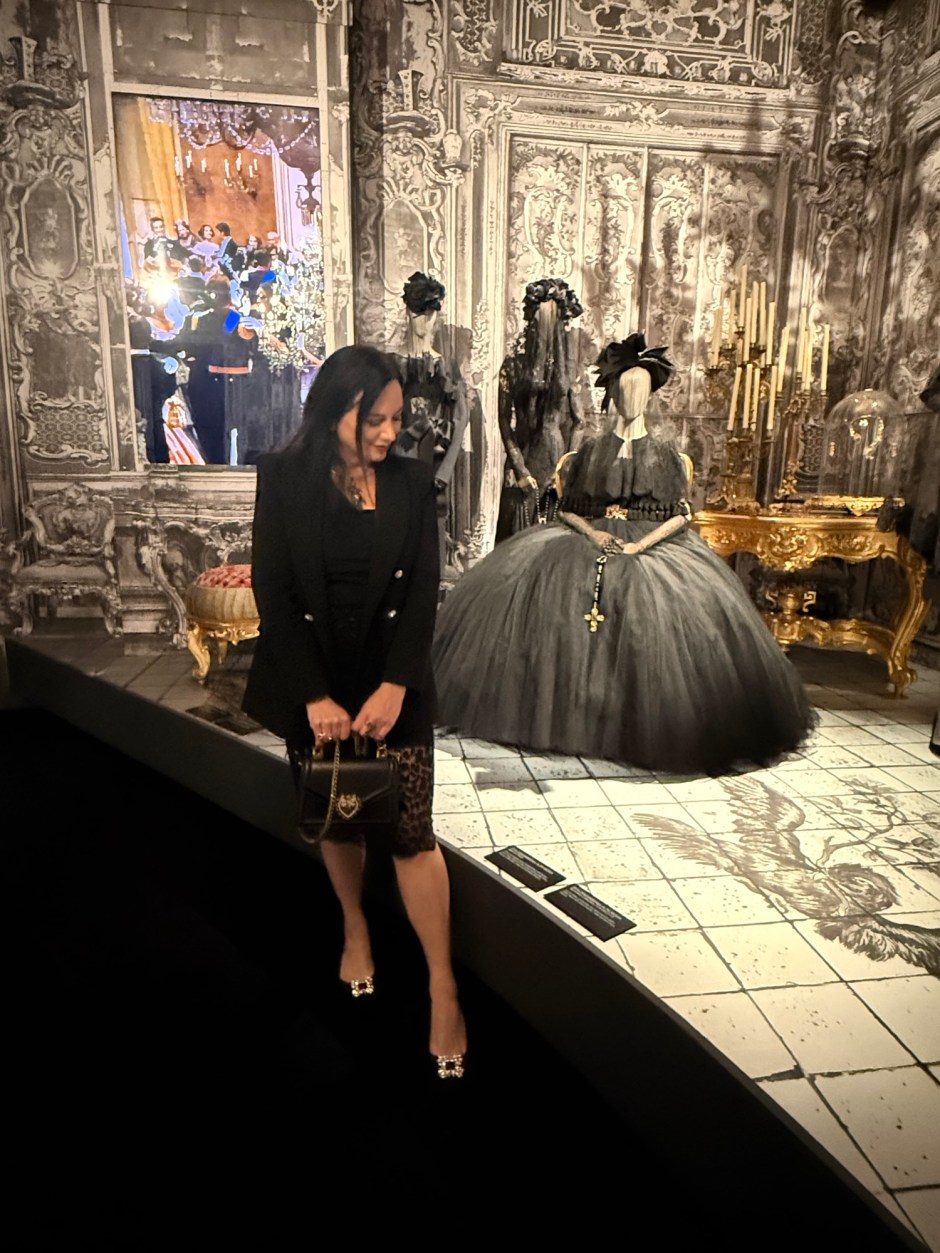
The exhibition at the ICA Museum Miami
Following sell-out runs in Paris, Rome, and Milan, From the Heart to the Hands: Dolce & Gabbana debuts its first US exhibition at Miami Design District’s Institute of Contemporary Arts ( ICA), from February 6th through June 14th, 2026.
Curated by Florence Müller, the exhibit is a walkthrough of Italian history, design, and art in the vision and journey of iconic designers Domenico Dolce and Stefano Gabbana.
If you go, take the time to immerse yourself in the 16 theme rooms, each one of them showcasing: scent from iconic fragrances inspired by their collections; sound from the soundtrack of a movie where they dressed the cast or opera arias from the respective opera they got involved in design.
Why the Miami exhibit is so special
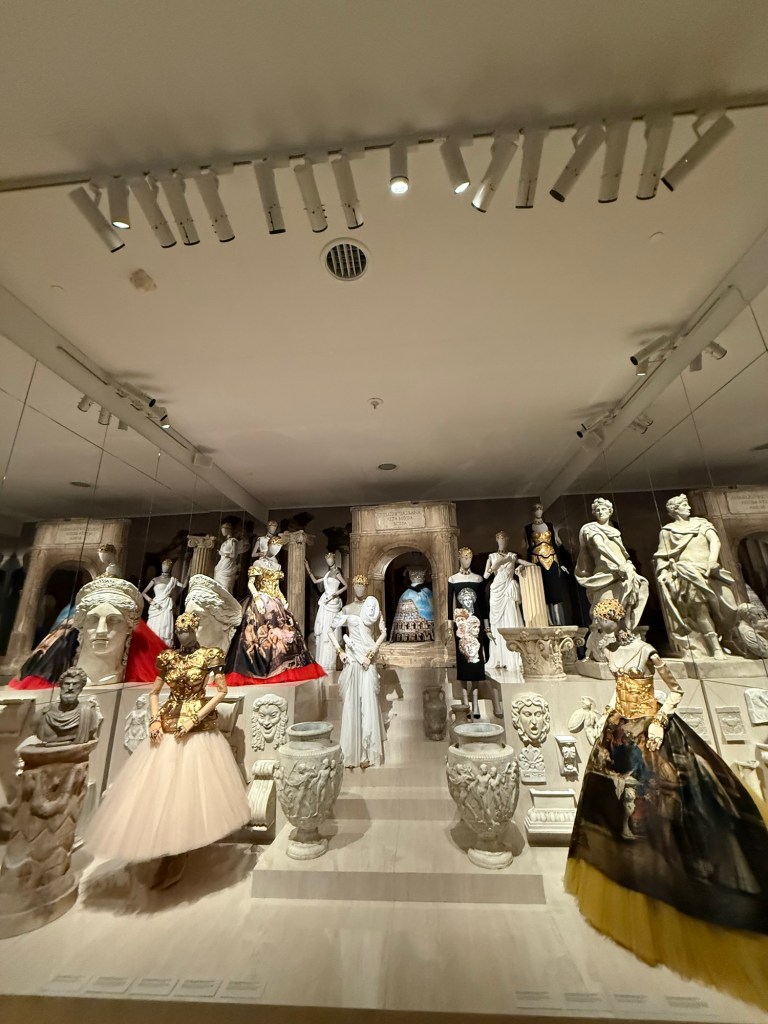
New rooms have been added to the Miami exhibit such as Rome, eternal beauty and in the heart of Ancient Rome.
The exhibit is not only for fashionistas, it is for whoever appreciates and values art and history, and most of all “Il fatto a mano,” the artistry and craftsmanship of the “handmade,” which is Italy’s pride and legacy reflected in centuries of civilizations that have passed.
“Dolce & Gabbana pay tribute to the differentiating factor between industrial production and haute couture: handcraft”
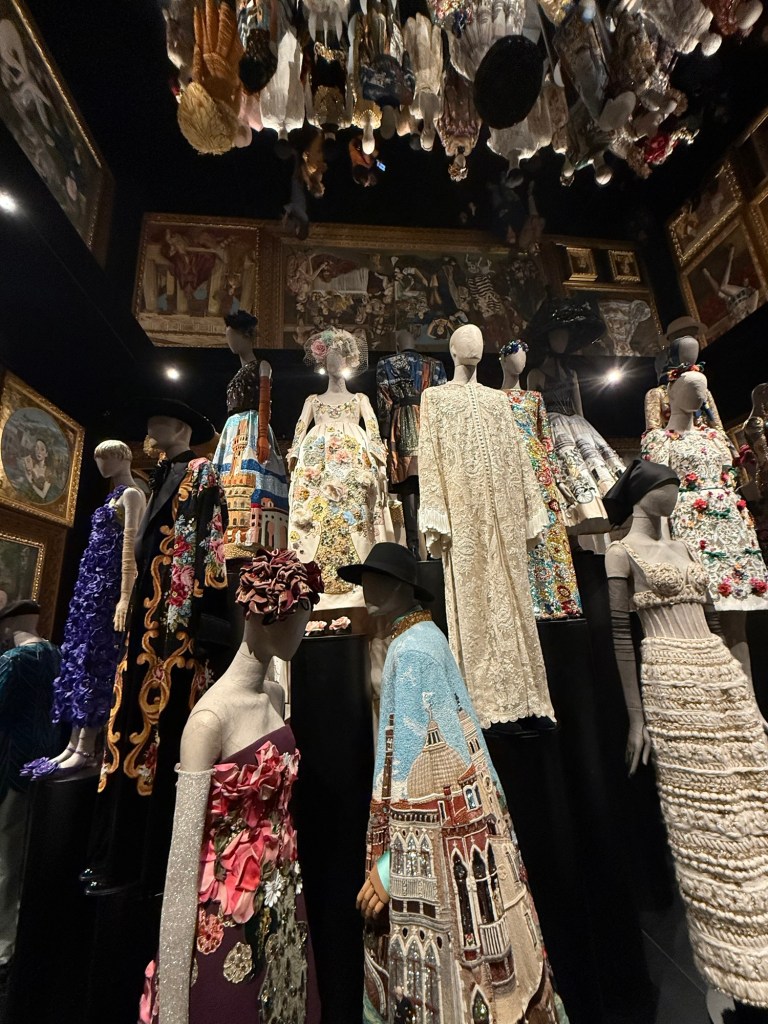
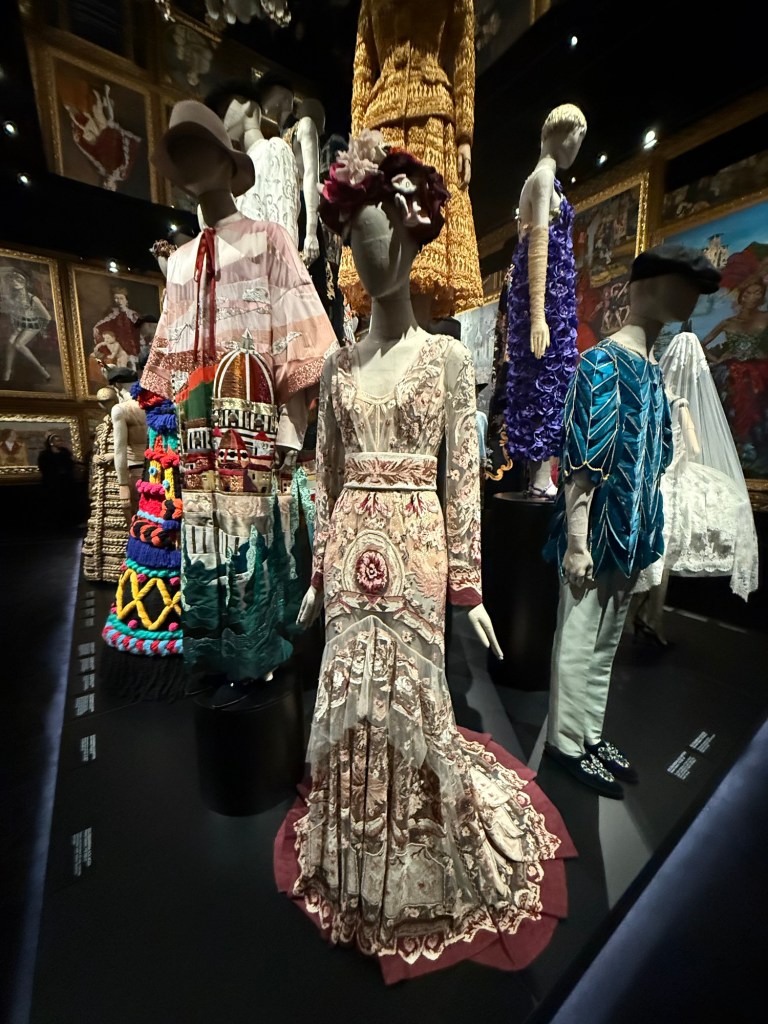
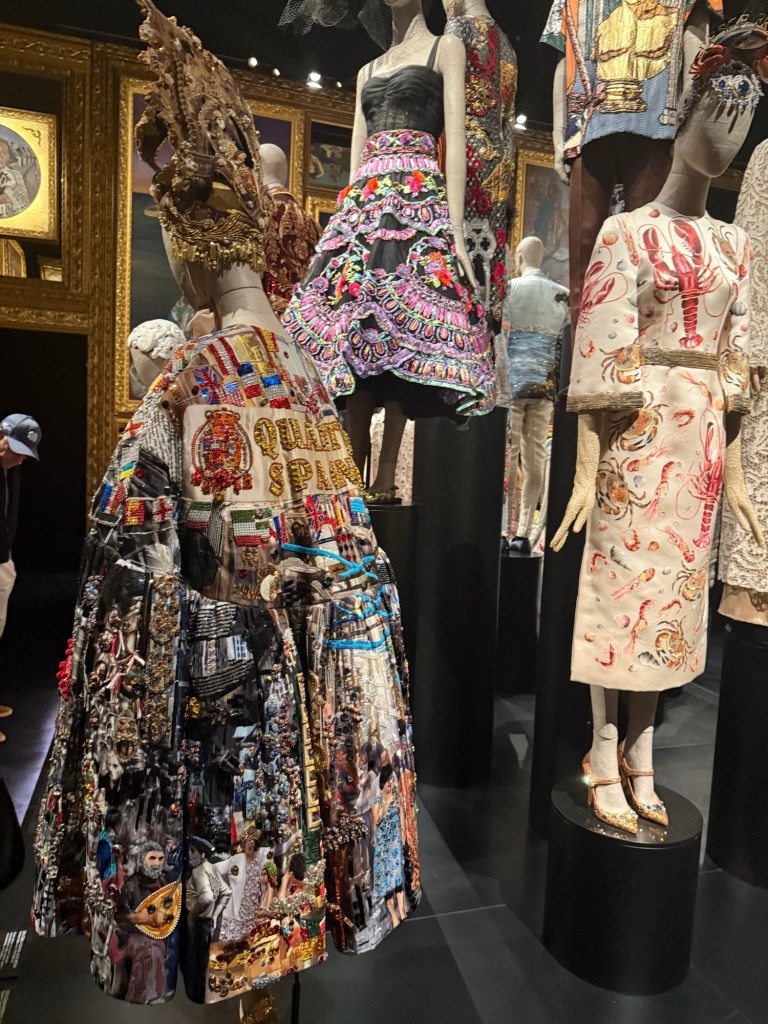
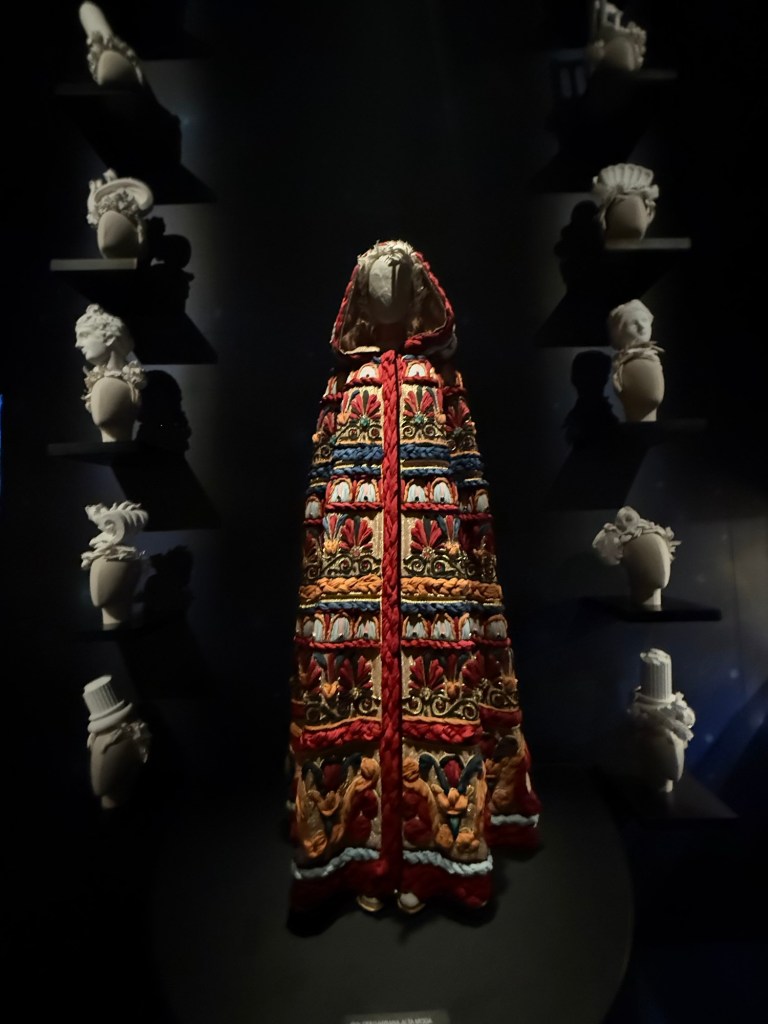
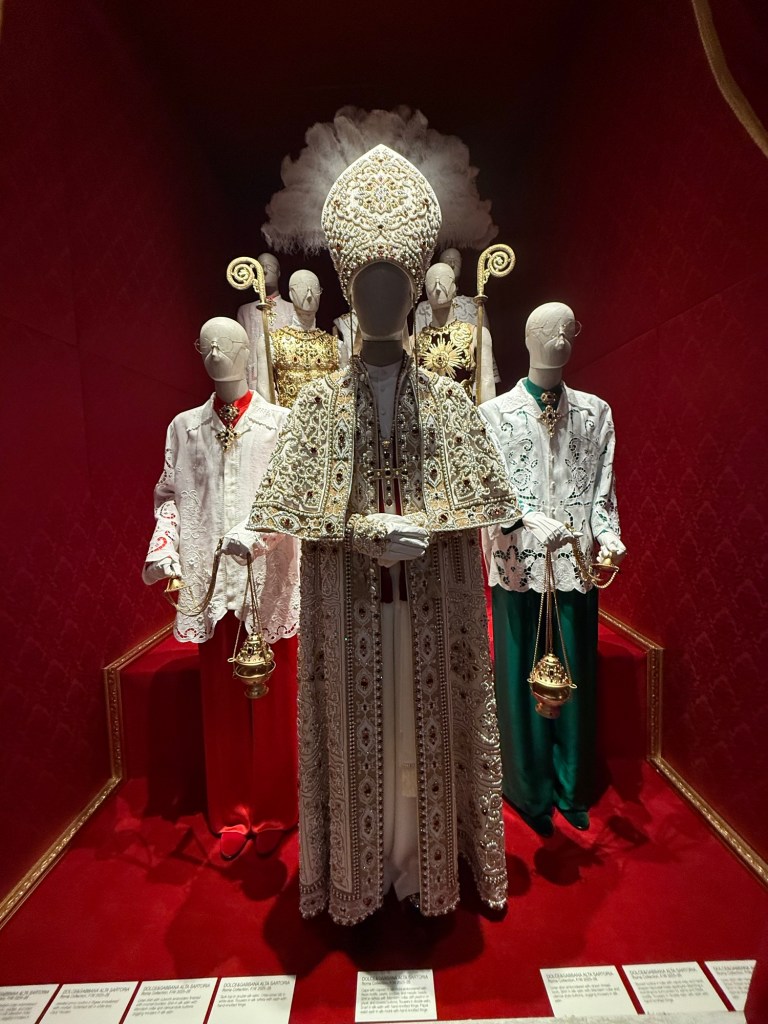
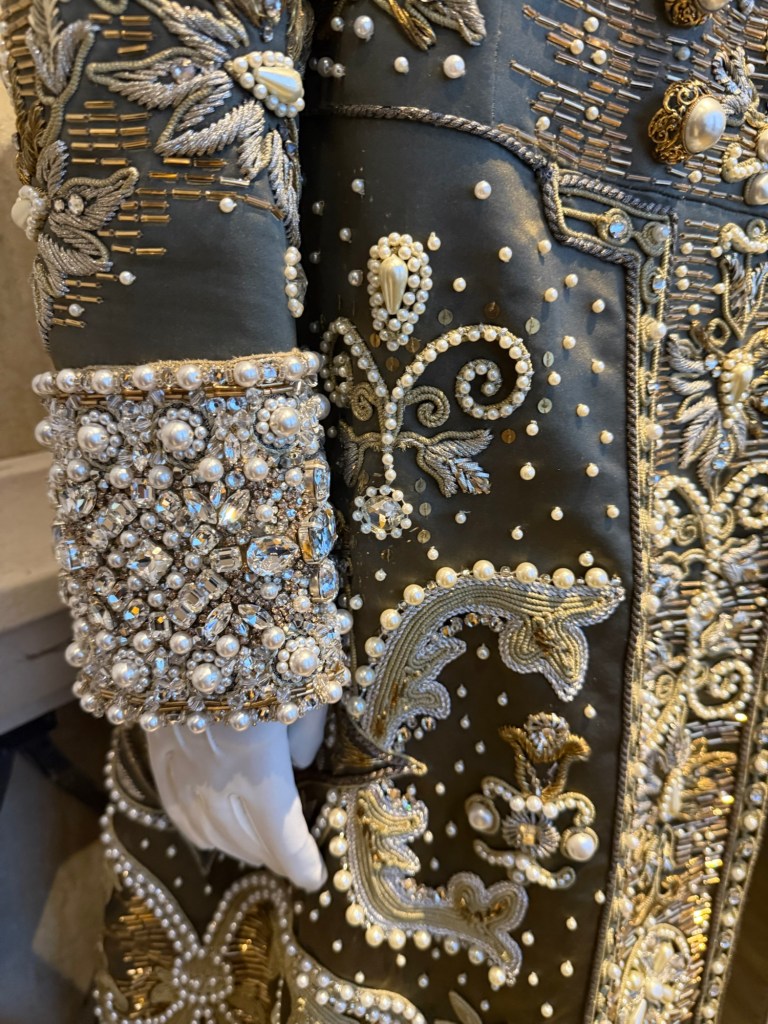
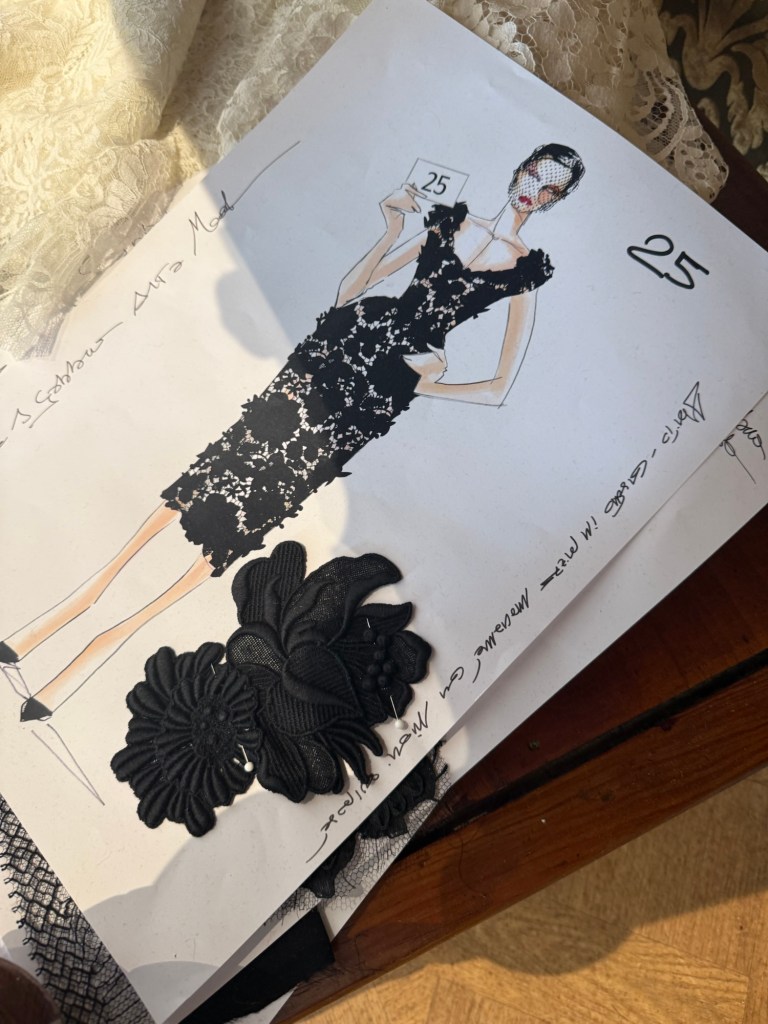
And the first room takes us to the art of handmade, here will be able to see techniques that have been recreated from the original sources in Sicily, Campania, Puglia, Sardinia, Toscana, Rome or Milan, such as the tubular embroidery, a lured mesh cape entirely embroidered with silk satin, which was first presented at the Alta Moda Venezia, the San Marco Collection 2021-2022 or the fur appliqué for Alta Moda Firenze 2020-2021.
Other meticulous and artistic techniques to admire in this room are cross-stitch, embroidery with fur, thread embroidery, appliqués, crochet, cutwork, jeweled embroidery.
Don’t miss the art by Anh Duong across the room and the unique jewelry displayed across the sidewalks.
2020
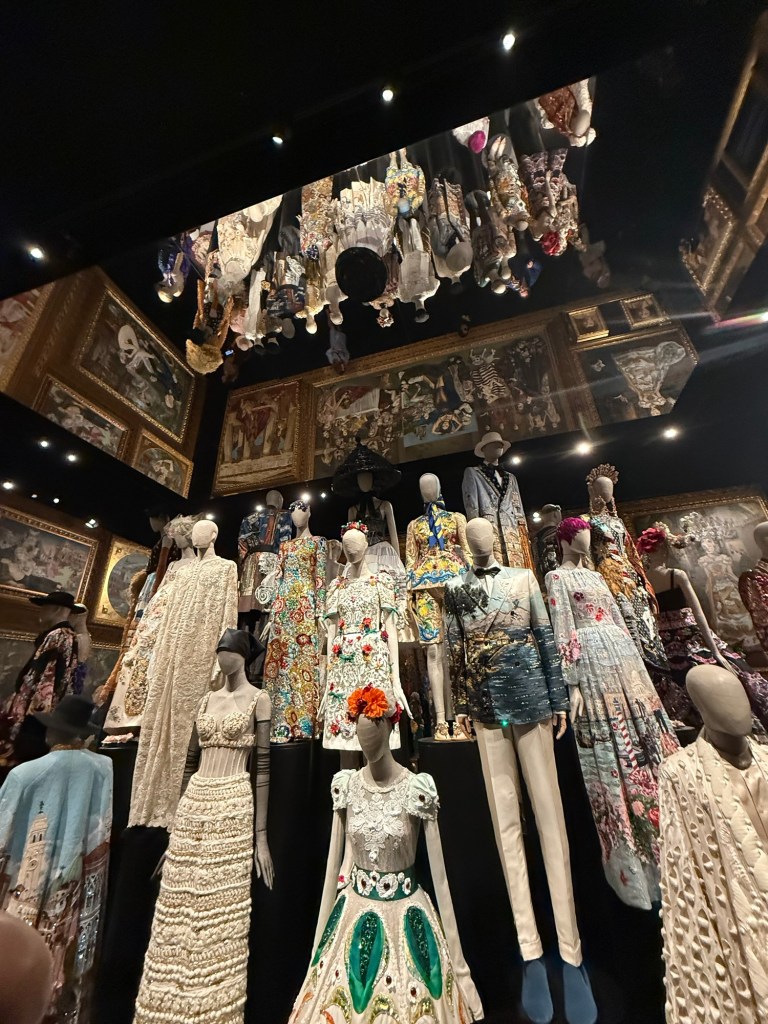
Architectural and pictorial is the next room where we can imagine the architecture and decorations of palaces and churches in different periods, from the Middle Ages to the renaissance, from the baroque to the neoclassical, continuos sources of inspiration for Domenico & Stefano.
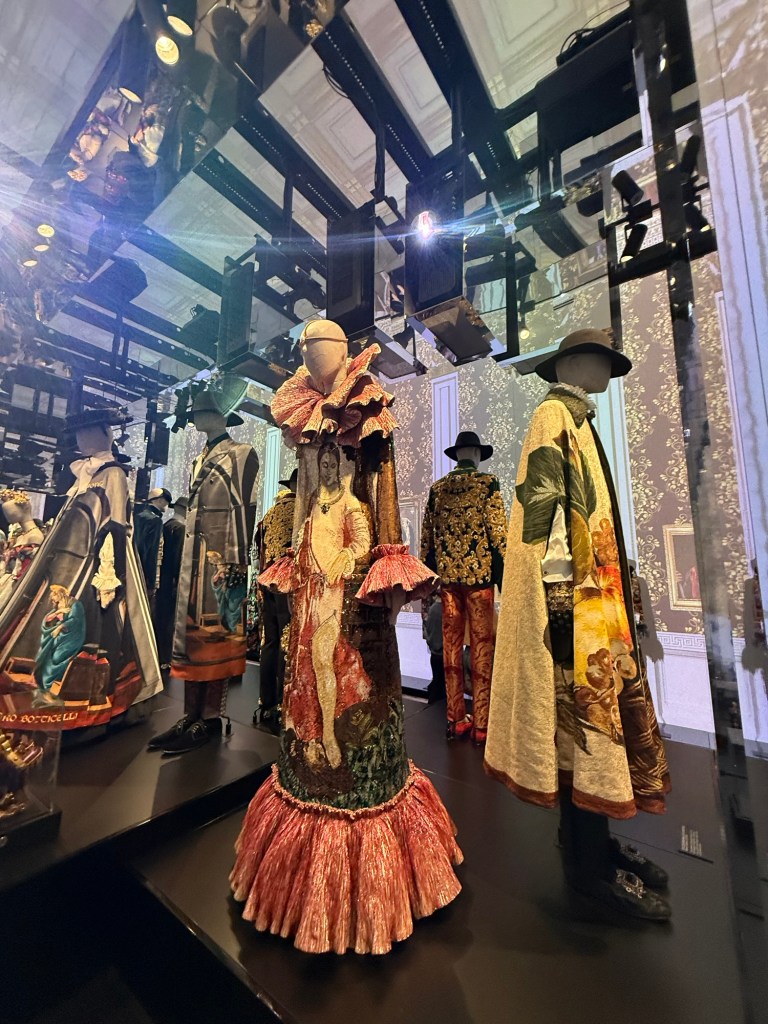
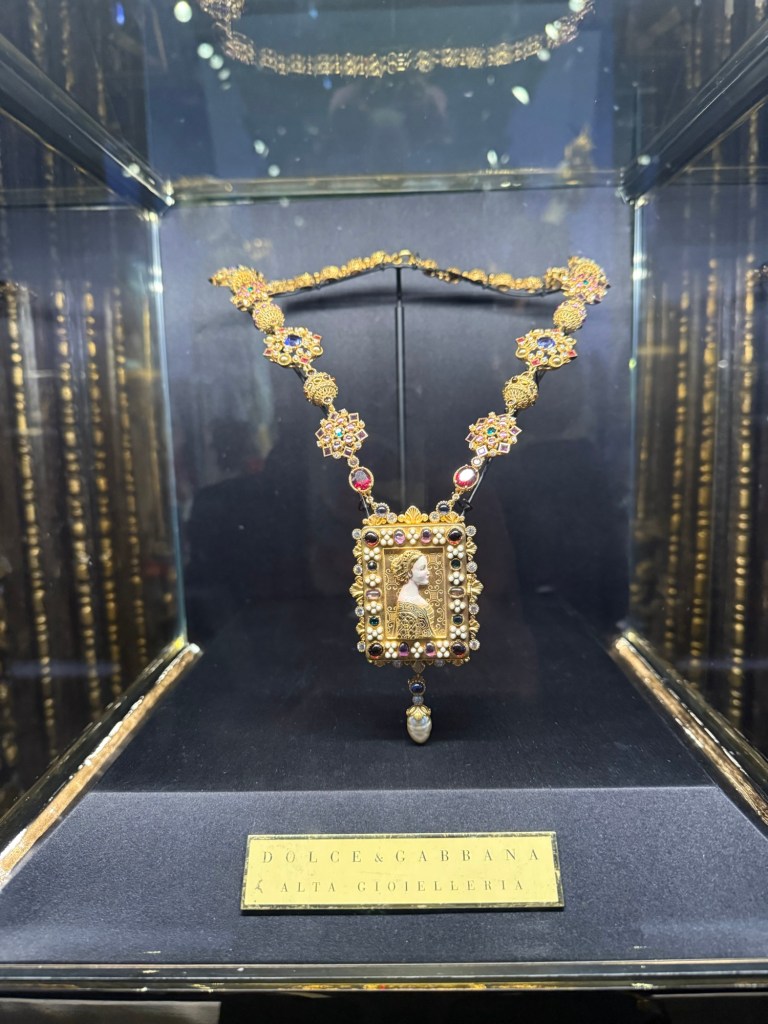
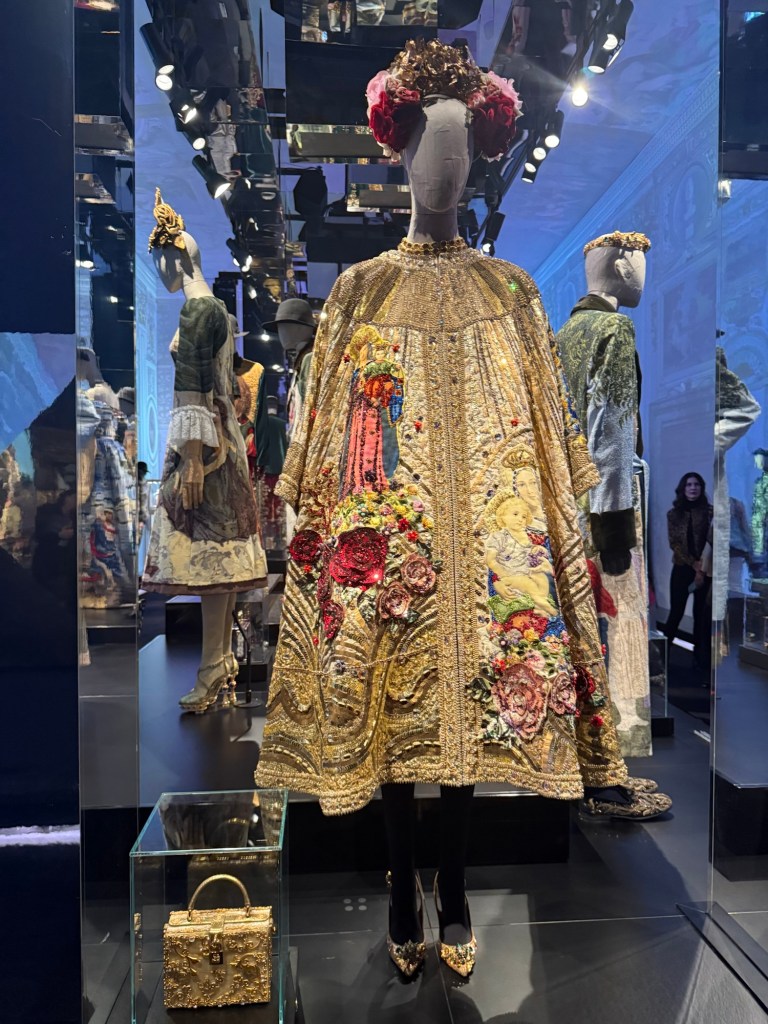
Dream of Diviniy, descending from their lofty thrones, the queens of antiquity and mythology step in the catwalks of Alta Moda.
Divine Mosaics in this room, note the displays of the replica of the temple of Concordia in Agrigento, this masterpiece of Hellenistic art is the only temple in Doric style capable of rivaling the Parthenon in Athens.
“The power God has given us to attract through beauty and the fragility inherent in the passage of time”
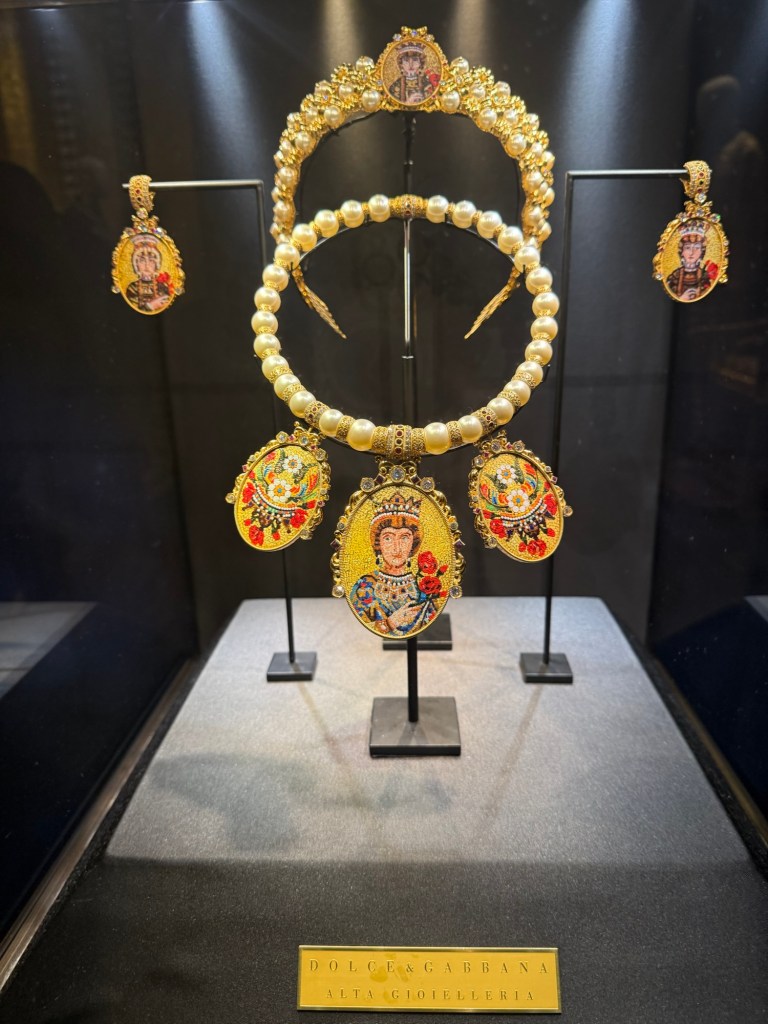
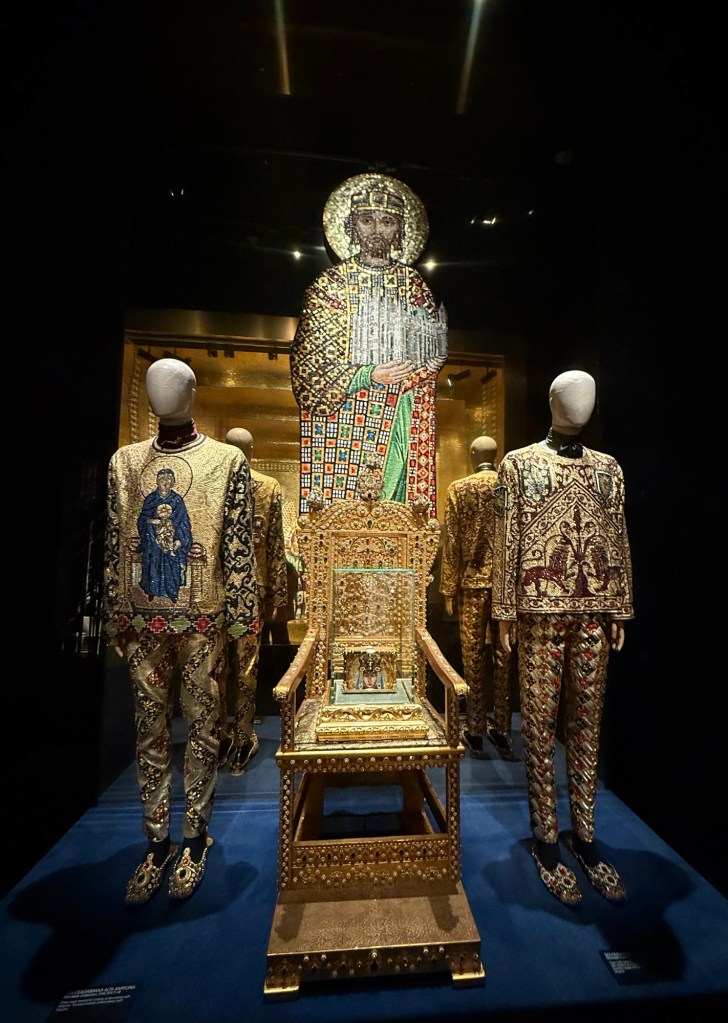
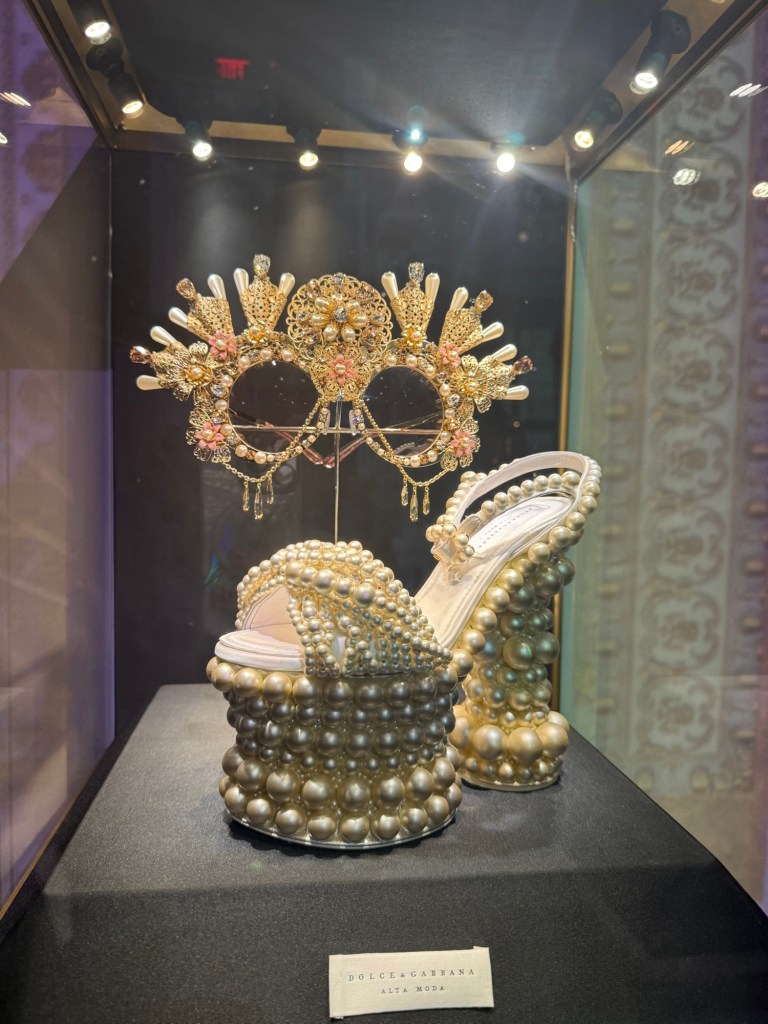
The leopard, in 1963 Luchino Visconti won the Palme D’Or at the Cannes film festival for his film Il Gattopardo. An adaptation of the novel by Giuseppe Tomasi di Lampedusa, the film is set in Sicily after the arrival of the Garibaldi.
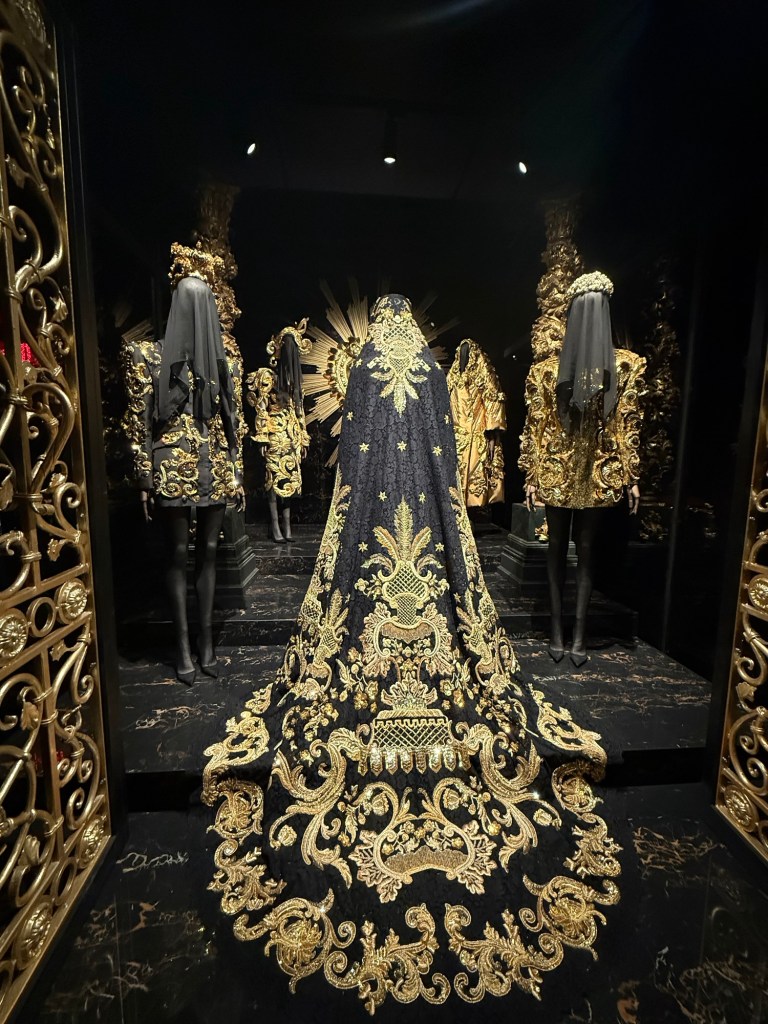
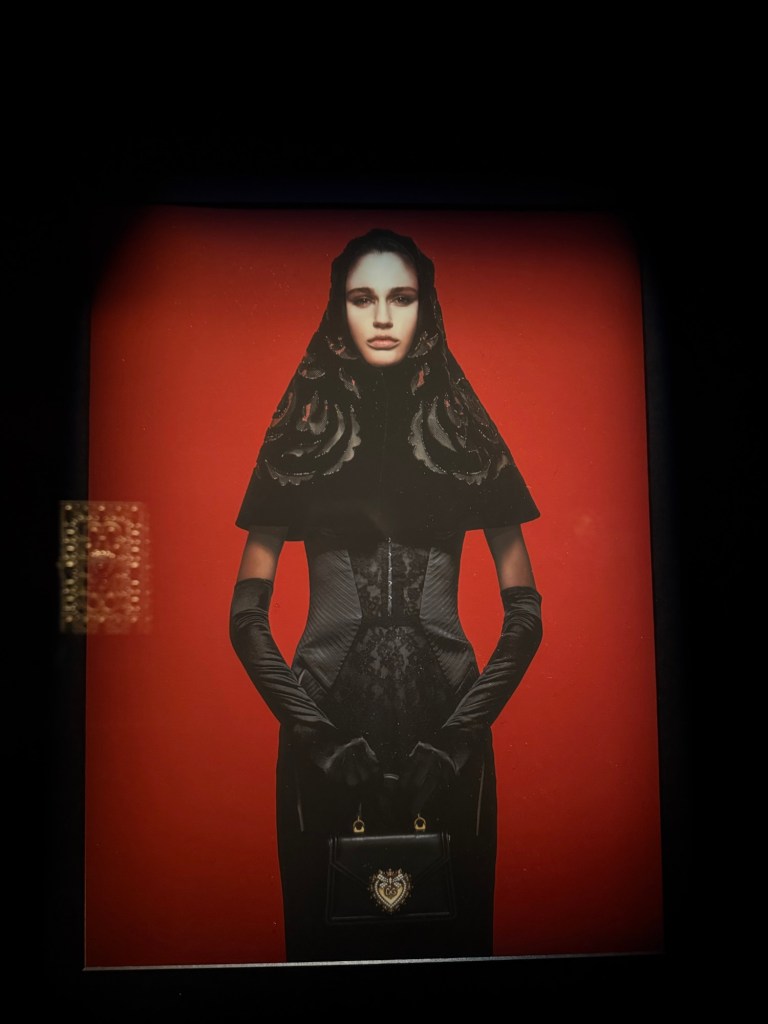
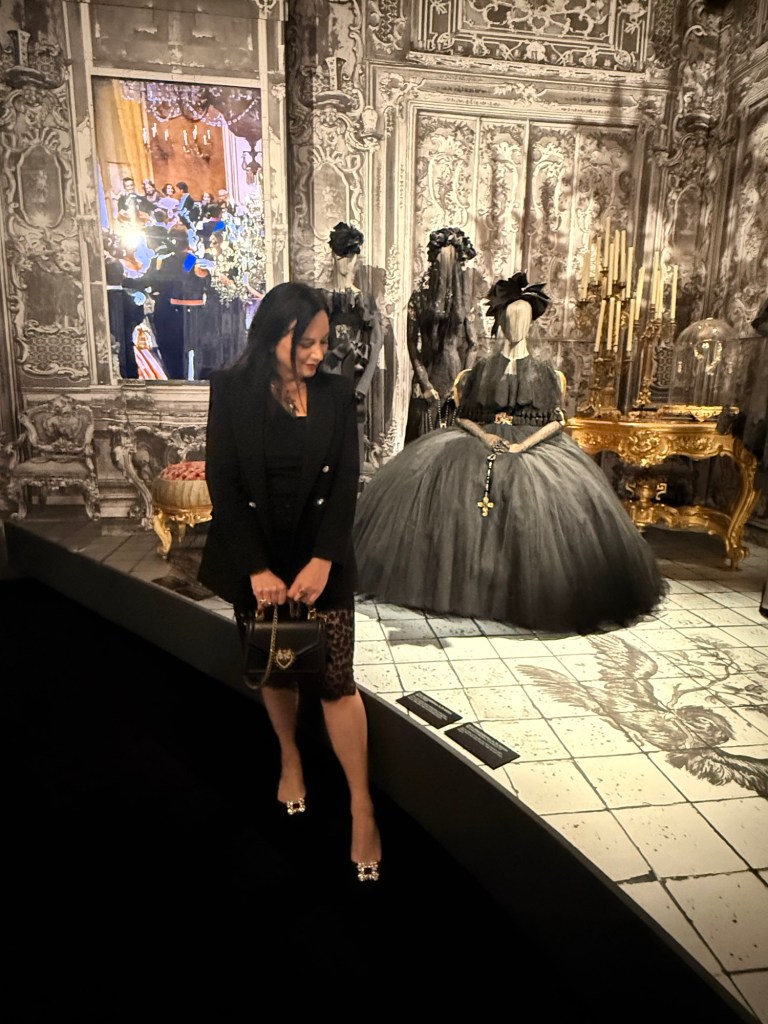
Devotion, Inspired by Baroque art from the sanctuaries under the protection of the Sacred Heart, it continues to shine to remind us that we won’t find eternity without sacrifice. The eternal dichotomy between the human and the divine, between mysticism and penitence; the tears of Lady Mary and her divine heart.
Sicilian Traditions, this is probably one of my favorite rooms, with the exuberant hand-painted Sicilian ceramics and horse-drawn carts.
Sicily’s ceramic tradition dates all the way back to Mycenaean times, with most popular centers in Caltagirone, Monreale and Santo Stefano.
The carretto comes from Greek times but developed into its present form in the 19th century. Families versed in the secret of this craft pass the techniques down to generations.
The most common subject depicted on the designs are the adventures of the Charlemagne and, his heroes. They are also the protagonists of the “Opera dei Pupi”, a marionette show that became popular in the early 19th century.
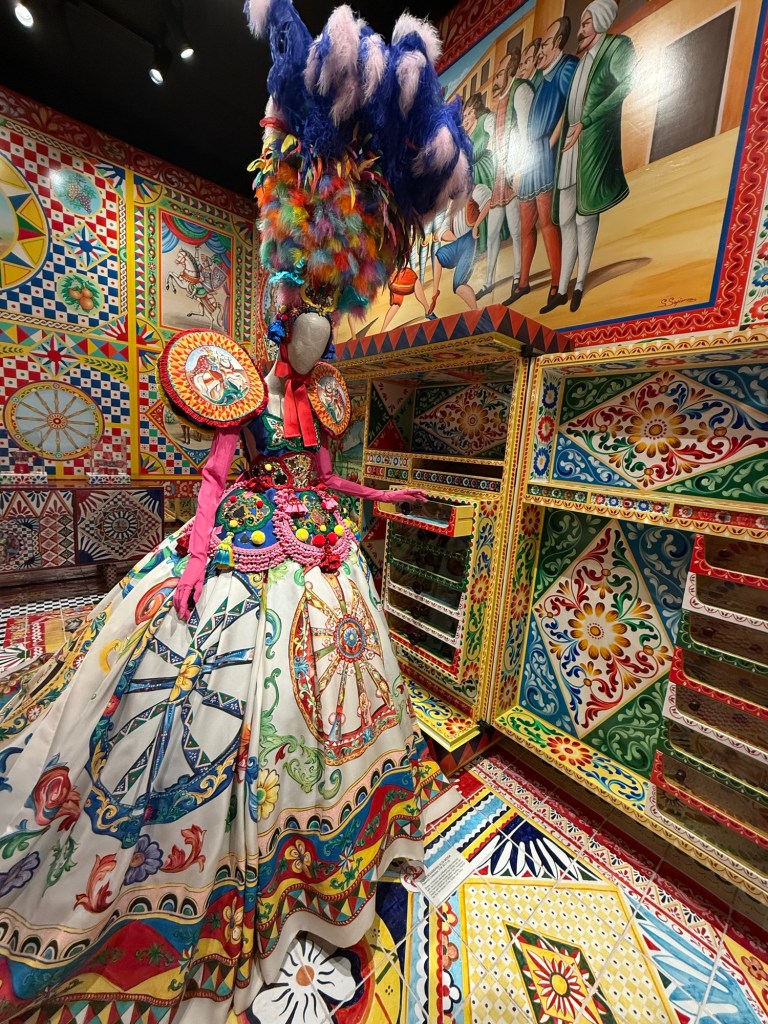
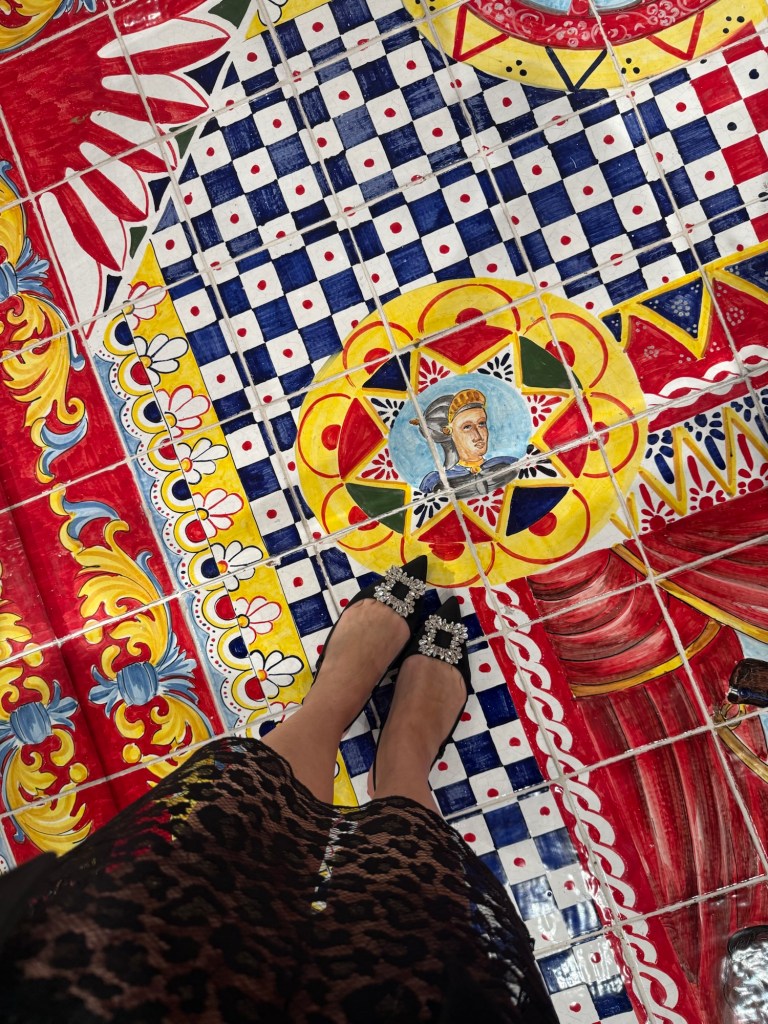
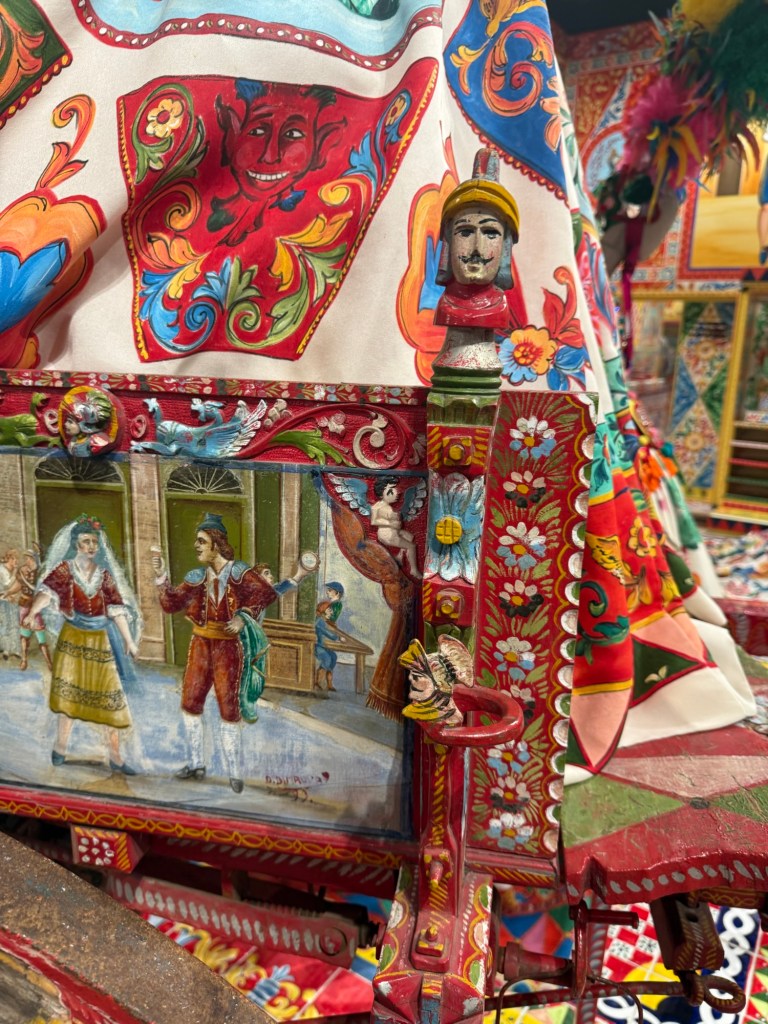
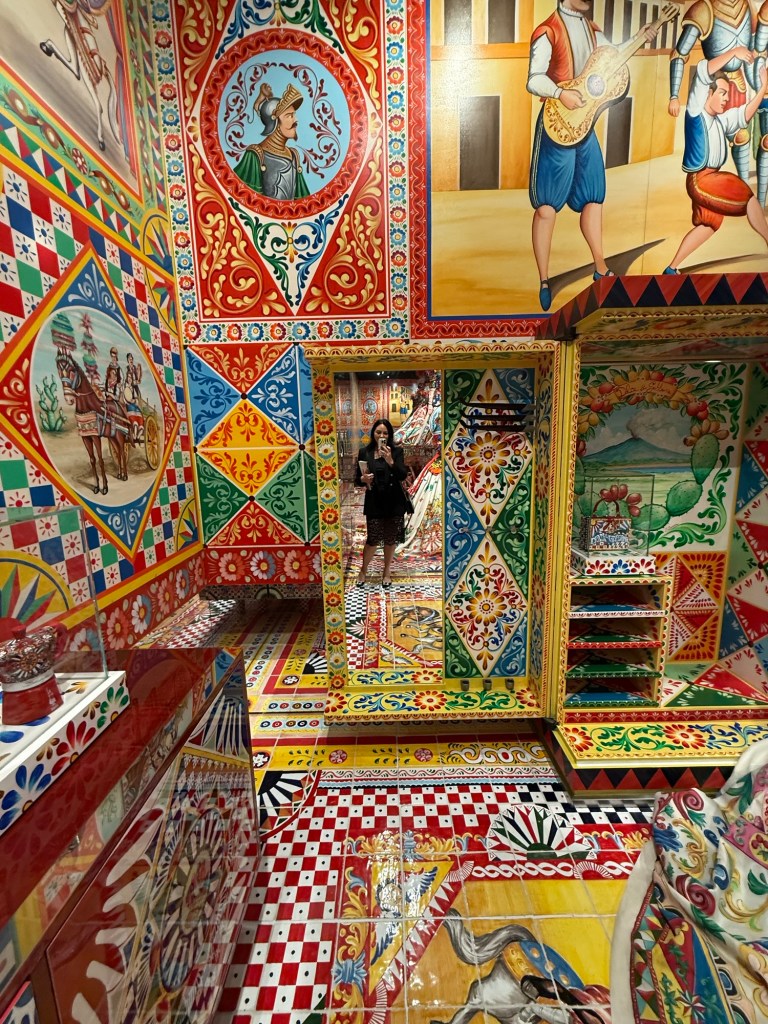
White Baroque; during the rule of the Bourbon in Sicily, Giacomo Scarpetta (1656-1732) gained fame as the creator of the stucco decorations for many religious buildings in Palermo. His inventions include the “teatrini” sculpted niches whose depth and complexity accentuates the interplay of light and shadow.
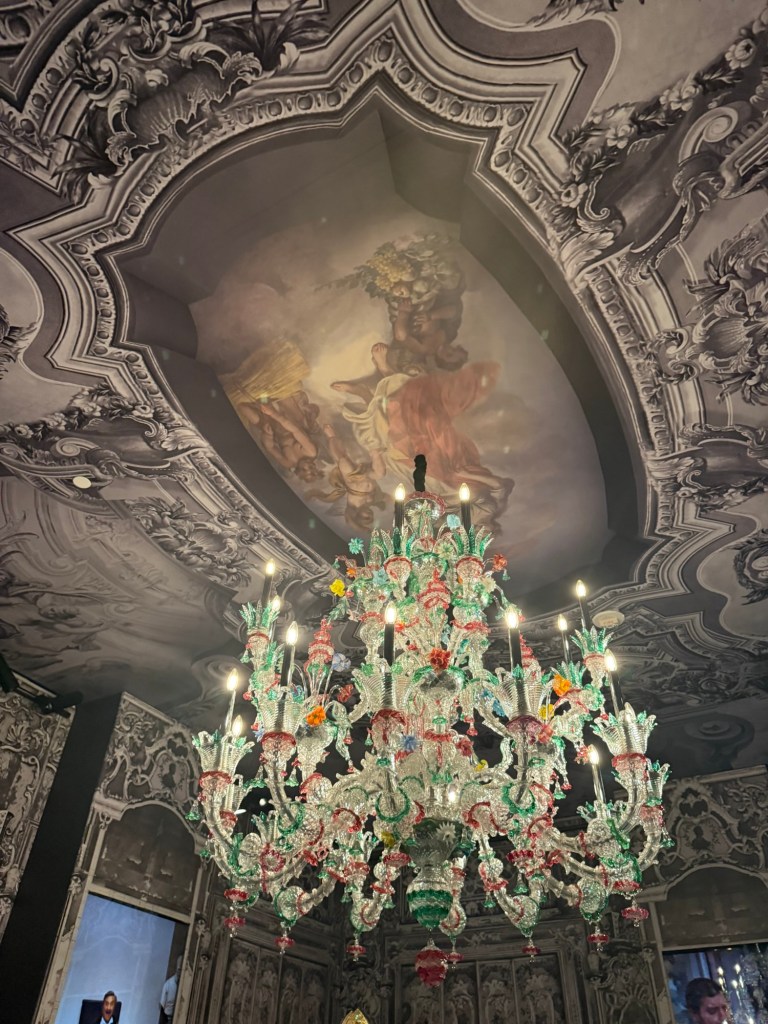
The art and craft of glassworking: in this room, glass embroideries and silver garments respond with their sparkle to the mirrors of the Barbini masters of the famous chandeliers established in 1936 by the Union of two Murano glassmaking families, with roots founded in 1295.
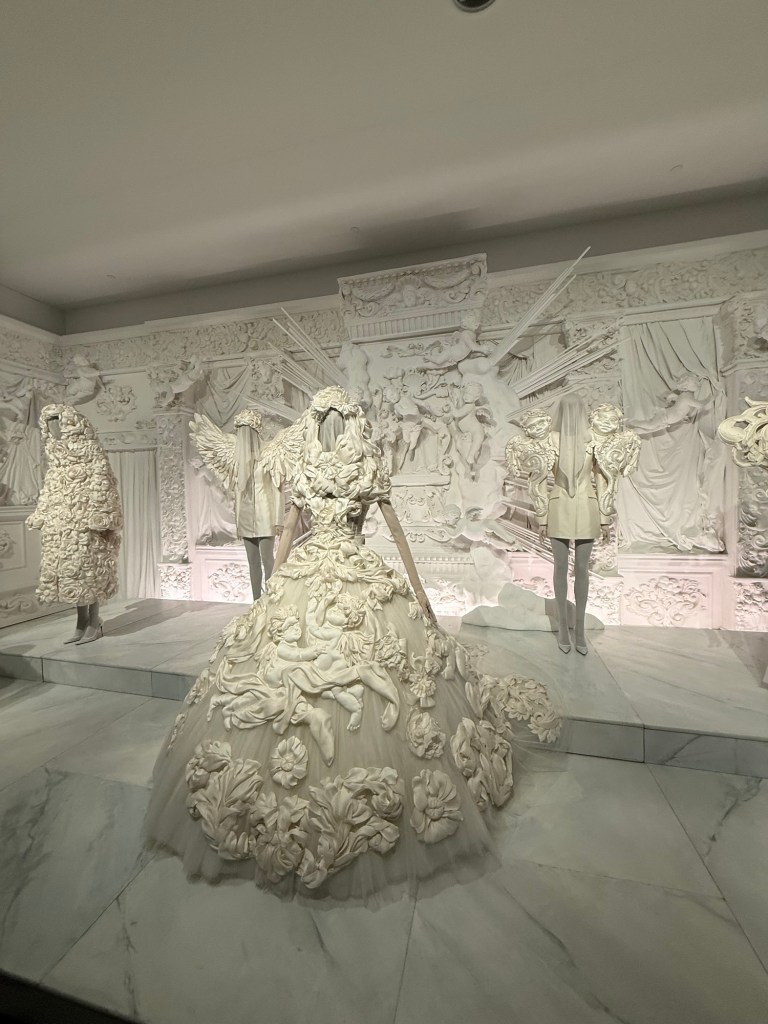
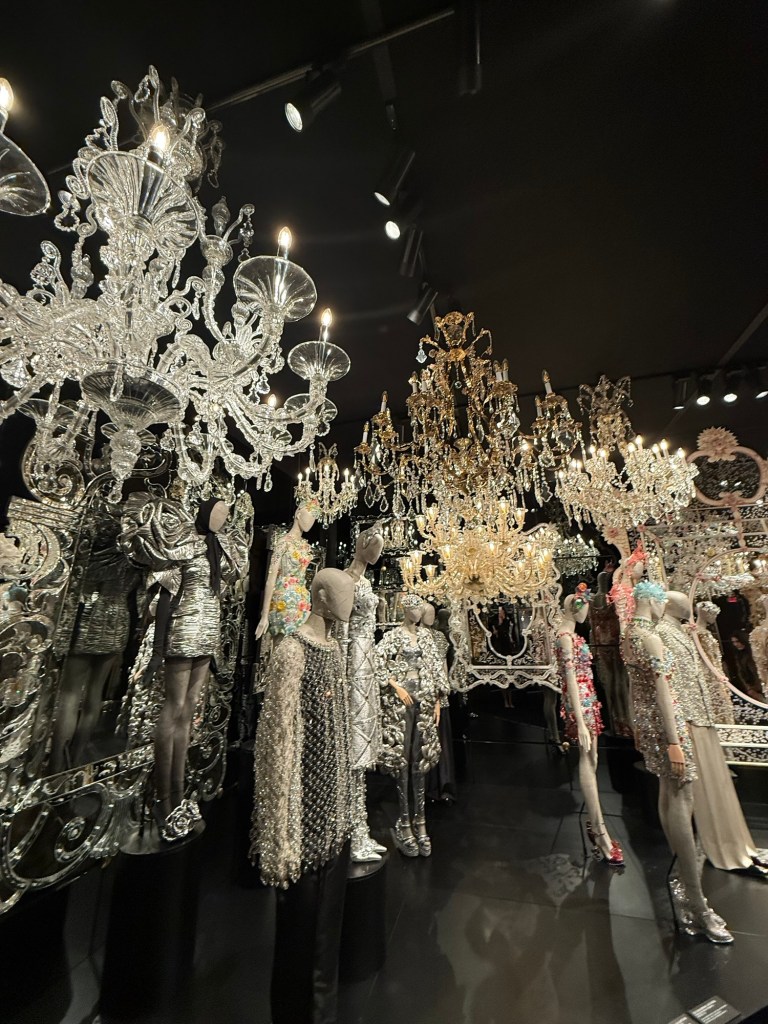
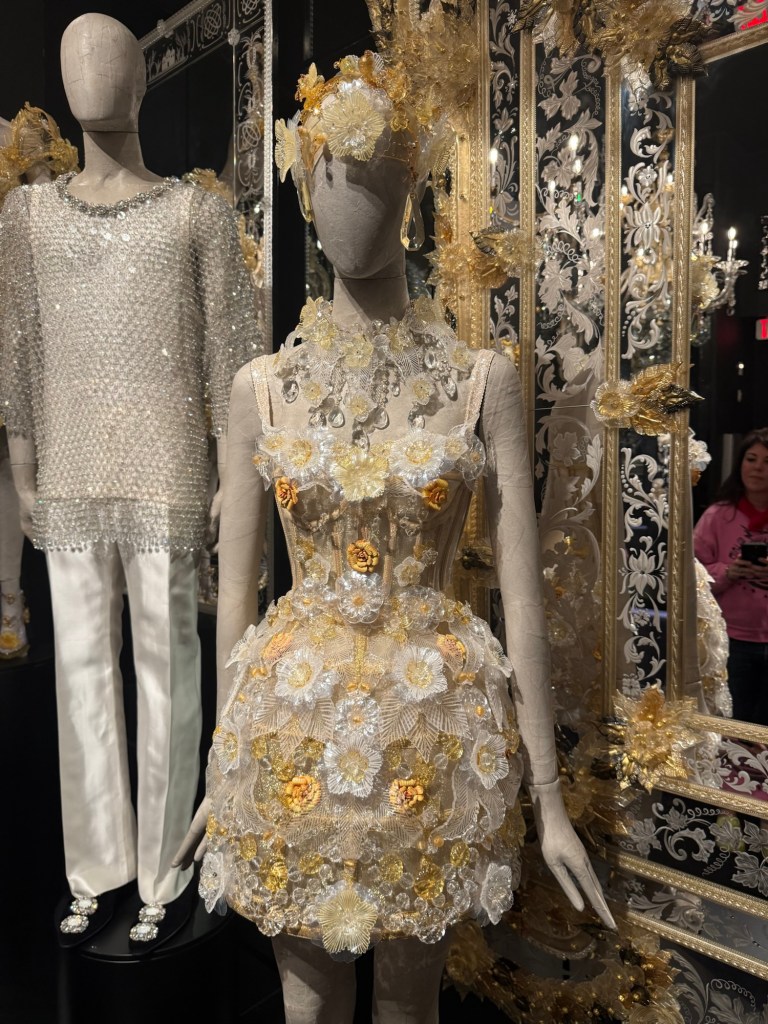
Rome’s eternal beauty, it is one of the rooms that, if you are like me, embedded in the mysticism and spiritualism of a religious education, no matter which religion you profess, it will still move your heart. This is a new addition to the Miami ICA’s exhibit, and at this point, I couldn’t stop a tear or two coming out of my eyes.
In the heart of Ancient Rome, in this sumptuous room, divine inspiration takes form in a compelling tribute to Ancient Rome, the goddesses celebrating the intrinsic divinity of the human dressed in Dolce & Gabbana.
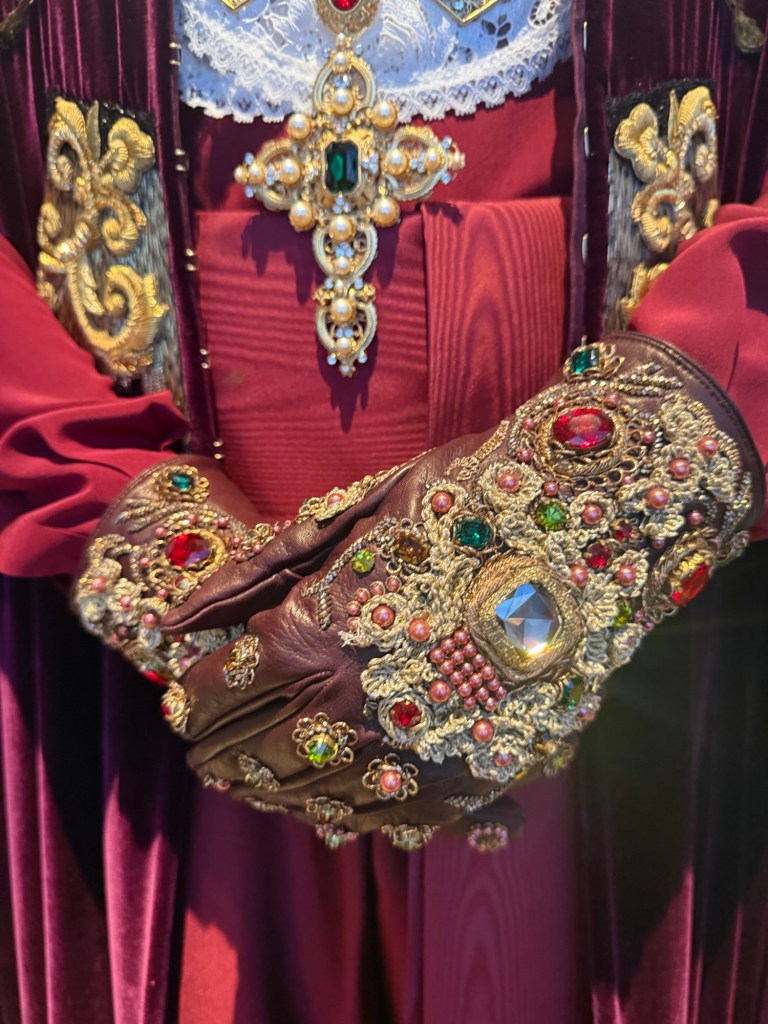
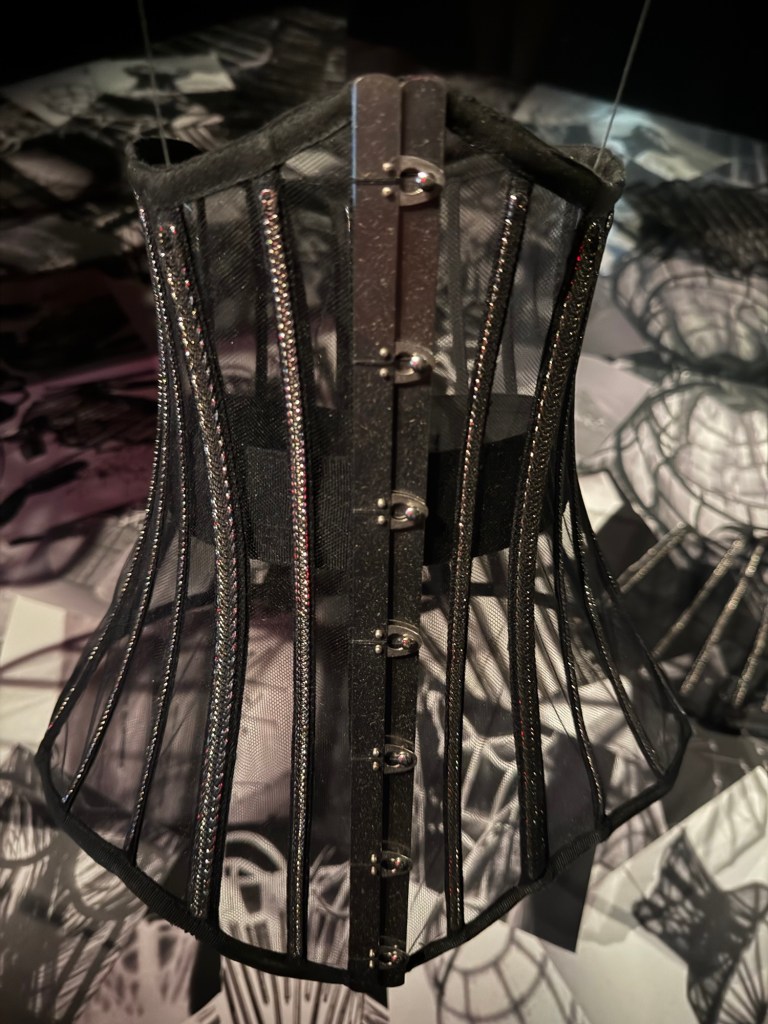
Anatomy of tailoring, the corset is one of the foremost emblems in the history of Dolce & Gabbana. It is a modern homage to the 18th and 19th centuries, the provocative 1950’s.
The art of Sardinia, the ancient filigree making in Sardinia, practiced on the island since Phoenician times and later, developed by the Arabs and the Spanish.
The voluminous white and black coats, and blouses recall the “mastruca” the traditional clothes of Sardinian shepherds.
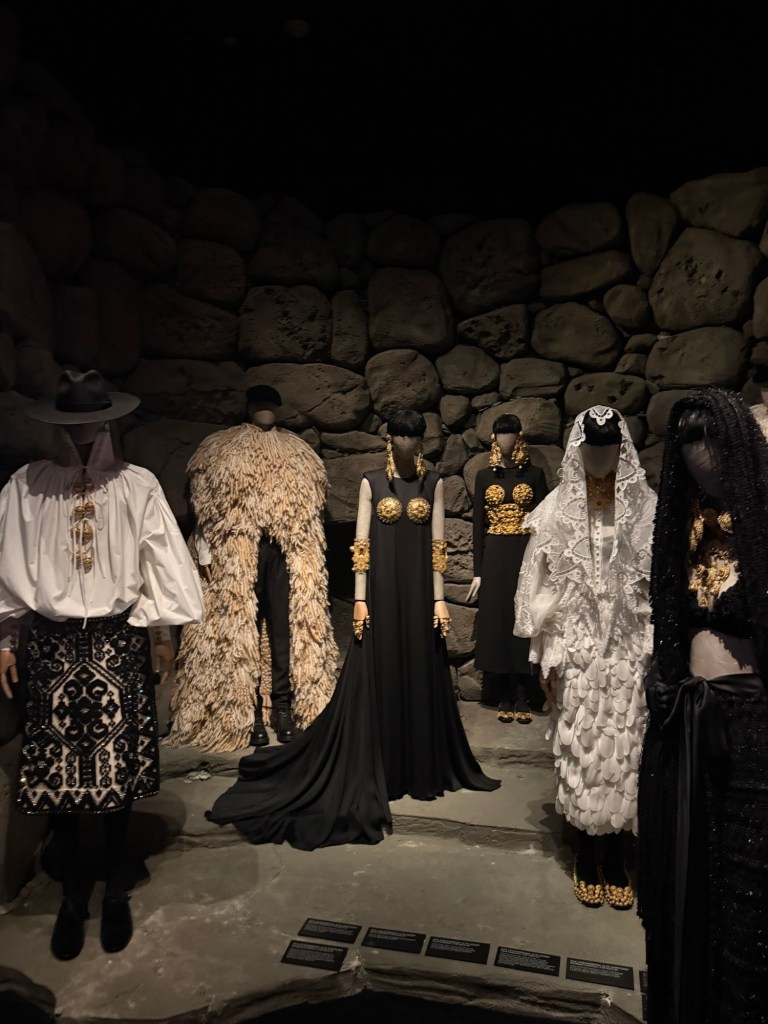
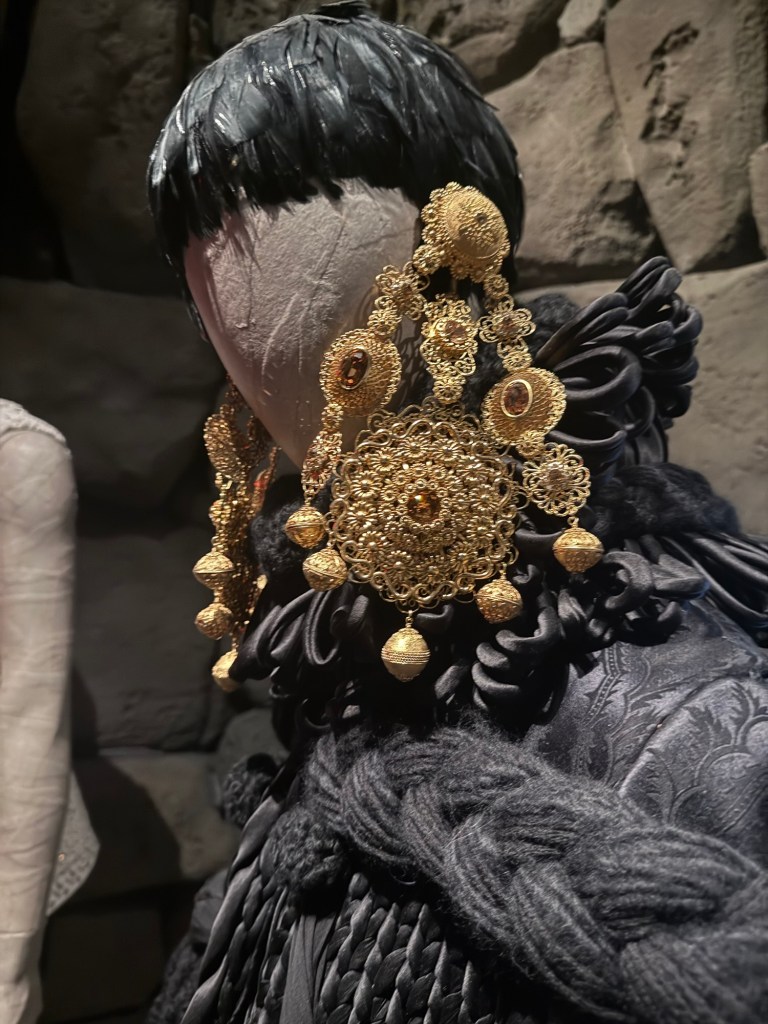
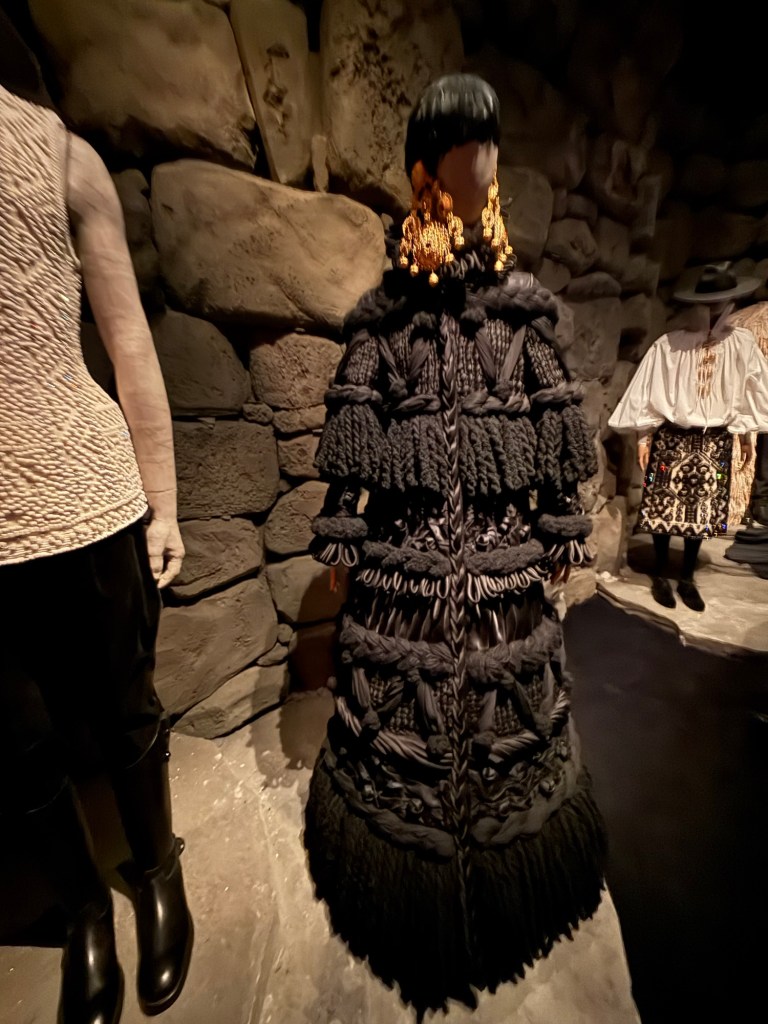
Ateliers, ornaments and volumes: the ateliers are the vital generative force, the beating heart of Alta Moda. Experience live techniques interpreted by various couturiers at the workshop. Furniture and accessories brought from their Milan workshops to Miami.
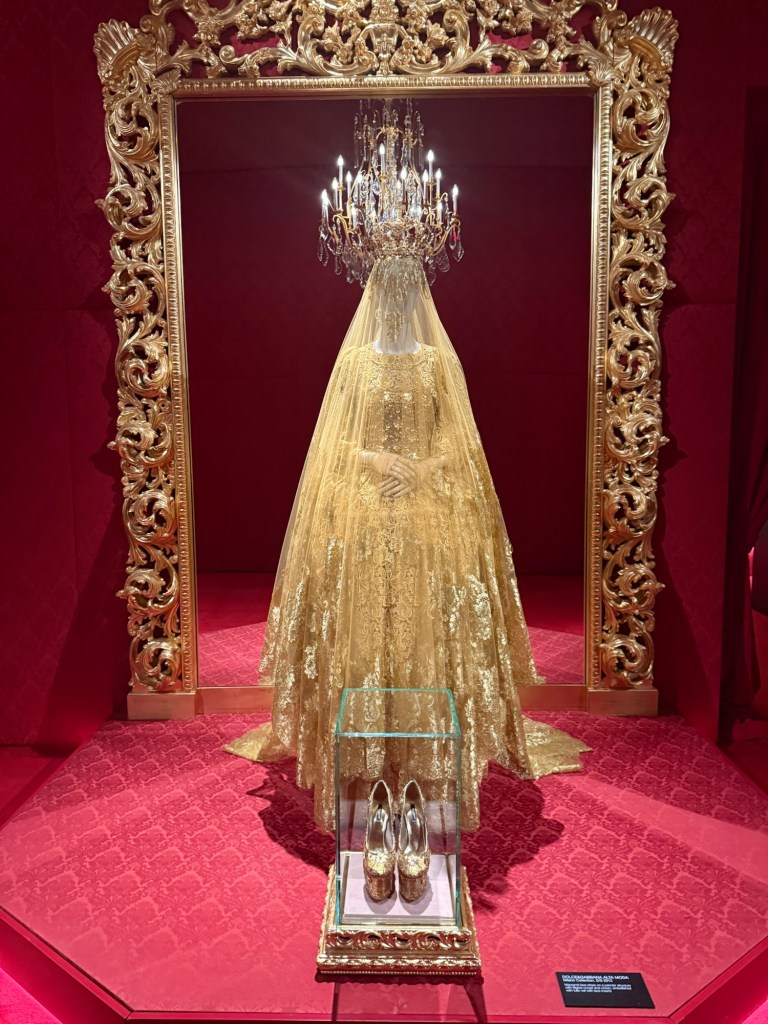
In the heart of Milan, the dress in particular symbolizes something very dear to Domenico and Dolce, Milan. This dress in gold macrame lace and gold filigree jewelry, was envisioned as an homage to the city.
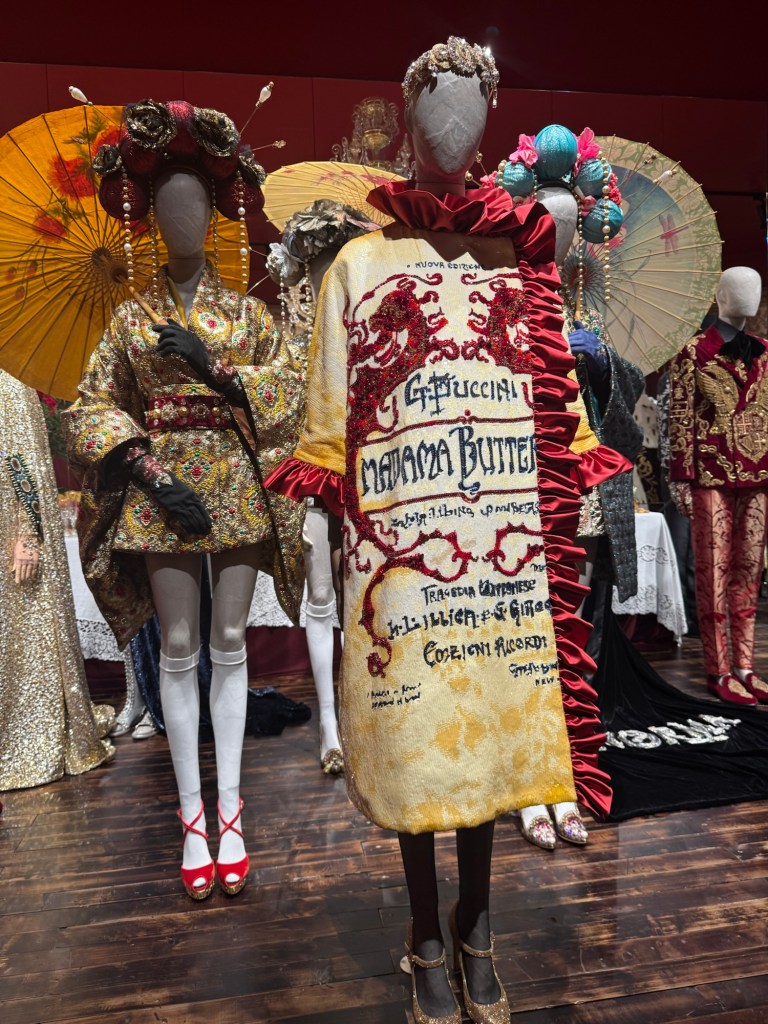
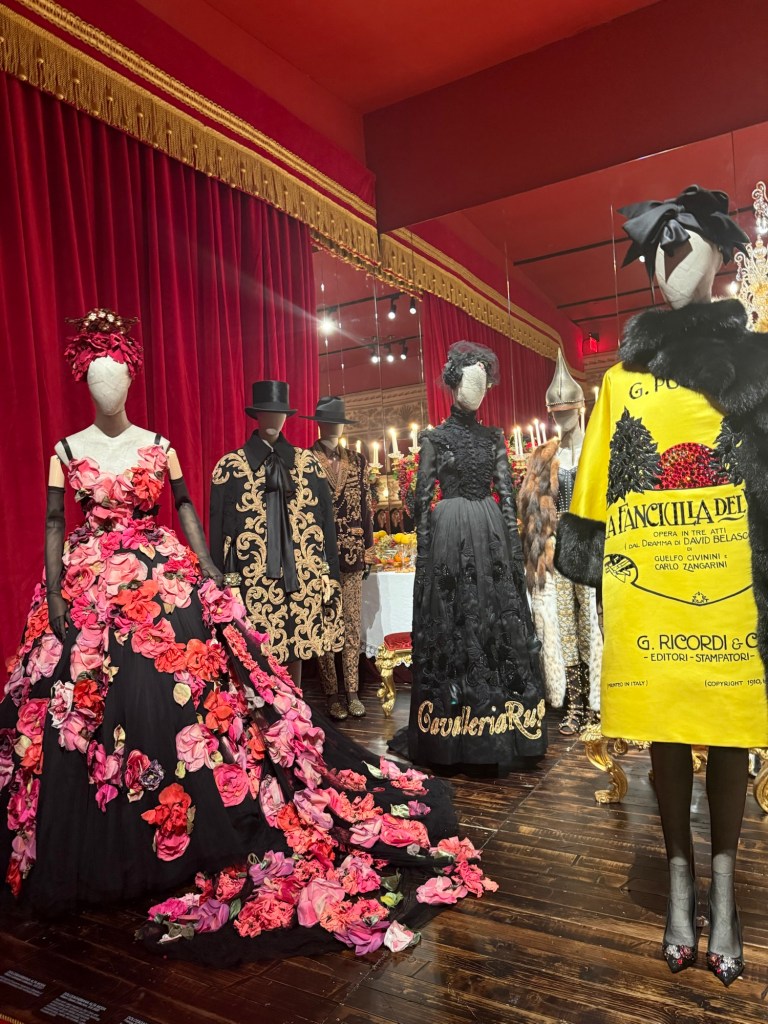
Opera, in the world of Dolce & Gabbana, theater and real life closely mingle in a mutual celebration of beauty. Whether Tosha, Aida or Norma, these female heroins, strong and fragile at the same time, symbolize the feminine ideal of the two couturiers.
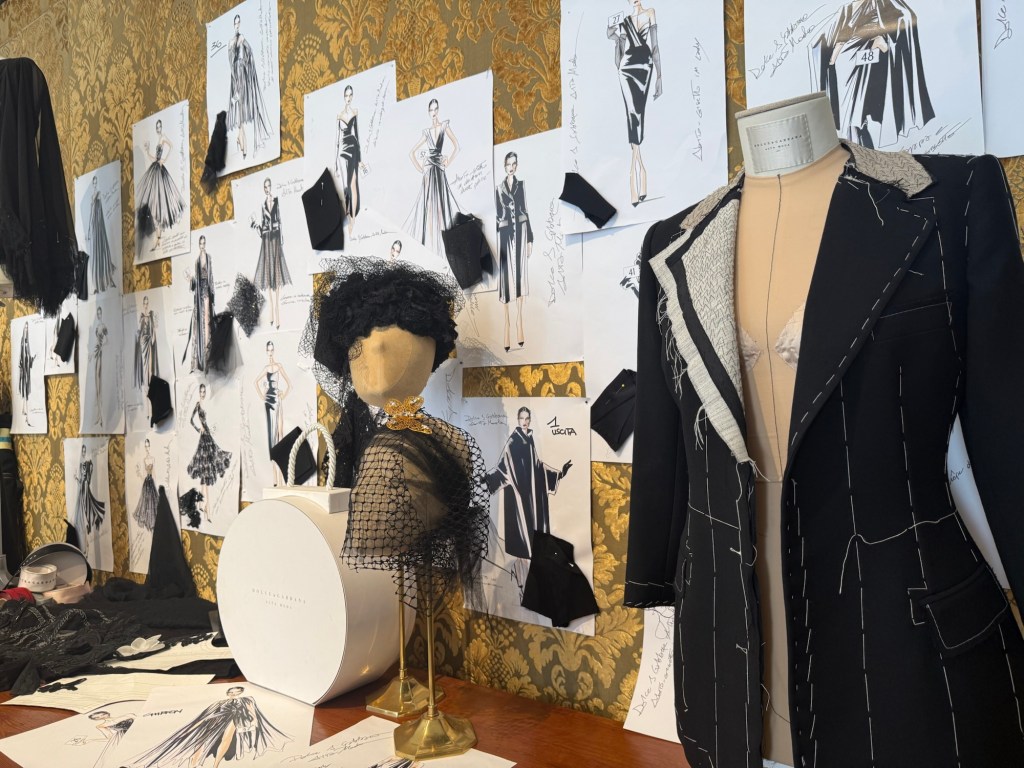
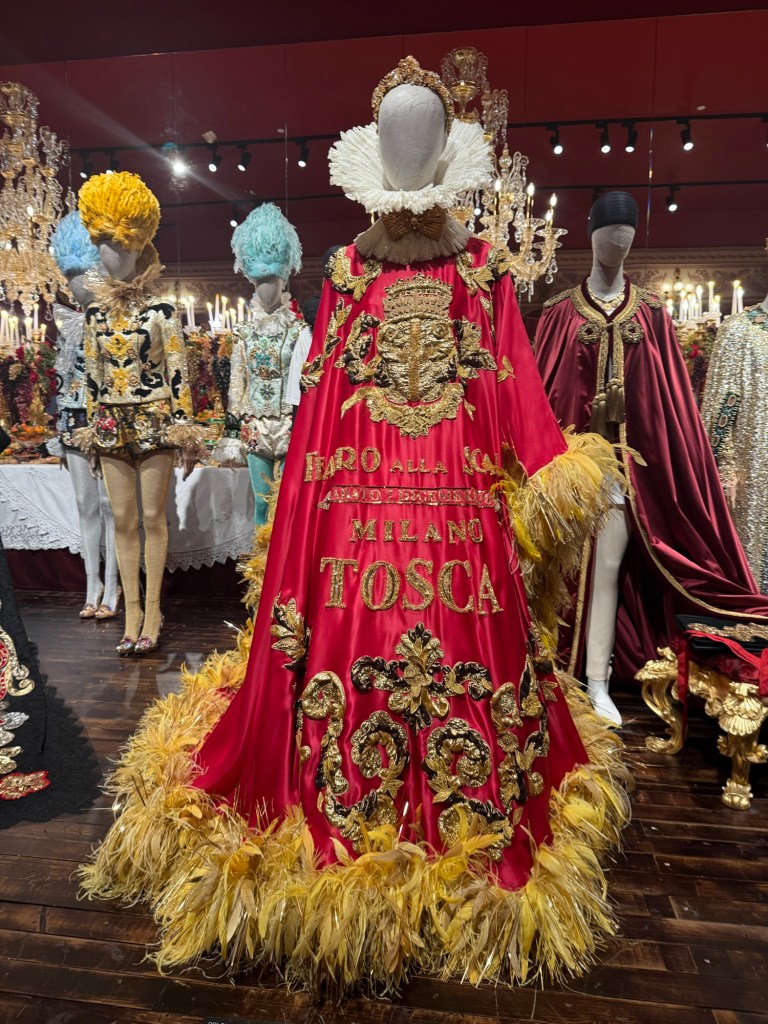
Source: “From the heart to the hands Dolce & Gabbana” edited by Florence Müller. Rizzoli 2024
Tickets: ICA Miami
 Montserrat Franco