Montserrat Franco is a multidisciplinary artist (singer-songwriter, performer, author) and a Distilled Spirits professional.
A certified Court of Masters Sommelier AIS and WSET, twice awarded T Distinctive by the CRT in Jalisco, becoming the first American female Master Mezcalier recognized by Mexico’s State Department of Education in Oaxaca.
She is certified in Scotch Whisky by The Edinburgh Academy.
A polyglot she is fluent in 7 languages.
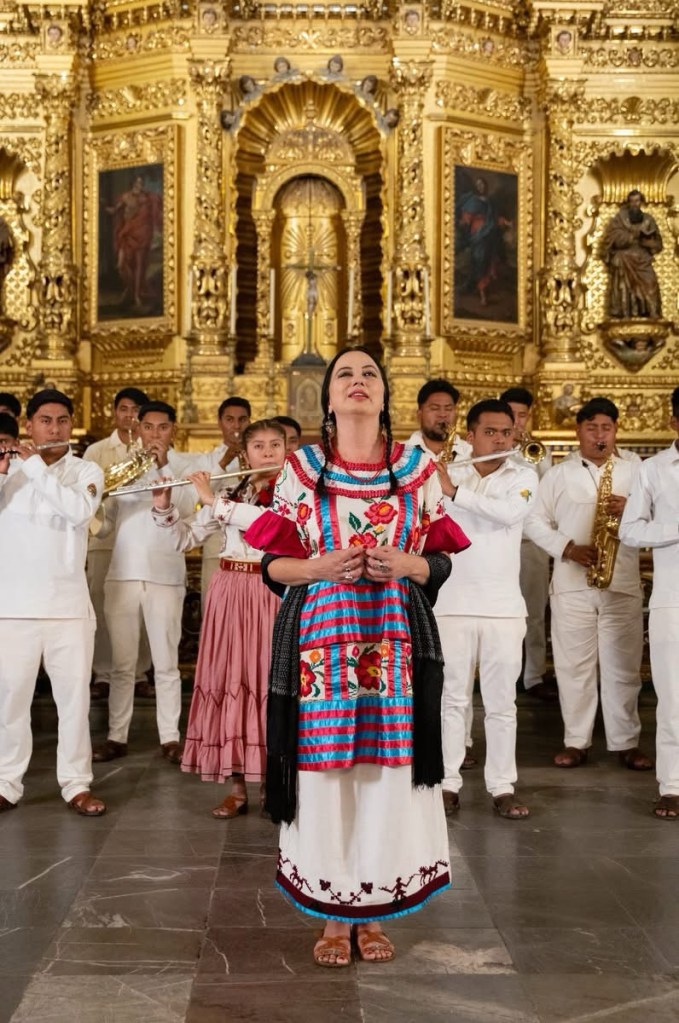
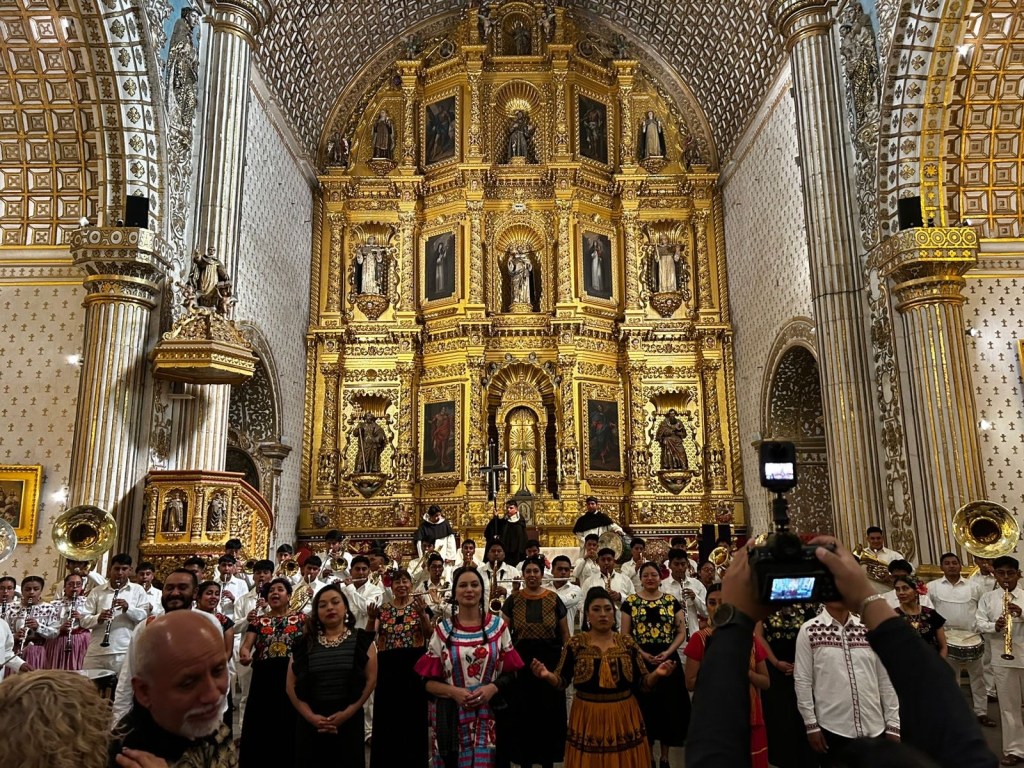
An original work by Jose Luis Guzman Wolffer filmed at the Santo Domingo Temple, UNESCO world heritage site, Oaxaca
The commemoration of five hundred years of the presence of the Order of Preachers in Mexican lands represents a moment of special significance, especially in Oaxaca.
The jubilee invites us to look back at the historical origin of the Dominican presence in the region.
The first mission to head to New Spain departed from Sanlúcar de Barrameda in February 1526, arriving in Mexico City on the eve of the feast of the Apostle Saint James. With their arrival, a period of intense evangelizing activity began, culminating in the official founding of the Province of Saint James of Mexico in 1532, with its formal installation taking place on August 24, 1535. From then on, the preaching friars established communities in strategic locations such as Santo Domingo de México, Tepetlaoxtoc, Chimalhuacán Chalco, Cuernavaca, Oaxaca, and Yanhuitlán, promoting extensive missionary work, especially in the Mixtec and Zapotec regions.
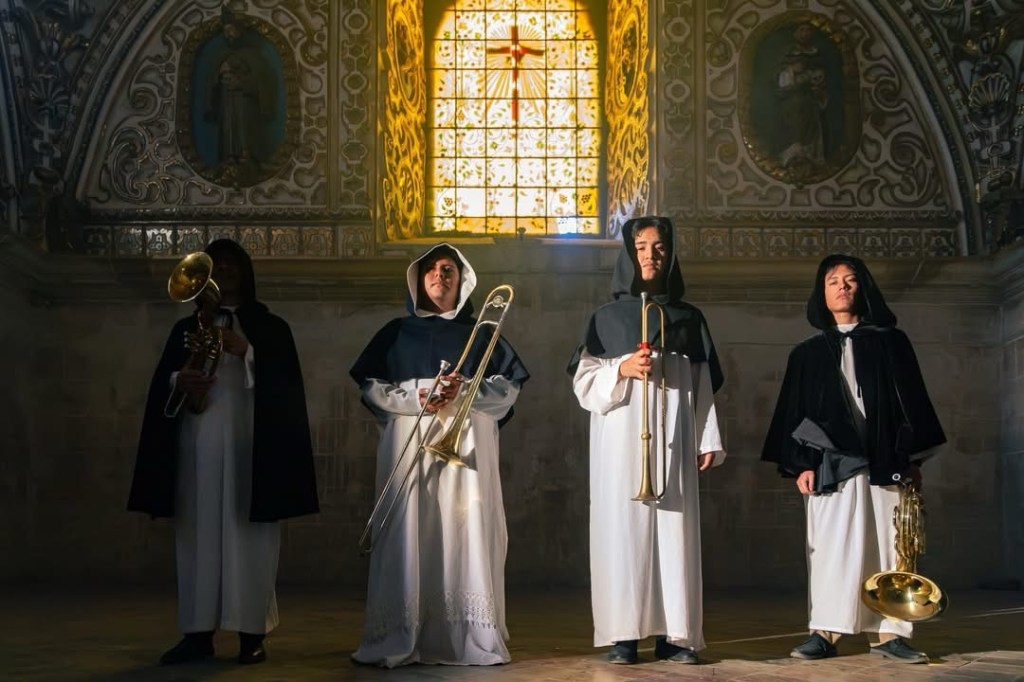
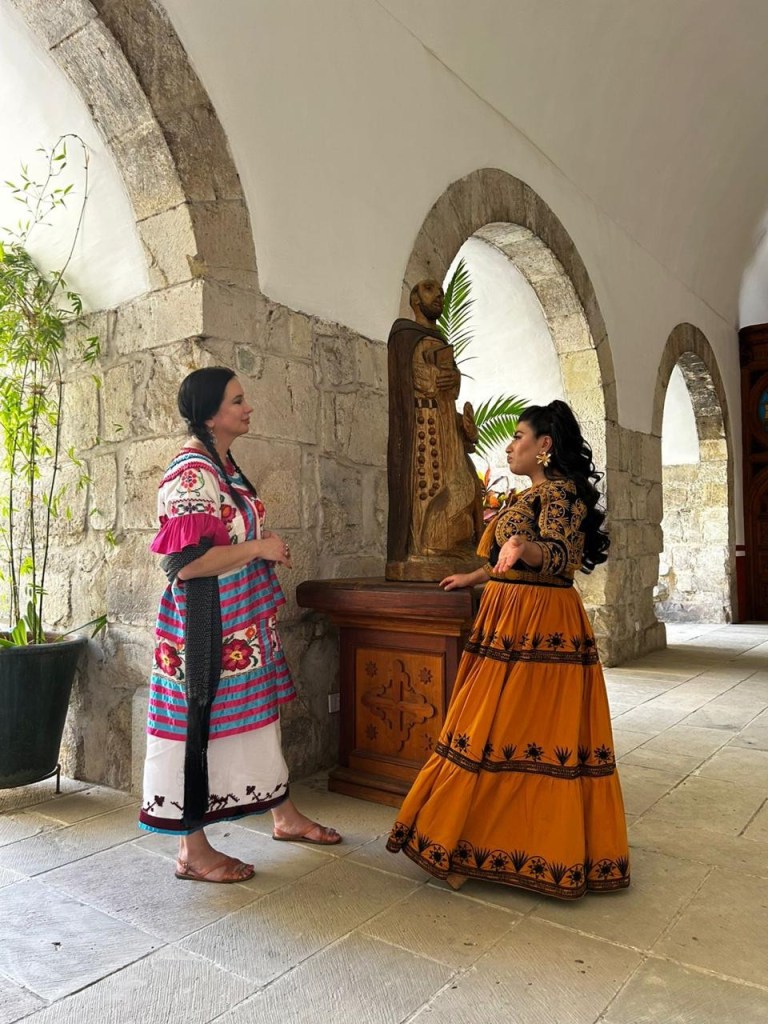
Montserrat Franco and the Cecam Philharmonic at the Santo Domingo Church, Oaxaca. Photo: Mauricio Velazquez Torres Brass ensemble at the cloisters of Santo Domingo. Photo credit: Mauricio Velazquez Torres Soloists Diana Itzel Ramirez, María Reyna, Yobanca Matamoros and Montserrat Franco Montserrat Franco and María Reyna, the Mixe SopranoThe Cecam Philarmonic, the Poliphonic Choir of Oaxaca, the brass ensemble, soloists and conductors Montserrat Franco during the film of Oaxaca Sacro at the Santo Domingo temple
Oaxaca Sacro is a musical and documentary proposal that rescues the main indigenous languages of Oaxaca by incorporating their linguistic elements into an original sacred music composition, while also celebrating in 2026 the 500-year presence of the Order of Preachers (Dominicans) in Mexico through their history, legacy, and religious services in Oaxaca.
Composed by José Luis Guzmán Wolffer in seven movements that have been translated from the original Latin to different languages of Oaxaca by native speakers.
Hacienda Guegorene. San Pedro Taviche, District of Ocotlan de Morelos
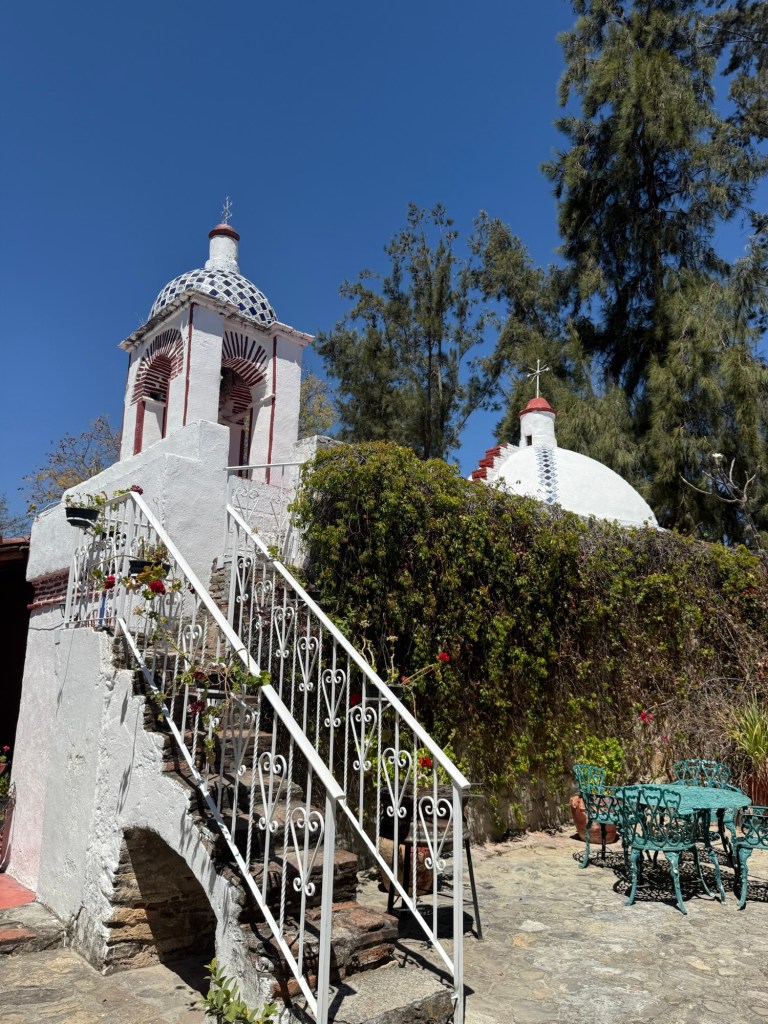
The Hacienda Guegorene is a historic Estate located in San Pedro Taviche, in the Ocotlán district of Oaxaca, within the Central Valleys, a region deeply tied to the Zapotec culture.
Historical background
Hacienda Guegorene dates back roughly to the late 17th or early 18th century, making it part of the colonial hacienda system that shaped much of rural Oaxaca’s agricultural economy.
The name Guegorene is believed to come from Zapotec linguistic roots, while interpretations vary locally, historians and linguists generally connect the word to Zapotec terms associated with “place of abundance” fertile agricultural land or a place where life grows, or “river of blood” because of the red color of the copal trees that surrounds the land.
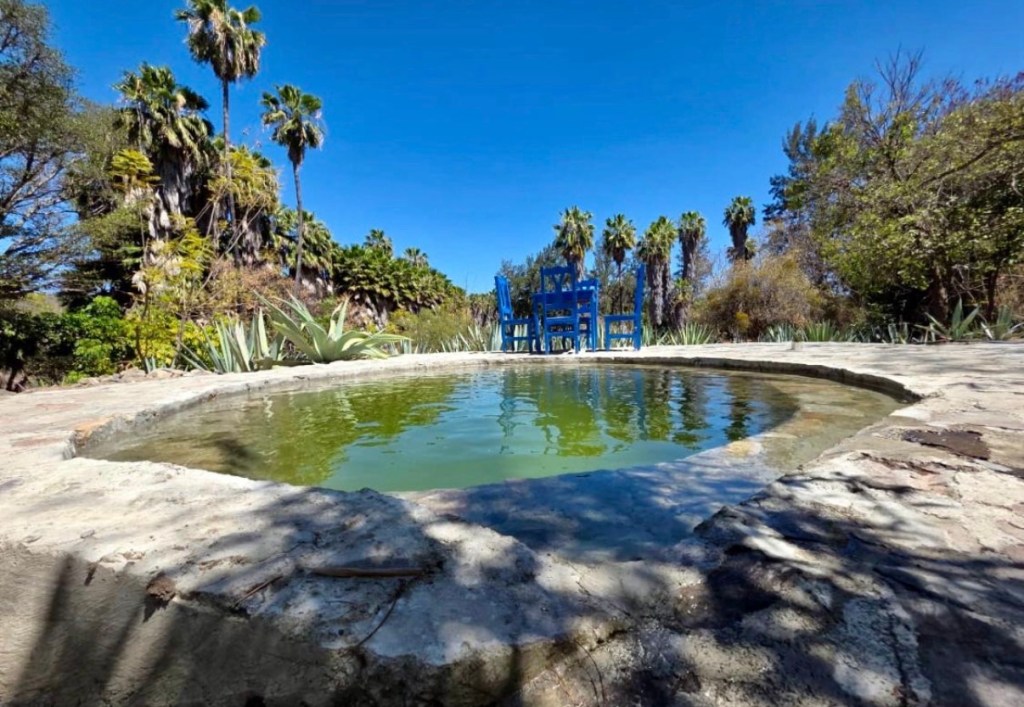
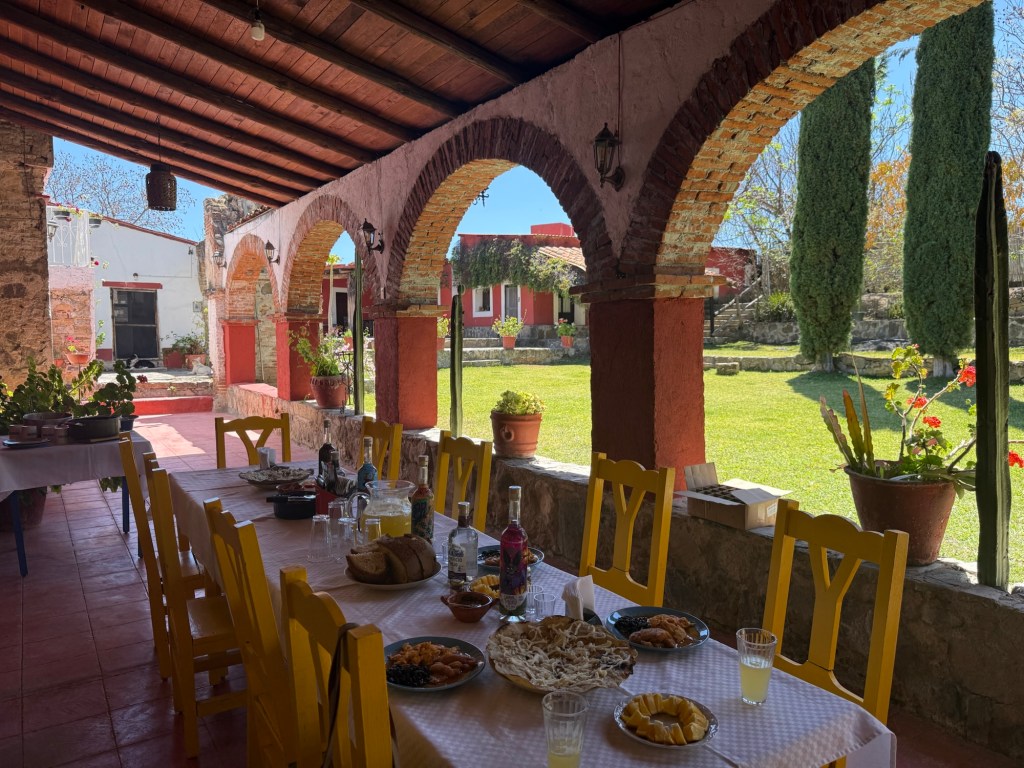
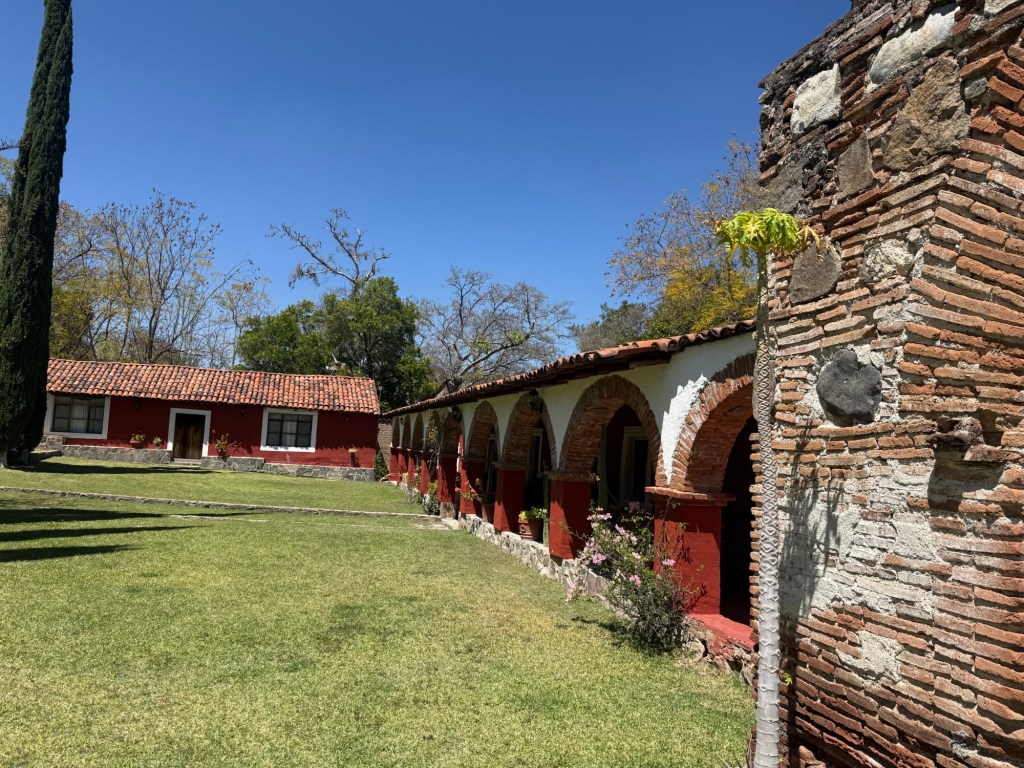
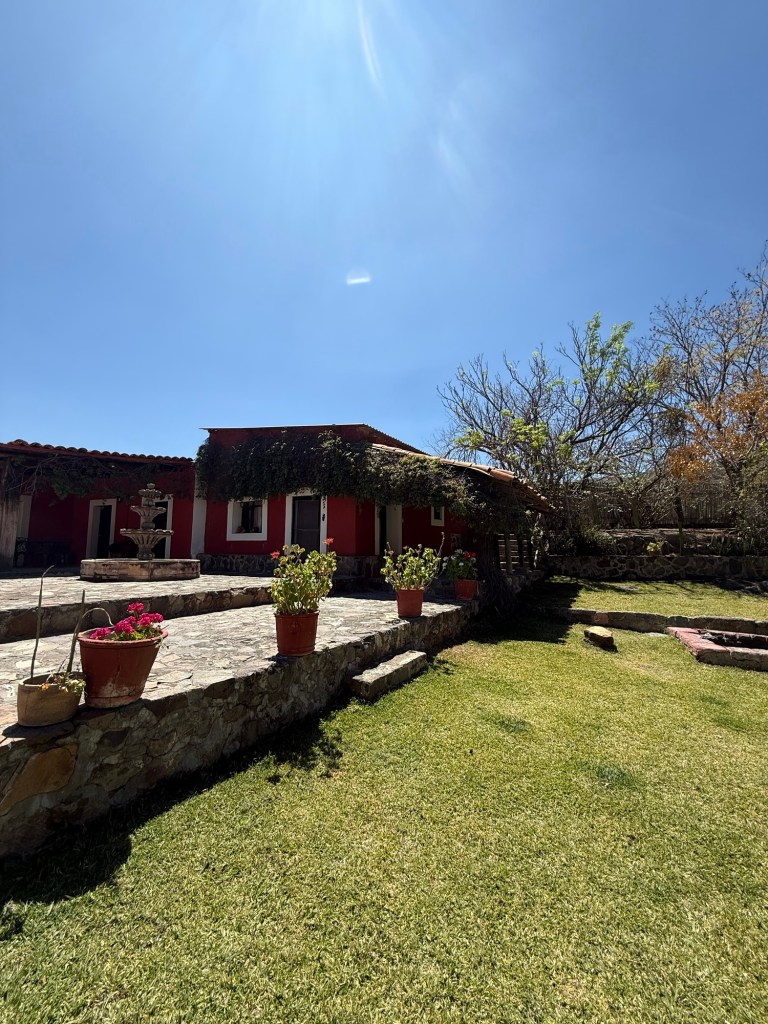
The architecture reflects classic colonial hacienda design, with a central fountain and gardens, large corridors with arches, an estate chapel, surrounding agricultural lands.
Mining in the Taviche, Ocotlan areas
Mining in the Taviche area dates back to the 19th century. By the late 1800s and early 1900s, many deposits of silver and gold were already being exploited in the Taviche mining district, including areas around San Pedro and San Jerónimo Taviche.
Mines were originally operated on a small scale by local haciendas like Guegorene. Later, foreign and national companies became involved in extracting the metals. The area became known as a precious-metal district with multiple underground mines.
Mining slowed down during the Mexican Revolution (around 1910) but resumed again in the 1920s and later decades.
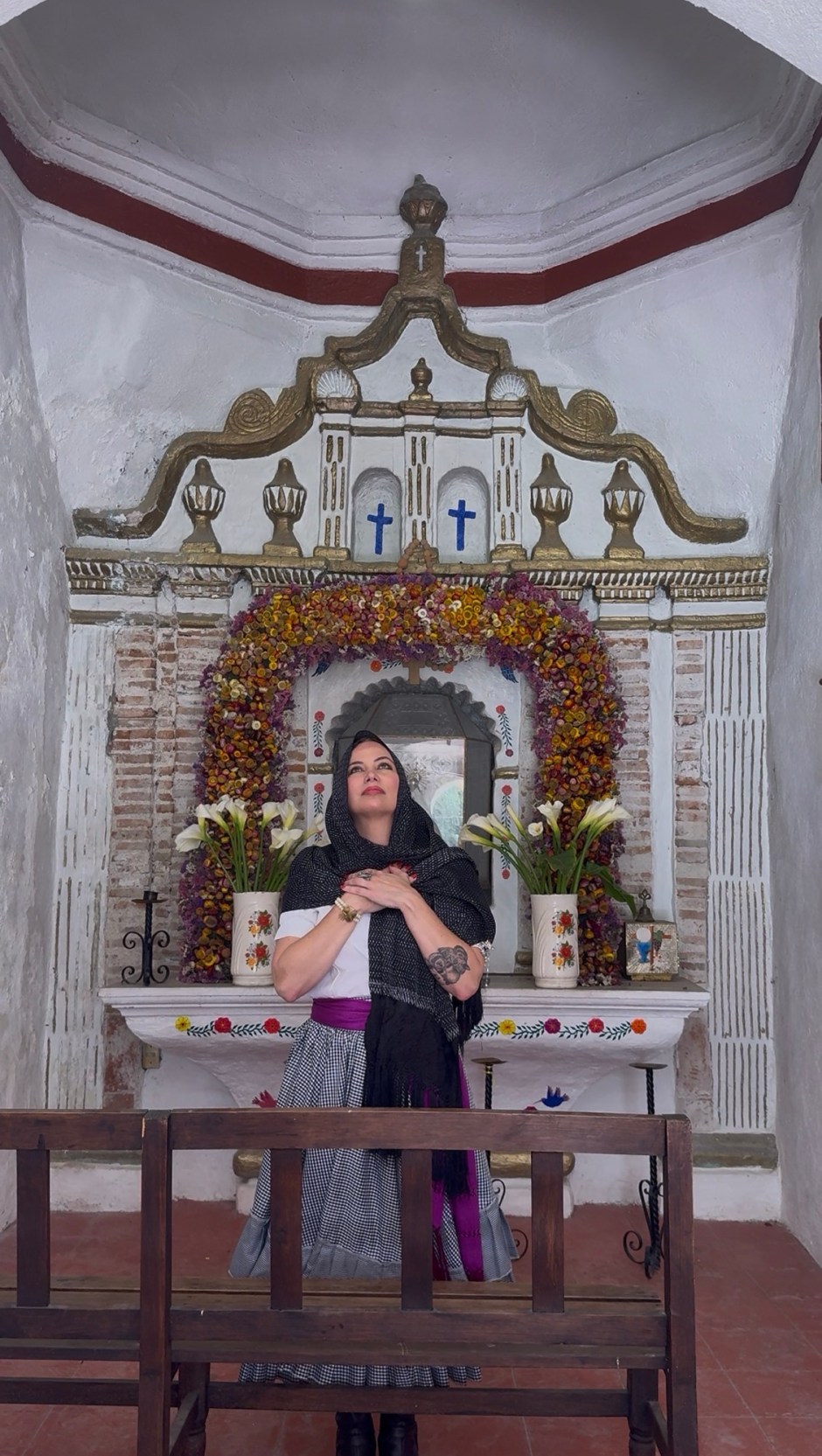
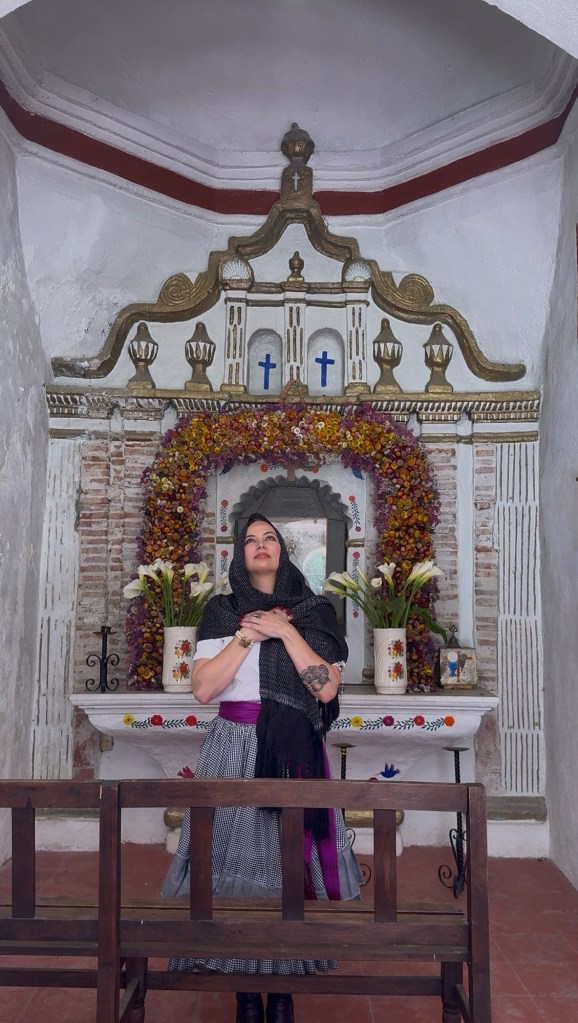
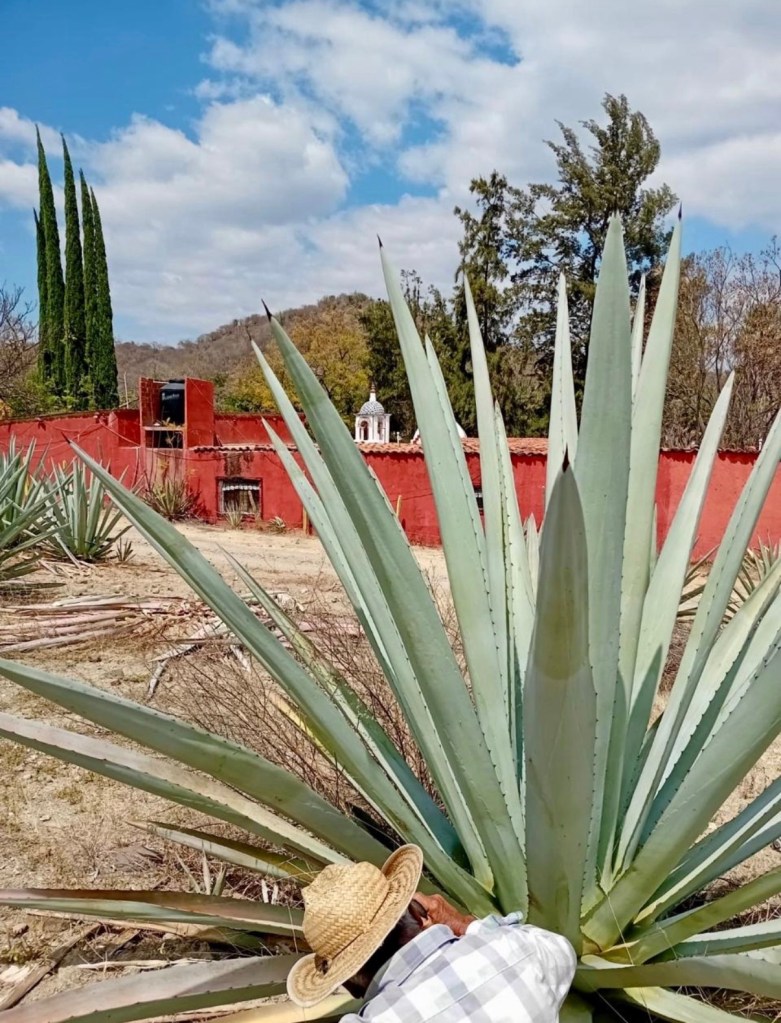
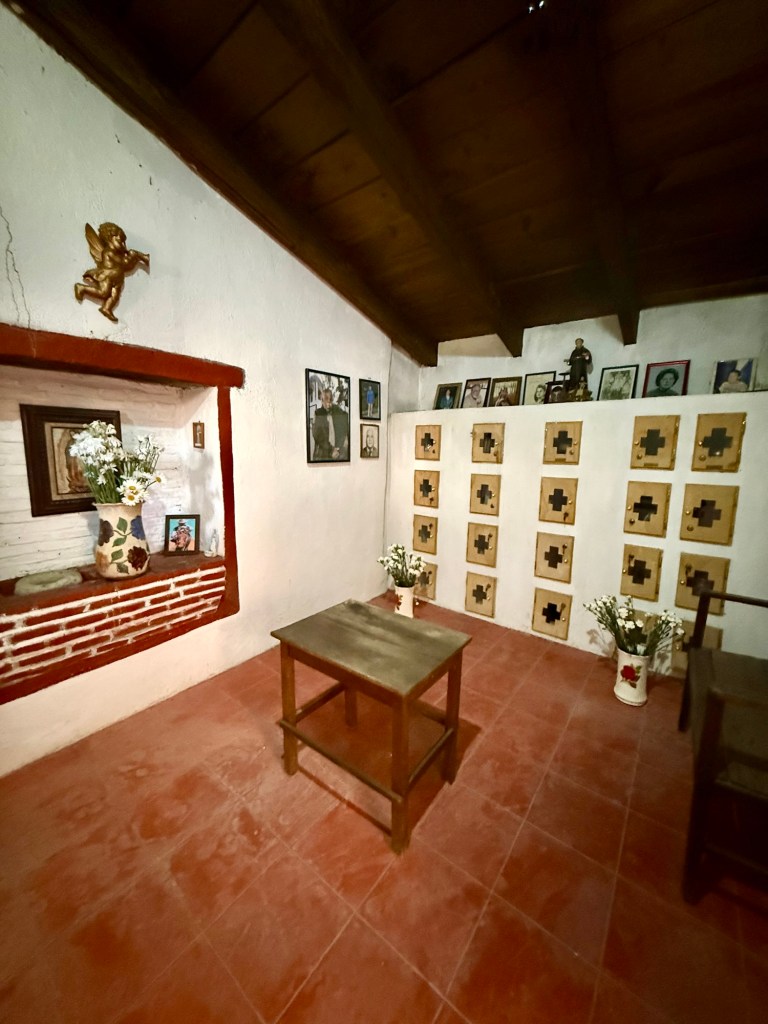
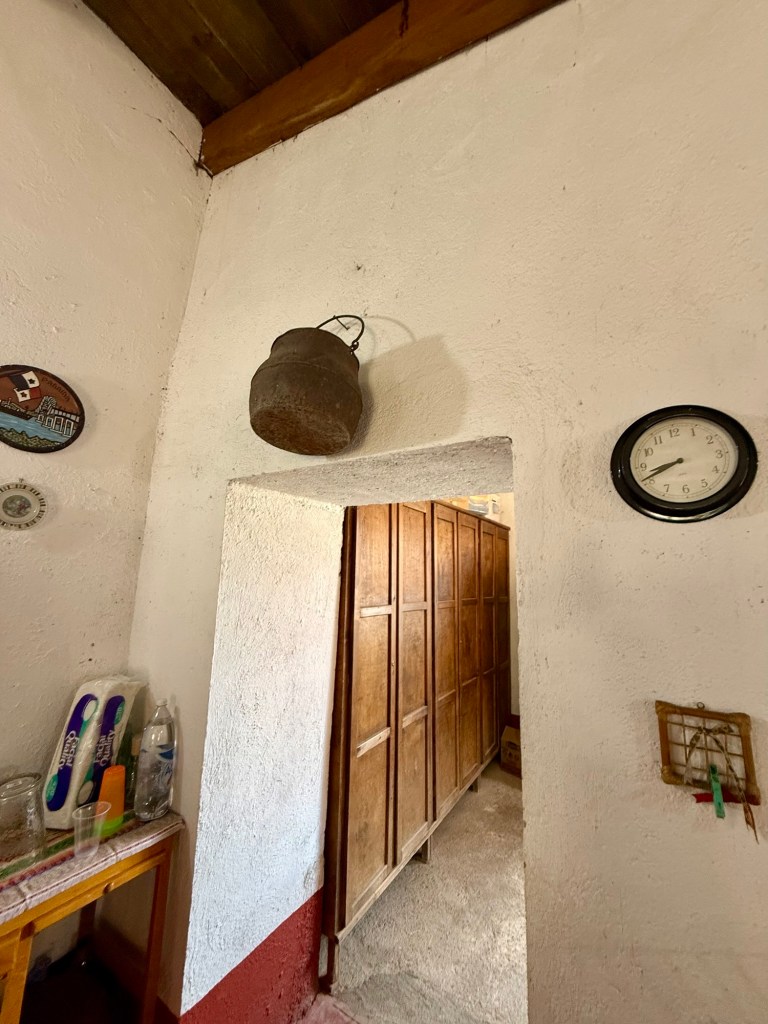
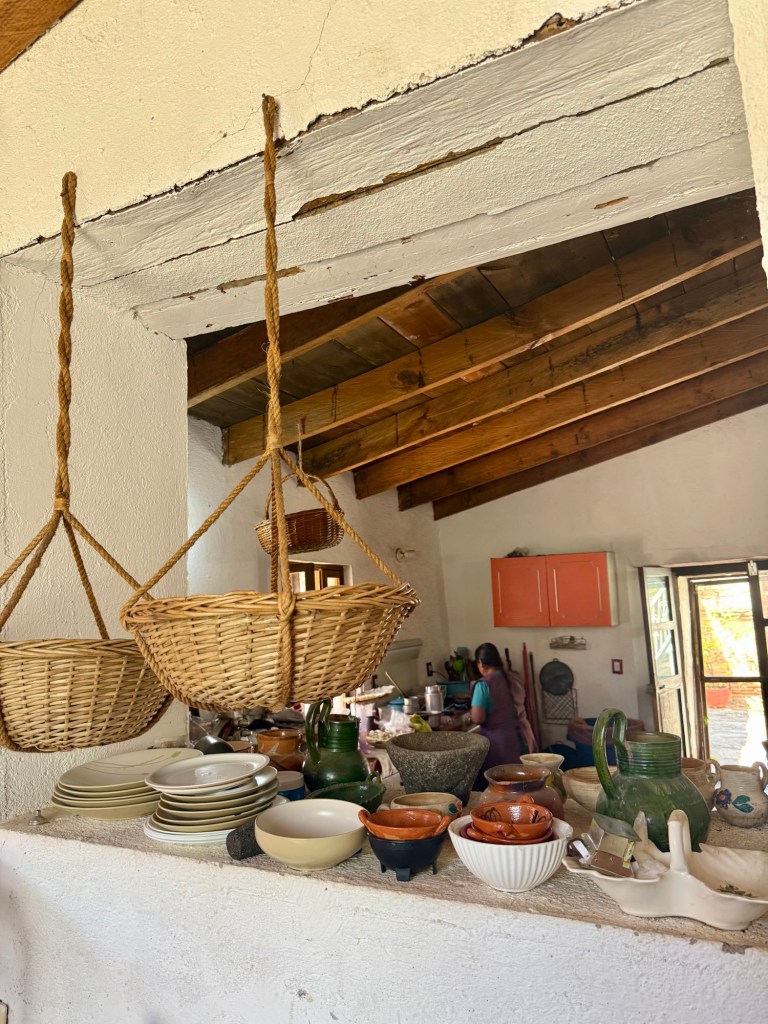
Montserrat Franco at the Chappel in honor to the Lady of Juquila. Hacienda Guegorene The agave fields across Hacienda Guegorene The spring water pool Breakfast at Hacienda Guegorene Four generations of Skidmore rest at the Hacienda’s chappel The kitchen with some ancient artifacts The kitchen The Chappel The arched corridors of the hacienda Several chambers are located across the hacienda complex
The chapel on the property reportedly contains a Virgin of Juquila image from 1827, showing how the estate also became integrated into the local religious and social life of the community.
The Union of Texan miners and Zapotec women
María Saturnina Jiménez García, of Zapotec descent, was the matriarch who led the operations of the hacienda alongside her Texan husband and son of Frank, the founder: Charles Henry Skidmore.
Dolores Skidmore Jiménez and Carlos Skidmore Jiménez preserved the estate and its agricultural vocation. They had eleven kids.
Today, Eduardo Muñozcano Skidmore, great-grandson of Frank, leads the comprehensive restoration of the historic center and creates the brand Quiéreme Mucho, bringing tradition into the 21st century with a sustainable vision and international outlook.
Sources:
Interview with Eduardo Muñozcano Skidmore , sociologist, descendant of the founders and creator of Quiereme Mucho Mezcal.
“Oaxaca remains an intact gem that will continue to remind us of our past, our ancestors, our true origins that shall never be forgotten.”
You might recognize it if you’ve seen the movie Nacho Libre, or if you’ve tasted the famous quesillo (also known as Queso Oaxaca) or its renowned “muerteadas” that the Etla Valley is famous for, which are celebrated on the eighth day after Day of the Dead.
On this post, I’ll provide you with all the information you need about the Etla Valley. It might seem confusing because there are multiple Etlas, but the entire valley holds significant historical importance. It was one of the oldest Zapotec settlements, even predating Monte Alban. In fact, the early hieroglyphic Zapotec writings were discovered at the site of San Jose El Mogote (600 BCE)
San Jose El Mogote
And we should probably start the tour here: San José Mogote was the largest and most important settlement in the Valley of Oaxaca during the Early and Middle Formative periods (ca. 1500-500 BCE) of Mesoamerican cultural development.
San José Mogote is considered to be the oldest permanent agricultural village in the Oaxaca Valley and probably the first settlement in the area to use pottery.
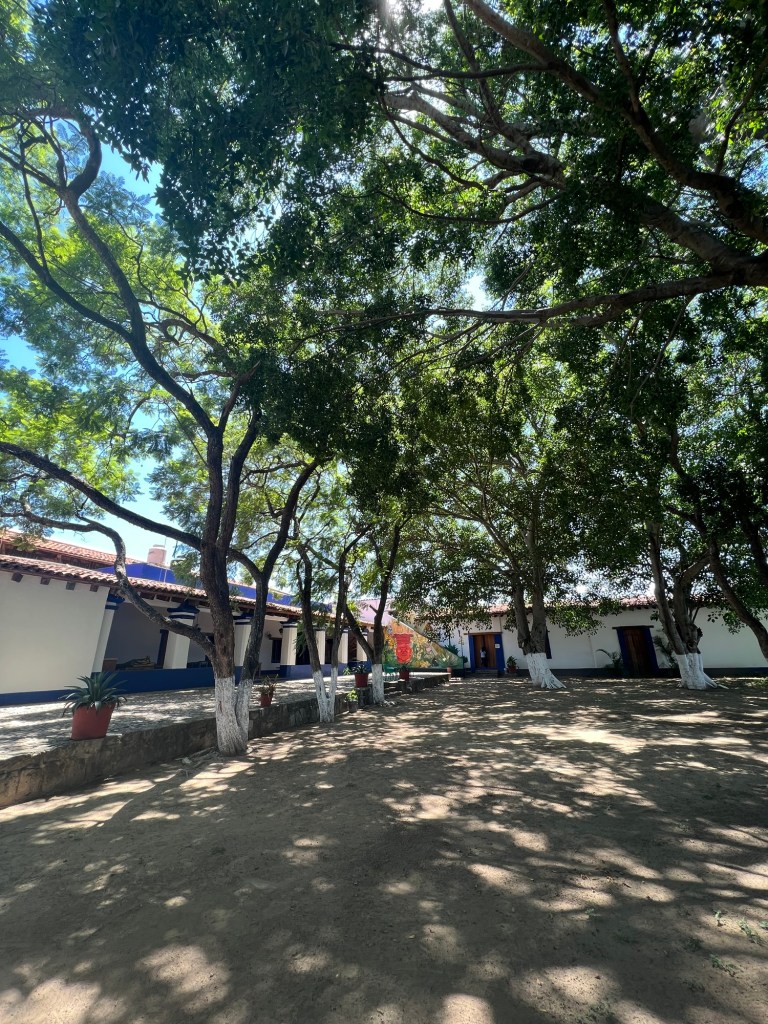
Some of the artifacts from the San José Mogote archaeological site may be viewed in the town of San José Mogote’s Community Museum, which is located in the El Cacique Ex-Hacienda.
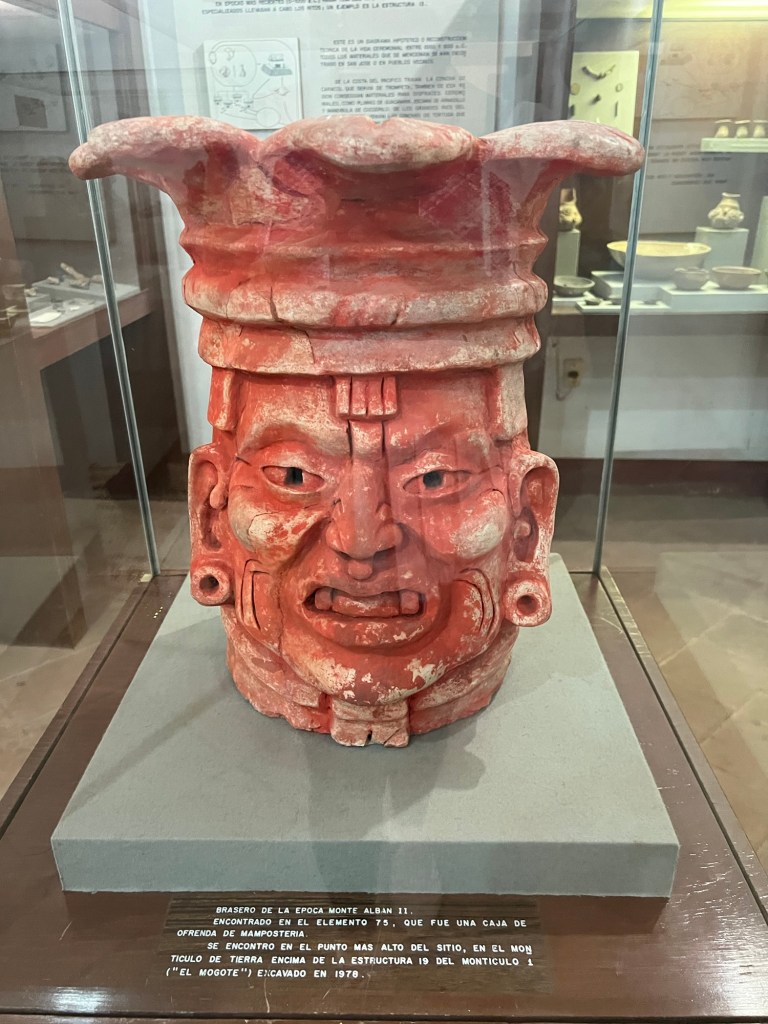
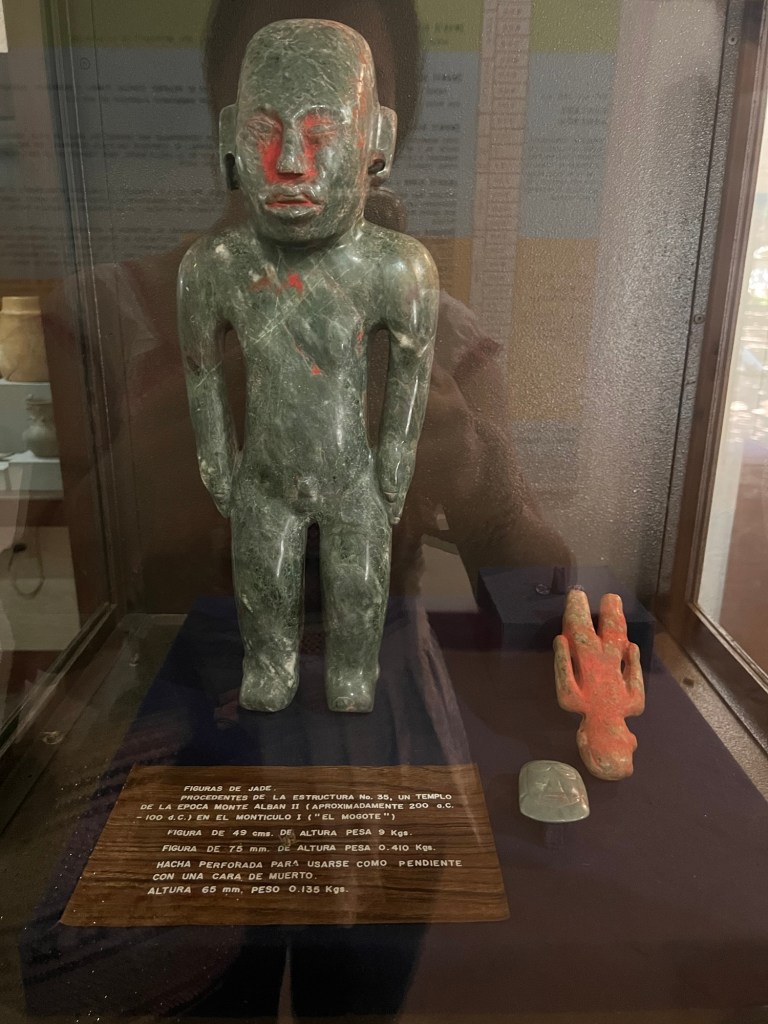
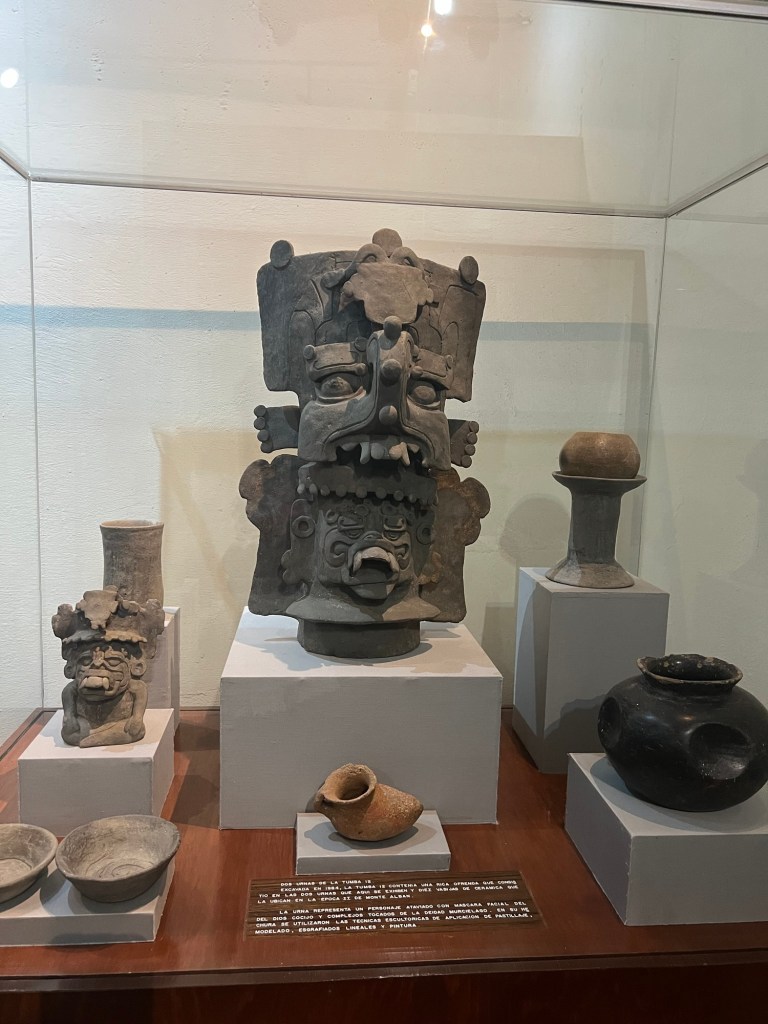
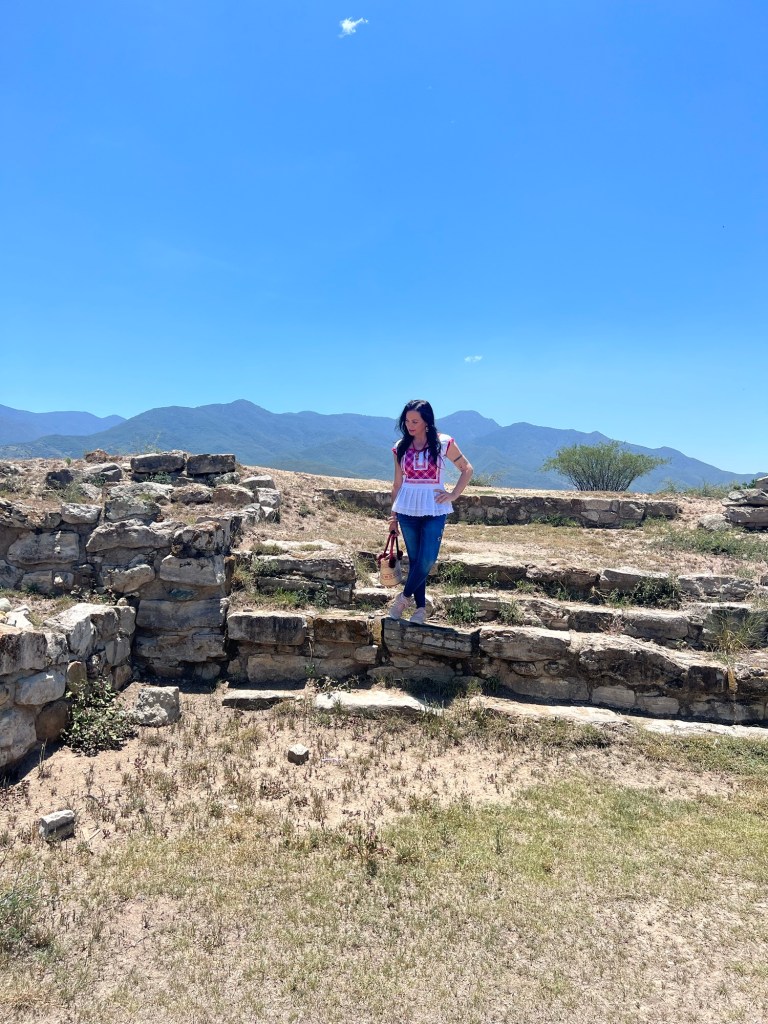
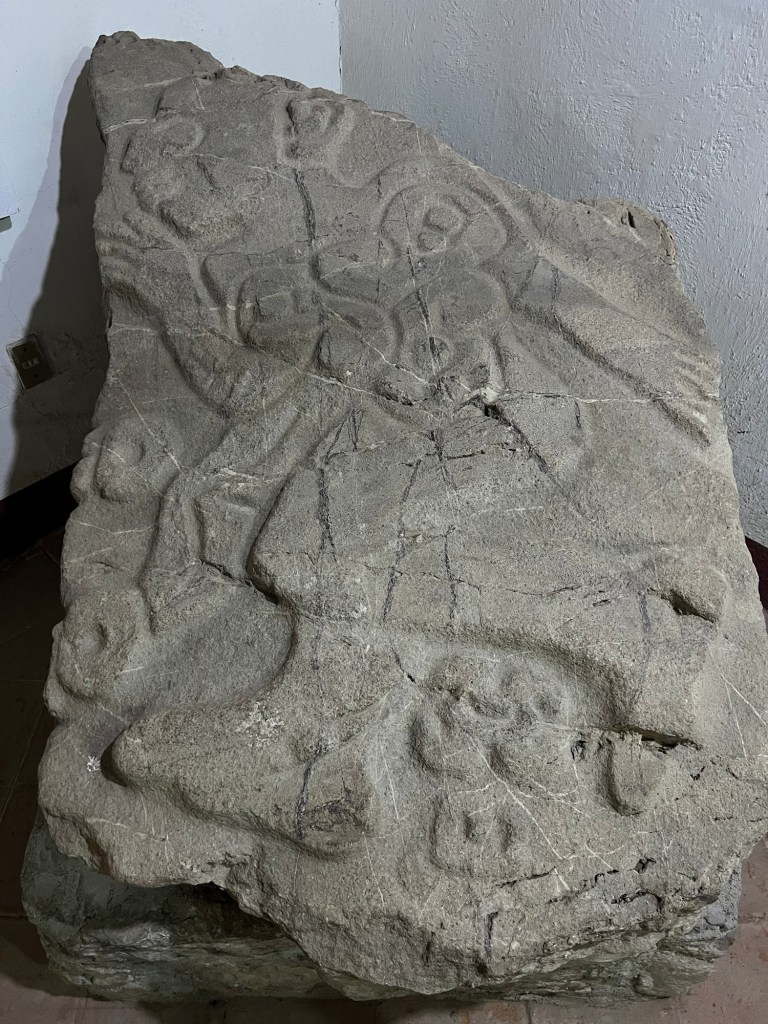
Ex-Hacienda El Cacique founded in 1686, today the Museum El Diablo Enchilado, incense holder from the phase Monte Alban II Jade figure found at the site of Dan Jose El Mogote from the Monte Alban II (200 BCE) Urns representing the Lord Bat with the Cosijo deity. Montserrat Franco on top of the San Jose El Mogote pyramid Monument 3 at San Jose Mogote. The two shaded glyphs between his legs are likely his name, Earthquake 1.
Reyes Etla
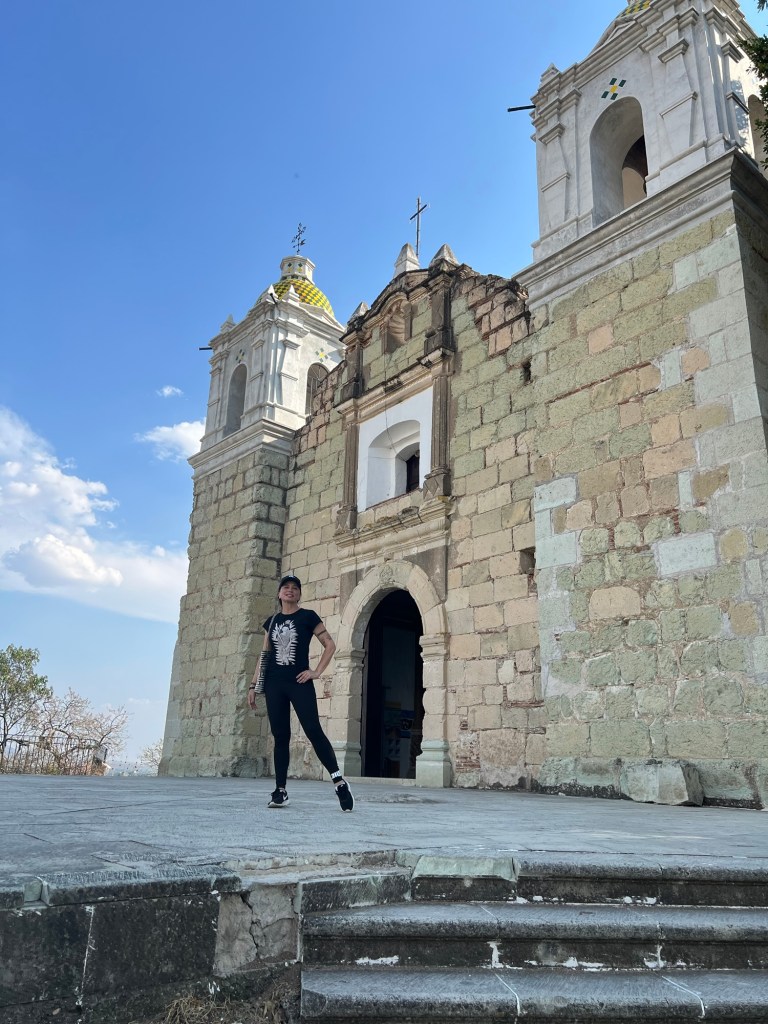
You might recall that charming church and its adjacent courtyard from the Nacho Libre film. If you take a few steps behind the church, you’ll find an unexcavated ceremonial site.
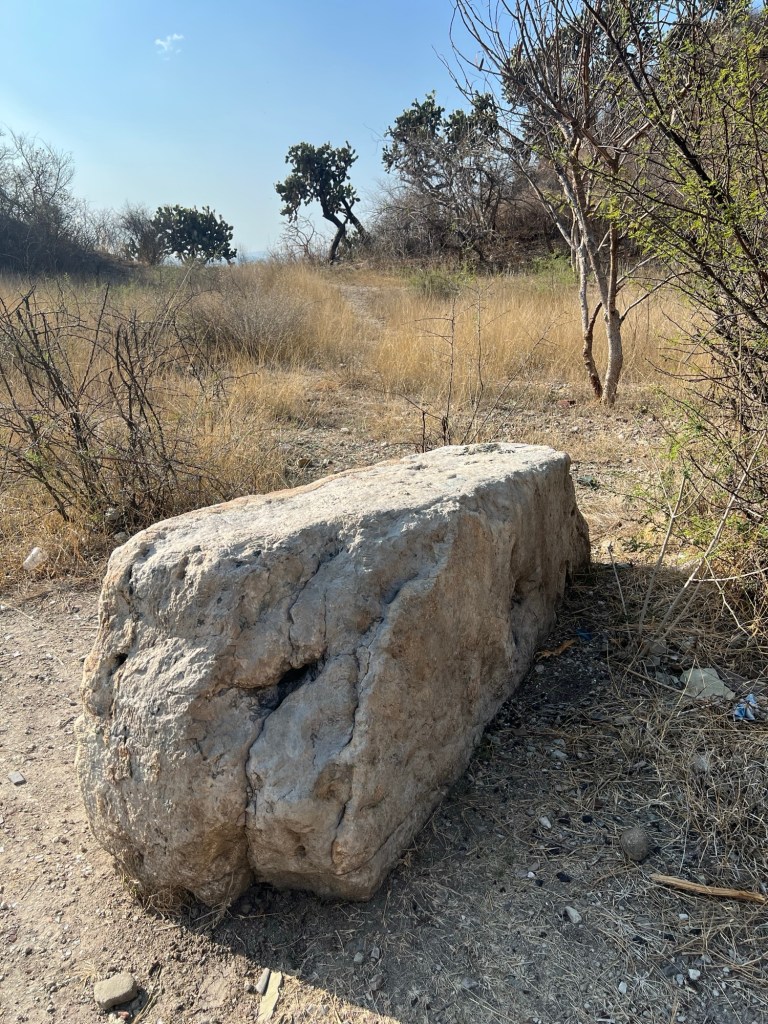
A site that dates from the Monte Alban I (250-500 BC) inhabitants from Etla and pilgrims from other villages would still come to this date to venerate, make petitions and sacrifices to the sacred serpent carved stone as they ancestors did.
It was strategically located to face the four cardinal directions; a ball game and a whole village was also built around the ceremonial site; today only a few stones remains of these ancient city.
This is a true example of syncretism that colonialism couldn’t erase from the collective memory of the true owners of these lands. A church and convent was built, a different name and figure was given for worship; they would still come to make petitions to the ancient stone for a better harvest, for the health of a family member, for that family member that’s overseas.
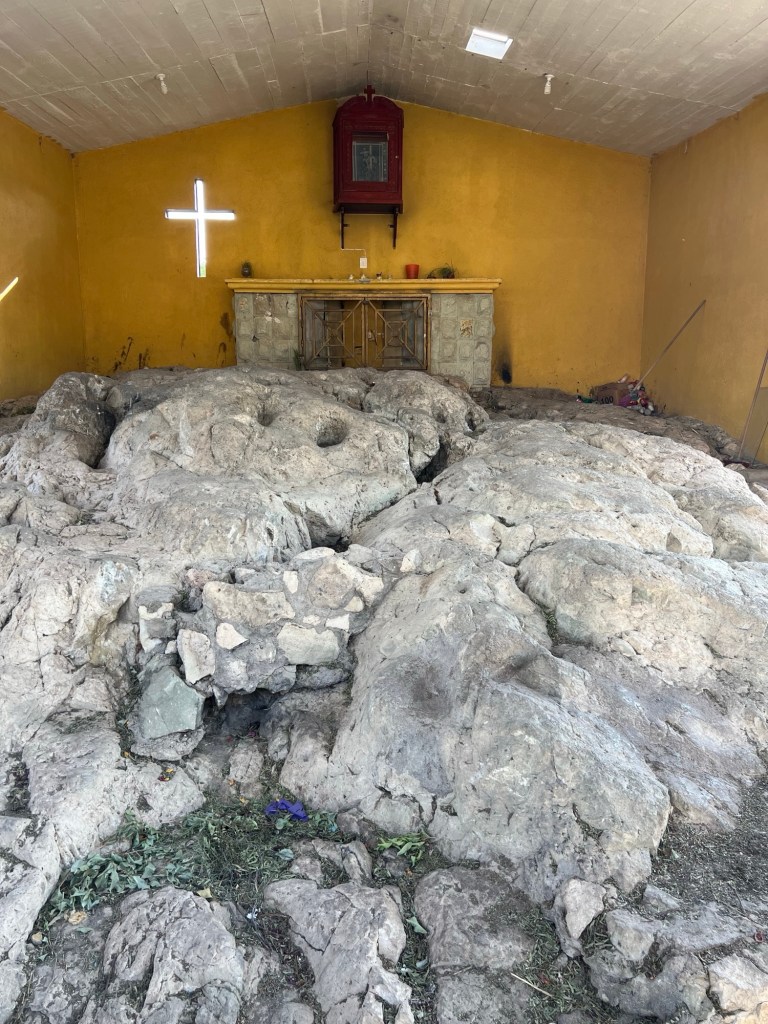
“The Lord of las Peñitas” is celebrated on fifth Friday of lent, the people, who intuitively follow faithful atavistic way the tradition of venerating this huge rock that has life and who listens to who makes “a petition”. Legend says that the day of the creation God imprinted his footstep on the rock.
This permanence of spirituality in our time of materialism, globalization and neo-liberalism is a true human treasure; Oaxaca remains an intact gem that will continue to remind us of our past, our ancestors, our true origins that shall never be forgotten.
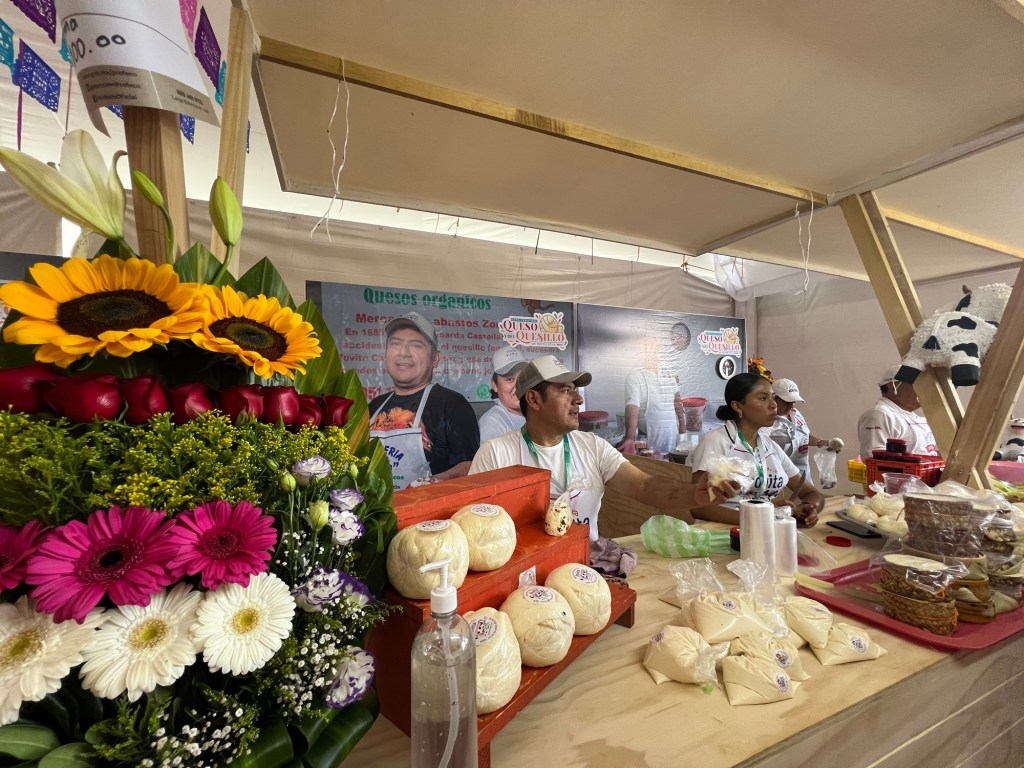
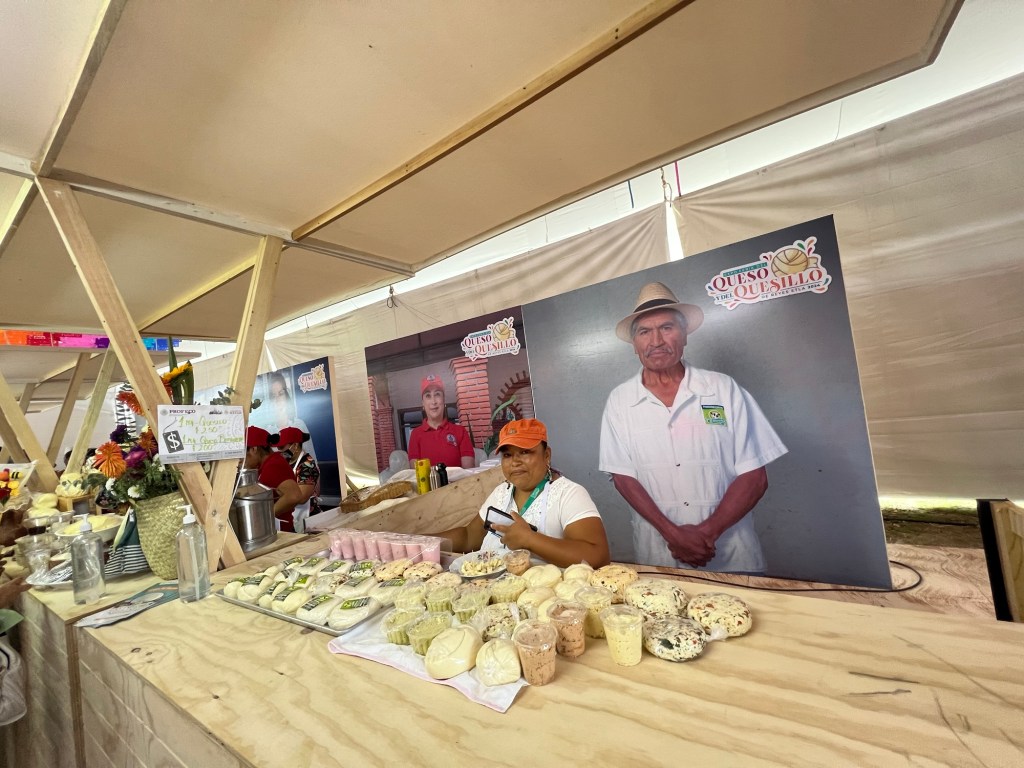
While visiting Reyes Etla, don’t miss the opportunity to buy and savor quesillo, the village where this delicious cheese was accidentally invented. You can find it at any local stall or the market.
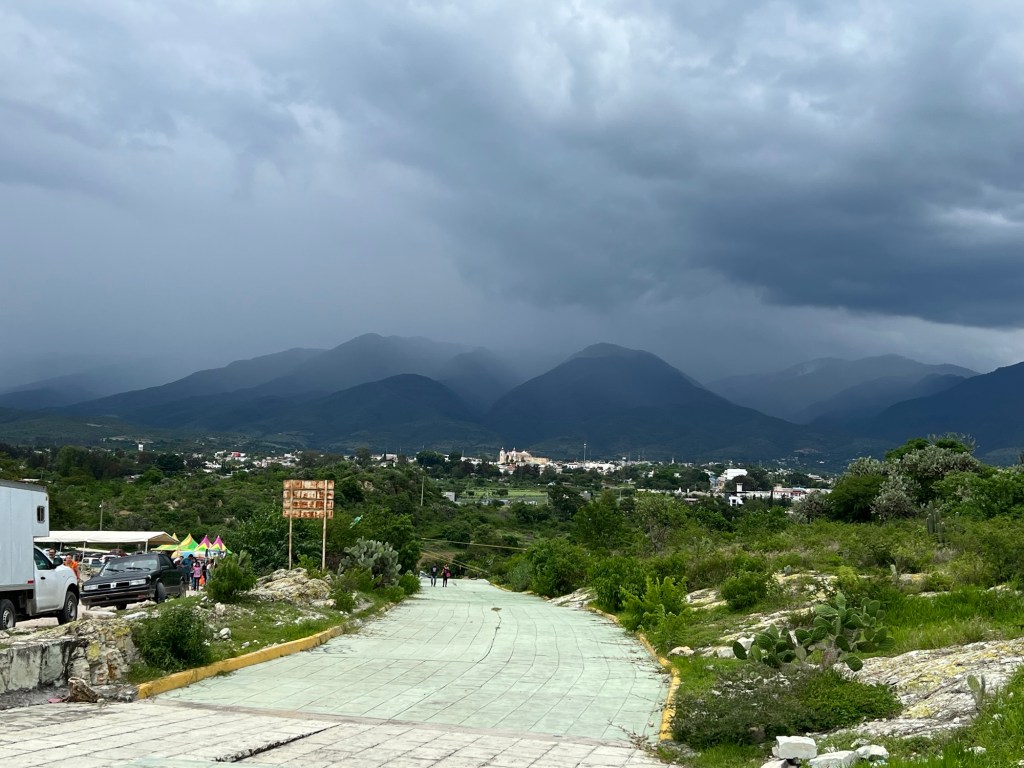
Quesillo stall at the Quesillo Festival in Reyes Etla Quesillo makers during the annual Quesillo Festival Reyes Etla A view of the Etla valley and Villa of Reyes Etla Sanctuary of The Lord of the Rocks (Las Peñitas) and film location of Nacho Libre The sacred serpent stone A rock formation at the base of the hill contains a fossilized footprint, attributed in legend to God or Jesus resting there
The Village of Etla
This is center of all Etlas, known for its historic ex-convent, vibrant Wednesday market with local cheeses and tamales.
It serves as the local government for several other communities and offers a blend of Oaxacan culture, history, and natural beauty, with many nearby accommodations in the surrounding Etla valley.
Founded in the 15th century, centered around the church and former monastery of San Pedro y San Pablo.
The name means “town of the land of beans” mixing Spanish and Nahuatl. “Villa” is from Spanish and means “town”
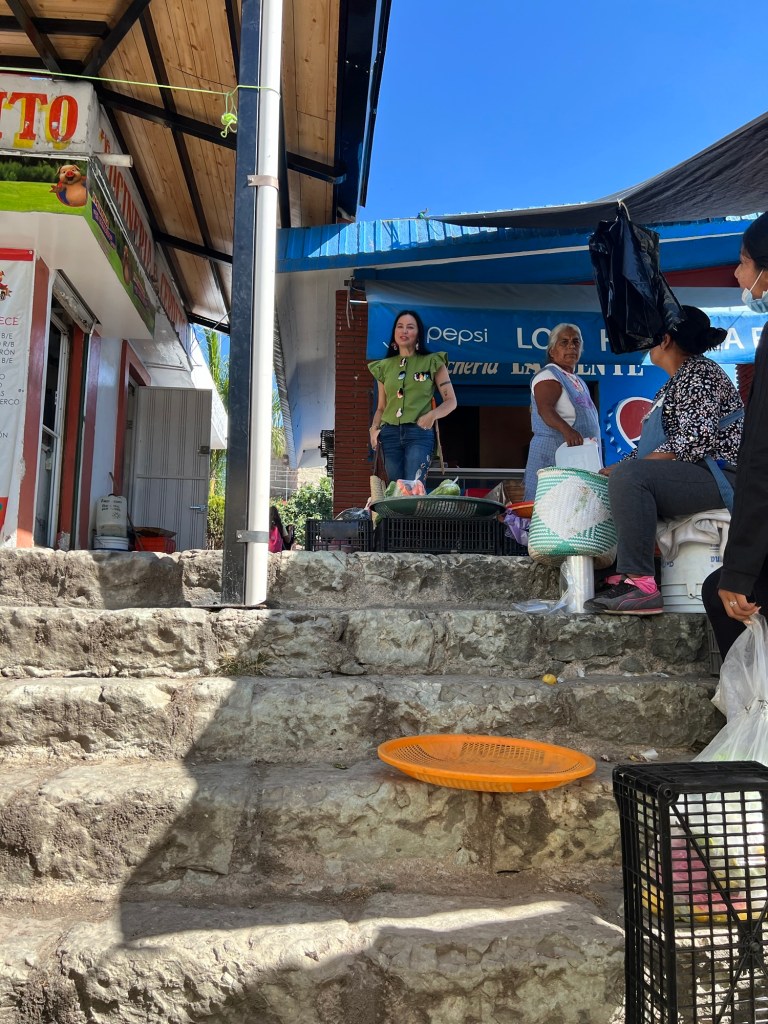
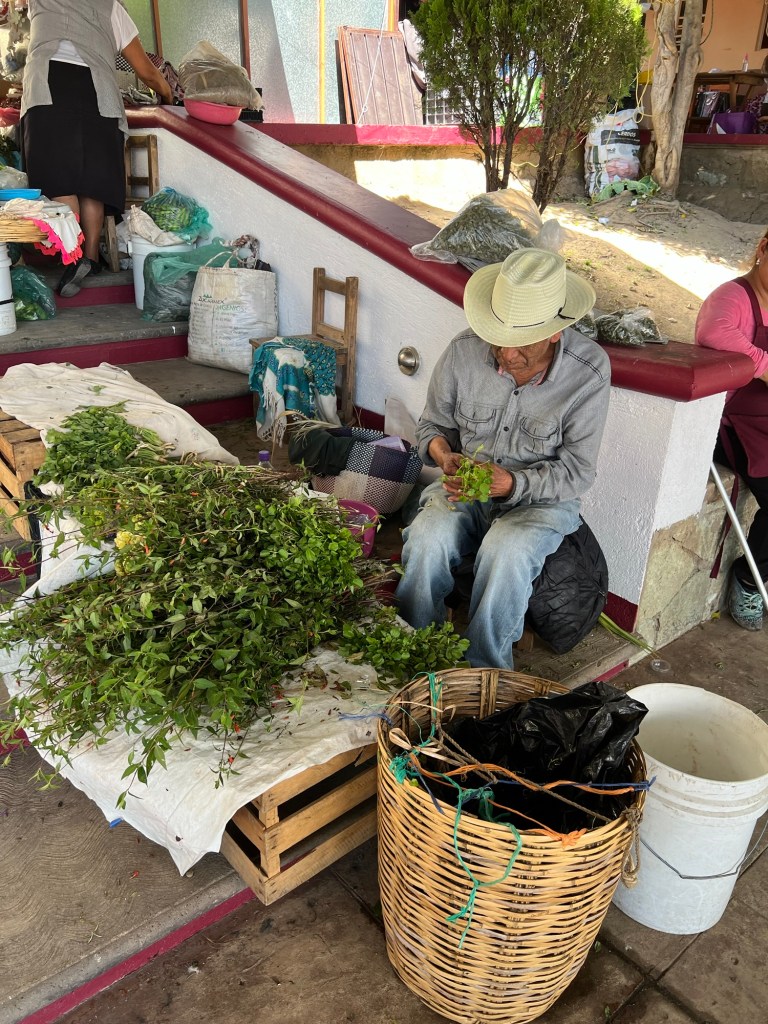
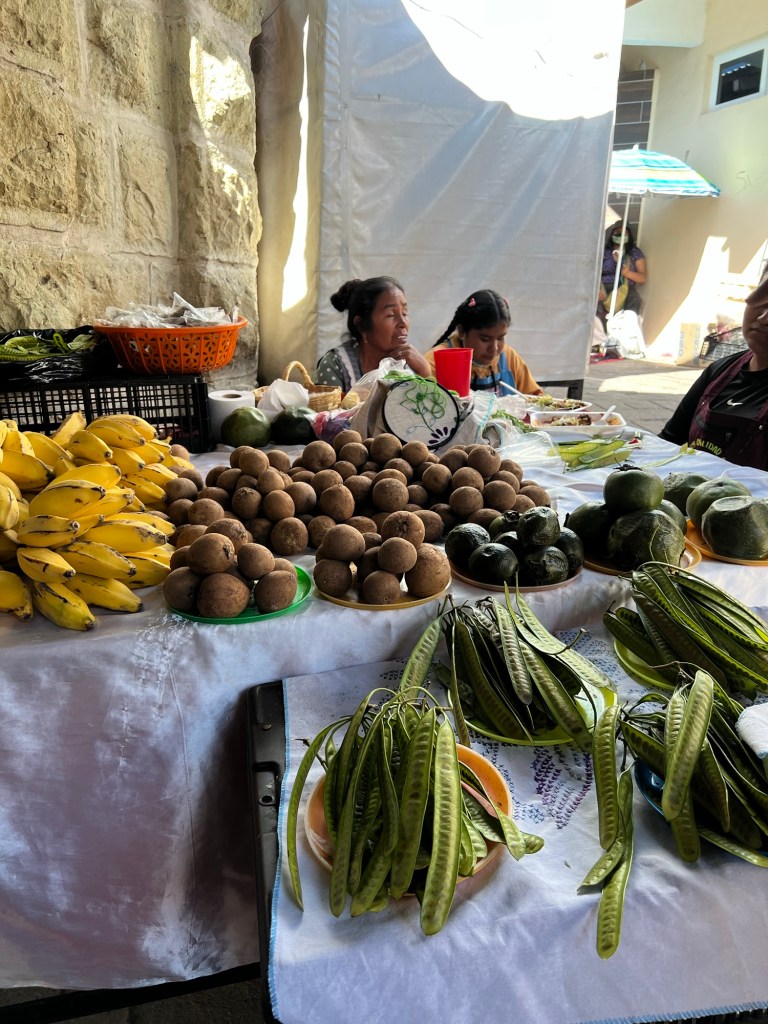
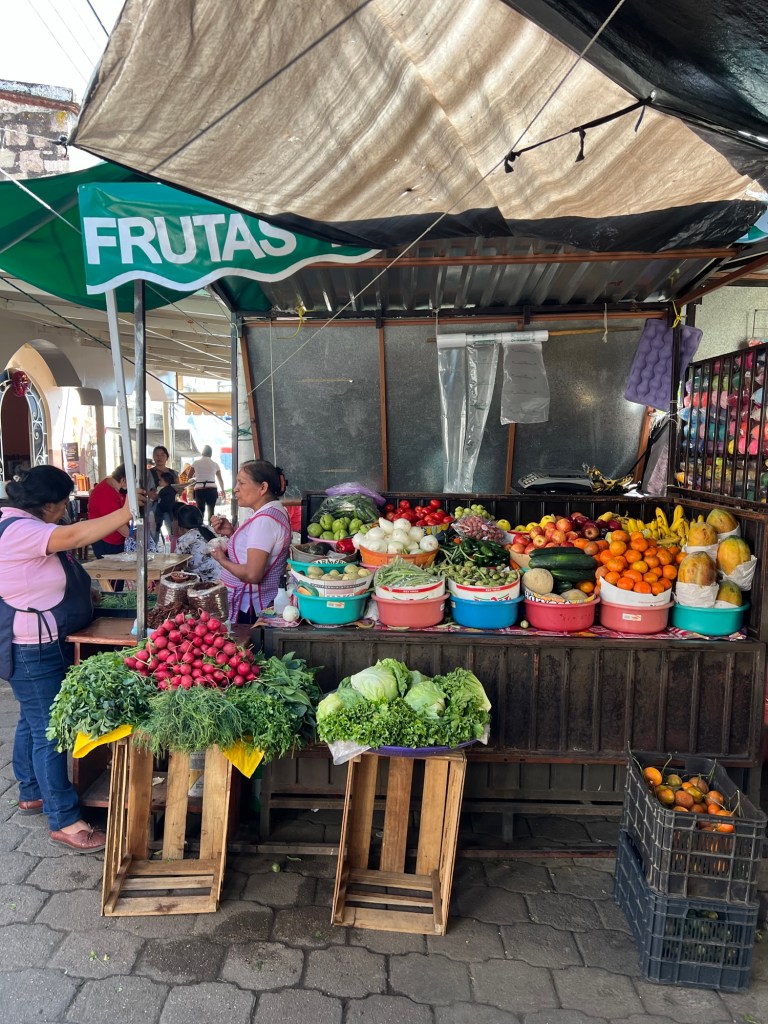
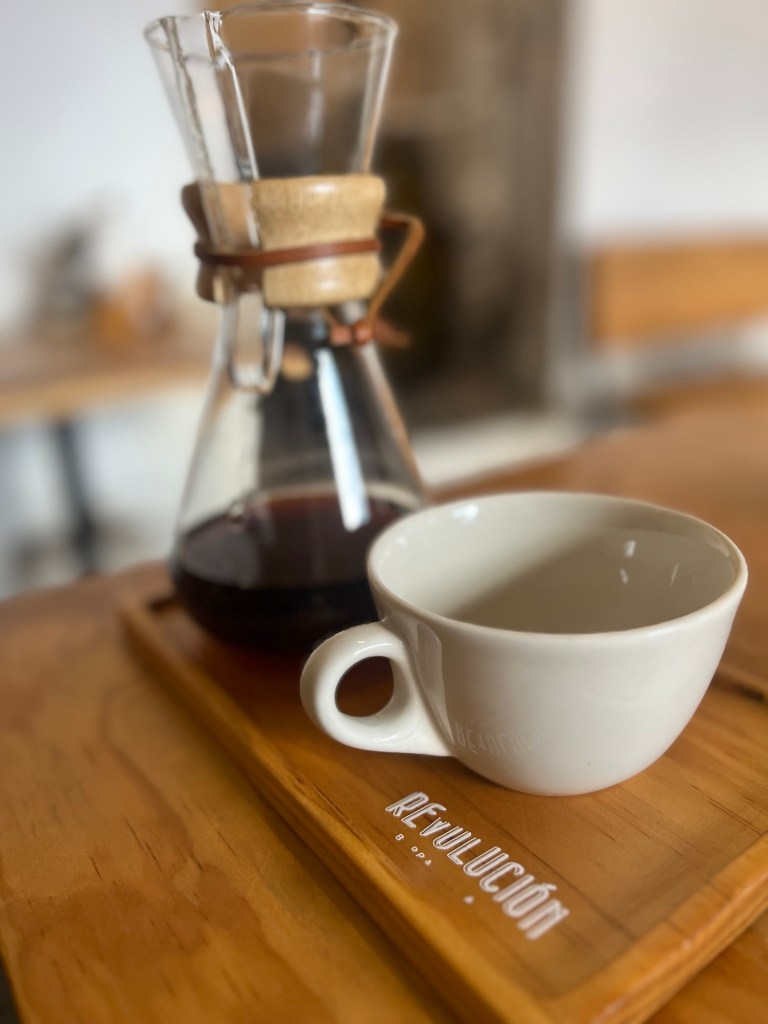
The famous steps at the Etla market, scene where Nacho Libre walked.An herbs vendor at the Wednesday market in the Etla village Local fruits and veggies at the Etla market Produce booth at the Etla market Cafe Revolucion it is one of the staple coffee shops at the village of Etla Gourmet coffee by Cafe Revolucion located at the main plaza in the Etla village
Asuncion Etla
Muerteadas are celebrations during and after Day of the Dead in the Valleys of Etla.
Muerteadas are traditional celebrations during the “Octava” or the 8th day after Day of the Dead such as the popular one in Asunción Etla and many other villages of the Etla valley.
This muerteada is the most anticipated festivity by the entire village called Muerteada La Lallanera proudly organized by a dedicated team of “mayordomos” or community leaders.
On this night, residents dress in costumes adorned with small mirrors and bells. The mirrors are used to scare away the witches and the bells help guide the spirits in the night. The costumes are complete with masks that represent important muerteada figures such as the devil, the dead, the old, the priests and more characters.
Accompanied by various brass bands, they meander through the neighborhood, going from house to house, welcoming the spirits to come out. The festivity turns into an all-night parade that ends around sunrise.
It’s remarkable how many brass bands there are in the entire valley. As Oaxaca is indeed a land of accomplished musicians, certain areas like the Etla Valley are so prolific that they turn these festivities into a truly “battle of the bands.” You have to experience it yourself: the vibrant musicians of a 25-piece band playing together, five to six different bands facing each other, no scripts, no director, just the talent.
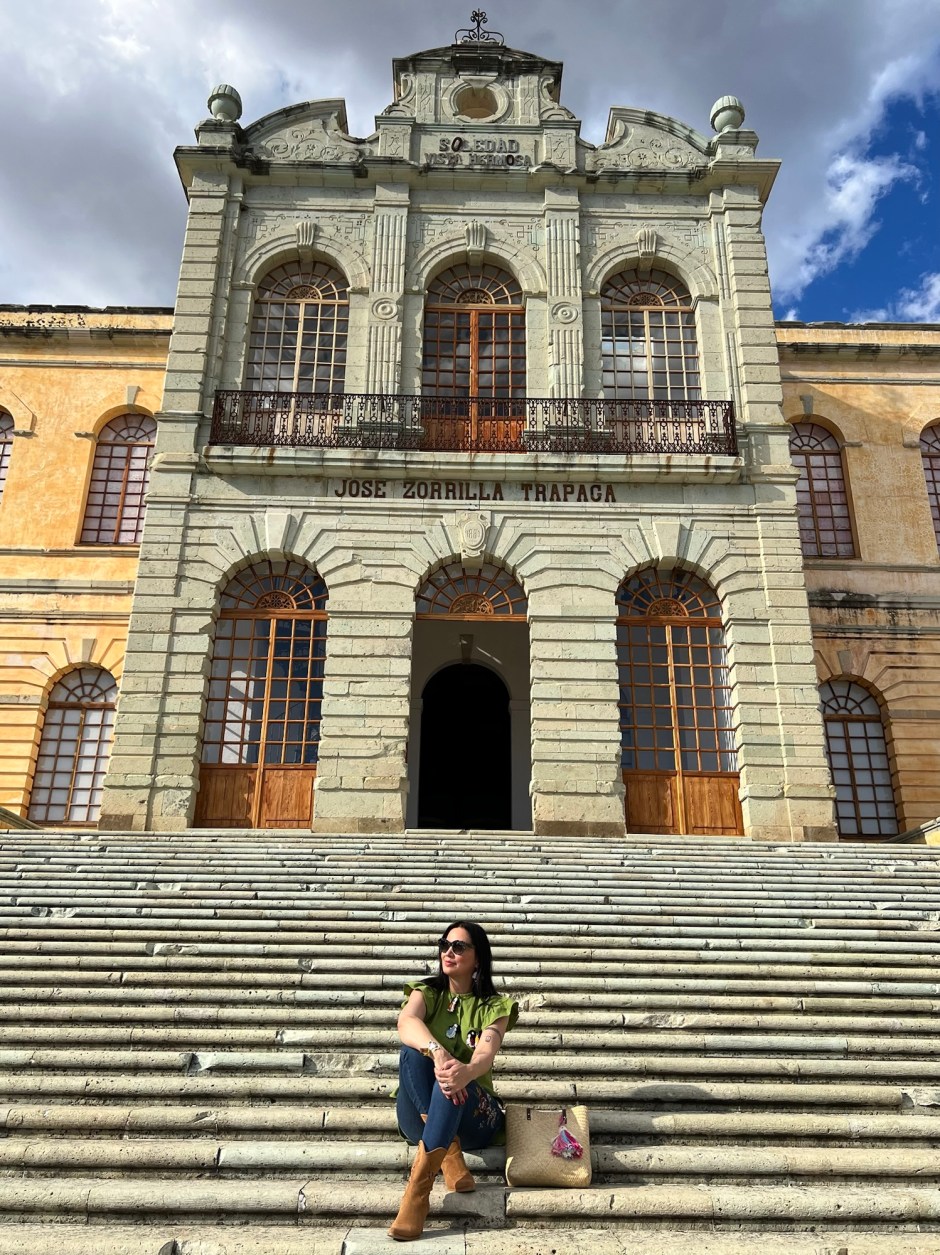
Oaxaca is renowned for its unique natural dyes, such as cochineal, which was once considered currency and used by cardinals in their capes and the monarchy. Another notable dye is añil, the famous indigo blue used by Levi’s. These pigments were integral to the textile industry. However, when small textile operations and natural dye production were replaced by massive operations in the East, all these factories were forced to close.
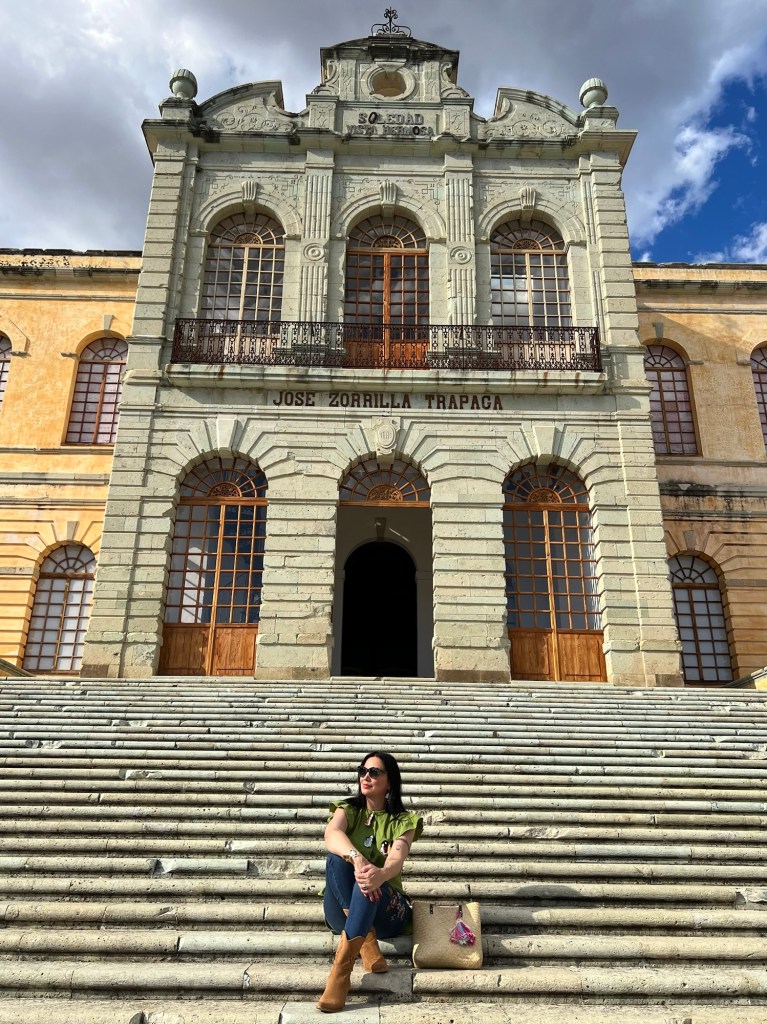
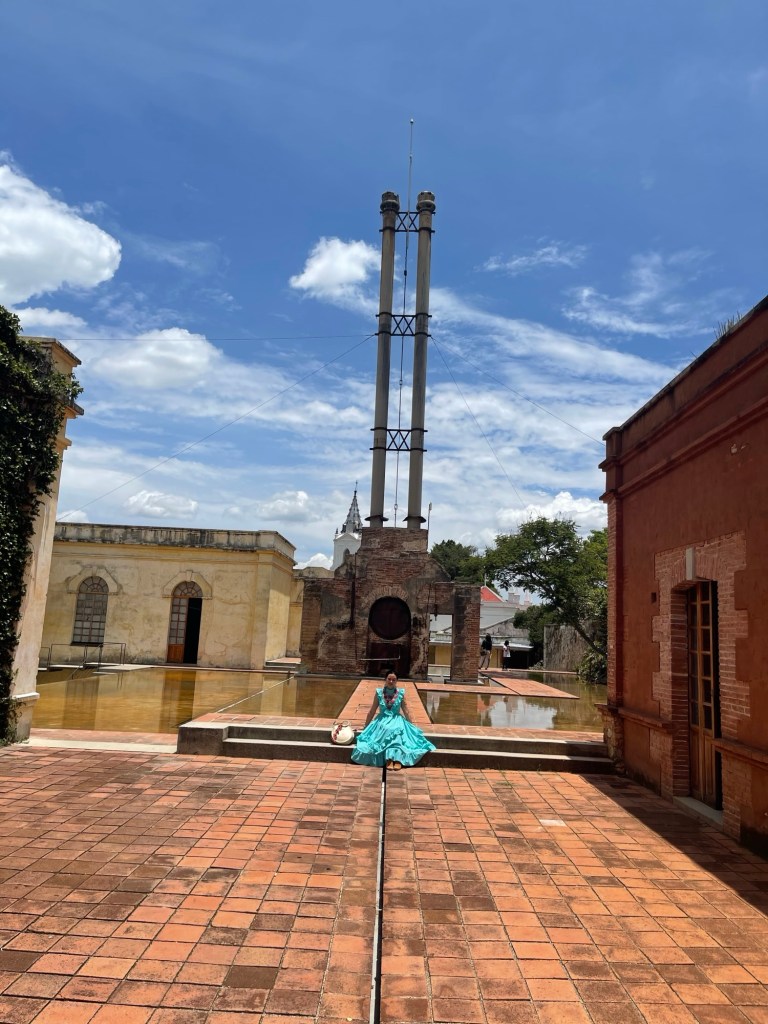
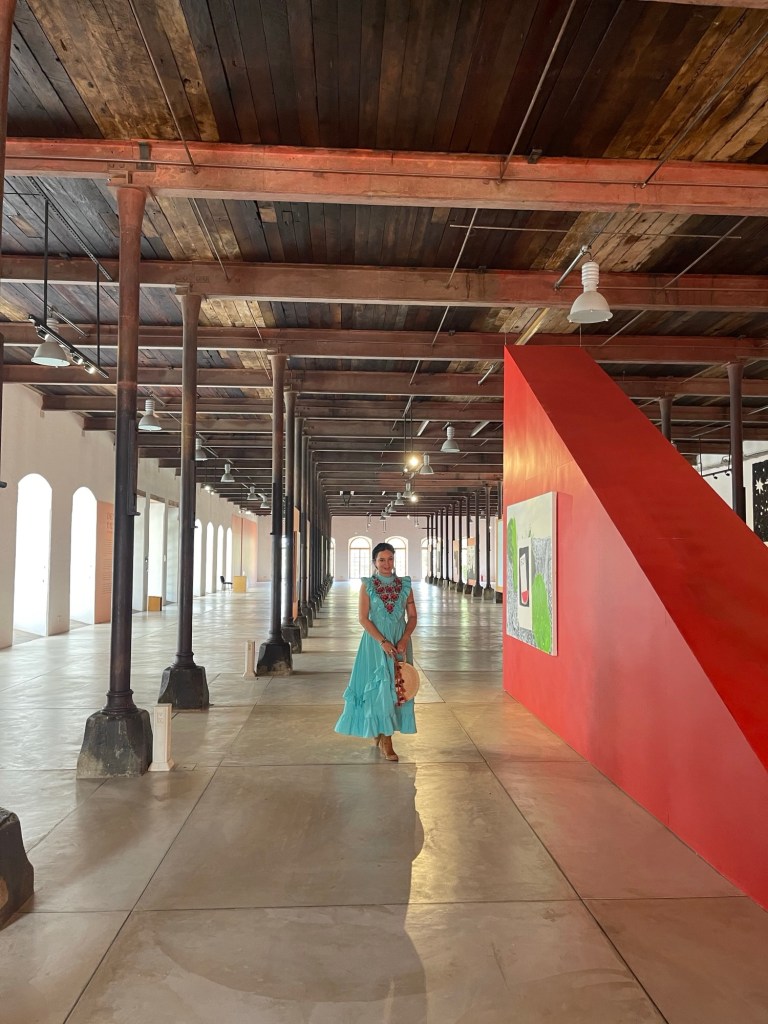
The Fabrica de Hilados y Tejidos La Soledad, established in 1883 in the quaint community of San Agustín Etla, was abandoned less than a century after its inception because of the arrival of chemical produced dyes and mass produced textiles.
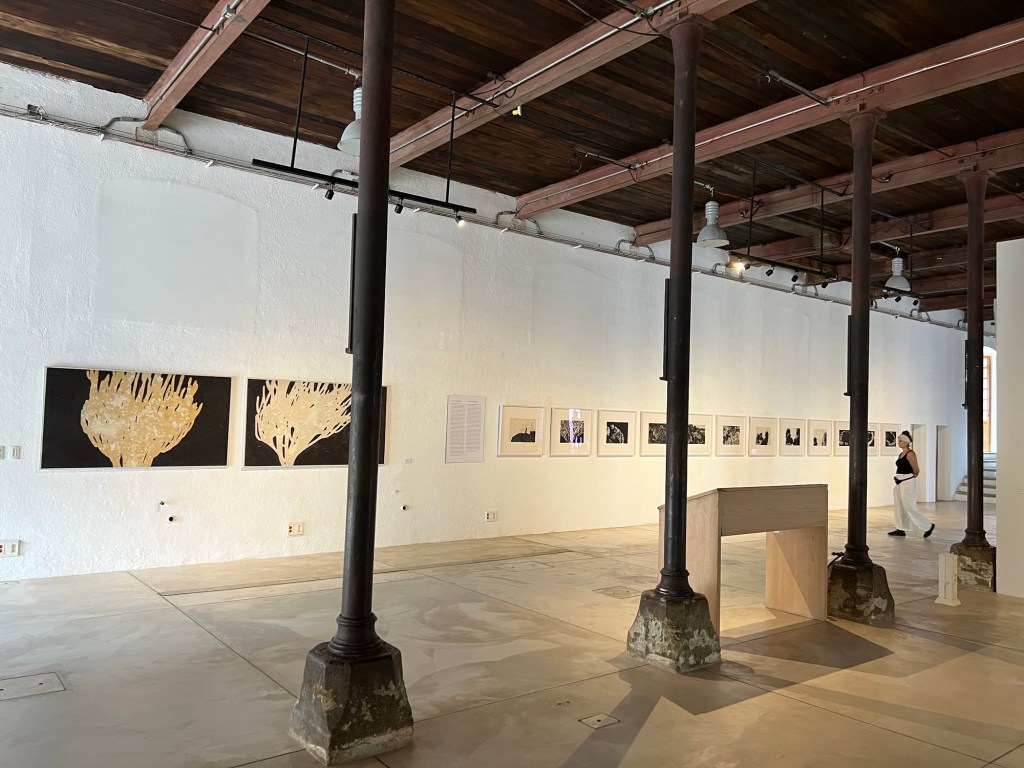
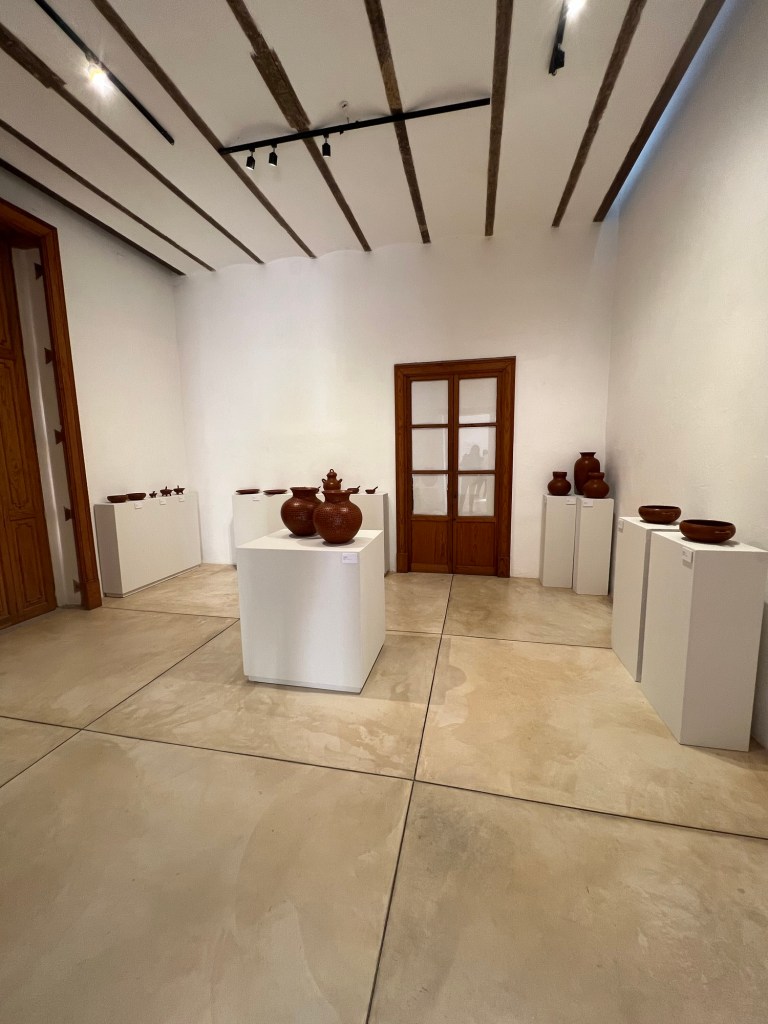
Center for the Art (CaSa) San Agustin Etla todayThe old factory was transformed into a n art center by visionary artist Francisco ToledoThe Church of San Agustin, San Agustin Etla Fabrica de Hilados y Tejidos La Soledad, today San Agustin Arts Center (CaSa) One of the temporary exhibitions at CaSa showcasing clay pottery artisan Macrina of Mujeres del Barro Rojo San Agustin Arts Center (CaSa) They house spaces for interpretative visual art installations and learning.
In 2000, Francisco Toledo, one of the most resilient and prolific Oaxaca visual artists originally from Juchitan, Isthmus of Tehuantepec, initiated a project to transform the dilapidated building into an ecological arts center. This endeavor culminated in the opening of the San Agustin Arts Center (CaSA) in 2006. Today, the complex is adorned with water features, gardens, and remnants of abandoned industrial machinery.
It’s important to acknowledge Francisco Toledo’s legacy and contributions to the preservation of handmade art. He established the recycled paper factory in San Agustin Etla, where artistic paper is crafted from recycled agave byproducts, flowers, plants, maize, beans, and natural dyes. This unique process results in one-of-a-kind artworks including labels for Mezcal brands that want to put the sustainable mark.
References:
Evans, Susan T. (2004). Ancient Mexico and Central America: Archaeology and Culture History. London: Thames and Hudson. ISBN0-500-28440-7
Tras los pasos de los dominicos [Following the footsteps of the Dominicans]. Reforma (in Spanish). Mexico City. December 17, 2006.
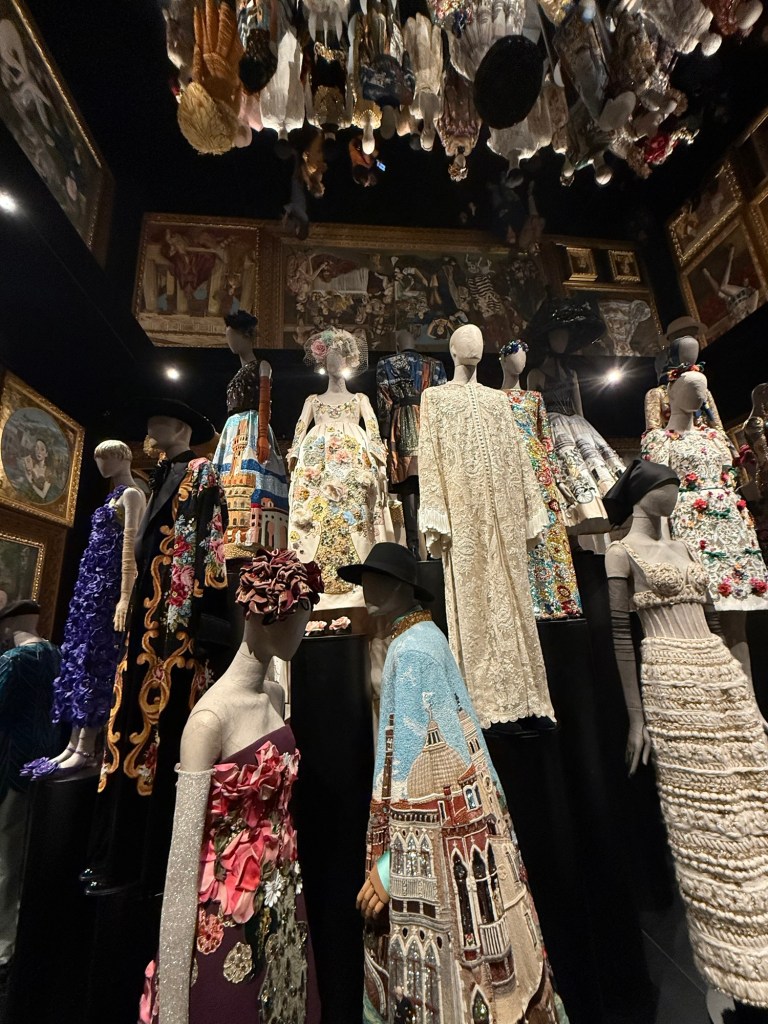
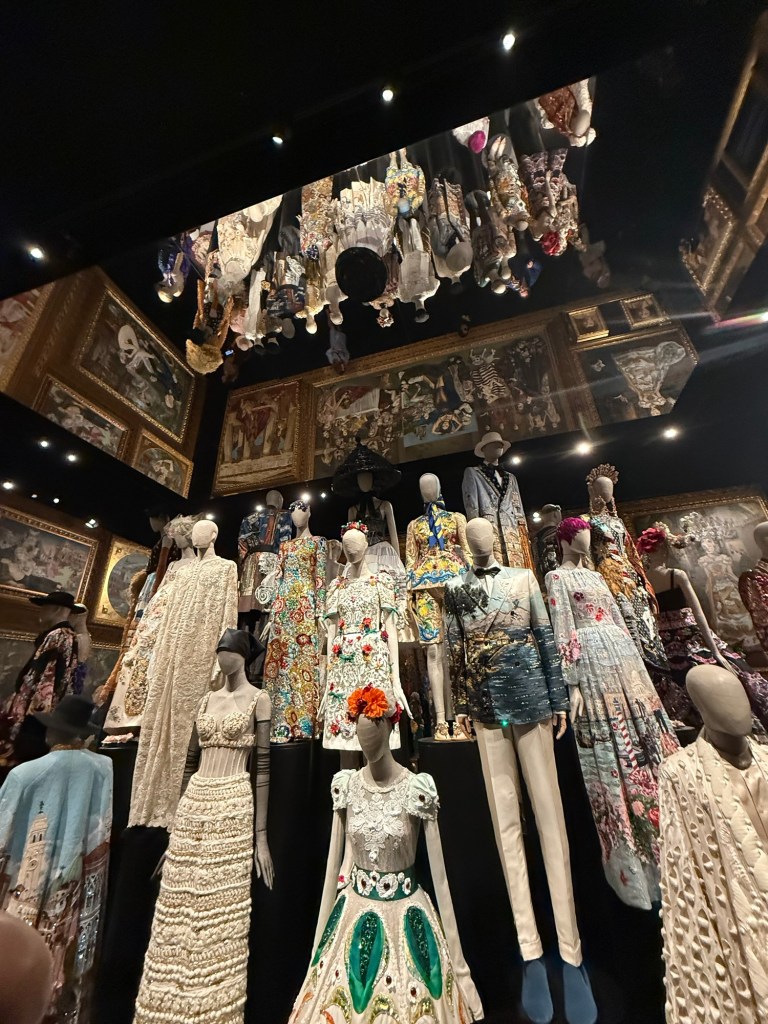
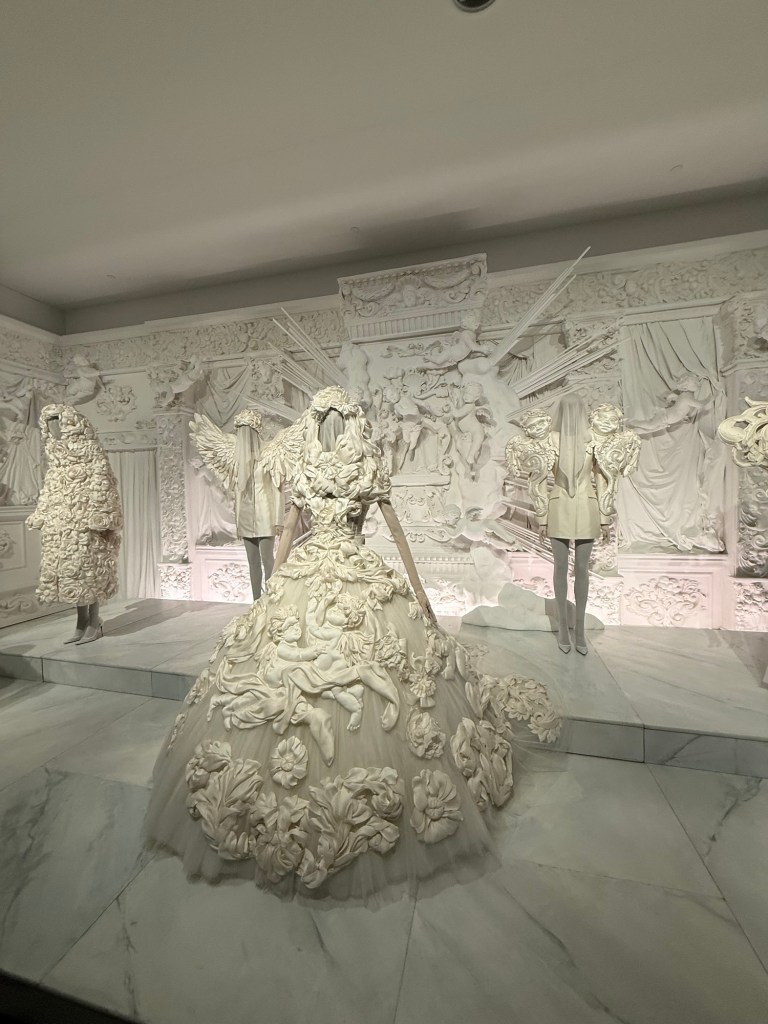
Following sell-out runs in Paris, Rome, and Milan, From the Heart to the Hands: Dolce & Gabbana debuts its first US exhibition at Miami Design District’s Institute of Contemporary Arts ( ICA), from February 6th through June 14th, 2026.
Curated by Florence Müller, the exhibit is a walkthrough of Italian history, design, and art in the vision and journey of iconic designers Domenico Dolce and Stefano Gabbana.
If you go, take the time to immerse yourself in the 16 theme rooms, each one of them showcasing: scent from iconic fragrances inspired by their collections; sound from the soundtrack of a movie where they dressed the cast or opera arias from the respective opera they got involved in design.
Why the Miami exhibit is so special
New rooms have been added to the Miami exhibit such as Rome, eternal beauty and in the heart of Ancient Rome.
The exhibit is not only for fashionistas, it is for whoever appreciates and values art and history, and most of all “Il fatto a mano,” the artistry and craftsmanship of the “handmade,” which is Italy’s pride and legacy reflected in centuries of civilizations that have passed.
“Dolce & Gabbana pay tribute to the differentiating factor between industrial production and haute couture: handcraft”
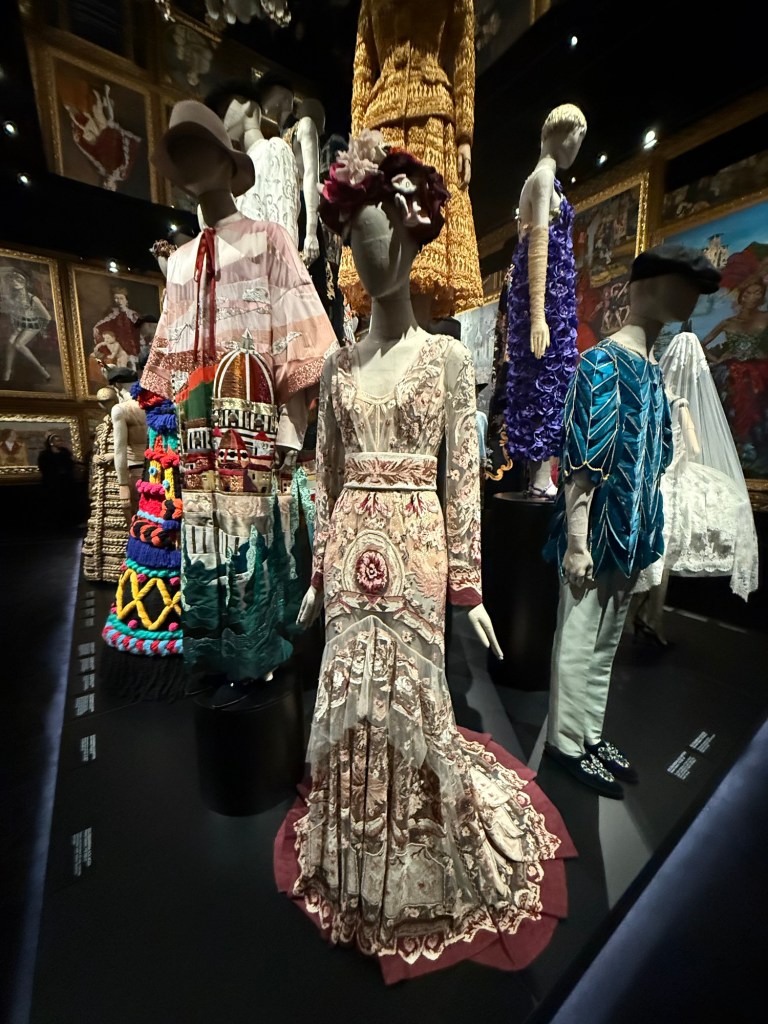
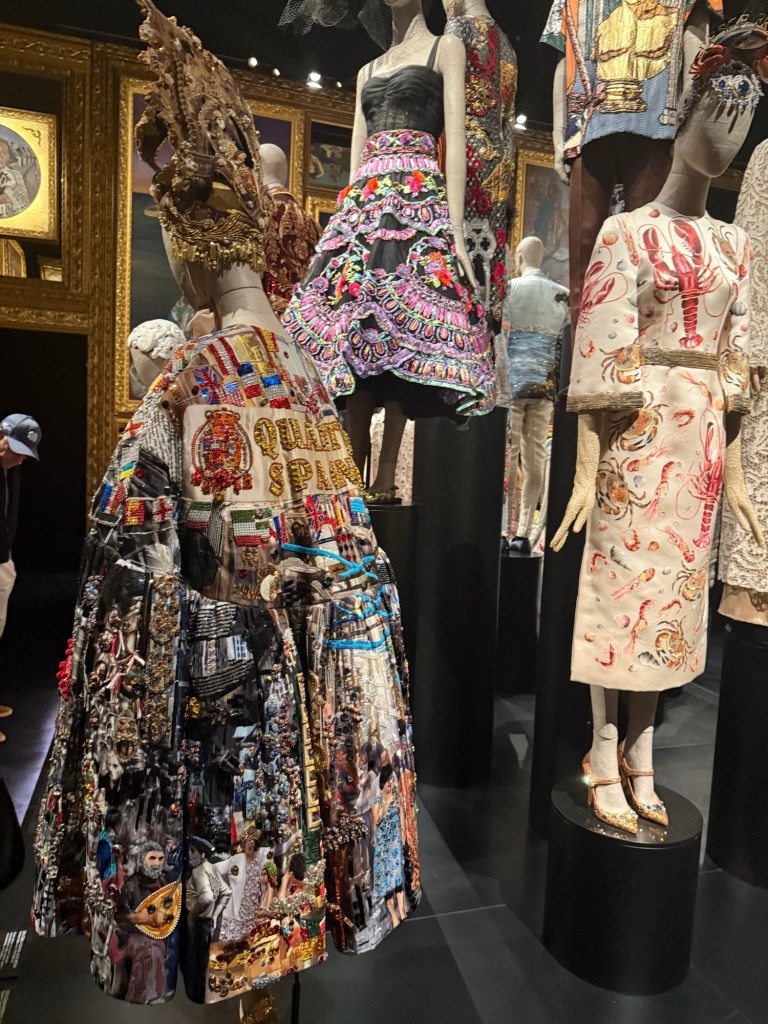
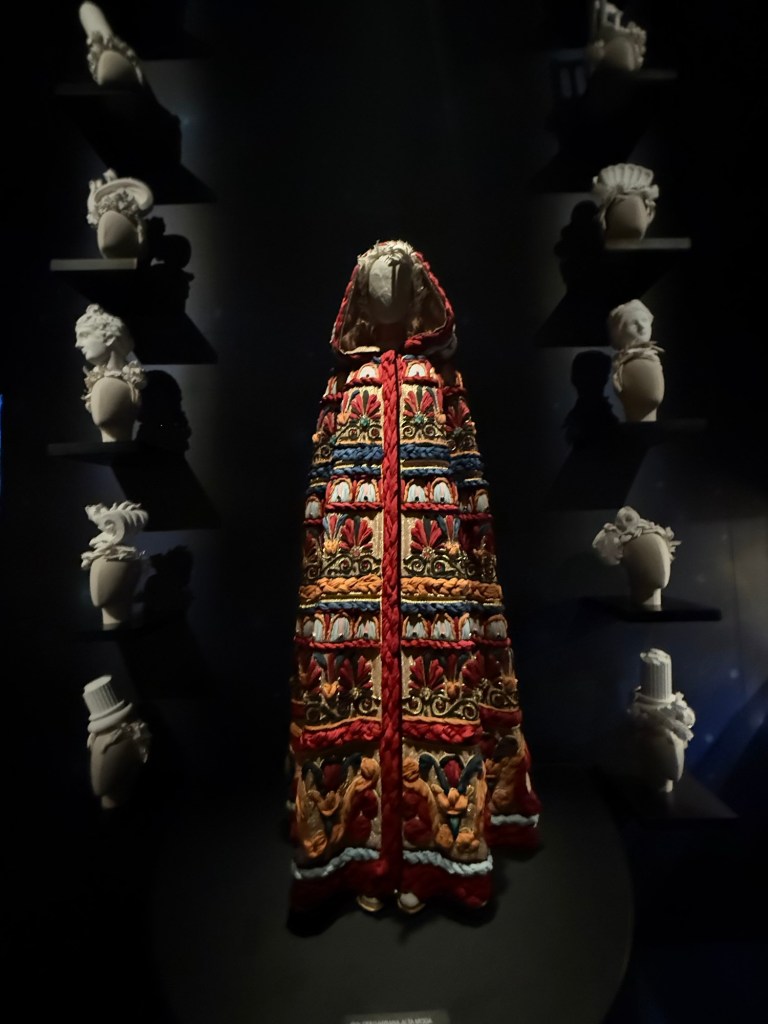
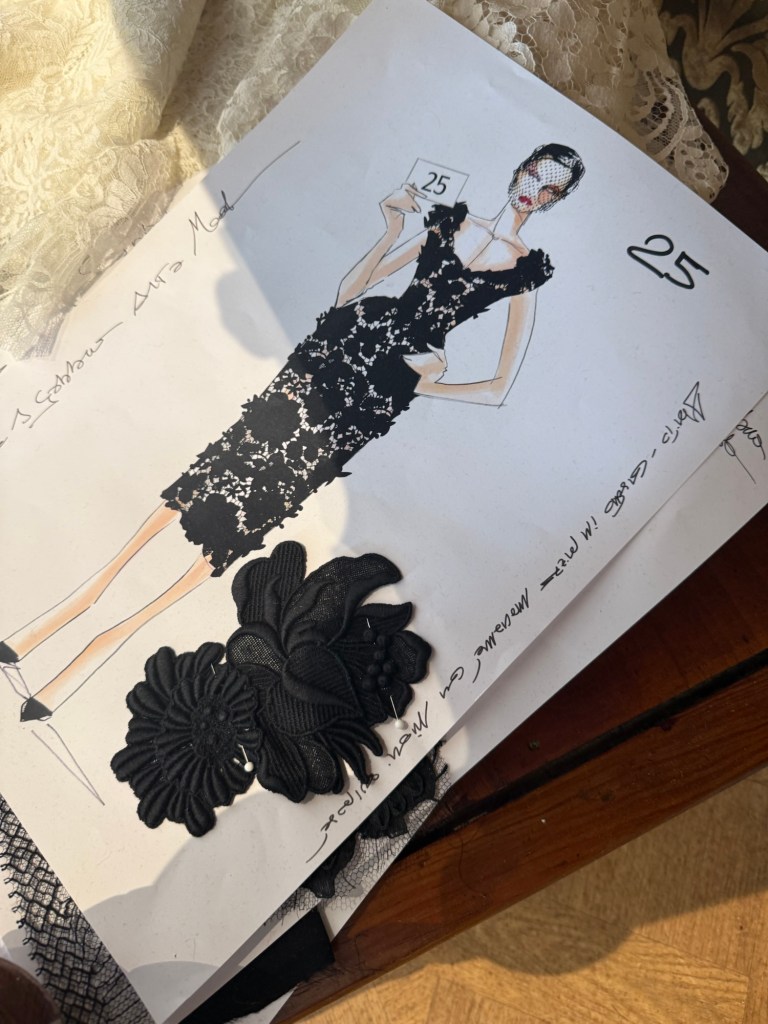
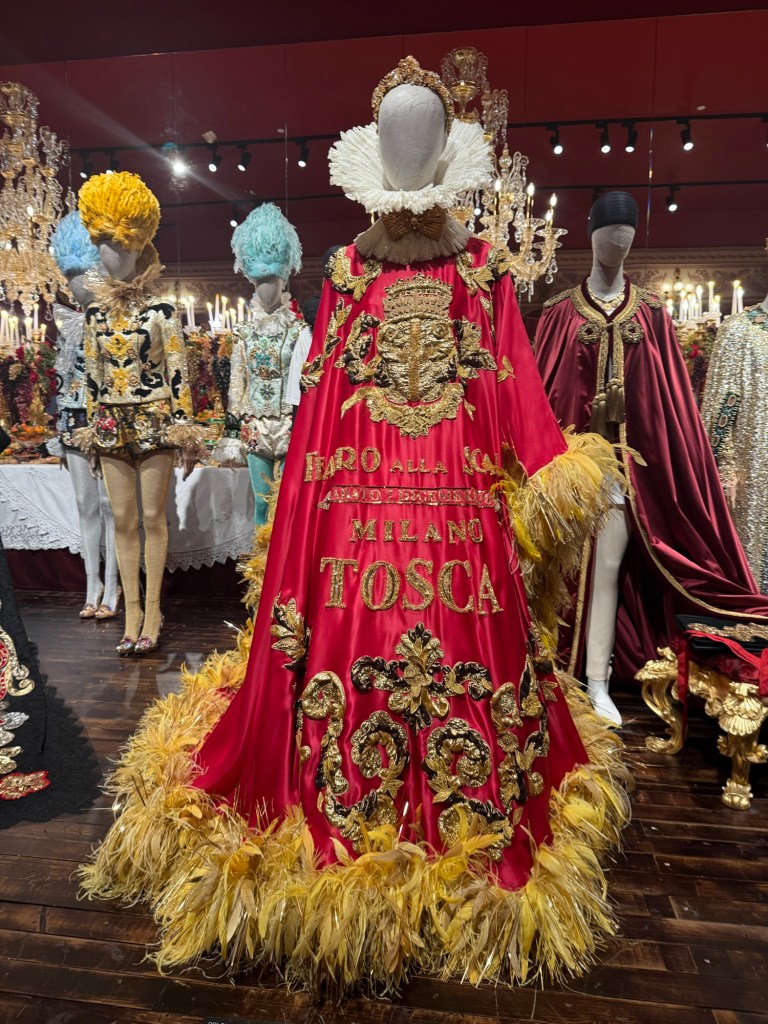
And the first room takes us to the art of handmade, here will be able to see techniques that have been recreated from the original sources in Sicily, Campania, Puglia, Sardinia, Toscana, Rome or Milan, such as the tubular embroidery, a lured mesh cape entirely embroidered with silk satin, which was first presented at the Alta Moda Venezia, the San Marco Collection 2021-2022 or the fur appliqué for Alta Moda Firenze 2020-2021.
Other meticulous and artistic techniques to admire in this room are cross-stitch, embroidery with fur, thread embroidery, appliqués, crochet, cutwork, jeweled embroidery.
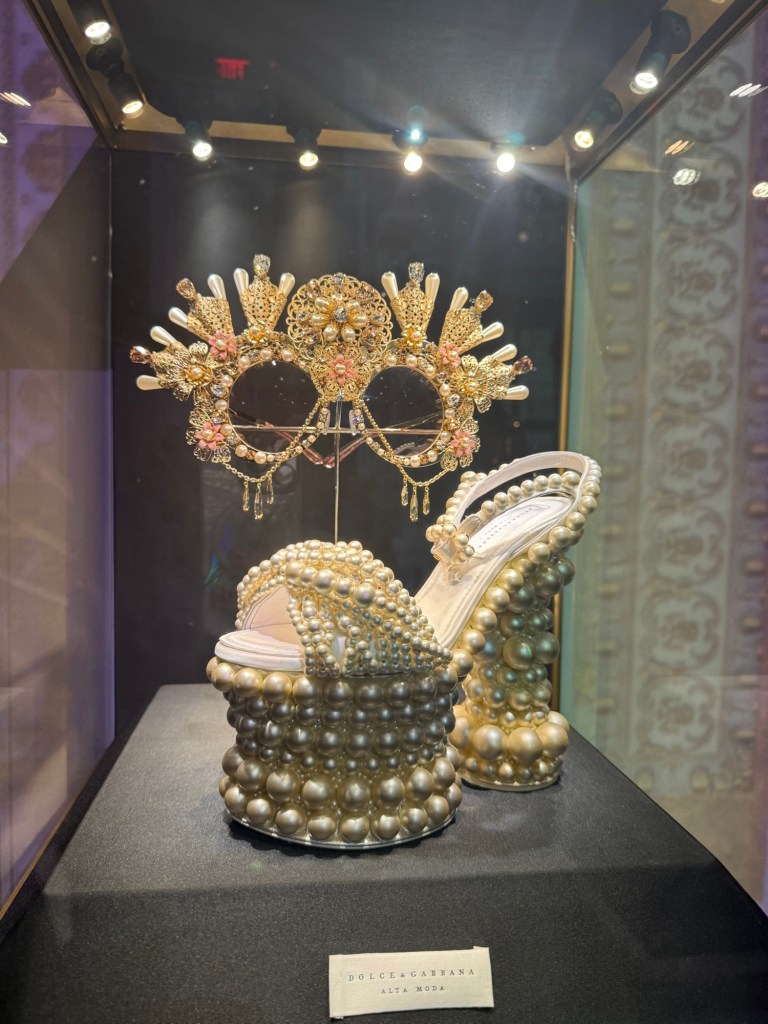
Don’t miss the art by Anh Duong across the room and the unique jewelry displayed across the sidewalks.
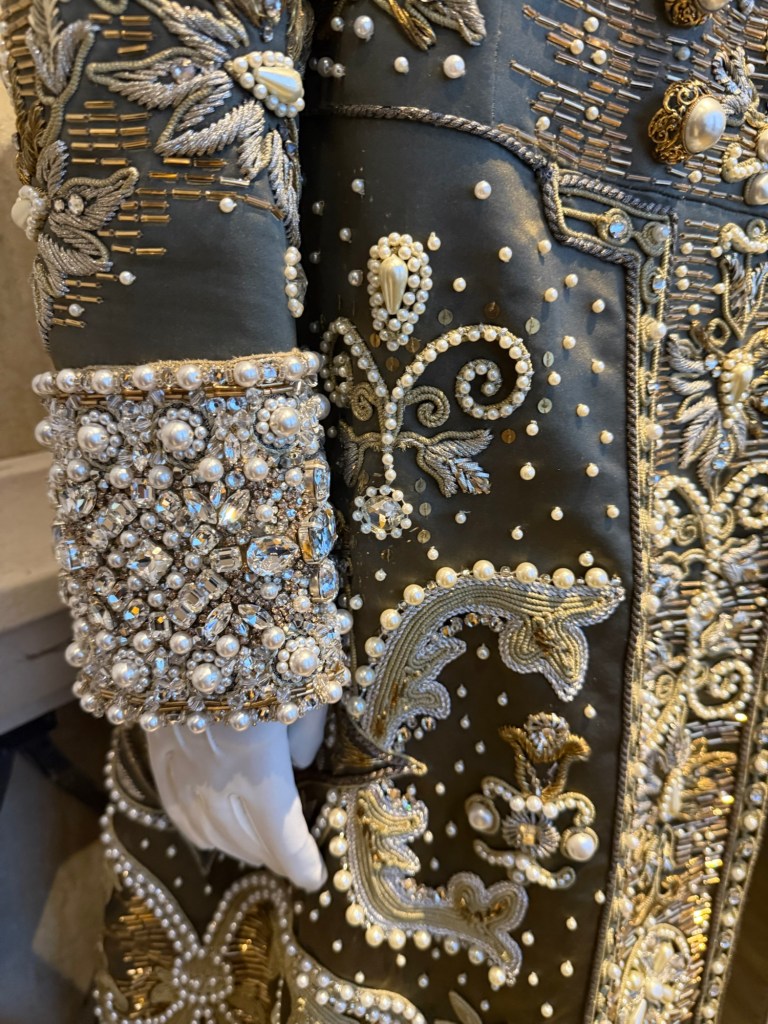
Alta Sartoria Milano Collection 2020 Illusion tulle corset dress embroidered with cross-stitch. Milano Opera 2020Texture effect embroidering for the Alberobello collection 2023-2024Alta Sartoria Marzamemi collection 2022-2023 capes entirely embroidered with crystals, pearls and seed beads
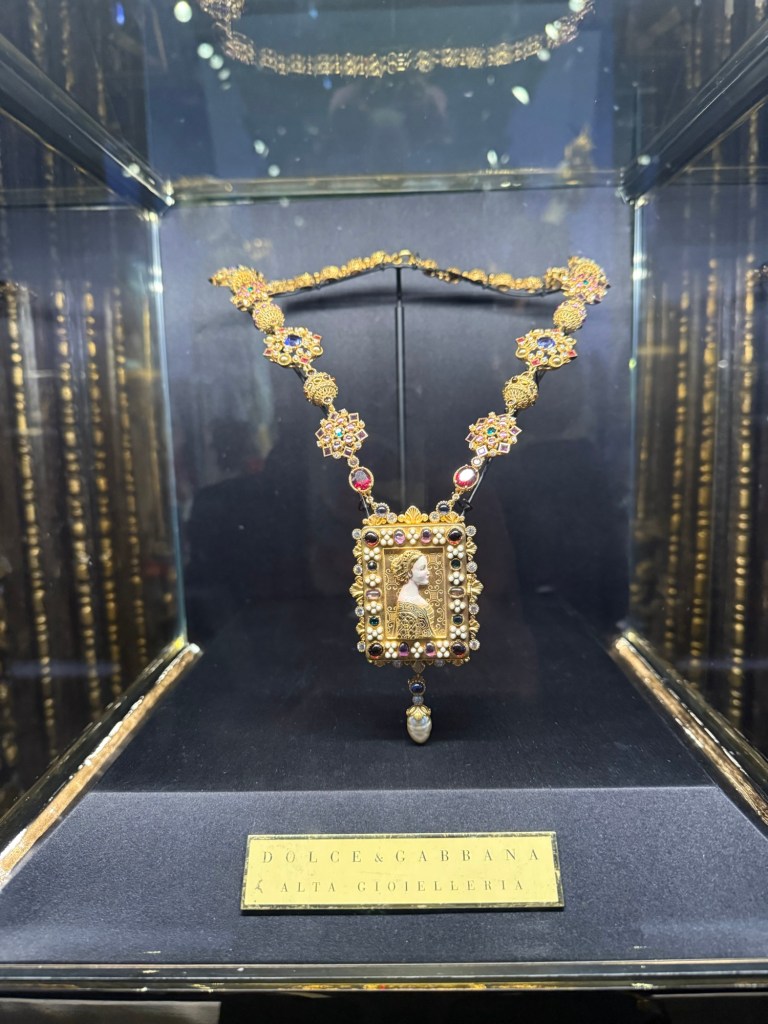
Architectural and pictorial is the next room where we can imagine the architecture and decorations of palaces and churches in different periods, from the Middle Ages to the renaissance, from the baroque to the neoclassical, continuos sources of inspiration for Domenico & Stefano.
Alta moda Milano Rinascimento Collection SS 2019 georgette dress entirely embroidered with sequins.Alta Gioielleria. Pendant necklace in yellow and white gold, multi-colored gem stones and diamonds. Alta Moda Milano Rinascimento collection SS 2019 From the heart to the hands Dolce & Gabbana at ICA Miami
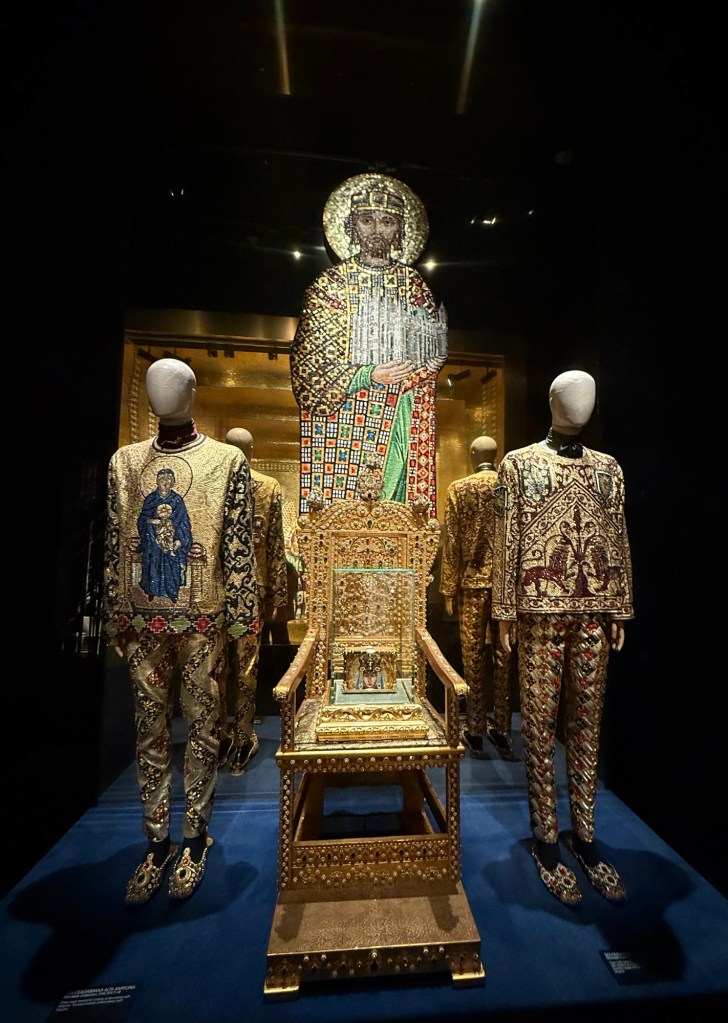
Dream of Diviniy, descending from their lofty thrones, the queens of antiquity and mythology step in the catwalks of Alta Moda.
Divine Mosaics in this room, note the displays of the replica of the temple of Concordia in Agrigento, this masterpiece of Hellenistic art is the only temple in Doric style capable of rivaling the Parthenon in Athens.
“The power God has given us to attract through beauty and the fragility inherent in the passage of time”
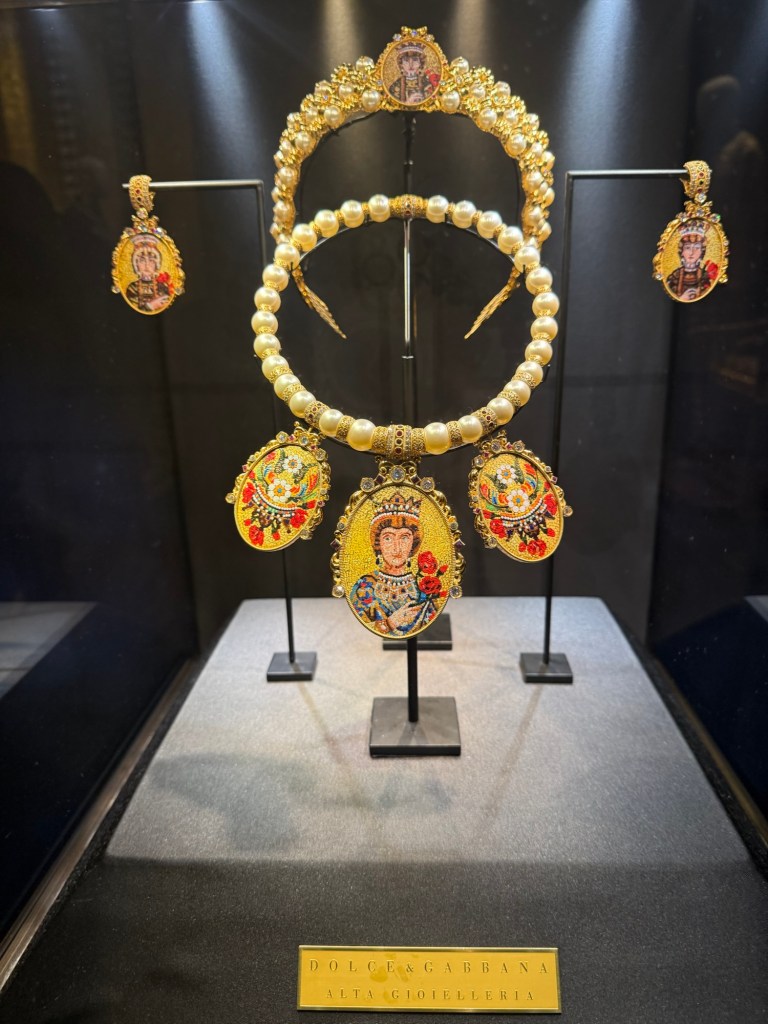
Alta Moda Agrigento Collection FW 2019-20Alta Gioelleria, necklace and earrings in gold with south sea pearls, rubies, diamonds and amethysts. The inspiration, the mosaics at the cloisters of the Monreale Cathedral in Palermo
The leopard, in 1963 Luchino Visconti won the Palme D’Or at the Cannes film festival for his film Il Gattopardo. An adaptation of the novel by Giuseppe Tomasi di Lampedusa, the film is set in Sicily after the arrival of the Garibaldi.
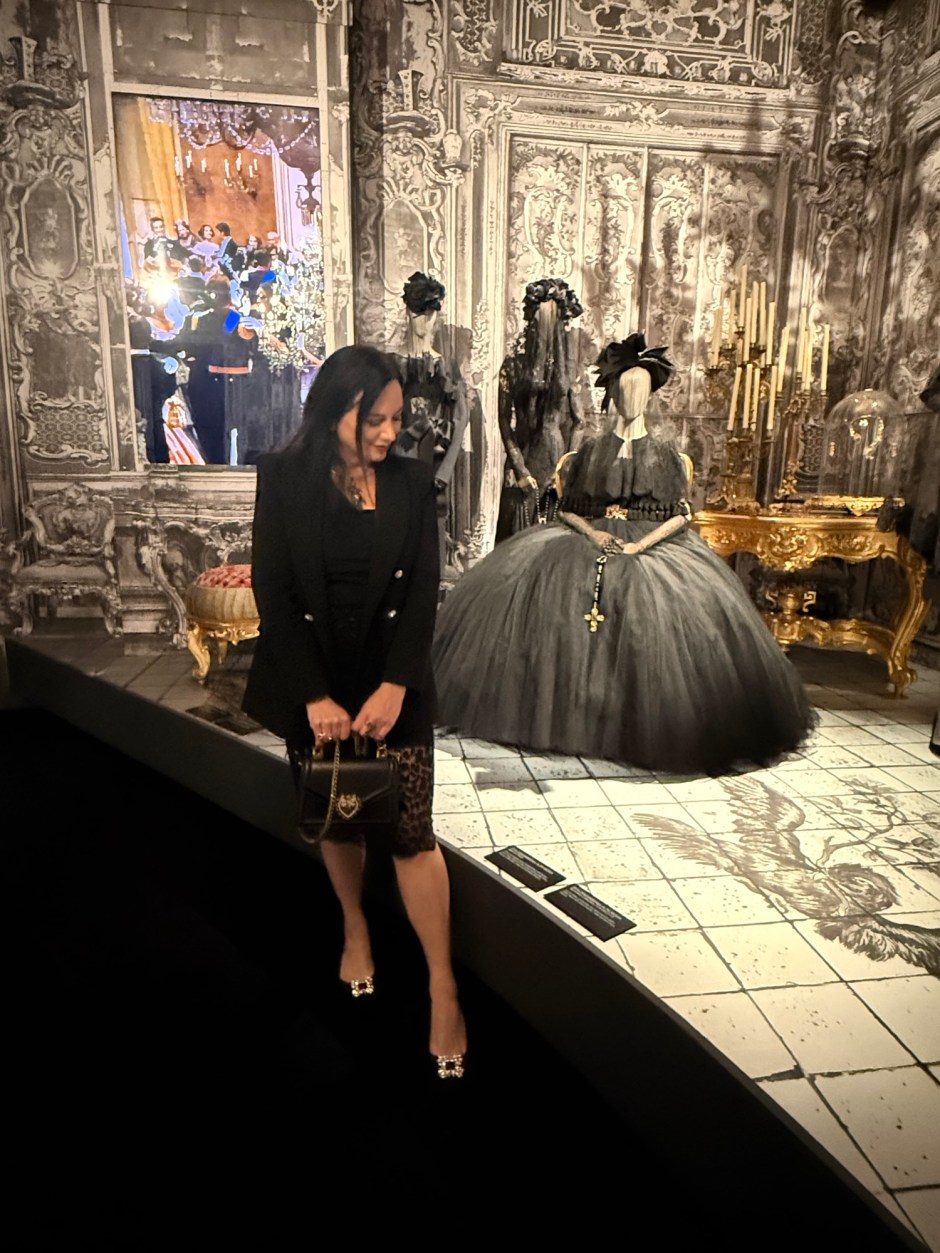
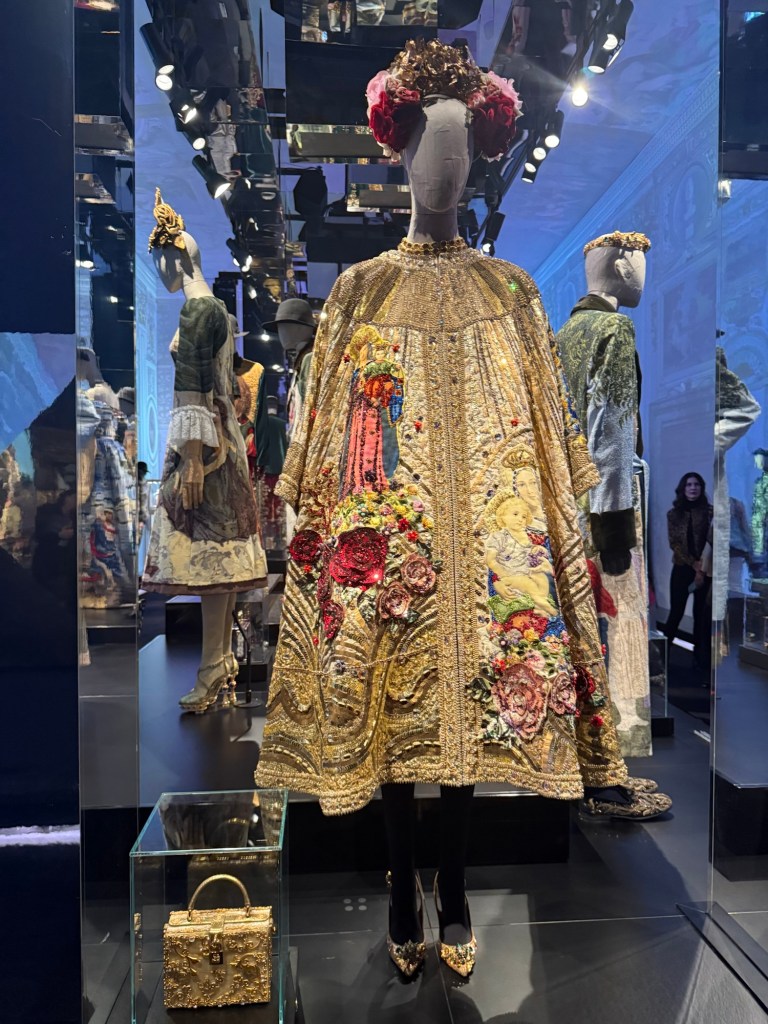
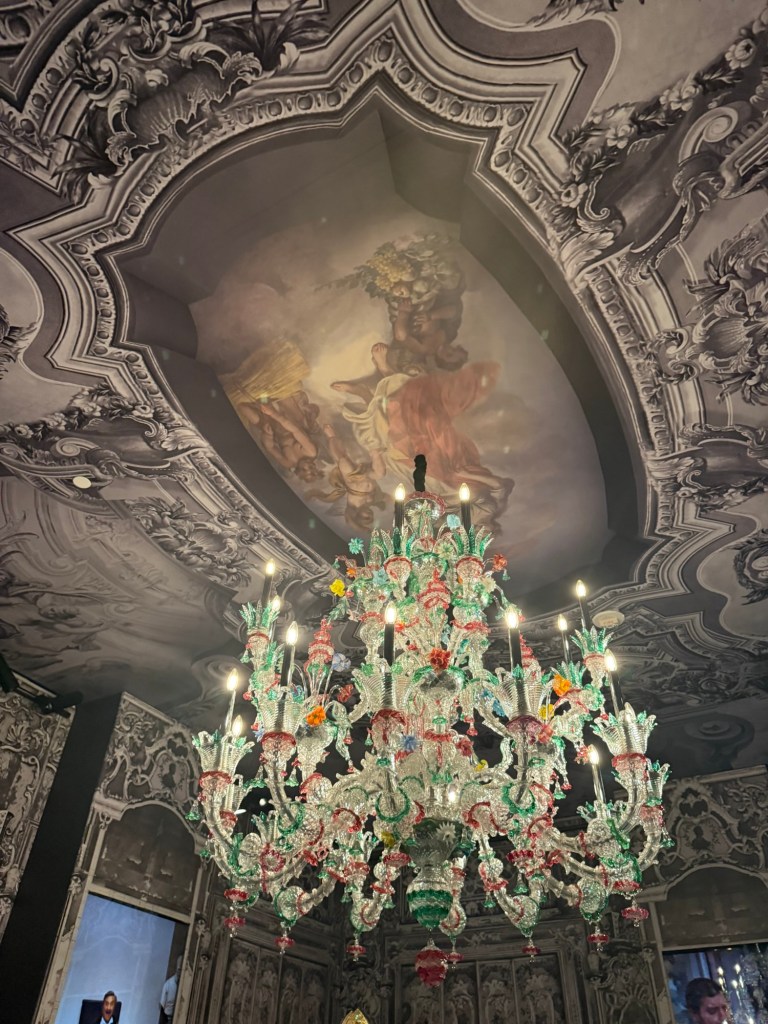
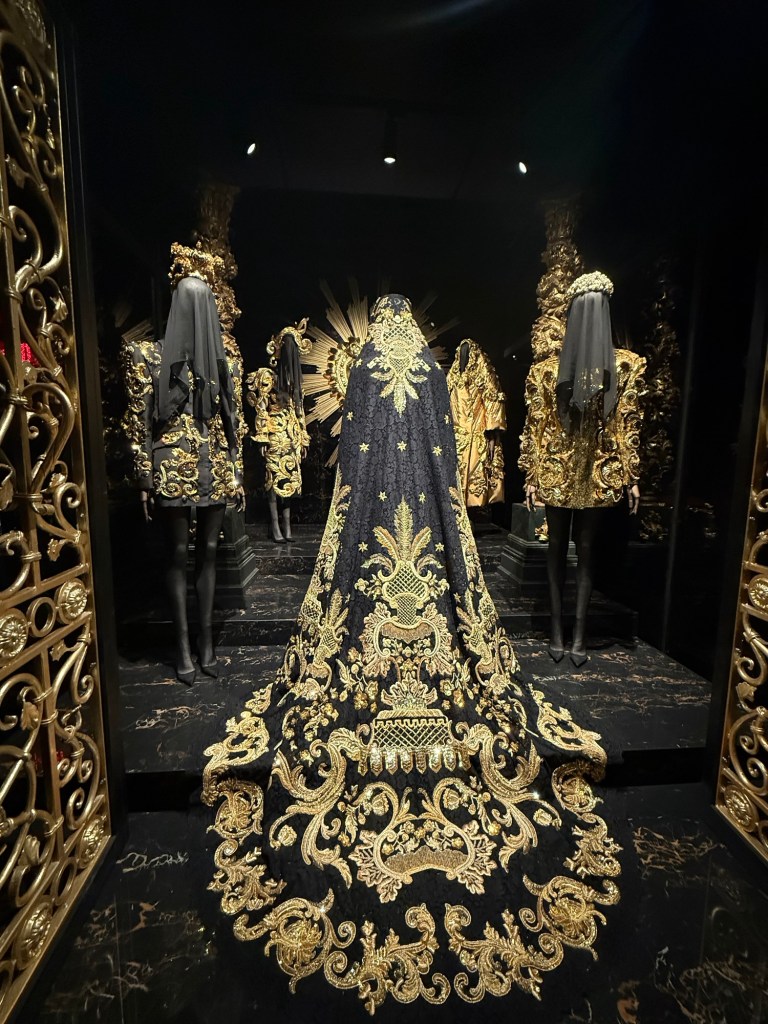
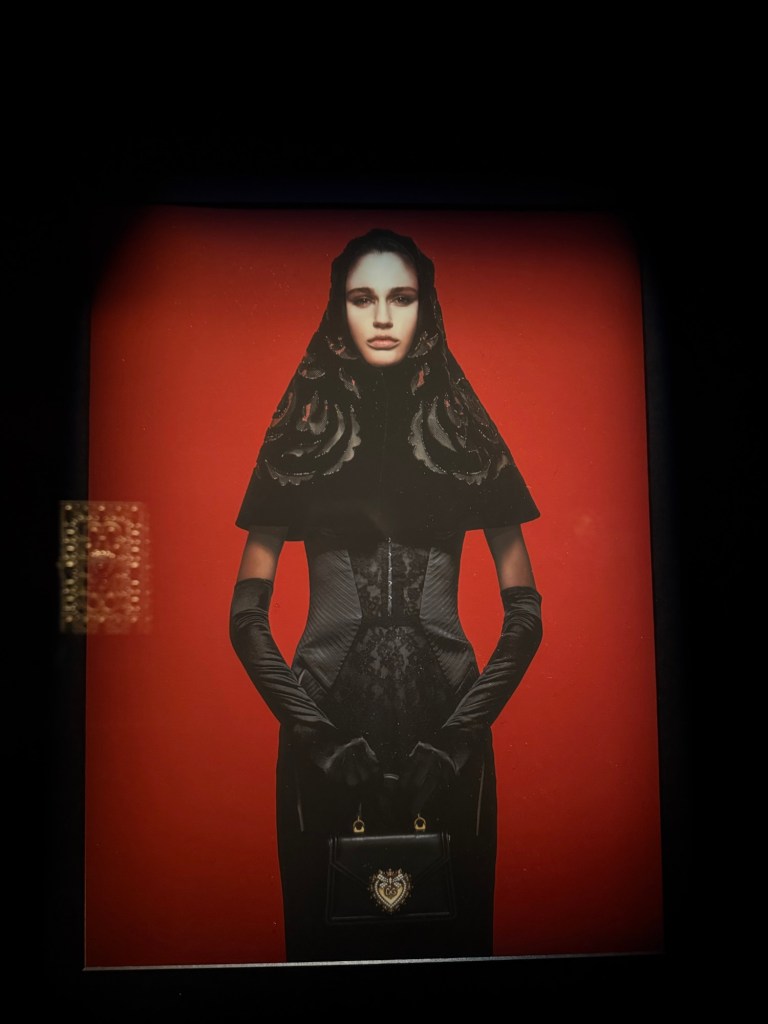
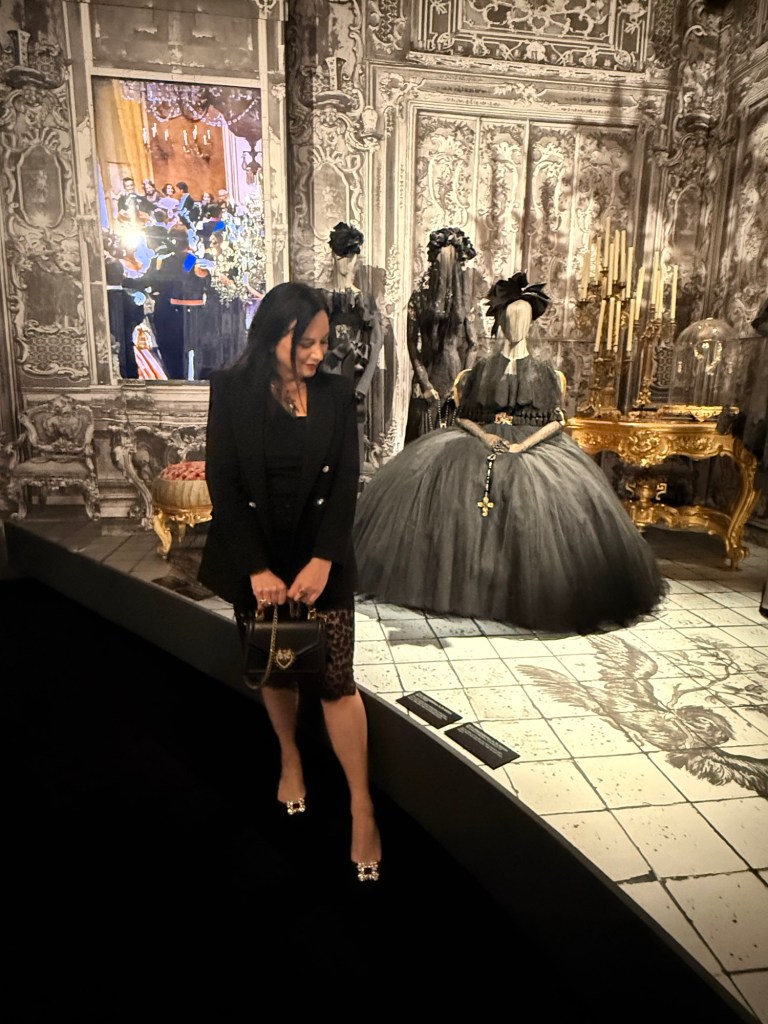
Devotion, Inspired by Baroque art from the sanctuaries under the protection of the Sacred Heart, it continues to shine to remind us that we won’t find eternity without sacrifice. The eternal dichotomy between the human and the divine, between mysticism and penitence; the tears of Lady Mary and her divine heart.
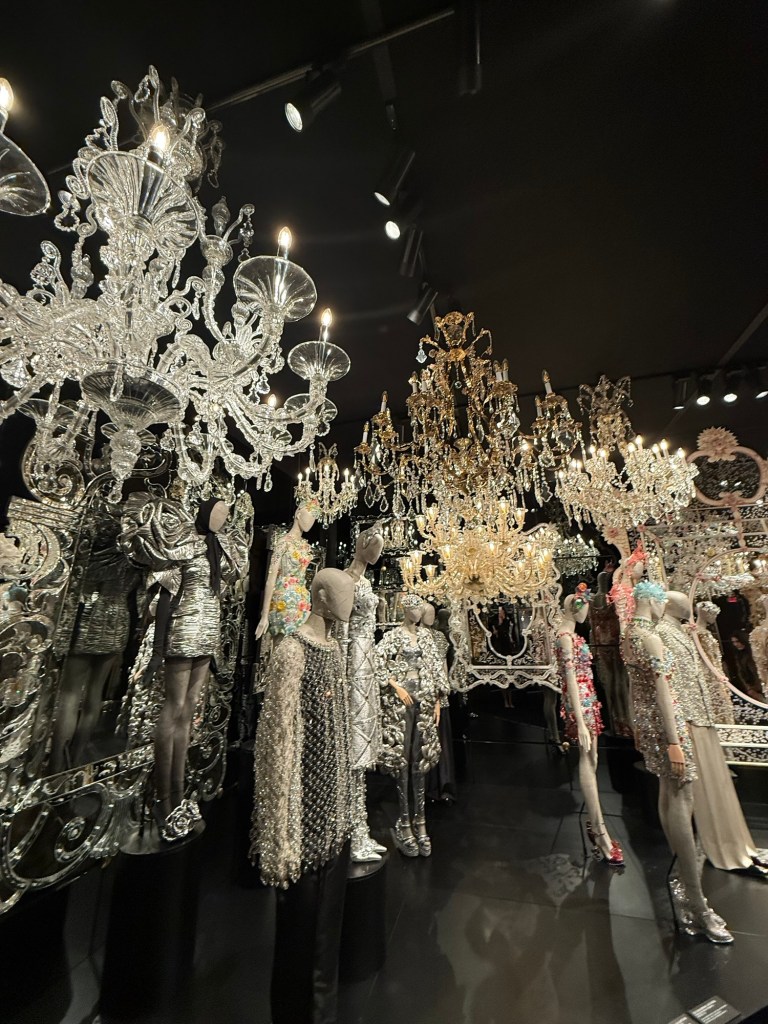
The famous chandeliers of Barovier & Toso, Murano.Alta Moda, lace mantle embroidered with sequins, gold thread and crystals The iconic devotion bagIl Gattopardo, Montserrat Franco in Dolce & Gabbana
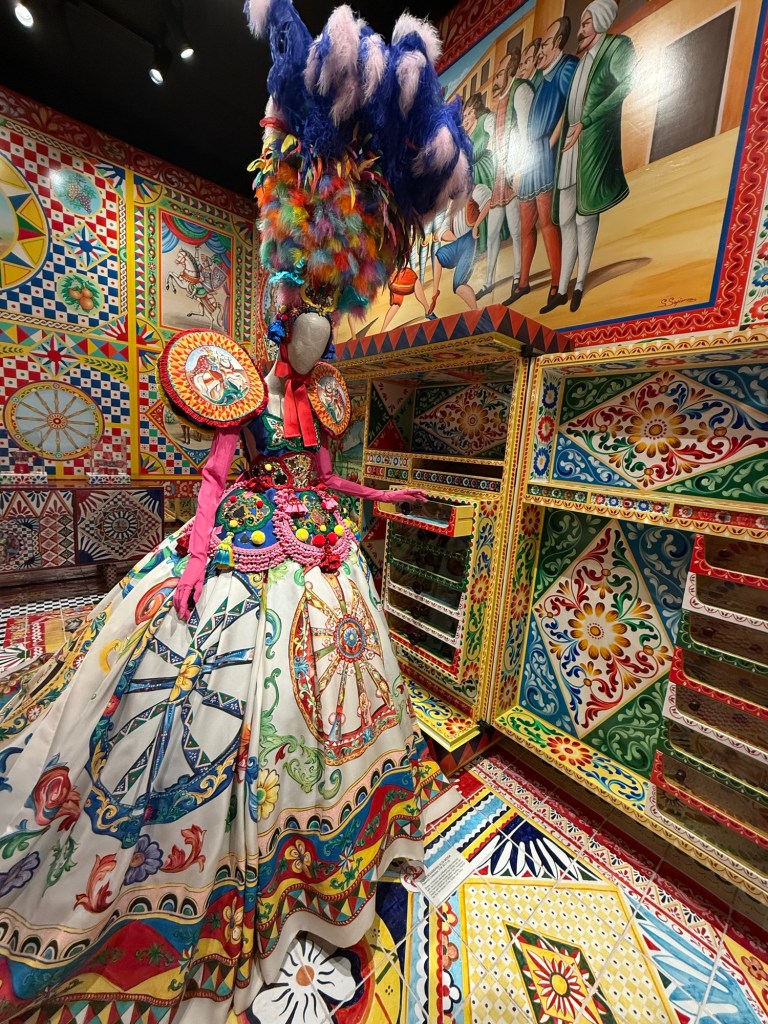
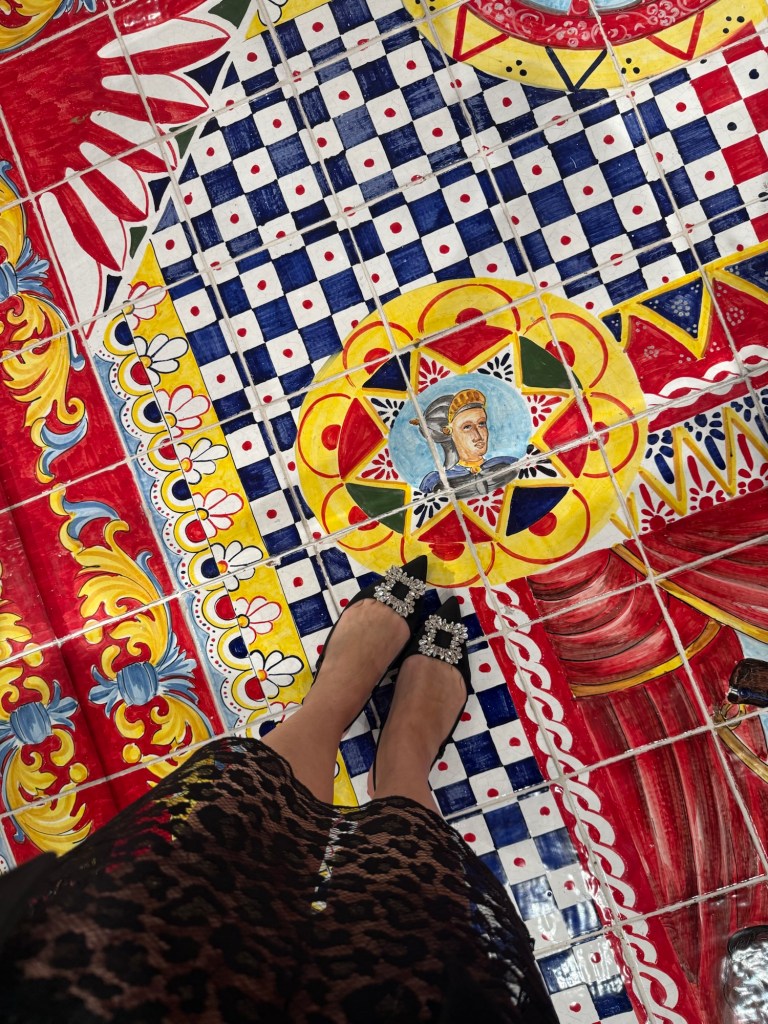
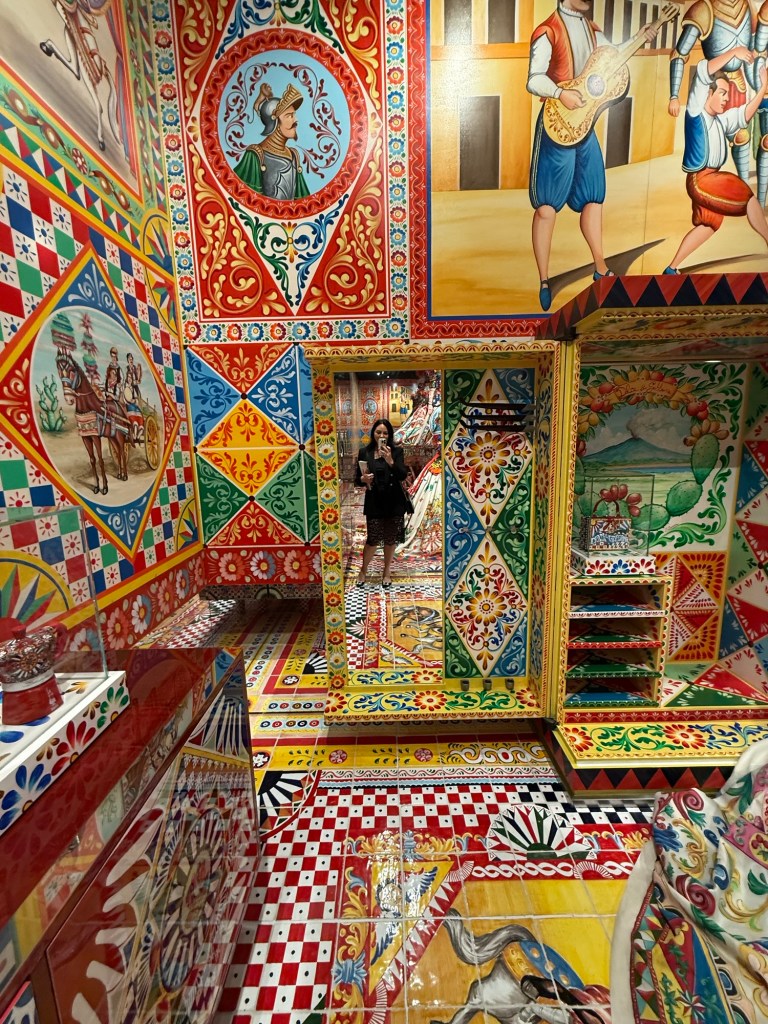
Sicilian Traditions, this is probably one of my favorite rooms, with the exuberant hand-painted Sicilian ceramics and horse-drawn carts.
Sicily’s ceramic tradition dates all the way back to Mycenaean times, with most popular centers in Caltagirone, Monreale and Santo Stefano.
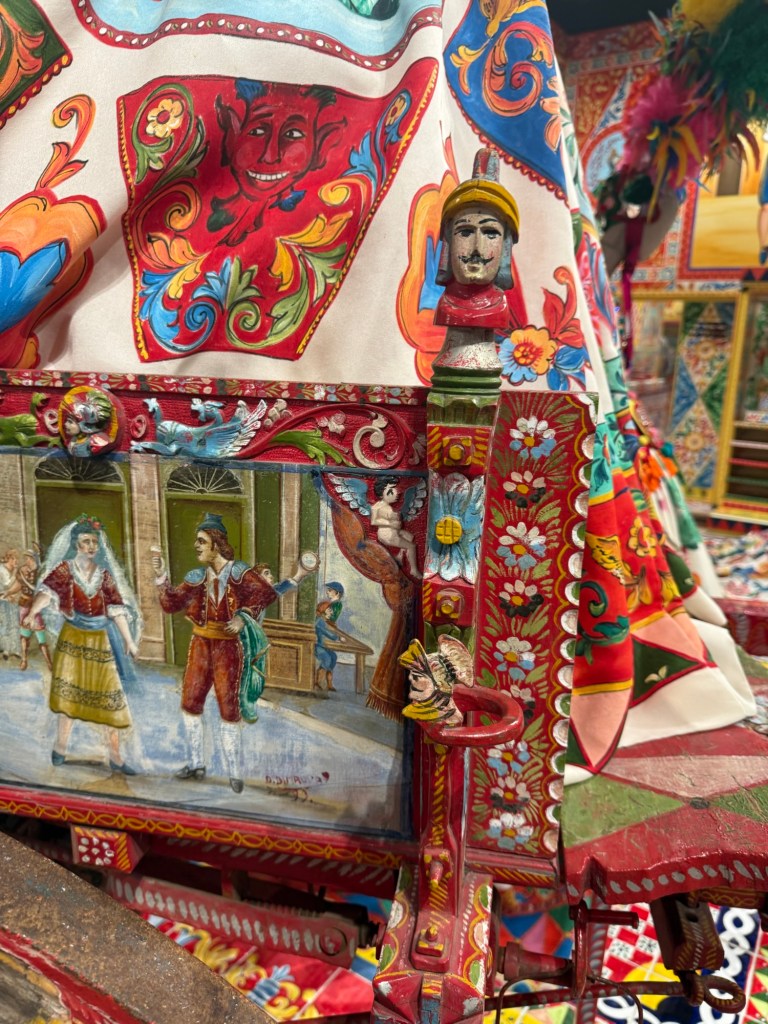
The carretto comes from Greek times but developed into its present form in the 19th century. Families versed in the secret of this craft pass the techniques down to generations.
The most common subject depicted on the designs are the adventures of the Charlemagne and, his heroes. They are also the protagonists of the “Opera dei Pupi”, a marionette show that became popular in the early 19th century.
Alta Moda Palermo collection FW 2017-18. Dress composed of a mikado bodice enriched with decorative elements of the Sicilian cart Handcrafted ceramic tiles decorated at the Bevilacqua brothers workshop in Caltanisetta.Detail of the carretto, painted by Salvatore Sapienza The colorful room of the Sicilian traditions
White Baroque; during the rule of the Bourbon in Sicily, Giacomo Scarpetta (1656-1732) gained fame as the creator of the stucco decorations for many religious buildings in Palermo. His inventions include the “teatrini” sculpted niches whose depth and complexity accentuates the interplay of light and shadow.
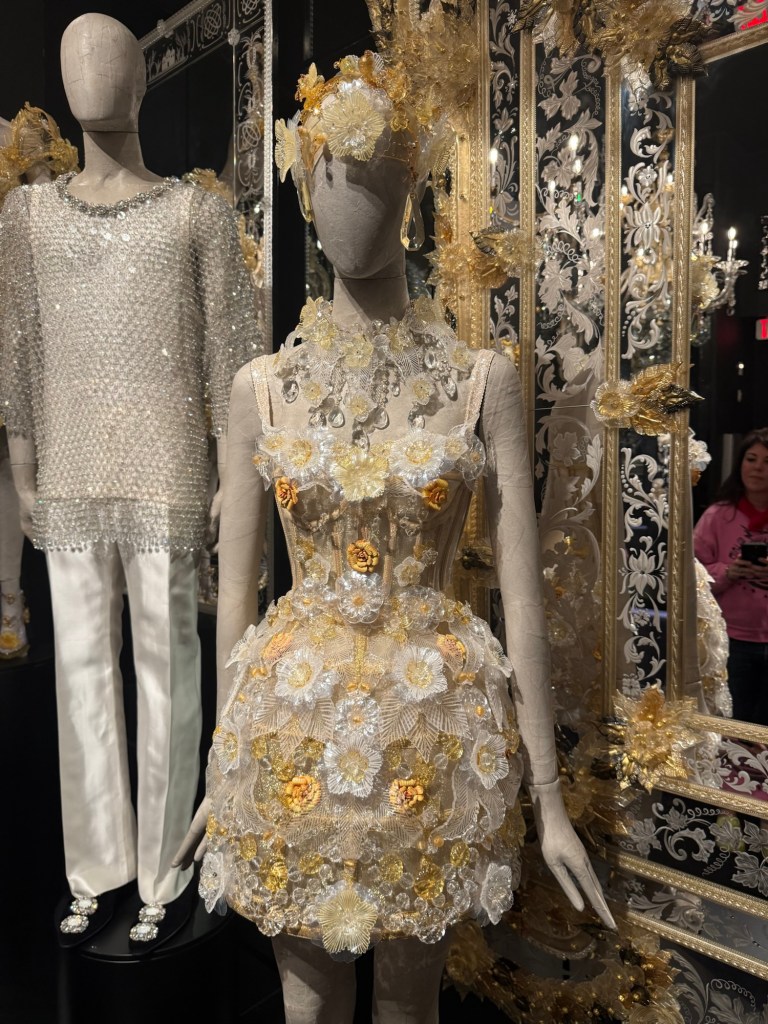
The art and craft of glassworking: in this room, glass embroideries and silver garments respond with their sparkle to the mirrors of the Barbini masters of the famous chandeliers established in 1936 by the Union of two Murano glassmaking families, with roots founded in 1295.
Alta Moda Siracusa FW 2022-23Alta Moda Venezia San Marco collection FE 2021-22Alta Moda Venezia San Marco collection FW 2021-22 illusions tulle dress embroidered with lurex lace and macrame, mirrors, hand-engraved plexiglass elements
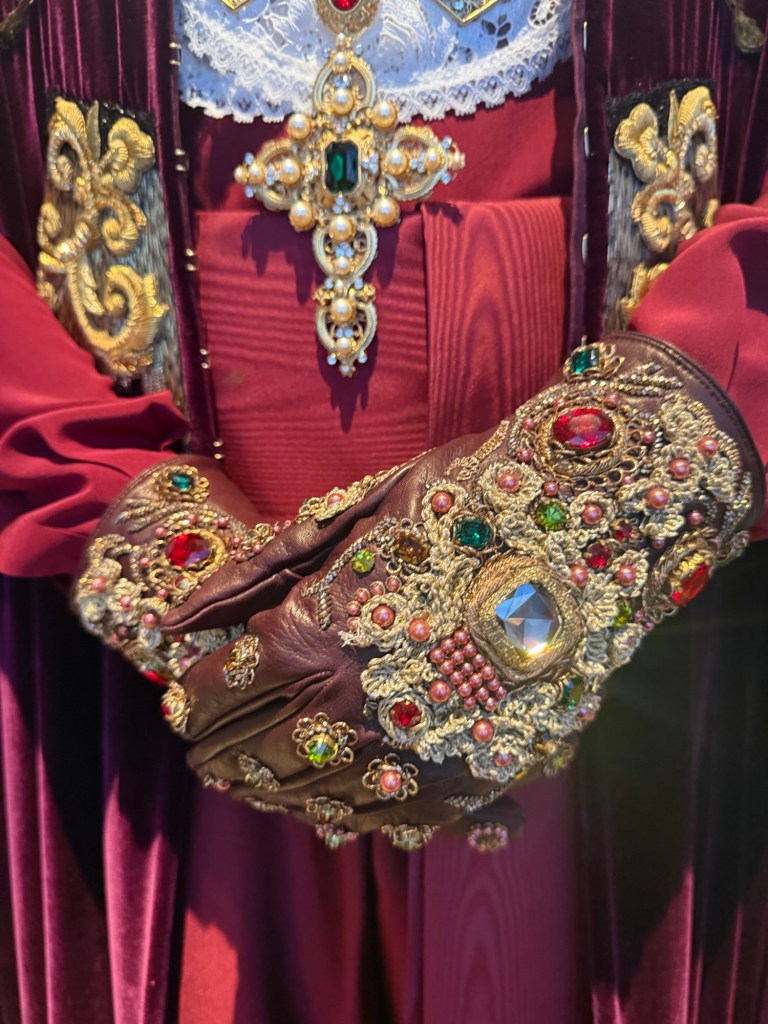
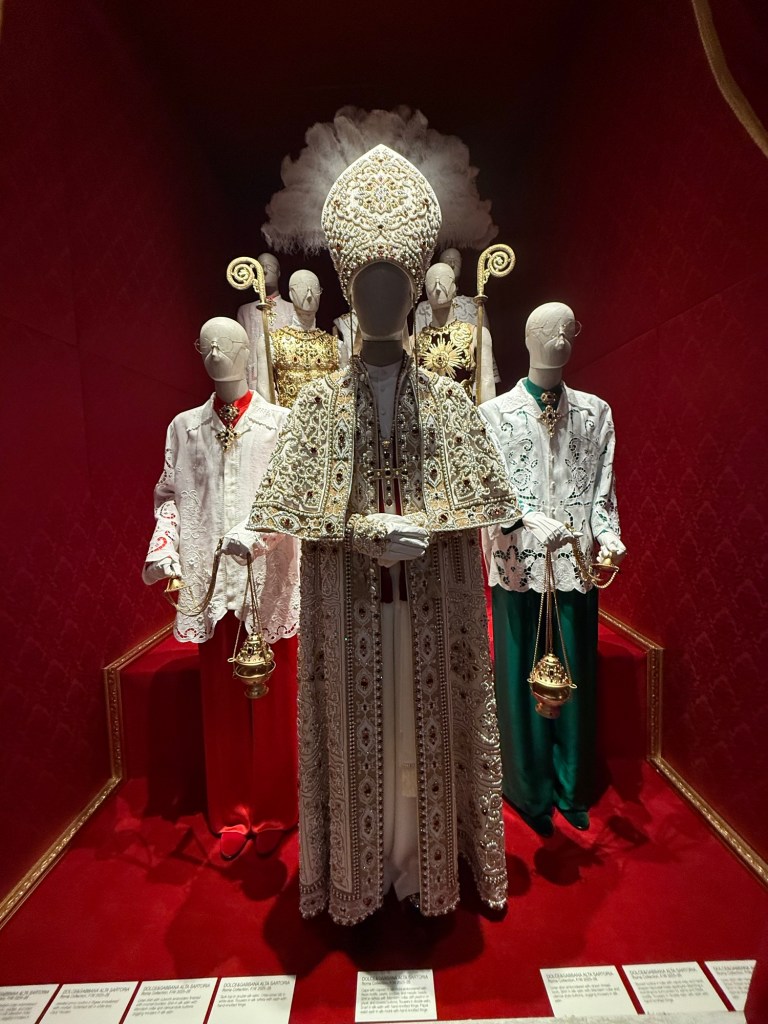
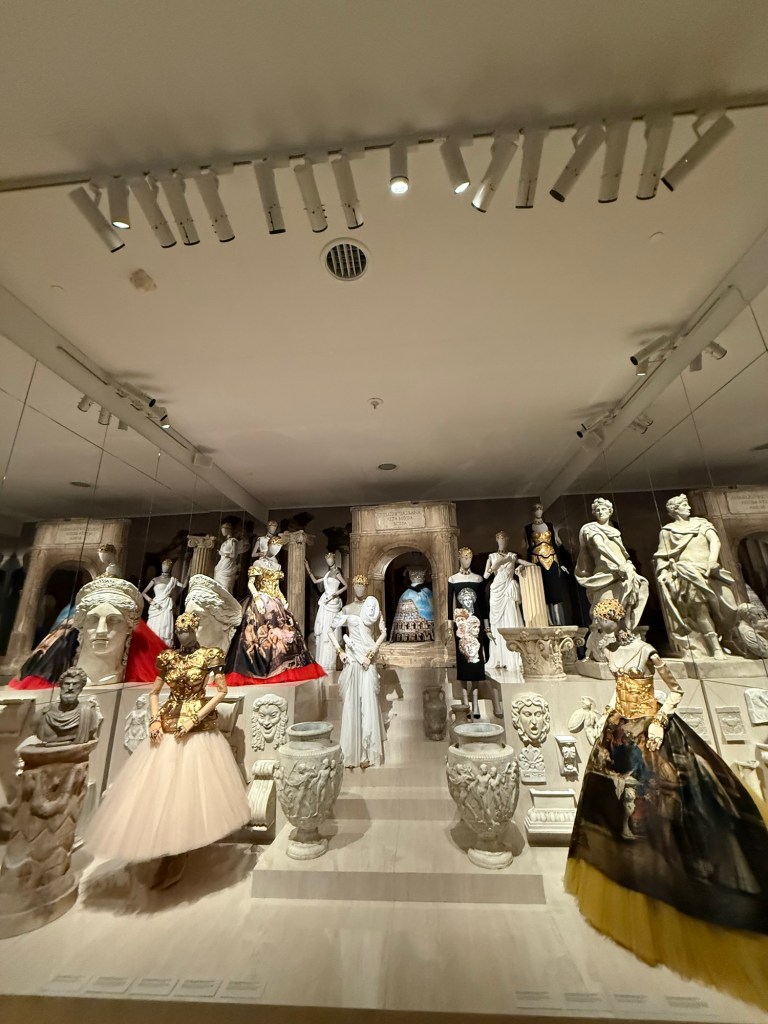
Rome’s eternal beauty, it is one of the rooms that, if you are like me, embedded in the mysticism and spiritualism of a religious education, no matter which religion you profess, it will still move your heart. This is a new addition to the Miami ICA’s exhibit, and at this point, I couldn’t stop a tear or two coming out of my eyes.
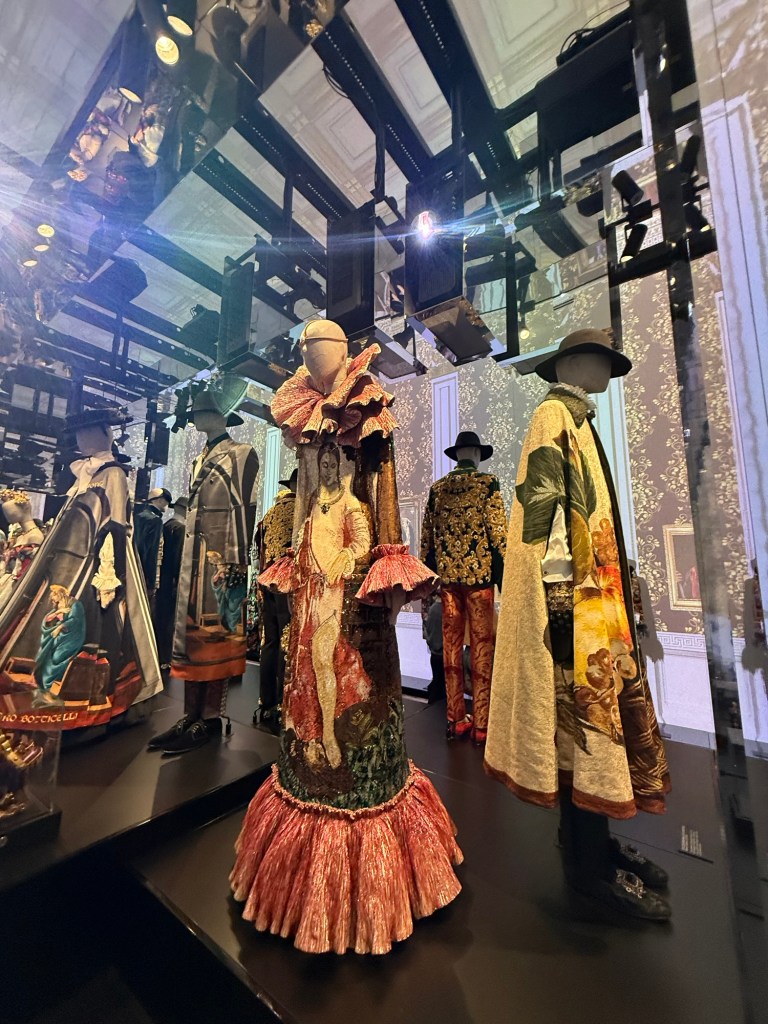
In the heart of Ancient Rome, in this sumptuous room, divine inspiration takes form in a compelling tribute to Ancient Rome, the goddesses celebrating the intrinsic divinity of the human dressed in Dolce & Gabbana.
Detail of the cardinal gloves. Rome eternal beauty Rome, eternal beauty Detail of the bishop’s cape. Rome eternal beauty In the heart of Ancient Rome, the new addition to the exhibition as seen in the Miami’s ICA
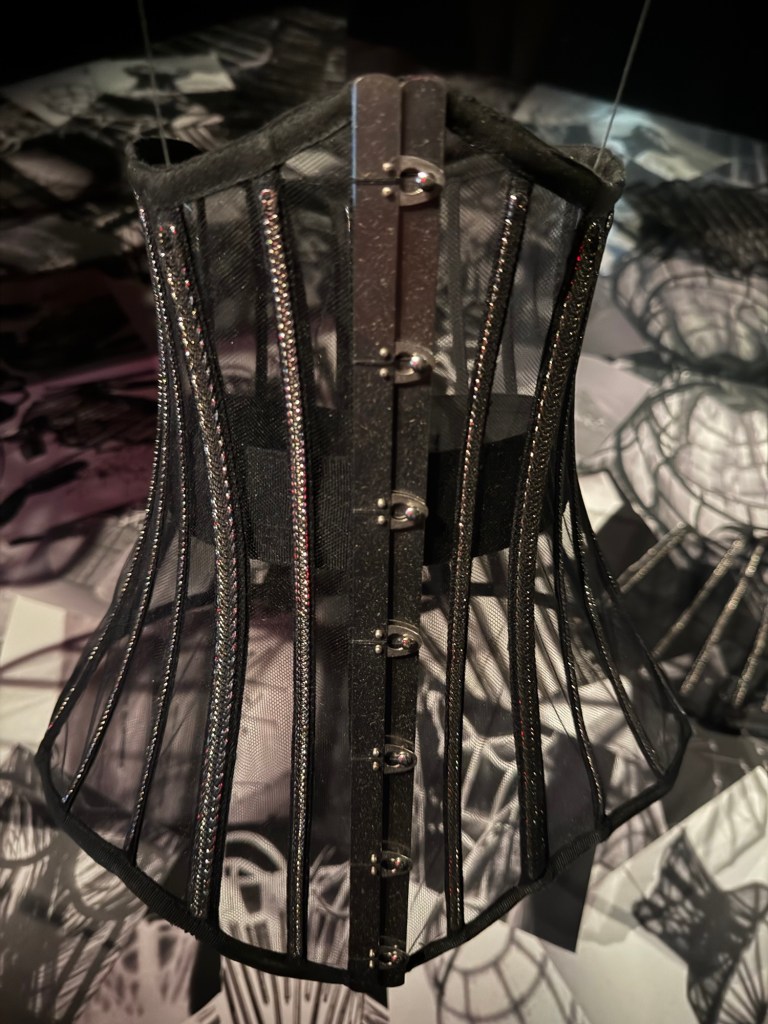
Anatomy of tailoring, the corset is one of the foremost emblems in the history of Dolce & Gabbana. It is a modern homage to the 18th and 19th centuries, the provocative 1950’s.
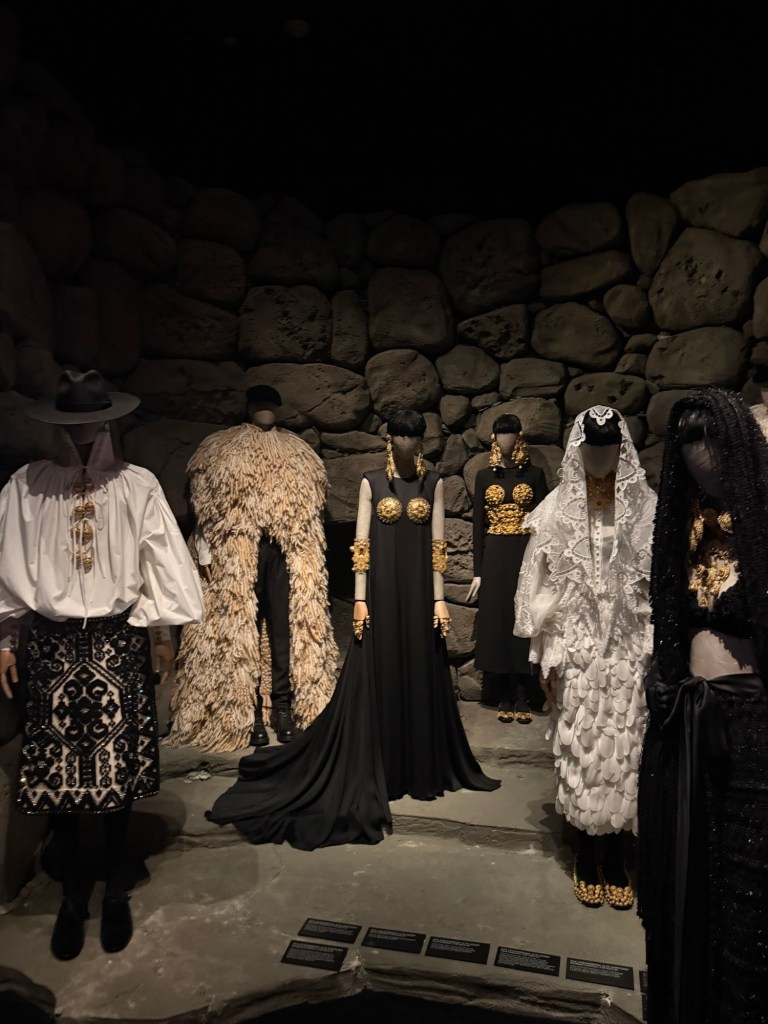
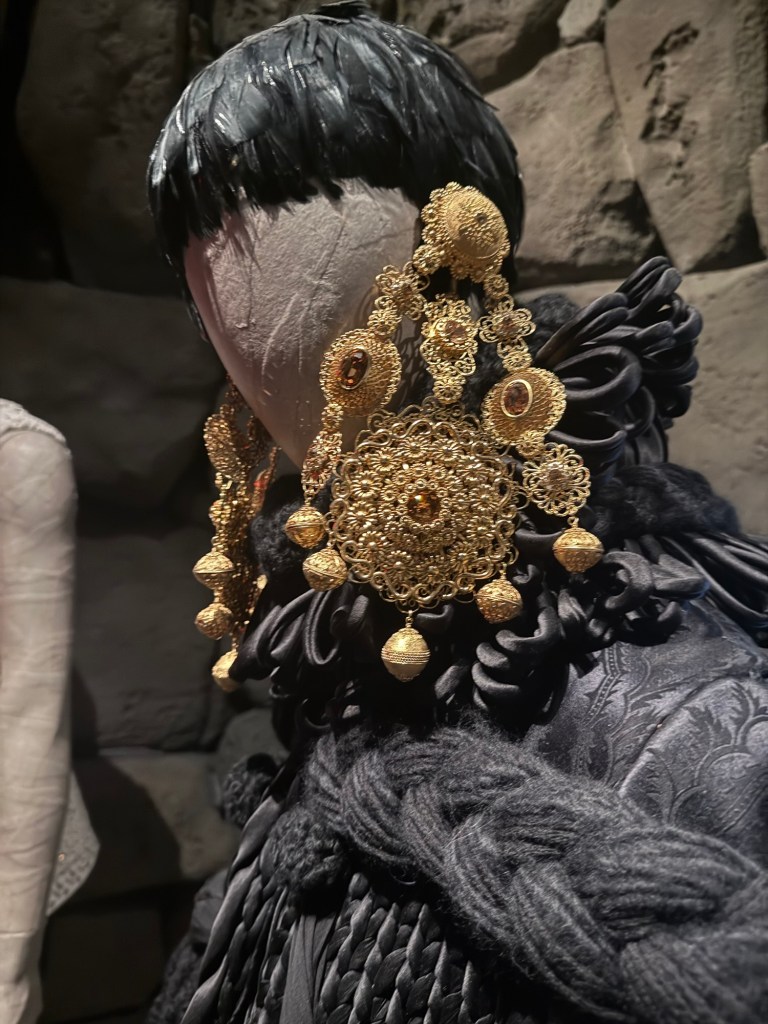
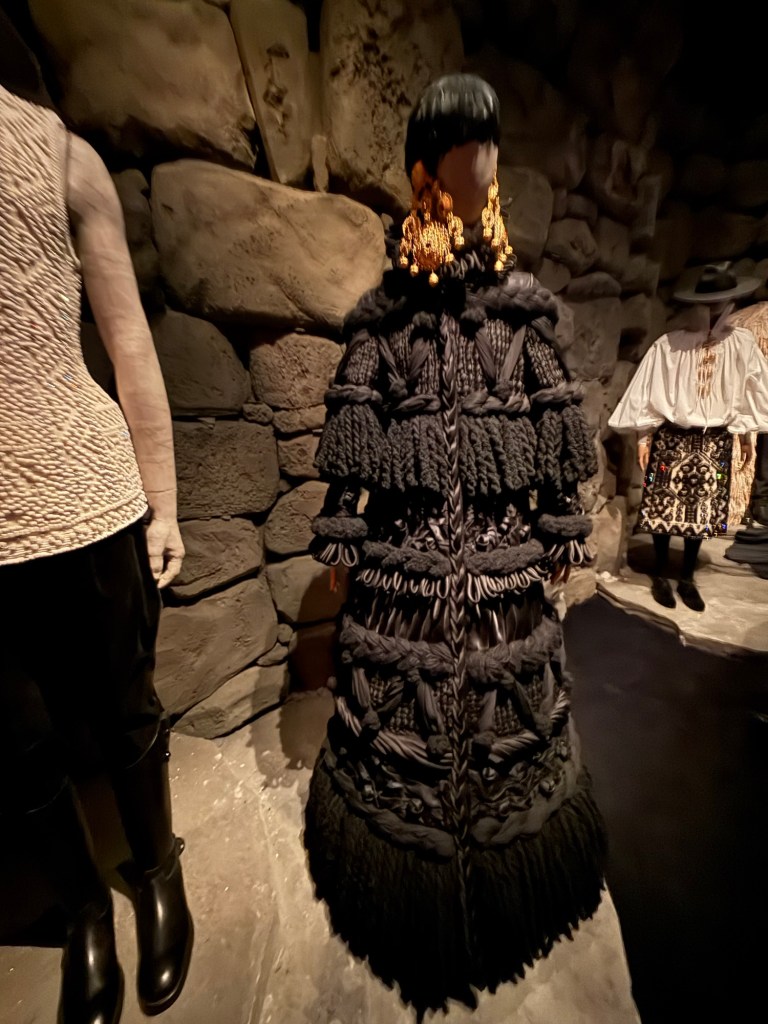
The art of Sardinia, the ancient filigree making in Sardinia, practiced on the island since Phoenician times and later, developed by the Arabs and the Spanish.
The voluminous white and black coats, and blouses recall the “mastruca” the traditional clothes of Sardinian shepherds.
Anatomy of tailoring Alta Moda Nora collection FW 2024-25 Alta Moda Nora collection FW 2024-25. Detail of filigree Alta Moda Nora collection FW 2024-25 illusion tulle coat entirely embroidered with lurex brocades, organza and tubed-shaped chiffon.
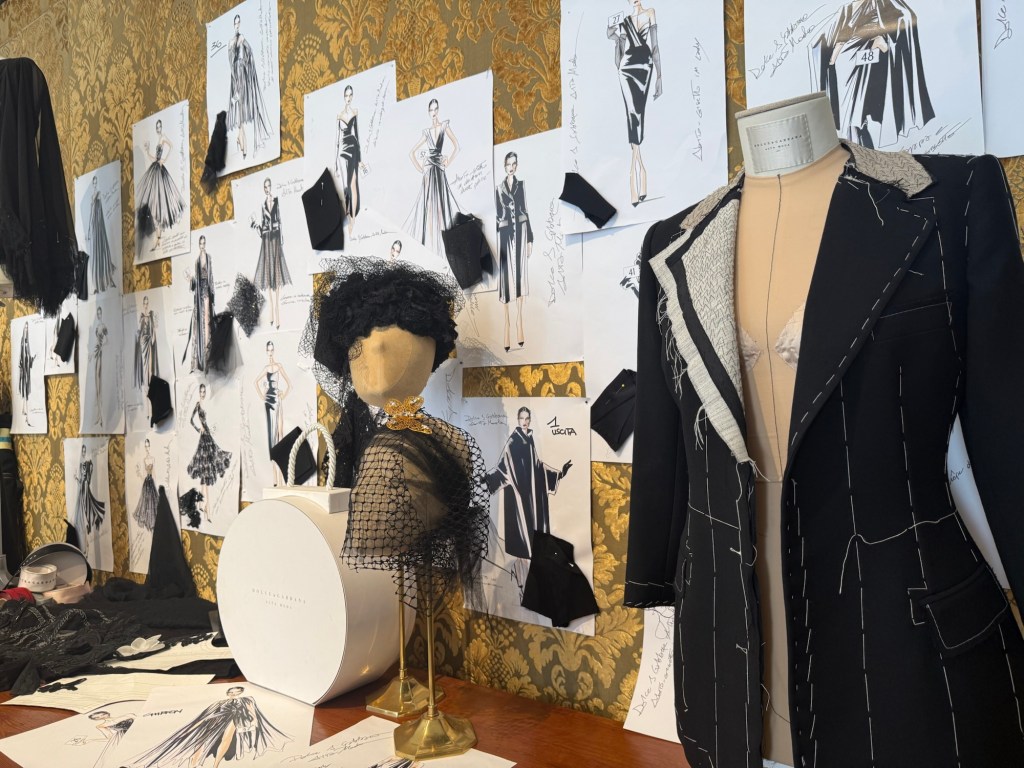
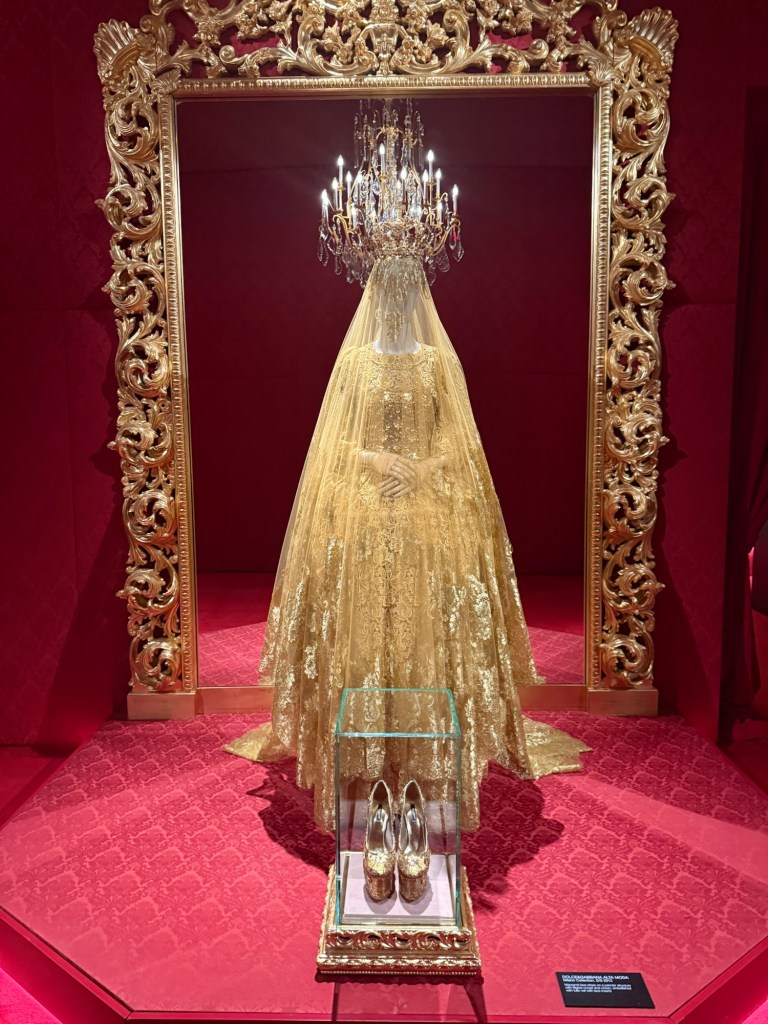
Ateliers, ornaments and volumes: the ateliers are the vital generative force, the beating heart of Alta Moda. Experience live techniques interpreted by various couturiers at the workshop. Furniture and accessories brought from their Milan workshops to Miami.
In the heart of Milan, the dress in particular symbolizes something very dear to Domenico and Dolce, Milan. This dress in gold macrame lace and gold filigree jewelry, was envisioned as an homage to the city.
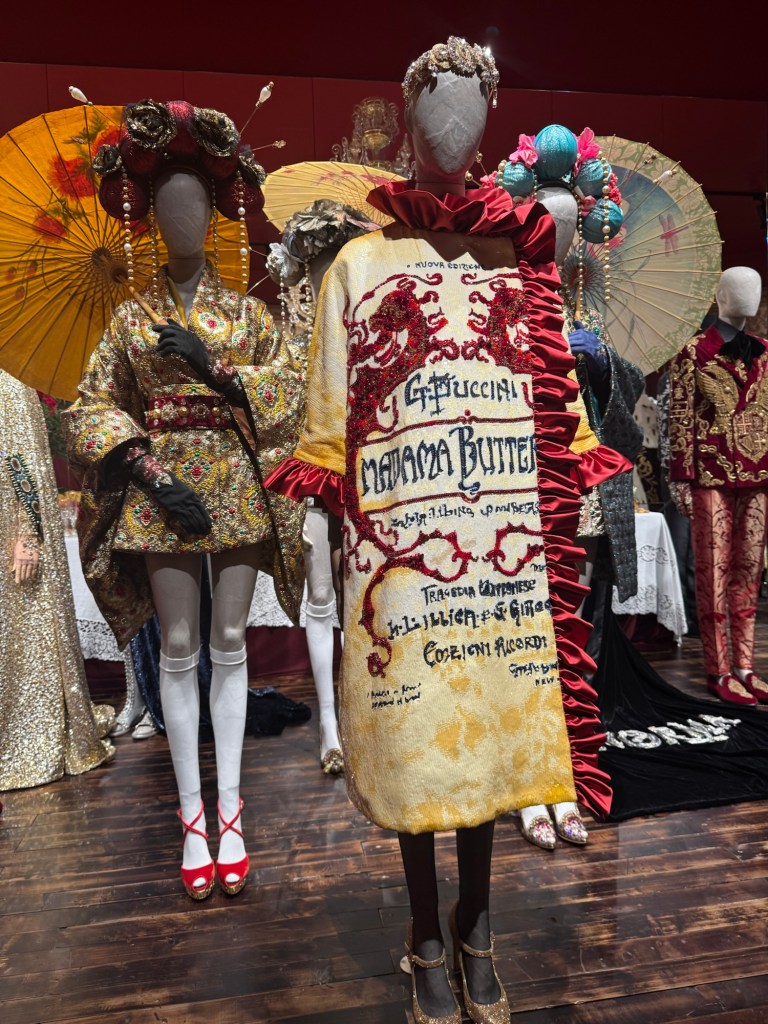
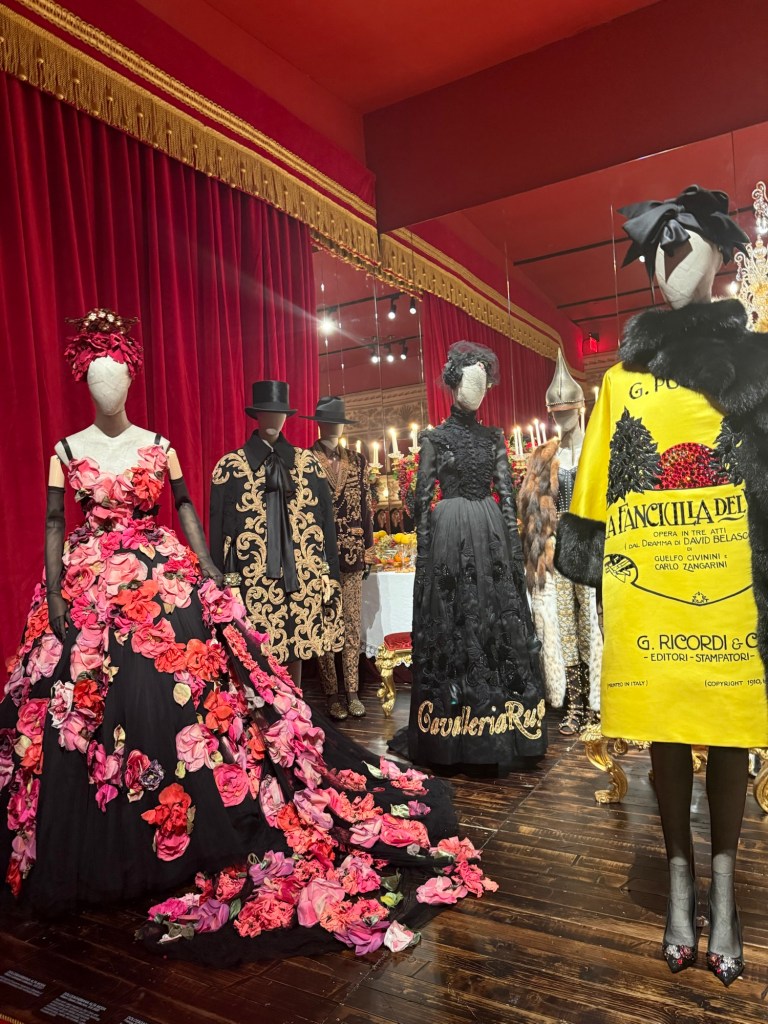
Opera, in the world of Dolce & Gabbana, theater and real life closely mingle in a mutual celebration of beauty. Whether Tosha, Aida or Norma, these female heroins, strong and fragile at the same time, symbolize the feminine ideal of the two couturiers.
The collage technique transposes images from nature or art, history onto the surface of a garment Sketches from the Sicilian Baroque collection In the hear of Milan Milano Opera collection SS 2020 Alta Moda Milano Teatro Collection SS 2016Alta Moda Milano Opera Collection SS 2020
Source: “From the heart to the hands Dolce & Gabbana” edited by Florence Müller. Rizzoli 2024
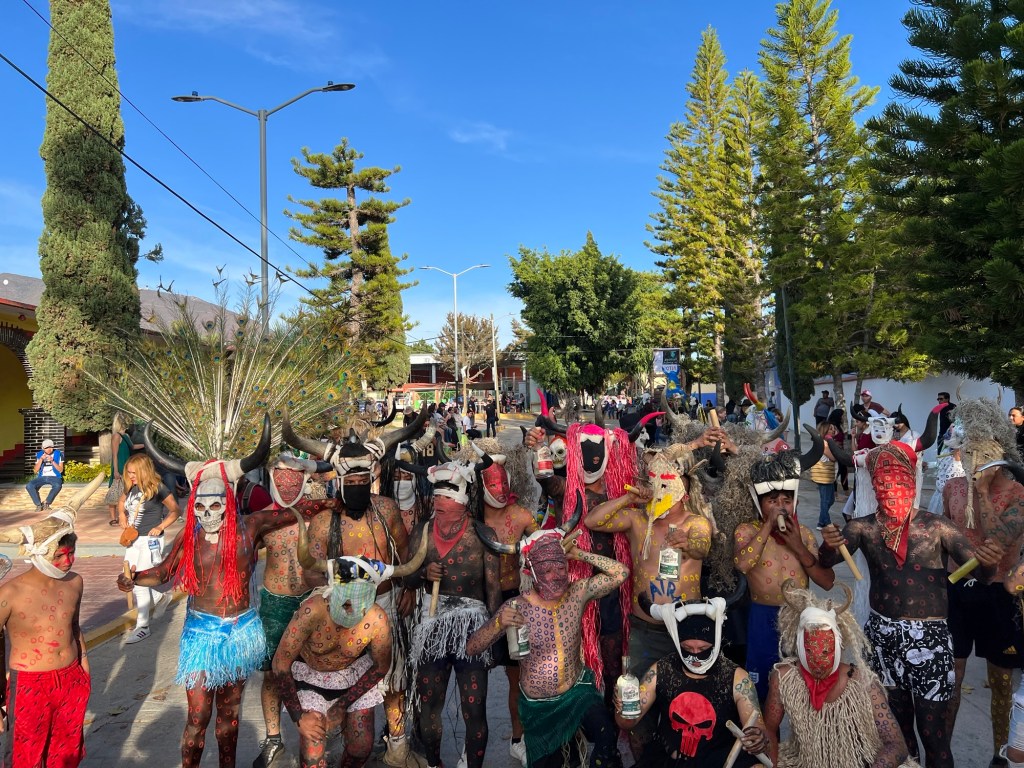
Oaxaca’s carnivals are among the most picturesque and diverse in Mesoamerica, celebrated between February and March before Lent.
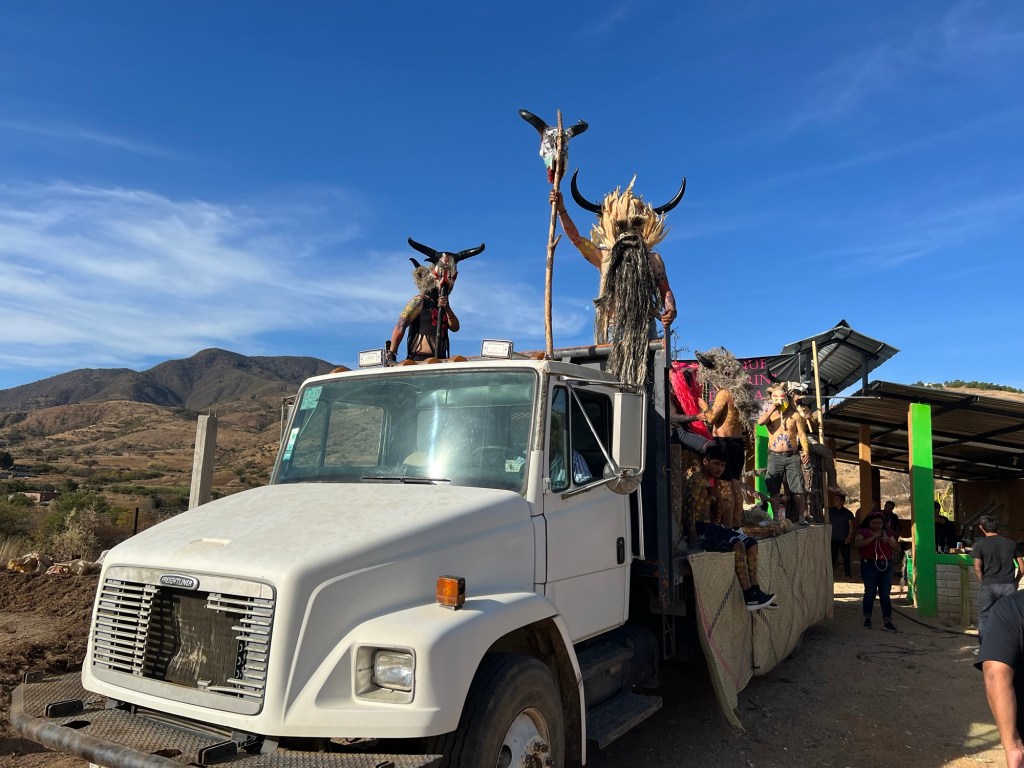
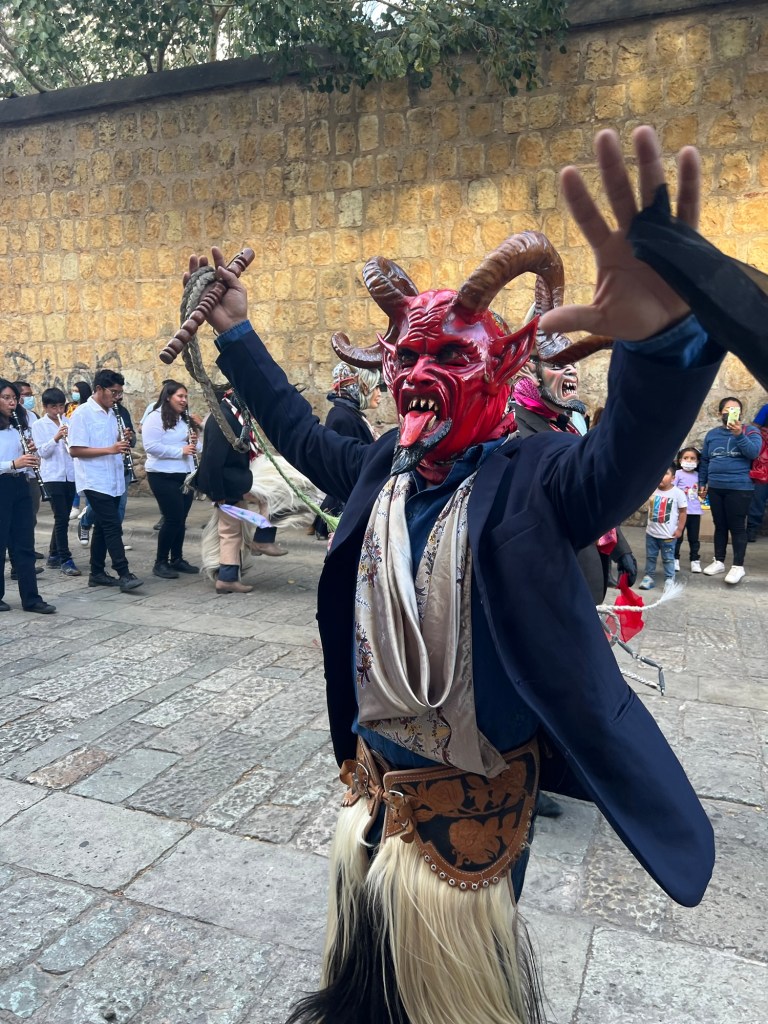
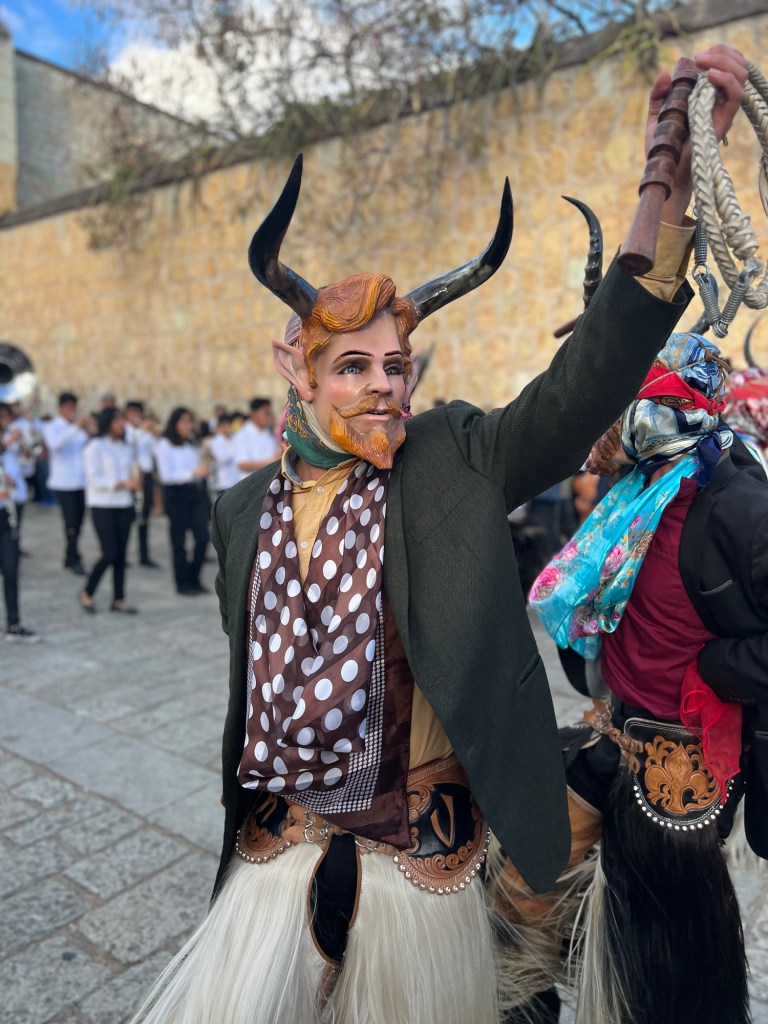
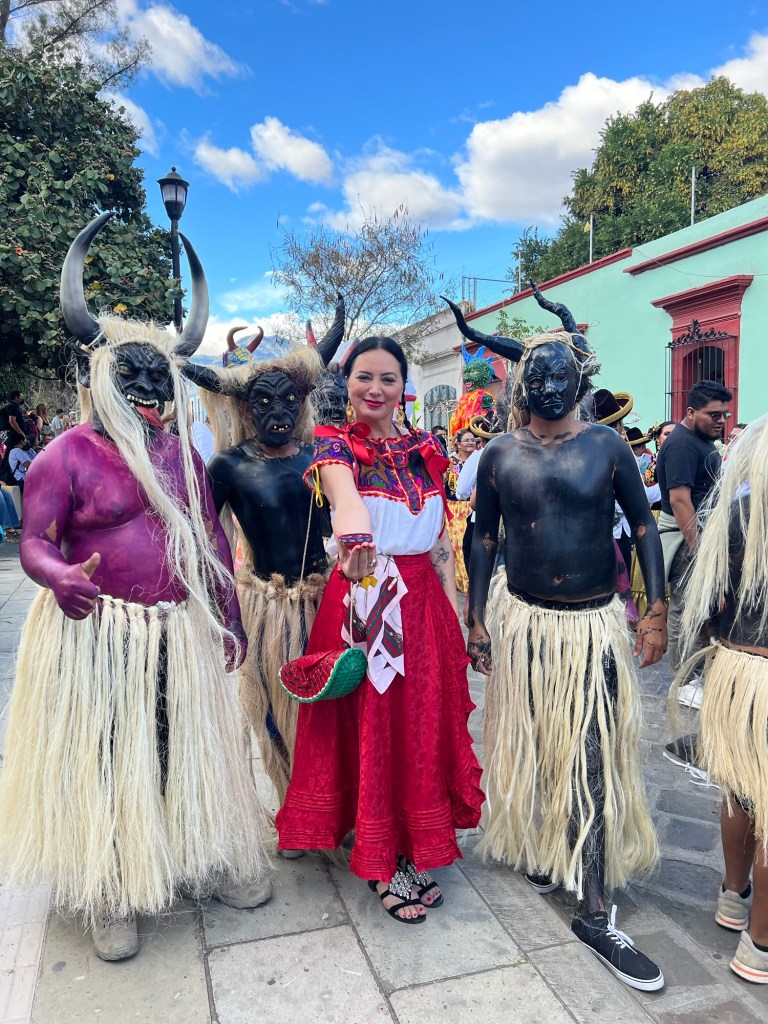
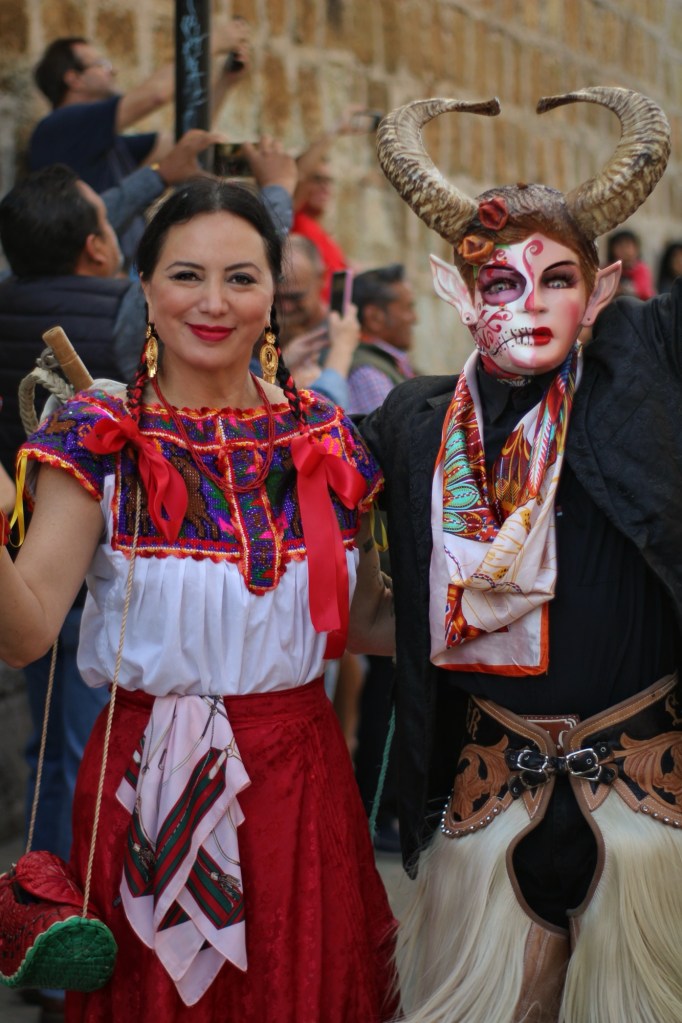
They feature colorful parades, music, and unique characters like the “cachudos” of Santa María Coyotepec, the “diablos pintos” of Santa Catarina Minas, and the devils of Santiago Juxtlahuaca.
Santa Catarina Minas carnivals
Some of the most iconic carnivals include:
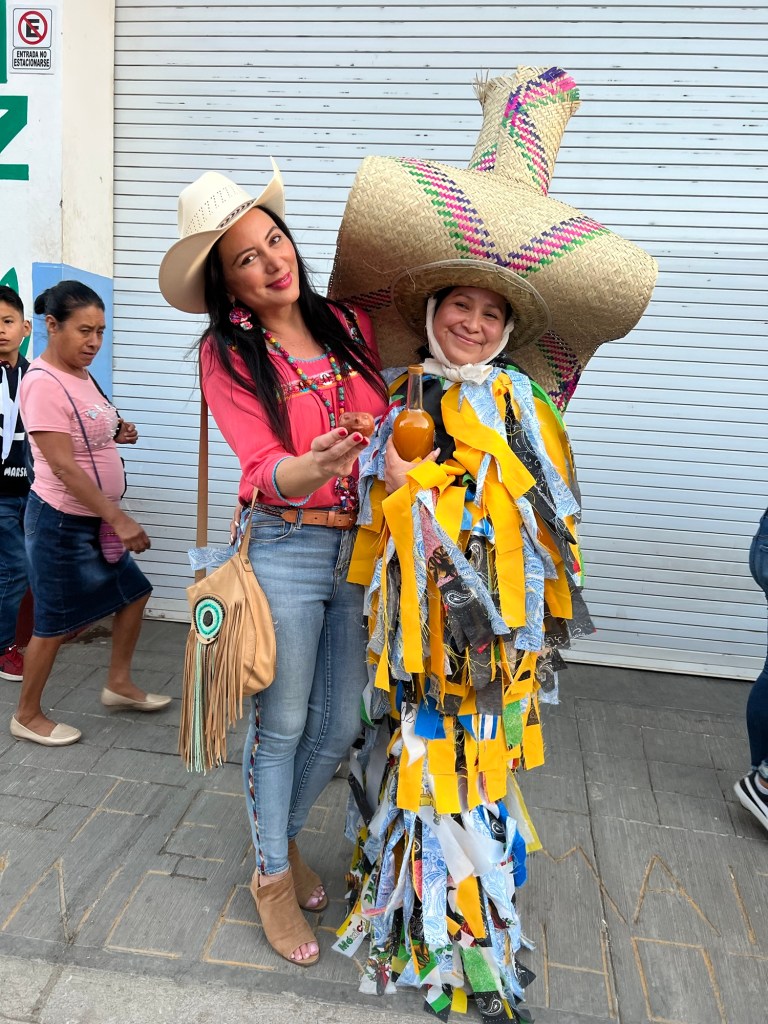
Putleco Carnival (Putla Villa de Guerrero): Famous for its “tiliches”, characters covered in colorful rags dancing nonstop.
San Martín Tilcajete: Features oiled-up “diablitos” roaming the streets with bells.
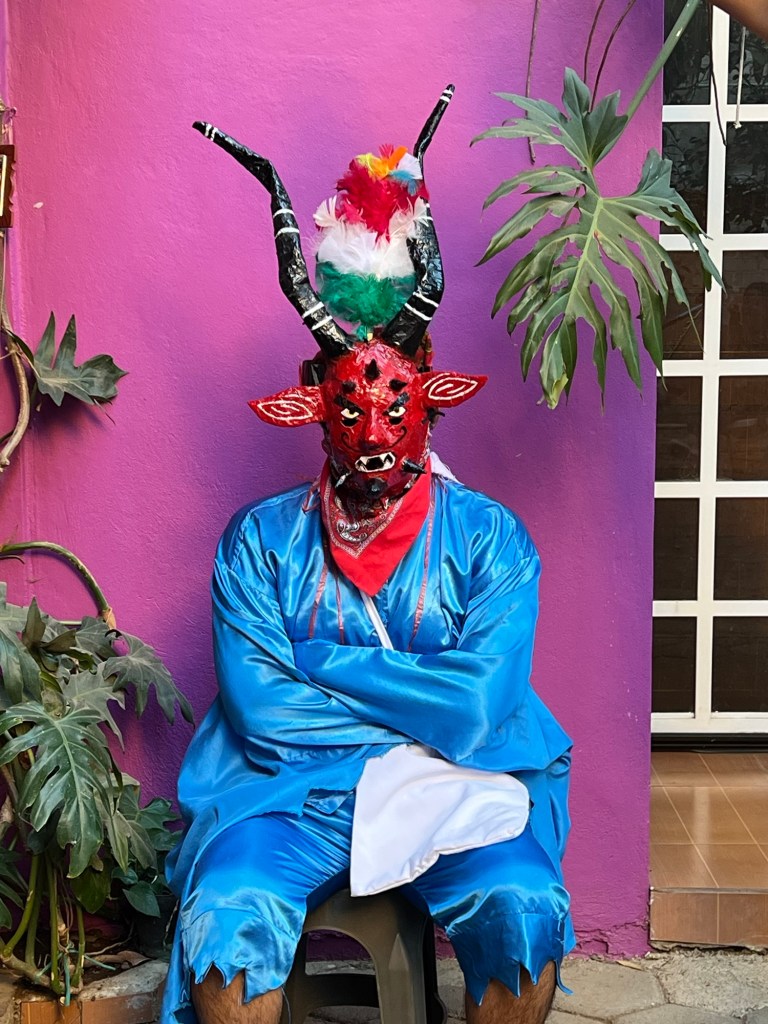
Villa de Zaachila: Devils and decorated eggs filled with flour are thrown at young women as a courtship gesture. The tradition of devils and love eggs in Zaachila is a vibrant expression of Zapotec culture. On Fat Tuesday, groups dress up as devils with papier-mâché masks, ringing bells to signal the last day for “carnal” or bad deeds before Lent. The Devils and Love Eggs Devils carry decorated eggshells filled with baby powder or flour and confetti, breaking them on single ladies’ heads as a sign of interest. These “love eggs” are displayed on embroidered handkerchiefs with love declarations, adding a romantic touch. Zaachila, the last Zapotec Empire capital, preserves traditions like mask-making, feather art, and embroidery.
Santa Catarina Minas: The story goes that in ancient times, they celebrated “Carnestolendas” on the Tuesday before Ash Wednesday, as a way to “cast out their demons” and give death to carnal desires. It was also the last day to eat meat before Ash Wednesday, when they’d go to receive ashes and observe Lent. What are the “diablos pintos” The “pintos” were people who painted their bodies and faces with natural pigments like tizate, apasle, palm, cuernamentas, and animal hides. They’d go out to scare the landowners and rebel, revealing their anger and indignation without being recognized, as their faces were covered or painted. The tradition They’d go to the hills to gather these natural pigments and then descend to frighten the authorities, expressing their inner “demons” and purifying themselves before Lent. This ancient tradition was a form of catharsis, releasing tensions and negative emotions before the reflective period of Lent. It’s fascinating to see how these ancient traditions influence today’s Carnival celebrations in Oaxaca and beyond.
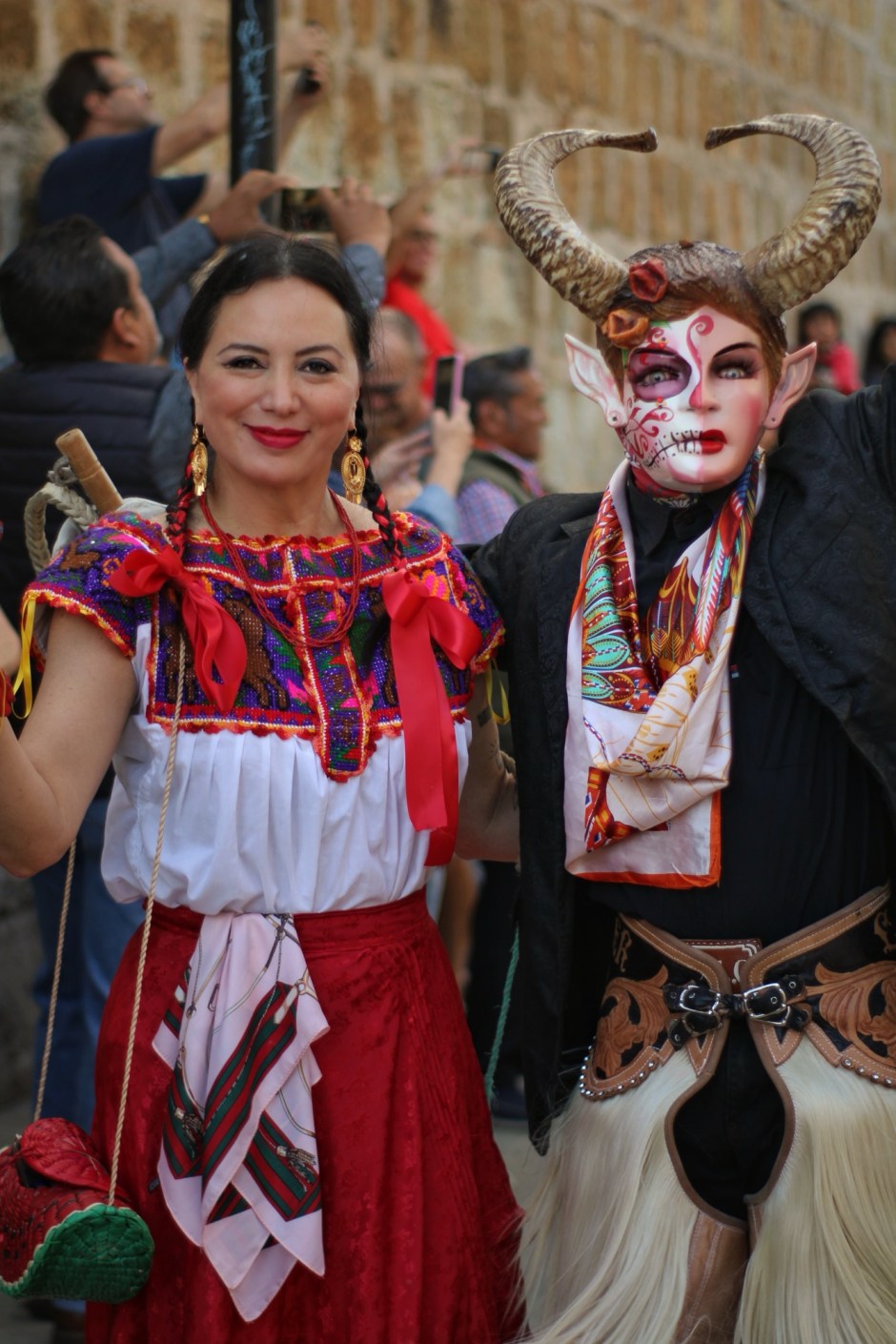
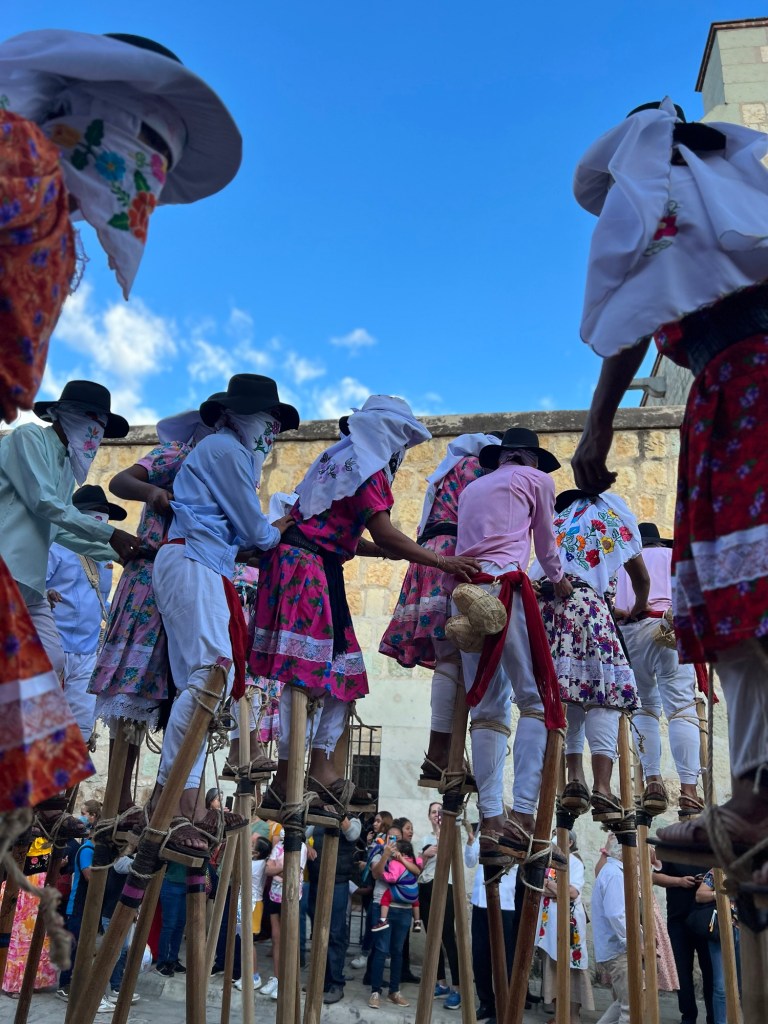
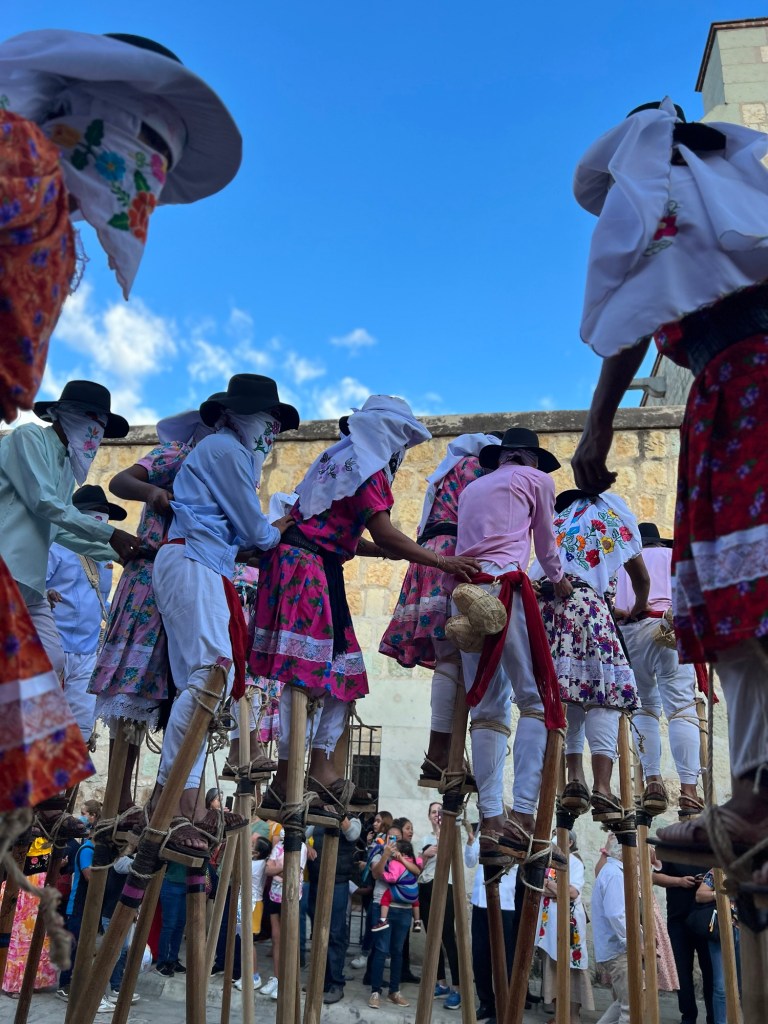
Montserrat Franco and a female Tiliche in Ocotlan de Morelos carnival The Santa Catarina Minas Carnival The Devil of Juxtlahuaca The Devil of Juxtlahuaca Zaachila’s zancudos Montserrat Franco and Cachudos of Santa Maria Coyotepec
Others include San Bartolo Coyotepec, San Juan Bautista la Raya, Ocotlan de Morelos, Magdalena Teitipac, and San Bartolomé Quialana.
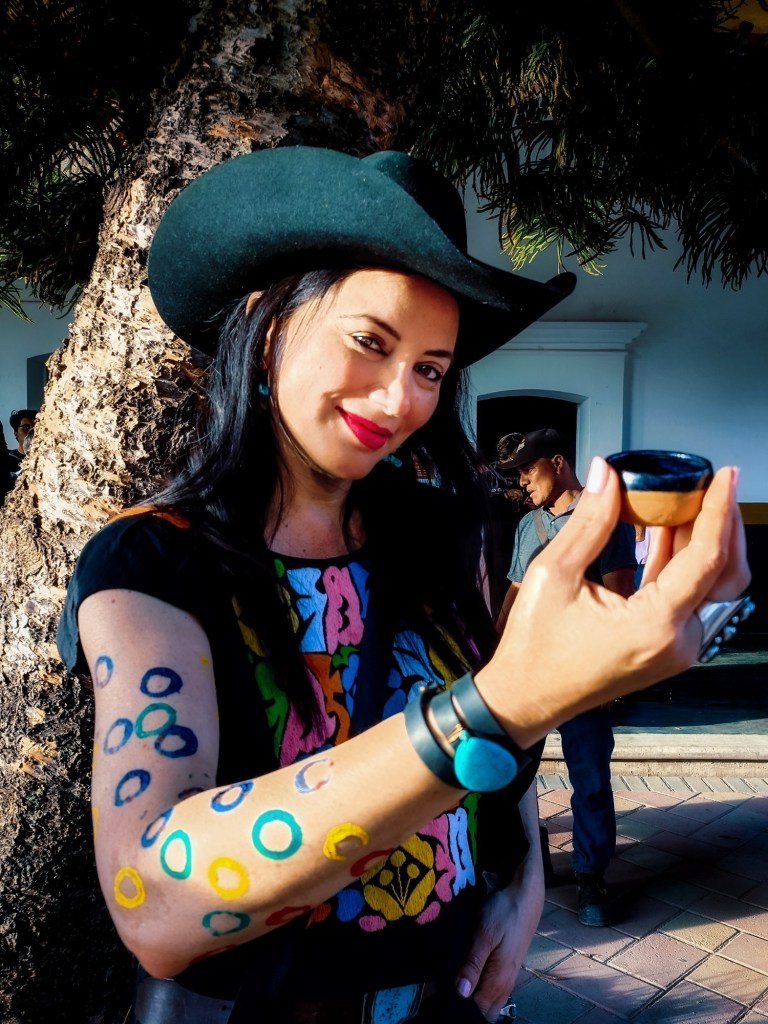
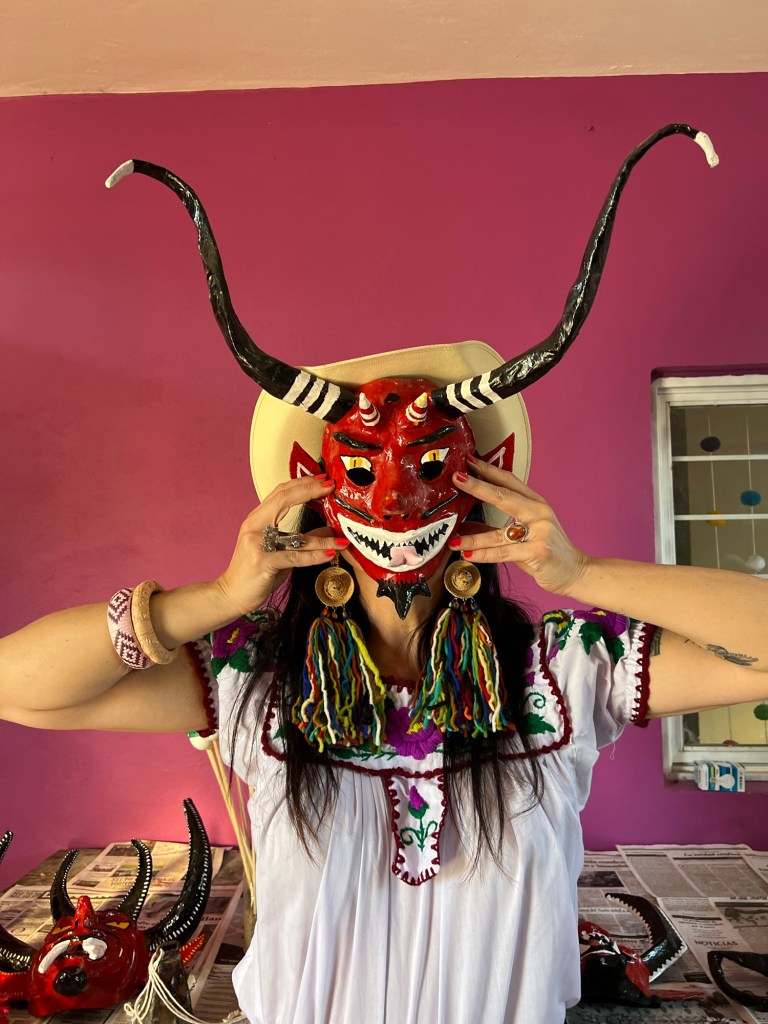
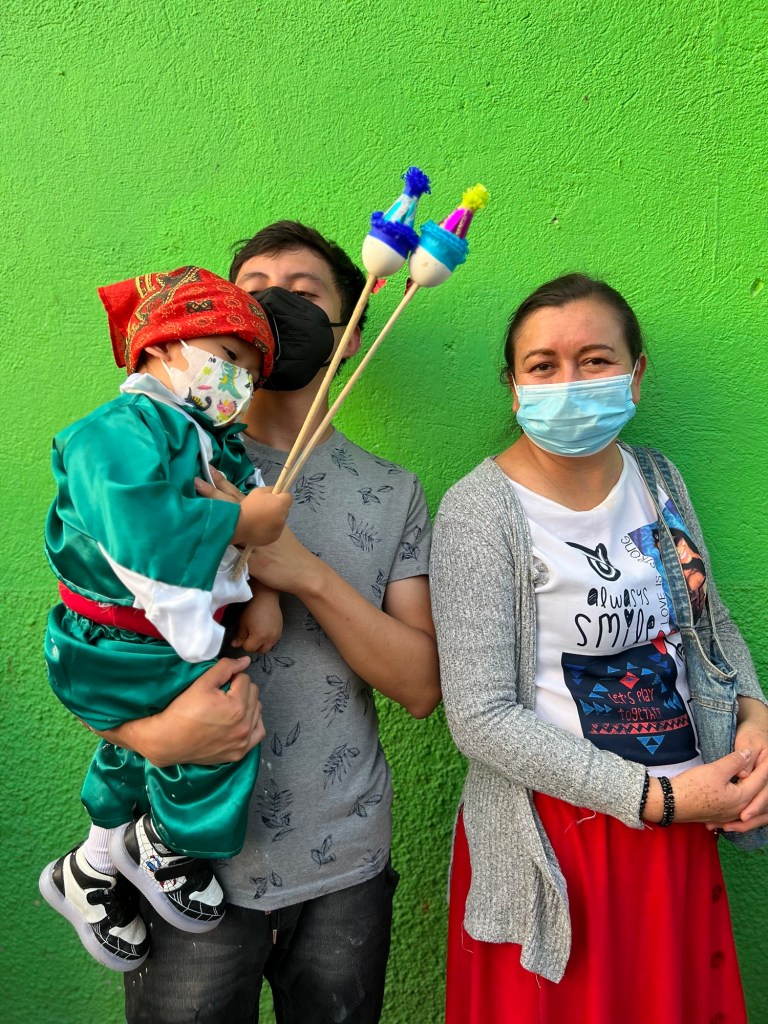
Montserrat Franco in Juquila’s traditional outfit with the Devil of Santiago Juxtlahuaca. Photo credit: Mayin López Decorated eggs filled with flour at Zaachila’s carnivals Zancudos of Zaachila Montserrat Franco with “pintos” dot painting in Santa Catarina Mina’s carnival. Photo credit: Sinuhé Gerardo Montserrat Franco wearing a paper mache mask from Zaachila A devil in Zaachila A family during Zaachila’s carnival
A Land of diversity, Cultural Heritage declared by Unesco, a destination like no other
Montserrat Franco
Oaxaca is not like any other part of Mexico; Oaxaca is a country of its own and that is reflected in the pride of 16 different linguistic groups and 26 sub-linguistic groups in their distinctive 8 regions.
The diversity in the culinary and mezcal is impressive counting the different terroirs, soils and elevations as well as the historic taste of each community: Cañada or Sugar cane fields (home of interesting Agricole rums and Oaxacan whiskey), Coast (excellent fish and sea food), Isthmus (most of the representative Tehuana and Muxe cultures, the famous Iguana soup and other delicacies), Mixteca(famous for their corn), Papaloapan (border with Veracruz, famous for their coffee and cacao), Northern Highlands, Southern Highlands, Central Valleys (where you will be mostly touring and will have all the diversity of agaves for the mezcal production).
Some recommendations:
· Most places, especially markets, taxis, stores, artisan shops, only accept cash in Oaxaca, credit cards only at fine dining restaurants and mixology bars. Always have Mexican pesos and if you need to, check with your bank which bank partners have no foreign commissions on transactions. Remember that US dollars are very low now and change is at around 16.28. You can exchange at the airport upon arrival and at the historic center at the exchange shops, just check the rates first.
· There’s no Uber in Oaxaca but there’s an app call Didi that you can download and place your credit card, it connects to yellow taxis and the rates are lower than negotiating with taxis on the street, I recommend to set the app to “Pay with cash” because when the driver sees that you are paying with CC on file, he can just cancel your trip because it takes longer for them to get paid.
· Always take a yellow cab; if you see a red or blue cab, those are called independent or “foraneos taxis” and connect closest cities but they are not allowed to enter inside the city center of Oaxaca, you may end up your trip far from your hotel if you take one of those taxis, paying the same rate.
· Getting around with taxis in Oaxaca can be a pain because they can technically charge you anything; always ask first how much the ride will be from your place to a place you go and agree to it.
· Tips are voluntary and servers always ask if you want to leave tips. US nationals are always the most generous but servers are not used to more than 10 or 15% gratuity.
· Always wear comfortable shoes, you walk a lot in Oaxaca
· Always wear sunscreen, hats, sunglasses, sun is pretty strong
· Keep yourself hydrated, never drink water from the faucet, not even to brush your teeth, use bottled water.
· Have some repellent, there are mosquitoes in the villages and there’s dengue going on right now.
· Oaxaca is pretty safe but avoid walking on dark streets during late hours (midnight and up) at the historic center. If you exit from a Mezcaleria try to always go on main streets; you will see the lively scene but always keep an eye on your back and surroundings.
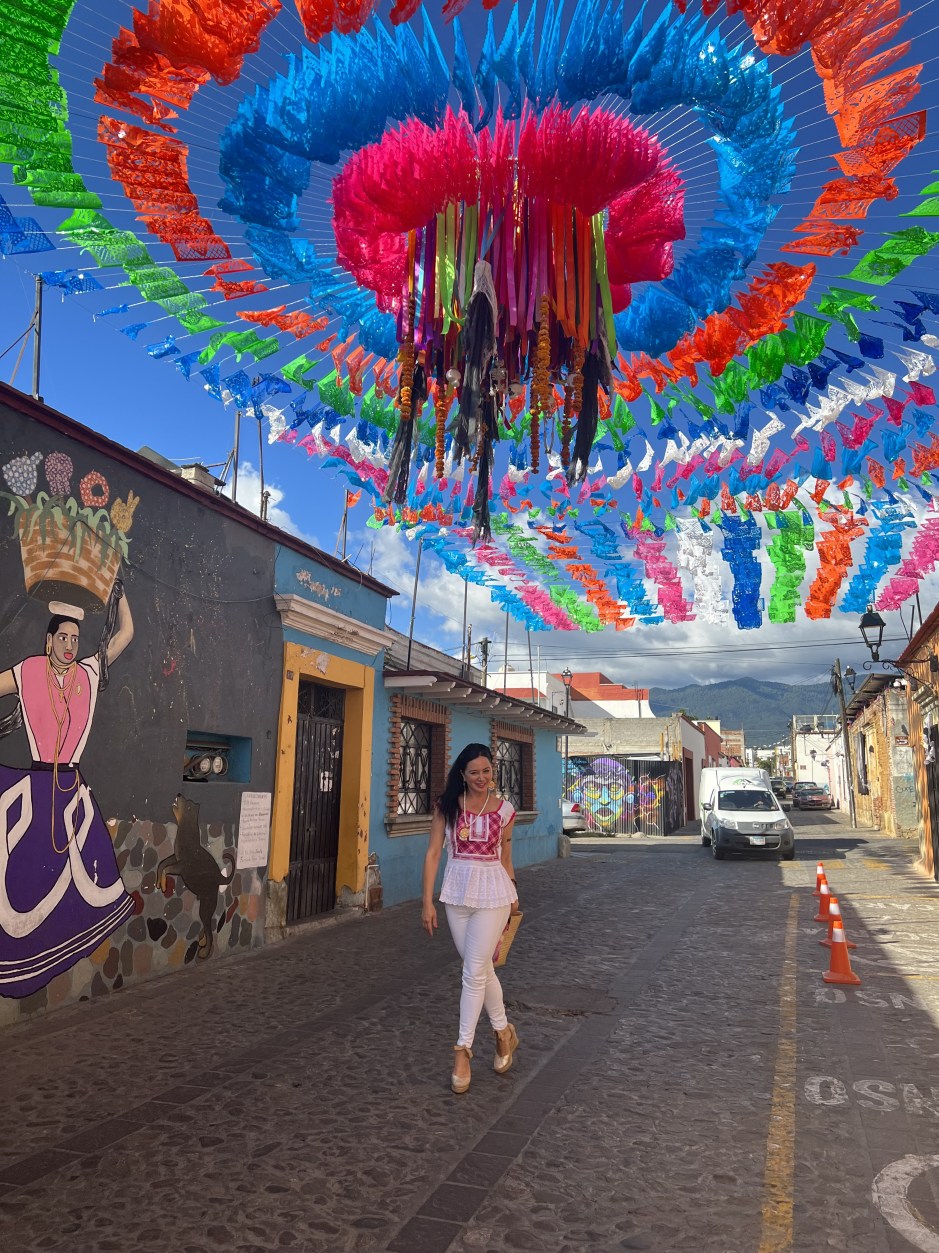
· In any situation enjoy everything that Oaxaca has to offer: the gastronomy, the mezcal, the craft and the lively scenery because every day in Oaxaca is a celebration; you will see most of these “calendas” or processions with dancers, giant props “monos”, globes “marmotas”, live marching bands and all of that is just part of their daily lives and is free for the public to see it and enjoy around the main streets of the Santo Domingo Temple. If you just walk around there or have a coffee or drink at a rooftop nearby Santo Domingo at around 5 to 7 pm each afternoon; you will experience it, most-likely is wedding or a Quinceanera (Sweet 15 celebrated in Oaxaca) depending of the date it is also a celebration of a Saint Patron (they have so many all year long)
The Santo Domingo Temple is the center of the everything that happens around the city of Oaxaca
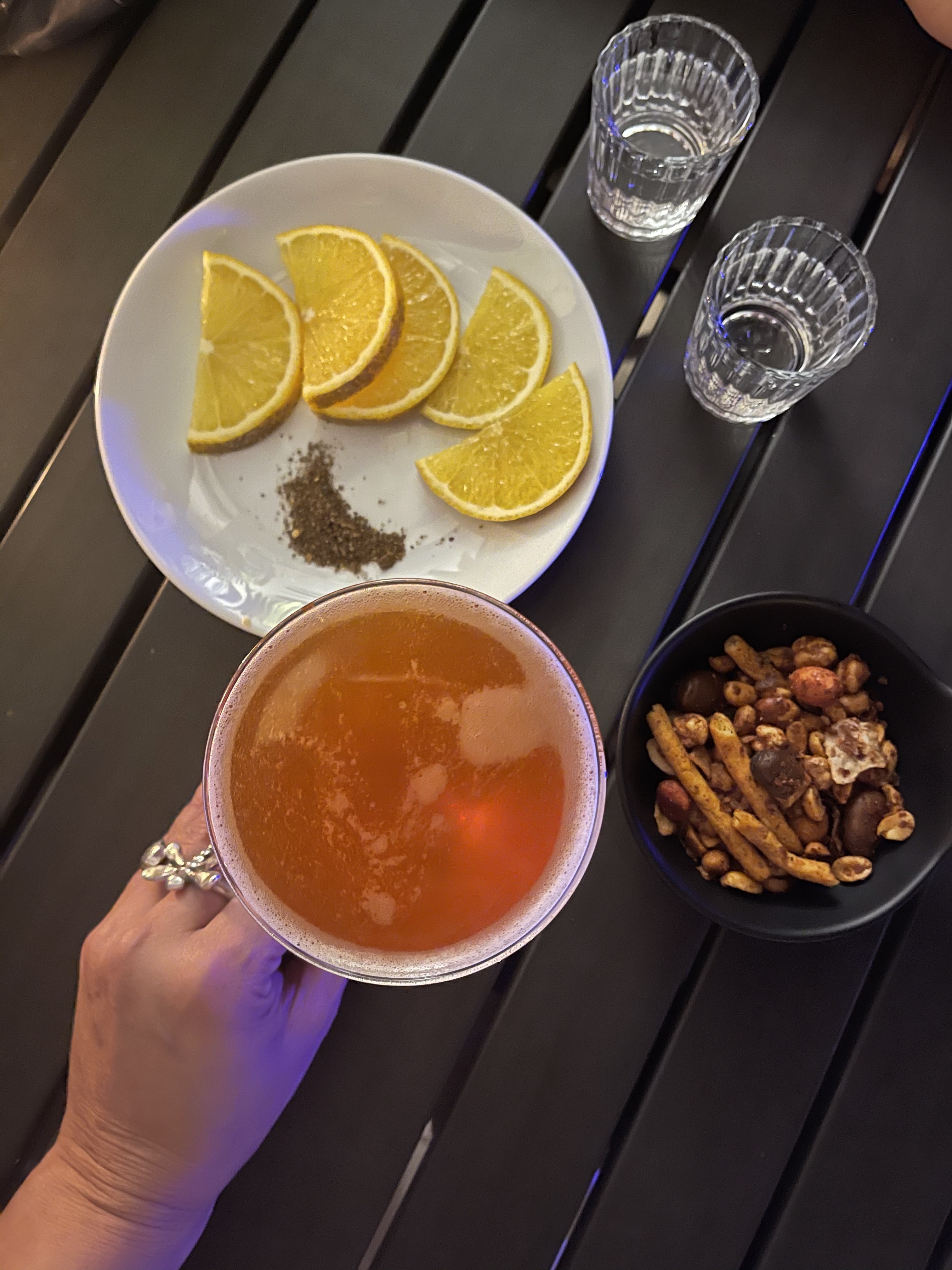
Mezcal service and cocktail offering at Casa Oaxaca
Culinary etiquette and must tries in Oaxaca:
Memelas: Handmade white corn patties made of “masa” they are always made to order in the comal (kind of like a hot clay grill) once cooked, the memelas (thicker than regular tortillas) are brushed with “asiento” (pork lard) placed again in the comal, they add “frijoles” (beans puree) “quesillo” cheese (often called “Oaxaca Cheese” but the correct name is “Quesillo”) those are the basic ingredients but you can add toppers such as: meats “tasajo” (a thin slice of beef) “Cecina” (a thin slice of marinated in chiles beef). Memelas are usually taken for breakfast with “café de olla” (if you are an espresso person, you may not like it as it is diluted with water; coffee cooked on a clay pot with spices such as cinnamon, cloves and it is already sweeten with “piloncillo” (unrefined cane sugar paste)
Memelas and salsitas service at Ancestral restaurant in Xochimilco
Tlayudas: These are white or blue corn patties made by hand and then pressed to make them very thin; cooked at the comal and then left to dry. They can remain edible for a long time in airtight containers. Some foodies describe them as the Oaxacan pizza, the tlayudas are something so traditional of Oaxaca that you can’t leave without trying them. Once the thin patties are ready and crispy, they are placed at the comal and “asiento” is added (if you are vegan or for religious reasons you could ask them to make it without asiento or with a vegan base asiento (most established restaurants can accommodate), then the frijoles, then quesillo (the main ingredient in the tlayuda) avocado slices, you have a choice of Cecina or tasajo and is accompanied with roasted green onions and radish.
Salsa verde and salsa roja: These salsitas are always present to accompany any dish, the green sometimes can be very spicy as it is made with habanero, the red can be a mix of mild chiles, some restaurants make these salsas in front of you and you can choose the salts you want and level of spiciness.
A traditional Oaxacan platter with meat, grilled cheese, guacamole, chiles, pork, sausage, bean, salsa roja and totopos (corn chips)
Chapulines: the roasted and seasoned crickets are the signature topping for any dish in Oaxaca. They contain more protein than a slice of beef. You can find them in all sizes and can eat them as a snack, on top of guacamole they taste fantastic, with salty peanuts and nuts. They are also grinded and made into salts.
A vendor stand at the Merced market with an assortment of chapulines salt and other favor “botanas” (appetisers)
Sal de Gusano: the worm that is around the maguey (agave) is soaking the agave SAP and is rich in flavor; it is collected and let to dry, then roasted and ground with spices to be converted into salt. It is served along with orange slices, green apples or jicama after a sip of mezcal but is preferred to have just the mezcal without any of that and use the gusano salt mostly as a rim for cocktails.
Mole: there are 7 different types of Mole in Oaxaca as opposed to Puebla where there is only 1. The competition has always been there as to who makes the best mole, but the reality is that each family in each region of Oaxaca has a signature recipe and their traditional mole for each occasion. On my recommendations there are some moles to taste in restaurants but you can also taste some at the mercados or towns nearby and see the difference.
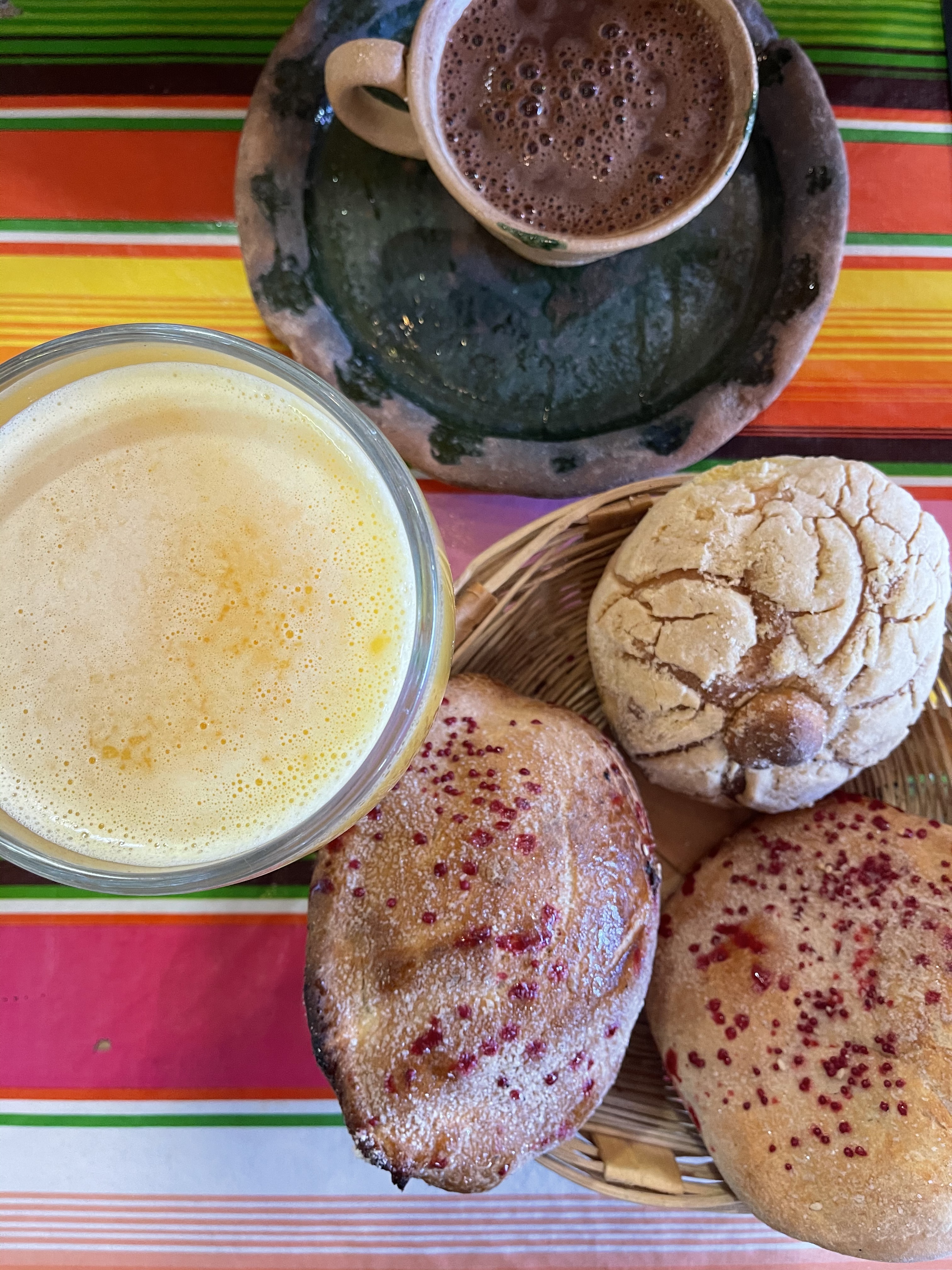
Chocolate: in Oaxaca they will offer you for breakfast even before coffee a Chocolate de agua (basically a non dairy hot chocolate) and a Chocolate con leche (a hot chocolate on hot milk) the beverage is very rich in flavor and already has lots of added sugar, vanilla and roasted almonds. The basic chocolate paste is made on the metate (an ancient stone grinder). On my recommendations you can also visit a traditional Chocolate factory at one of the mercados where you can see the process, now made in metal grinders, is still very old fashioned. The most important thing about the chocolate they serve you is that they will use a green or red clay jar and a molinillo (some kind of a wooden wisp) to make the bubbles right in front of you. If it doesn’t make bubbles, the hot chocolate is not perfectly served.
The famous Oaxacan Chocolate served in a clay jarrito at La Merced Market
Tejate: an ancient drink that had ceremonial purposes in the past. It is very refreshing and you will see it in the streets served from giant clay containers on “jicaras” hand painted gourd vessels, you can also ask for a plastic container to go.
Pan de Yema or Pan Dulce: an egg, water, flour and pulque (fermented agave SAP) yeast, some bread makers now use baker’s yeast. They will always serve you this bread (that is the original recipe for the Pan de Muertos) with a chocolate beverage or coffee. The Pan dulce will have some variations on shape and the crusty top (also called “conchas” in other parts of Mexico).
Pan de yema and pan dulce served with chocolate and orange juice at La Merced market
Barbacoa: best barbacoas you will find at the village’s markets; the most popular barbacoas are the ones of the village of Zaachila which was the last capital of the Zapotec empire and about 40 minutes from the center of Oaxaca or in the Tlacolula market (about 40 minutes from Oaxaca’s city center) Barbacoa can be of sheep, goat or cow but most popular and rich in flavor are the first two. Beef is first marinated with spices and then cooked in an underground oven, a mezcal bottle is placed next to it as a blessing. You can also experience and see the “destapada” when they open the oven and serve you a copita (tiny glass) of warm mezcal to open the appetite before having the barbacoa for breakfast or lunch. Usually it is the meal/brunch on Sundays. At markets it is served with a generous dish of soup from the barbacoa itself and large tortillas with all the toppings to make your own barbacoa tacos.
Aguas Frescas: at any restaurants or markets the aguas frescas are always available and since this is pure fruit juice, you have all the variety that the tropical and sub-tropical region has to offer.
Nieves: These are Oaxacan sorbets, made with real fruit, water or milk in the old fashioned way (wooden tanks) . They have great flavor. Some of the best nieves are at La OaxaqueñaPlaza de la Danza, on the same plaza of La Soledad Church, this is great area to have a seat and enjoy the sunset or after a meal, have some nieves and listen to the marimba (steel drum) players that are always there.
Mezcal: the pride and joy of Oaxaca is Mezcal, I have recommendations on the next posts of some of my favorite mezcal routes and mezcalerias as each region has a signature mezcal making and agave diversity as well as each region’s microclimate, water and terroir will influence on the final product. What used to be a drink of the community made in small batches for that special occasion is today a fashionable spirit praised by bartenders around the world and loved by millennials. Today is the fastest growing spirit category.
The city of Coral Gables was developed by George Merrick with the conception of “The Beautiful City” an architectural movement from the late 1800’s and early 1900’s that includes the “Beaux-Arts” style characteristic to many buildings not only in Coral Gables but also can be seen in Downtown Miami.
Merrick a visioner himself created unique villages in to the City, on a plan that only Walt Disney could conceive; Merrick was determined to make this town beautiful.
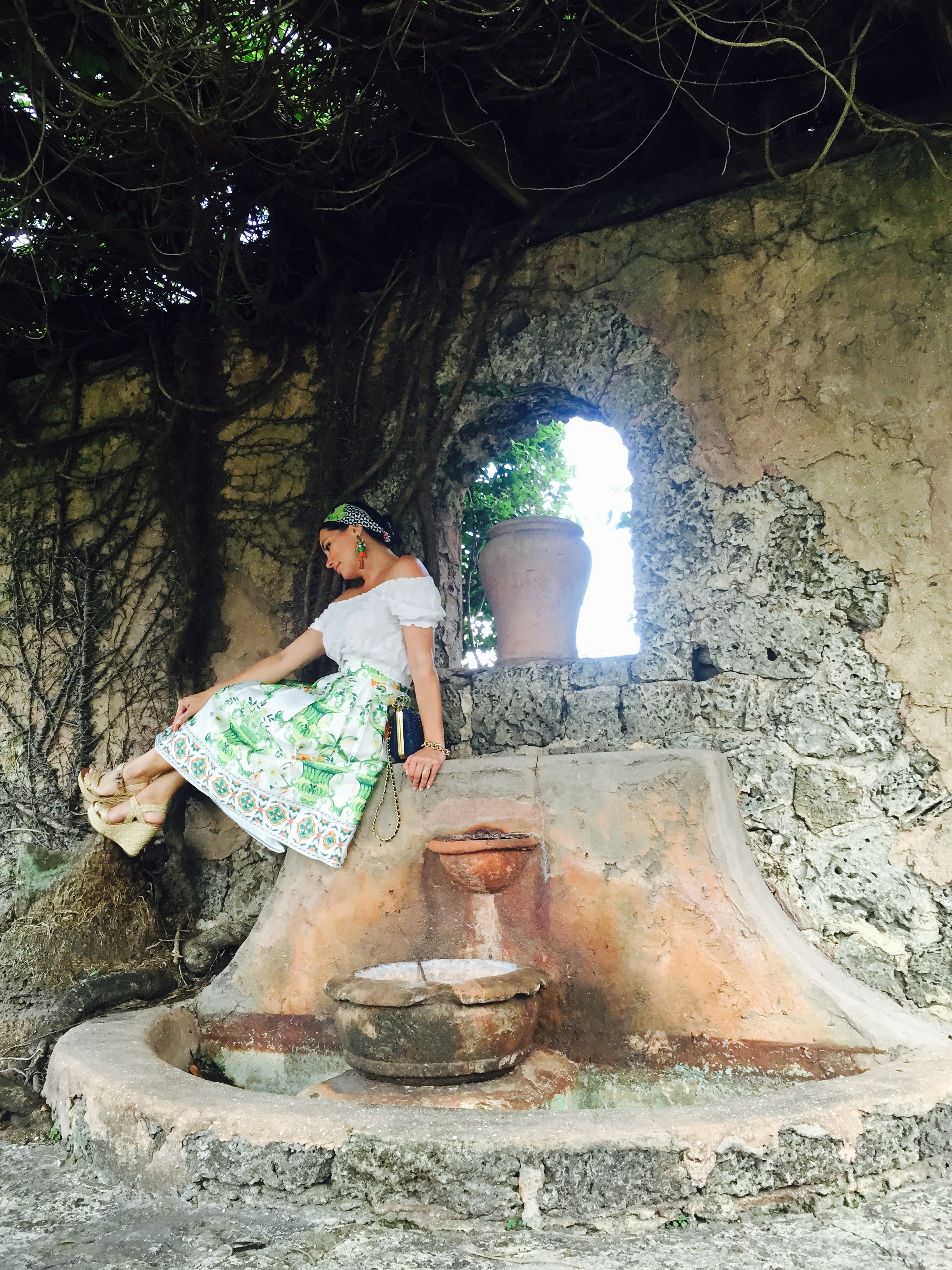
One of the typical scenes in Coral Gables, a fountain built on the coral rock (limestone) bringing reminiscences of an ancient Spanish village.
The Villages
I invite you to take a closer look to the villages and admire the architecture, the gardens, the arched gates and feel like you have travelled around the globe in less than a day.
The Italian Village: Stroll on Montserrat, Palmarito and Altara Avenues, the homes here will transport you to the Villas of the 17th century in Italy. Frank Wyatt Woods designed them in 1926.
The French Villages: Conceived after 18th century French country farm houses and chateaux; these villages are located on the 500 to 1000 block of Hardee Road.
French Normandy Village: Did you notice when driving on traffic on LeJeune Road the particular houses by the 400 block of Vizcaya Ave? These are the 15th century homes found in England and France; constructed here in the 1930’s.
Pioneer Village: When driving or walking around Santa Maria Street by the Golf Course of The Biltmore Hotel; take a look at the Colonial Village with tall pillars, white picket fences, two story porticoes.
Chinese Village: The colorful Chinese compound style residences were designed in 1926 and you can see them on the 5100 blocks of Riviera Drive, Menendez, Castania, Maggiore and Sansovino Avenues.
Dutch South African Village: Designed by Palm Beach Architect Marion Syms Wyeth, these L and U shaped farmhouses resemble the homes of the wealthy Dutch colonists and you can see them on LeJeune Road and Riviera Drive, Maya Street.
The predominant architectural lines in Coral Gables are the 1920’s Mediterranean Revival Style and The Spanish Renaissance often confused with the 1930’s Art Deco because of the timeline between styles.
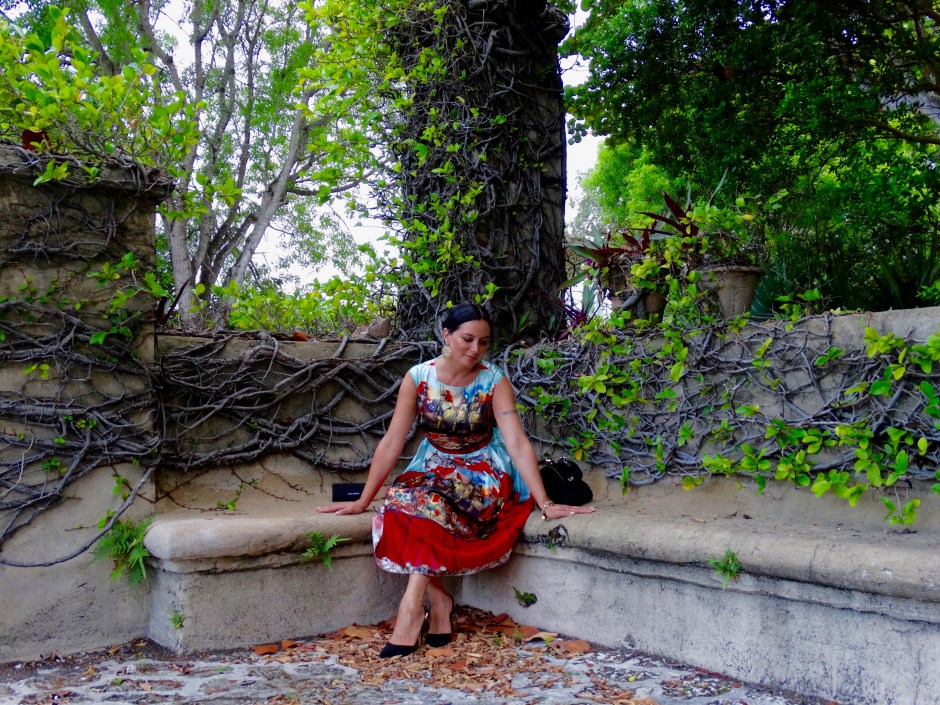
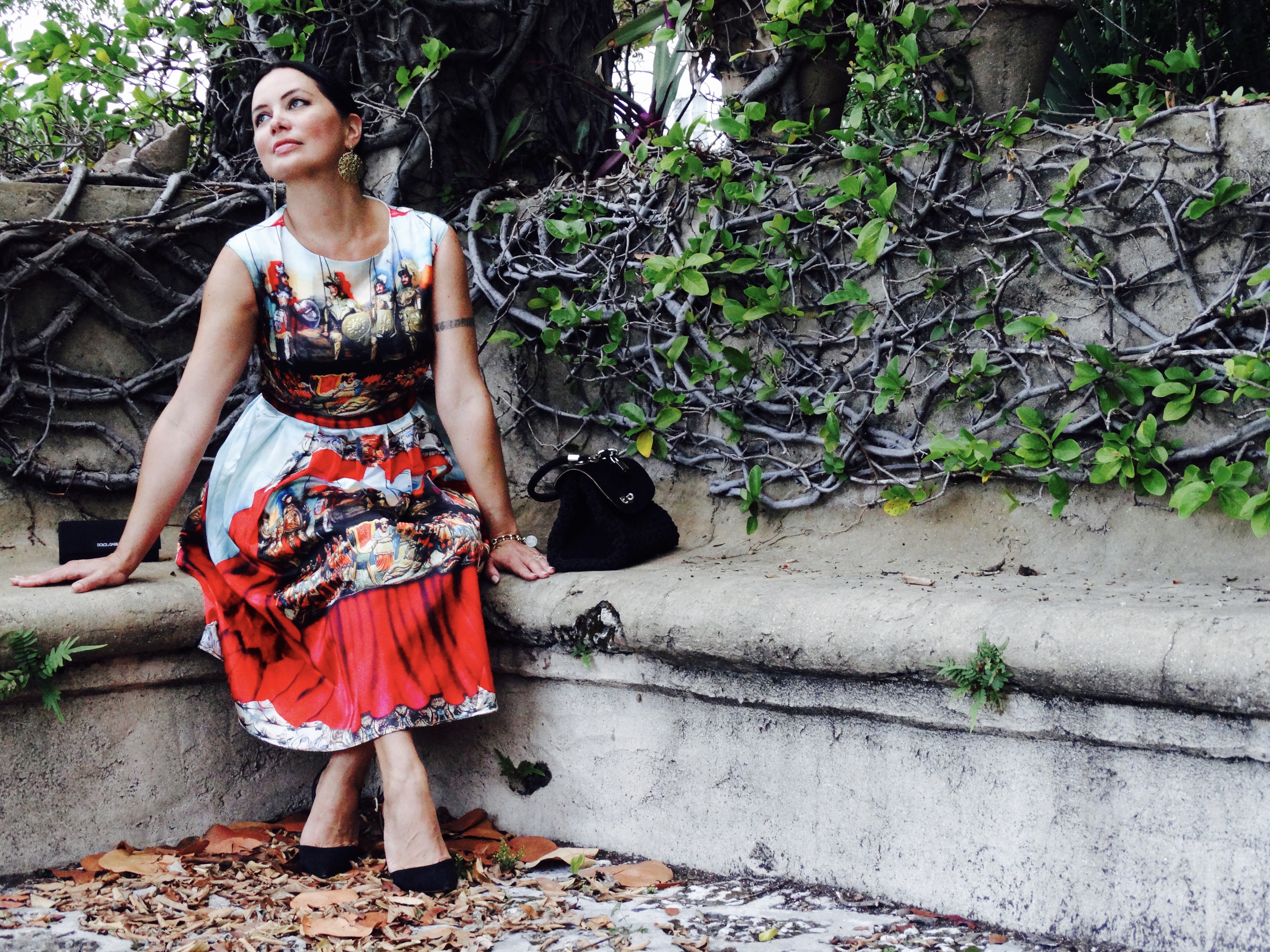
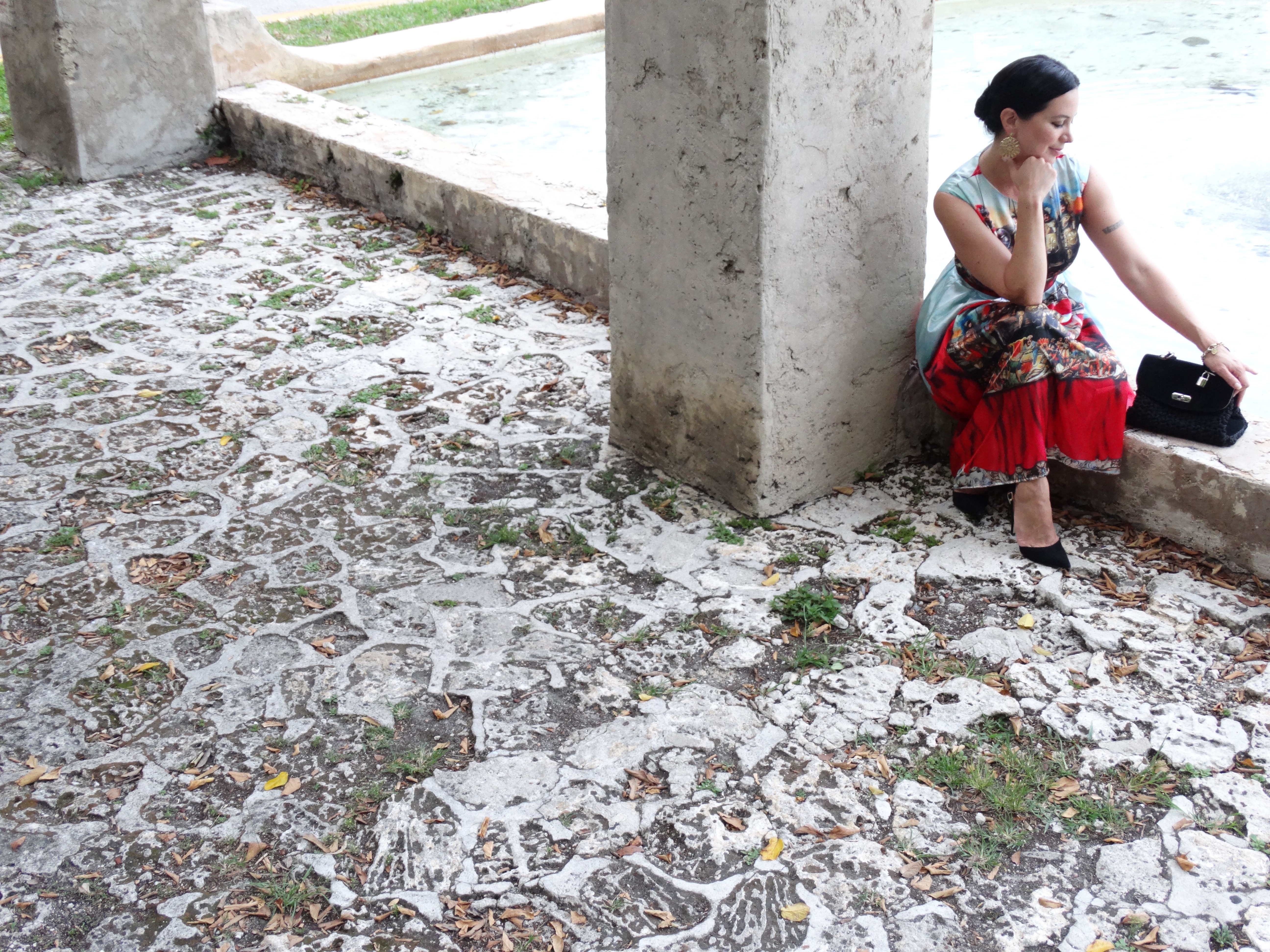
Montserrat Franco in Coral Gables, wearing a dress from the Dolce Gabbana Teatro dei Pupi (Theatre of marionettes) collection
The Gates of Coral Gables
George Merrick also envisioned eight different entrances to Coral Gables inspired in Spanish hill towns; only four were completed. You may drive by almost everyday around these gates but take a pause and look around a piece of history on your very own town.
The Douglas entrance (on Douglas and 8th Street) also called “La Puerta del Sol” is one of the most elaborated built between 1925 and 1927. It is registered on the National Registry of Historic Places.
A view of the building connected to the gate “Puerta del Sol”
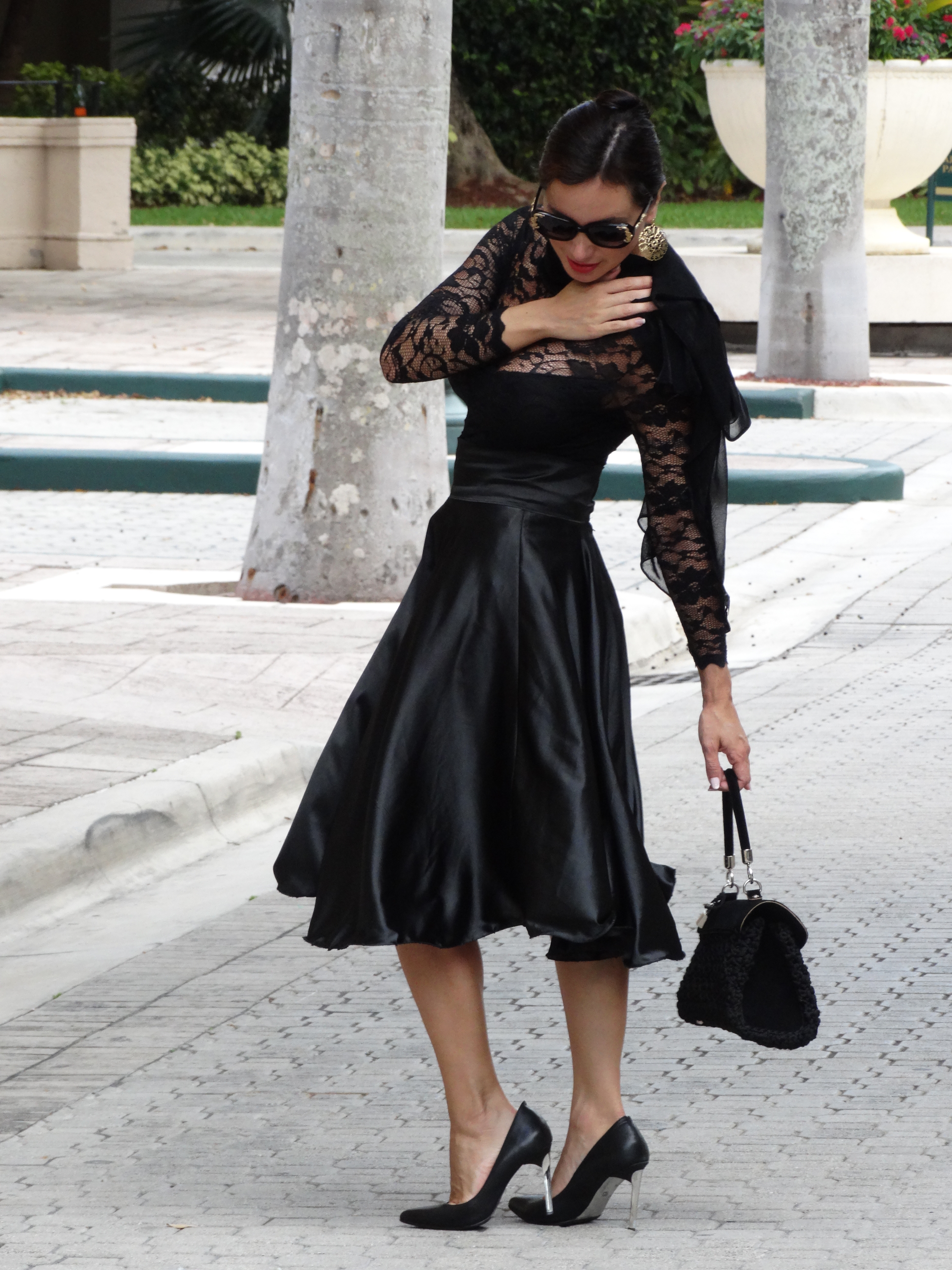
Montserrat Franco in Coral Gables (Puerta del Sol entrance) wearing a Dolce Gabbana dress and sunglasses from the Sicilian Baroque collection
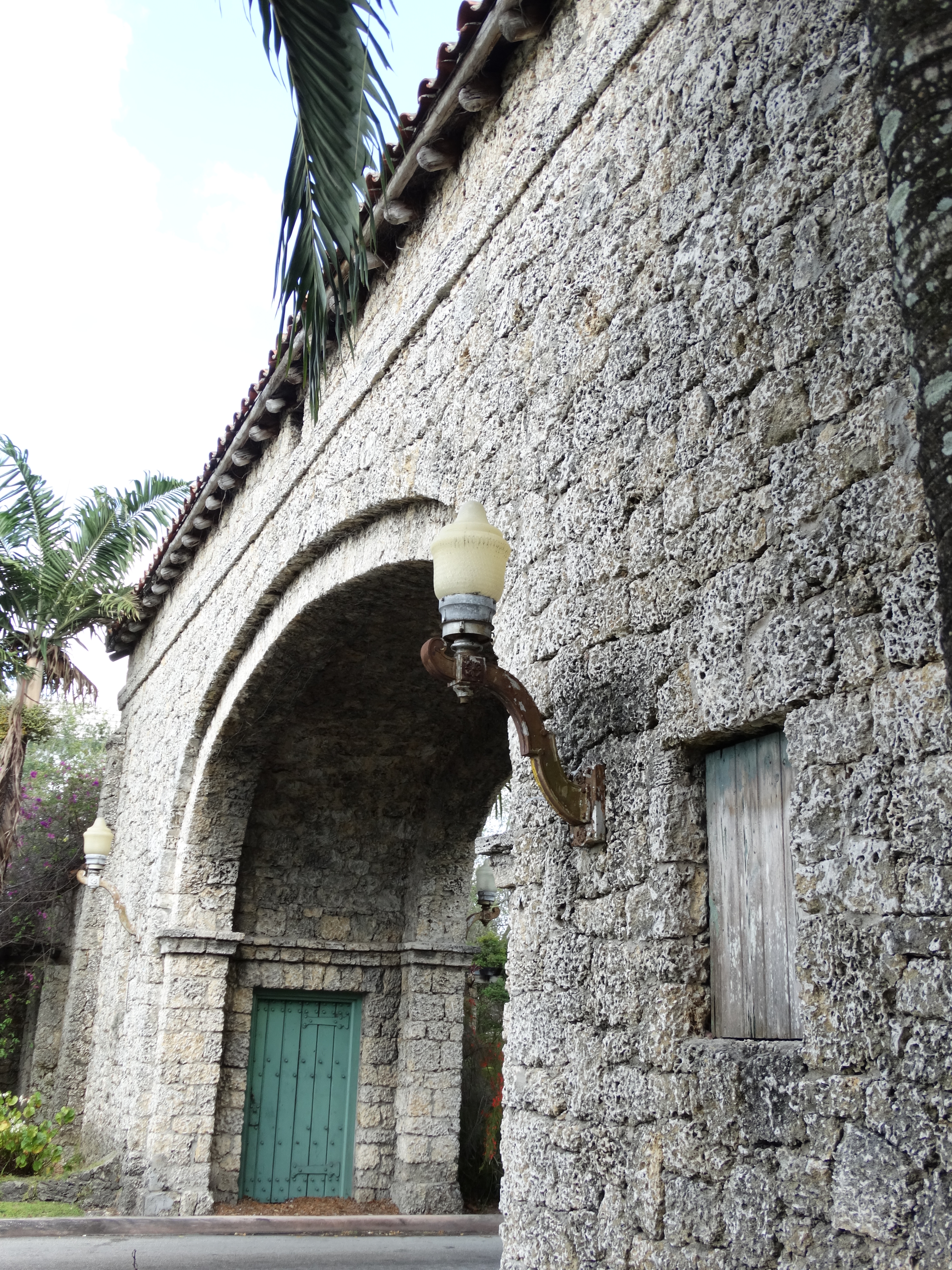
The Granada Entrance: Located at Granada Blvd and SW 8th st built on coral rock (limestone). The arch spans Granada Blvd which is a historic roadway.
The Granada entrance
Montserrat Franco at the Granada walls in a Dolce Gabbana dress from the Byzantine collection
The Prado entrance: Located at the NW corner of the City of Coral Gables at S.W. 8th Street and S.W. 57th Avenue (Red Road). For years the Country Club Prado Arch has been a setting for photography, specially wedding, engagement, etc.
The Alhambra Entrance: Located at S.W. 37 Avenue (Douglas Road), Majorca Avenue and Alhambra Circle. The Alhambra entry arch is also known as the commercial entry to Coral Gables, as Alhambra Circle leads to the central business district and Miracle Mile.
So much to explore in Coral Gables that you may want to come back for more, a long walk around charming homes with clustered buganvilias on limestone walls; unexpected fountains; spanish coats of arms on pillars and immense banyan trees to get the feeling of that Mediterranean getaway not so far away from home.
Christian Dior Beauté:
Located at Level 1 inside Neiman Marcus; Christian Dior is the timeless French House of Beauty; choosing the right foundation, brushes and highlighters to enhance is not an easy task so we got expert advice from Yolanda Ayala who kindly guided us in the search for the perfect tones; loved the Dior Show in 2 steps: maximizer and dramatic mascara. Another favorite is the Forever foundation with 35 SPF and shine control; this makeup feels great on the skin leaving a sun kissed look.
For the perfect eyebrows I recommend the Dior Show brow styler, with a few touches following the arch of the eye brows to create a natural and filled look.
Dolce & Gabbana : The Sicilian Bronzer – Limited Edition
When I first saw this beautiful bronzer I said: “I must have it” and I did, thanks again to Yolanda who made it happen. The limited edition “Sicilian carretto” design on this beautiful coffret it’s a keeper.
The Sicilian bronzer will give you that natural glow needed to complete your makeup. I tried the Dolce Matte lipstick in Flirt; a long lasting color that can stay for hours.
The Dolce Gabbana Sicilian Carretto Bronzer Limited Edition is inspired on the colorful art of the carriages in Sicily
L’Occitane en Provence:
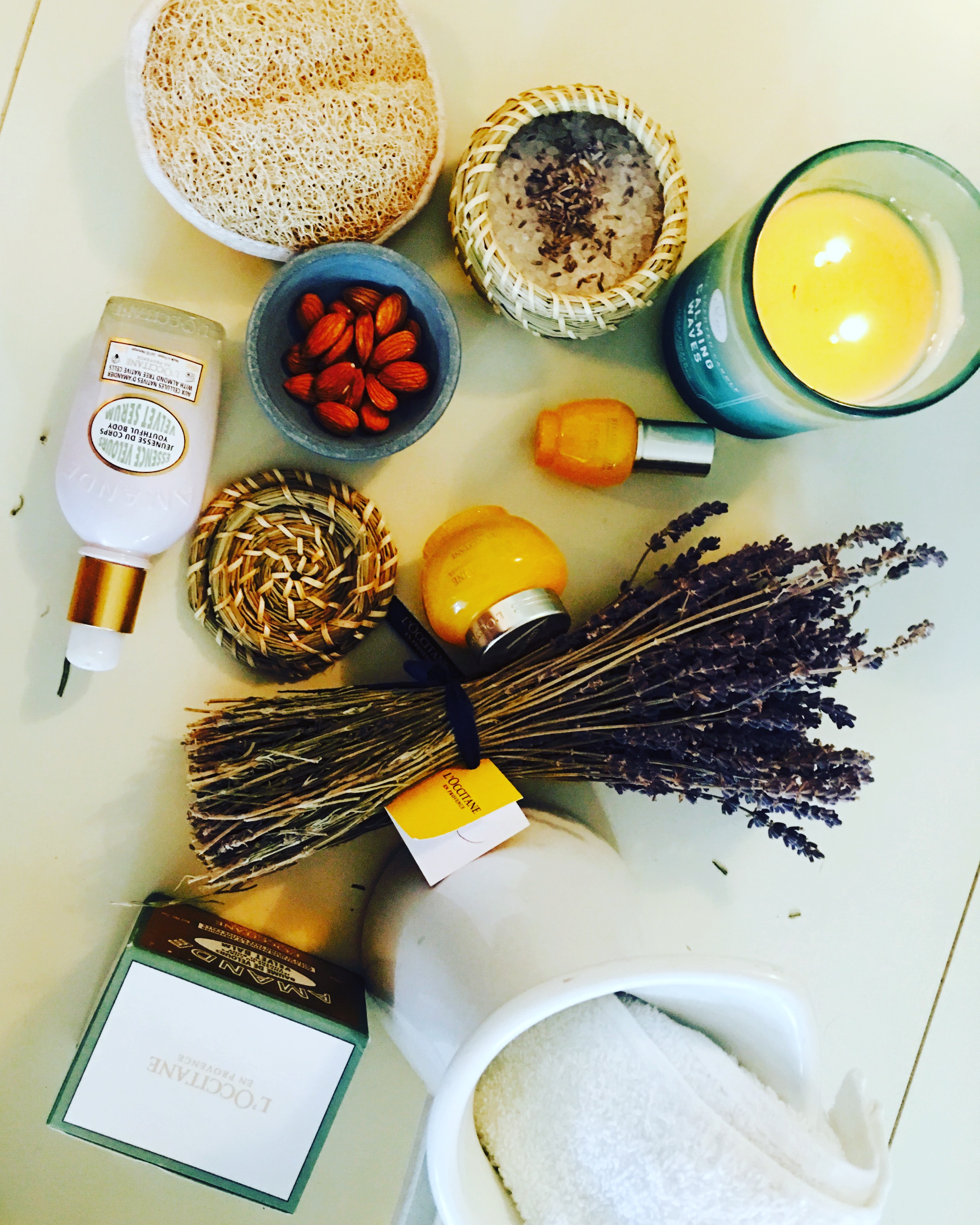
Located on Level 2 at the Shops at Merrick Park; I became a big fan of L’Occitane and the Divine Collection; creams and serums made with essential oils extracted from the “Immortelle flowers” everlastings, plants in the family Asteraceae that grow in the wild island of Corsica and can live forever.
Try also the restorative hand creams and lotions made with original resources from the South of France; almond, lavender, roses and get all the steps to make your own spa indulgence at home.
Did I mention L’Occitane gives back? Not only a promise to the environment, all organic made, never tested on animals but also a support to charities all over the world.
Lilly Pulitzer:
When entering the Lilly Pulitzer store at Merrick Park we can’t be more happy; because Lilly’s designs are just all about a Floridian dream lifestyle, a scape to the tropics.
The iconic prints on the shift dress that made it to our first ladies and socialites closets are here to stay; find one for every occasion at Shops of Merrick Park’s first level.
Bright neons, turquoise hippocamps, pink flamingos, green palm leaves, yellow pineapples and all in between mosaics combined with tassels and charms; Lilly’s artistry is still alive on every dress.
The native of NY who settled in Palm Beach and opened a lemonade stand with her husband never thought how brilliant could be to start her own shift dress business after everyone loved the designs, sooner she sold more dressed than lemonade cups.
When packing for a vacation never miss a statement piece and a Lilly dress, after all… life is better on the beach.
The Town of Coral Gables and City Hall depicted on a hand painted wall at the dressing room of the Lilly Pulitzer boutique at Merrick Park
Also known as the Birdland sanctuary; El Portal (from the Spanish “The Gate”; named this way because of the two main wooden gates that were placed at the entrance of the village) is one of the very first archeological sites registered in Miami Dade County.
Because El Portal isn’t a touristic attraction opened to the public; please be cautious if decide to visit, respect the nature, the silence and the neighbors. El Portal is a residential village were peacocks walk free; an almost enchanted forest with hundreds of year old trees guiding the path to a Tequesta Indian Burial site.
The Tequesta Indians; one of the first people of today’s South Florida lived in the areas known as the Biscayne Bay and the South bank of the Miami River including what is today the Village of El Portal. In 1560 Admiral Pedro Mendendez de Aviles took contact with the Tequesta Indians who were later transferred to Cuba, converted to the new faith and later vanished.
One of the ancient trees at the Village of El Portal, a sacred habitat.
Once at El Portal; I had my first encounter with that exuberant vegetation and the endless variety of botanical species; because of my Native American origins I felt the need to visit the site and respectfully give back to the earth what is from the mother earth: I had kept for the longest time a few ritual instruments I received from the Mbya Guarani Indians back in Paraguay which I deposited on to the sacred mound. I prayed in silence and felt in harmony with the nature.
This tablet marks the habitation mound of the Tequesta Indians
One of the typical scenes at El Portal: Peacocks crossing the road
I thought this was also one of the cutest signs: Caution: Duck crossing
In addition El Portal is a certified Wildlife Habitat, as a source of the Four Basic elements needed for wildlife to thrive: food, water, cover and places to raise the young spices. I discovered signs marking the pathways while numerous butterflies revealed their beautiful colors. This site provides also the necessary milkweed, nectar sources and shelter to sustain monarch butterflies as they migrate though North America.
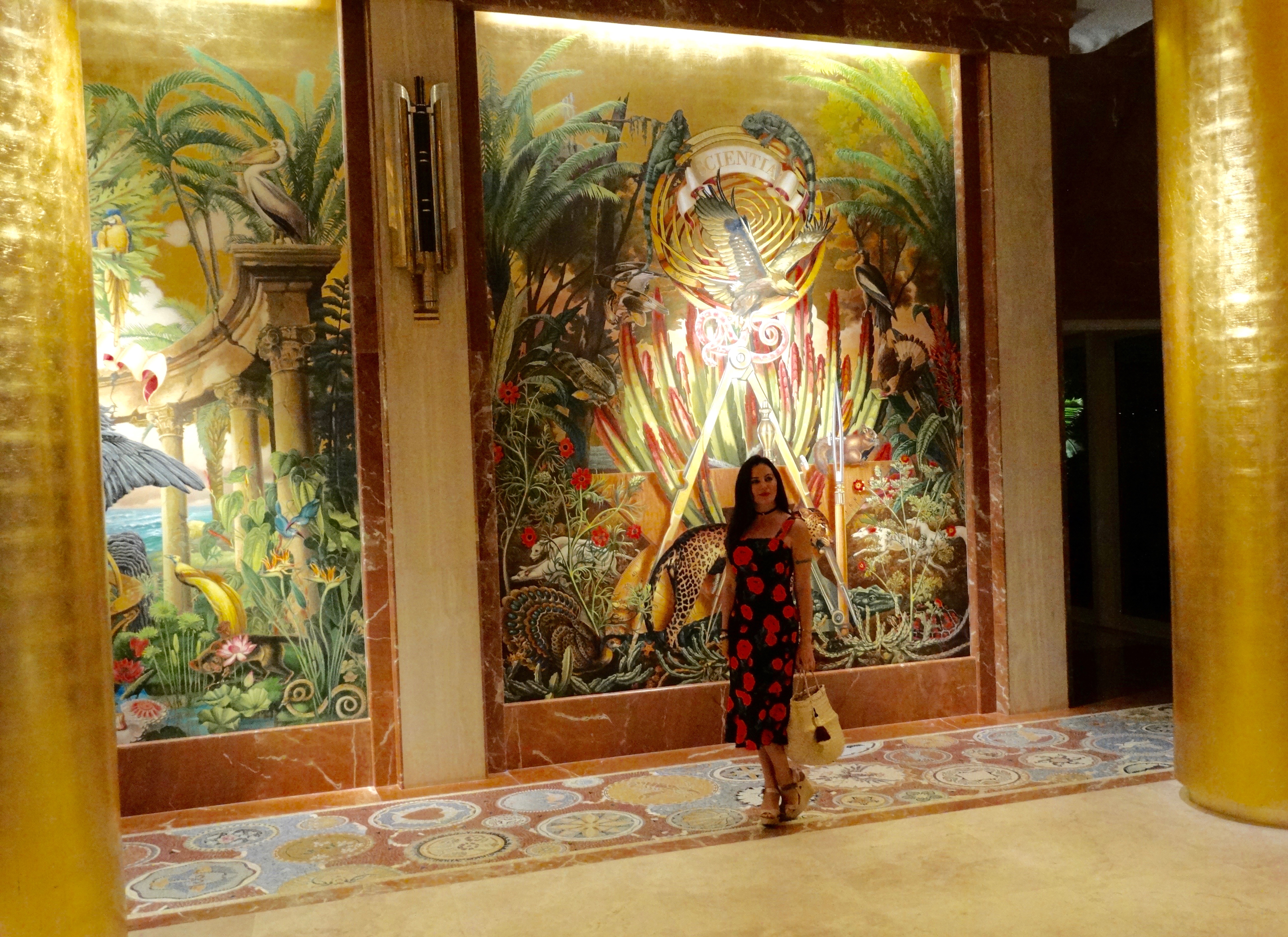
When entering the opulent Faena Hotel is like submerging in to a Cathedral of art; murals and mosaics by renowned Argentinian artist Juan Gatti called the Coined Utopia (Faena + Utopia) a depict of the Journey of Life and a vision of Alan Faena’s magical world.
Montserrat Franco in front of Juan Gatti’s “Coined Utopia” at Faena Miami Beach wearing Dolce & Gabbana
Alan Faena; the orchestrator of this Hotel Universe; has always been the utopian businessman; when believing in areas that no one will give credit to; decades ago back in Argentina, transforming and making its own empire from marginal to chic; like a Midas touch; everything turned in to gold.
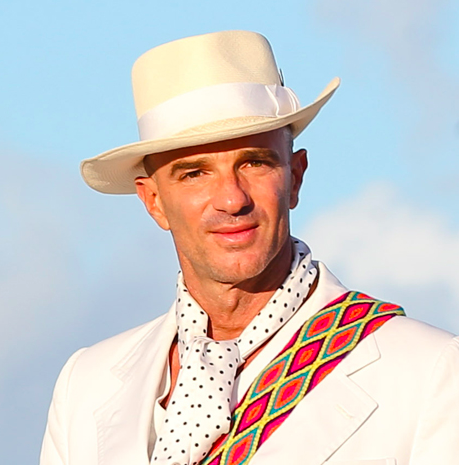
When understanding the Faena’s “cosmovision”; his own style that has been evolving as the Urban Alchemist; dressing in pristine white and a dandy hat but with a folk accessory to complete the outfit: an Indian wayuu crossbody bag. We want to show you more about his fantastic world and here we are for the experience.
Alan Faena
Golden columns and red carpet guide us to the Living room, the tropical lounge retreat with a curated live music set nightly; elaborated mixology and that feeling of being on your best friend’s living room.
Los Fuegos by Francis Mallmann: A few steps right after we are at Los Fuegos by Francis Mallmann; crowned the Ambassador of Fire; Francis Mallmann brings his own South American “Gaucho” mastery for “asado” as the traditional way on his custom designed wood fired grill.
One of the distinctive points at the Faena is the golden mammoth installation by Damien Hirst; “Gone but not forgotten” is an example of the unexpected bringing us back to reality and what is here to stay. The path will take us to the beach on a dreamy oasis of white sands flanked by the characteristic red and white stripped umbrellas with endless tassels; in the Middle East tassels were worn as amulets for protection; tassels can be seen on the decor around the Faena complex.
Damien Hirst: “Gone but not forgotten” Montserrat Franco wearing a Pitusa Sevillana dress
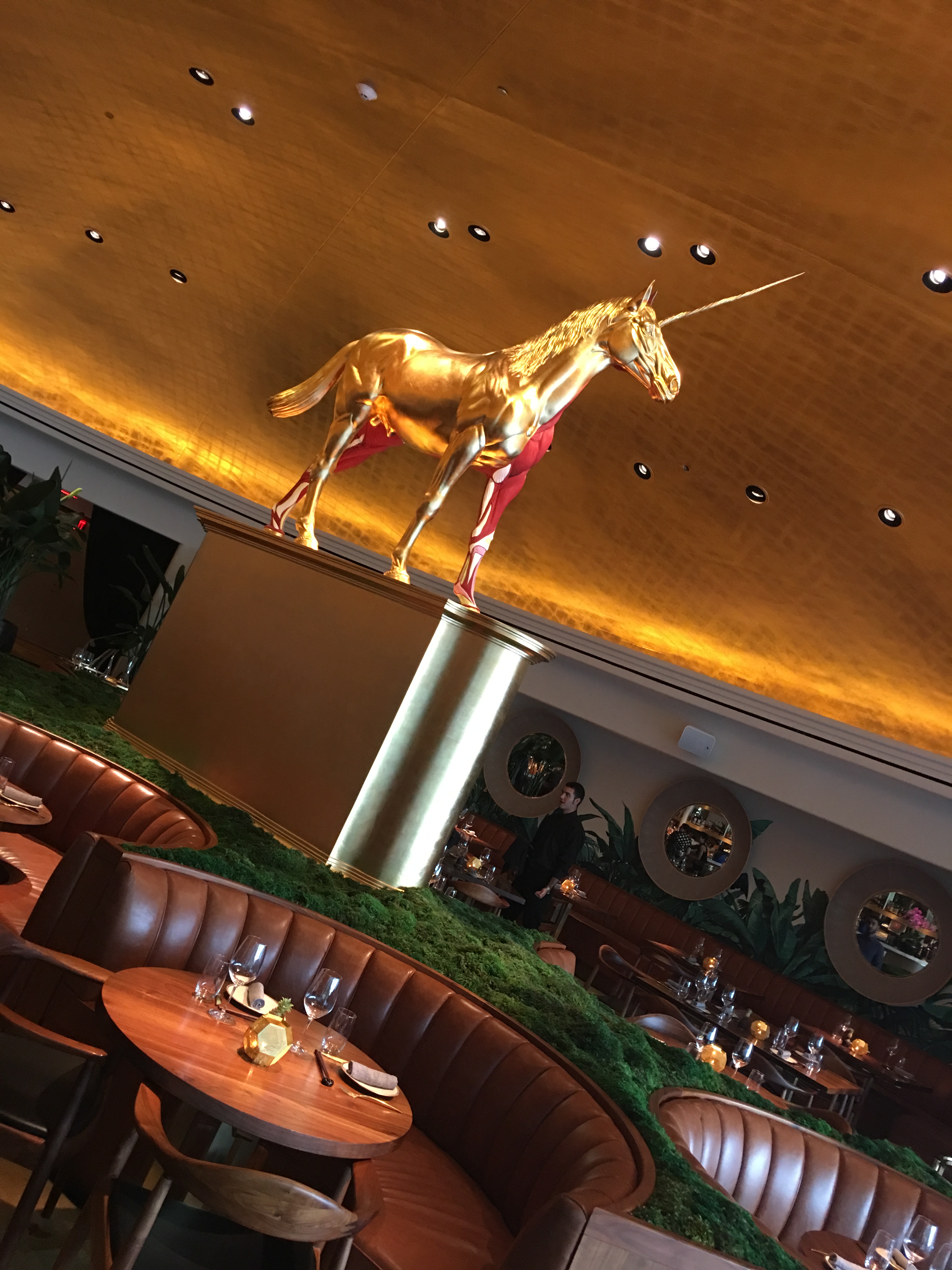
Pao by Paul Qui: Coming back to the dining areas; we are ready to contemplate the stunning views from the terrace at PAO by celebrity Chef Paul Qui; a James Beard winner brings his Pan Asian flair to Faena’s fine dining arena; from stylish presentations to harmonious flavors; the crudos, kinilaw, ceviche, sashimi or tiradito are once again a delectable sharing experience all paired with a cult and collectible wine list under the tutelage of the sommelier team at La Cava. Another Damien Hirst sculpture of The Unicorn; half gold, half alive in the middle of the dining room is a true expression of the dichotomy myth + reality in Faena’s universe.
Damien Hirst: The Unicorn at Pao by Paul Qui
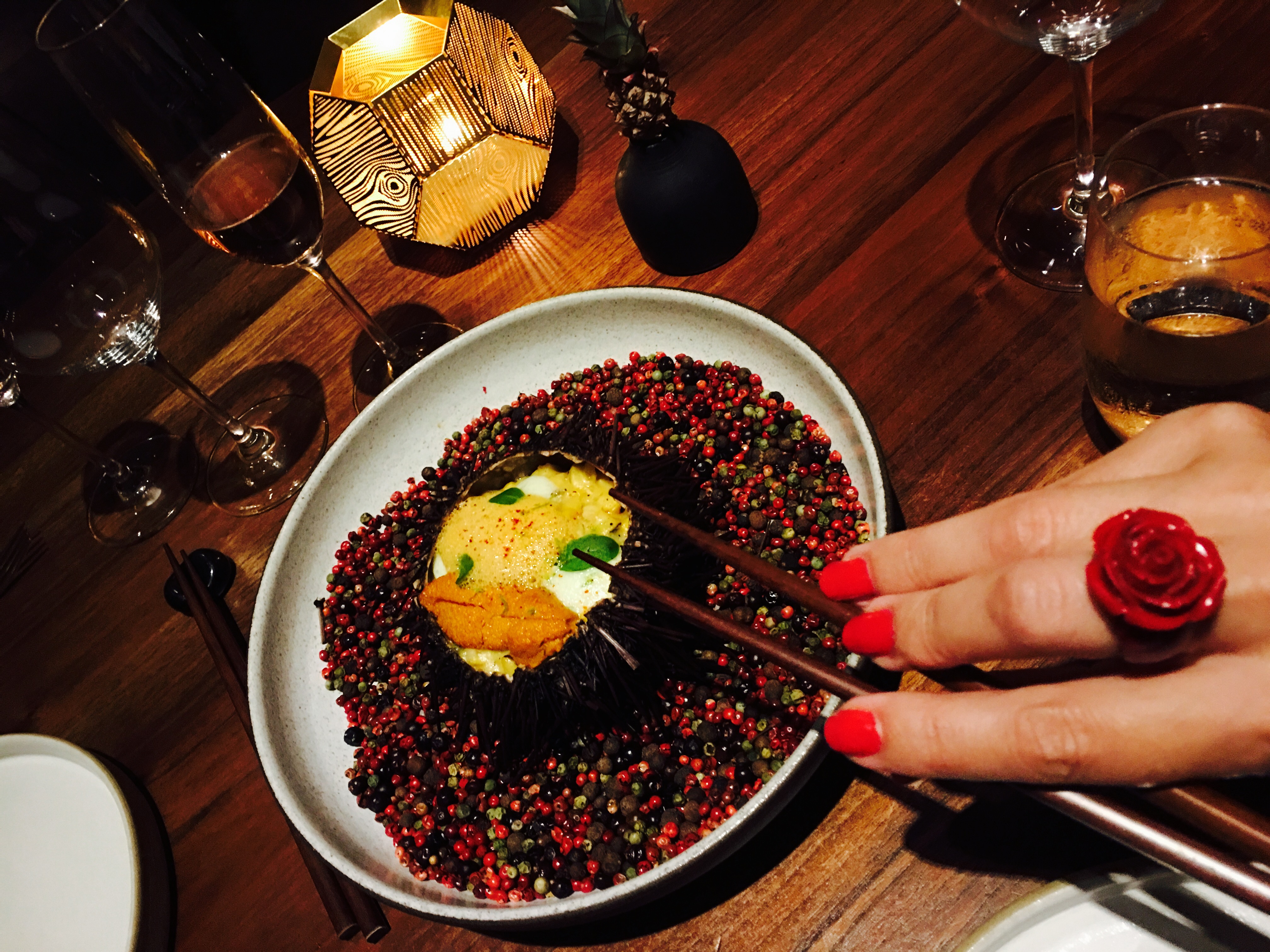
The Unicorn is the name of this creative dish composed of Uni + Corn on a sea urchin shell
Tierra Santa: The Spa
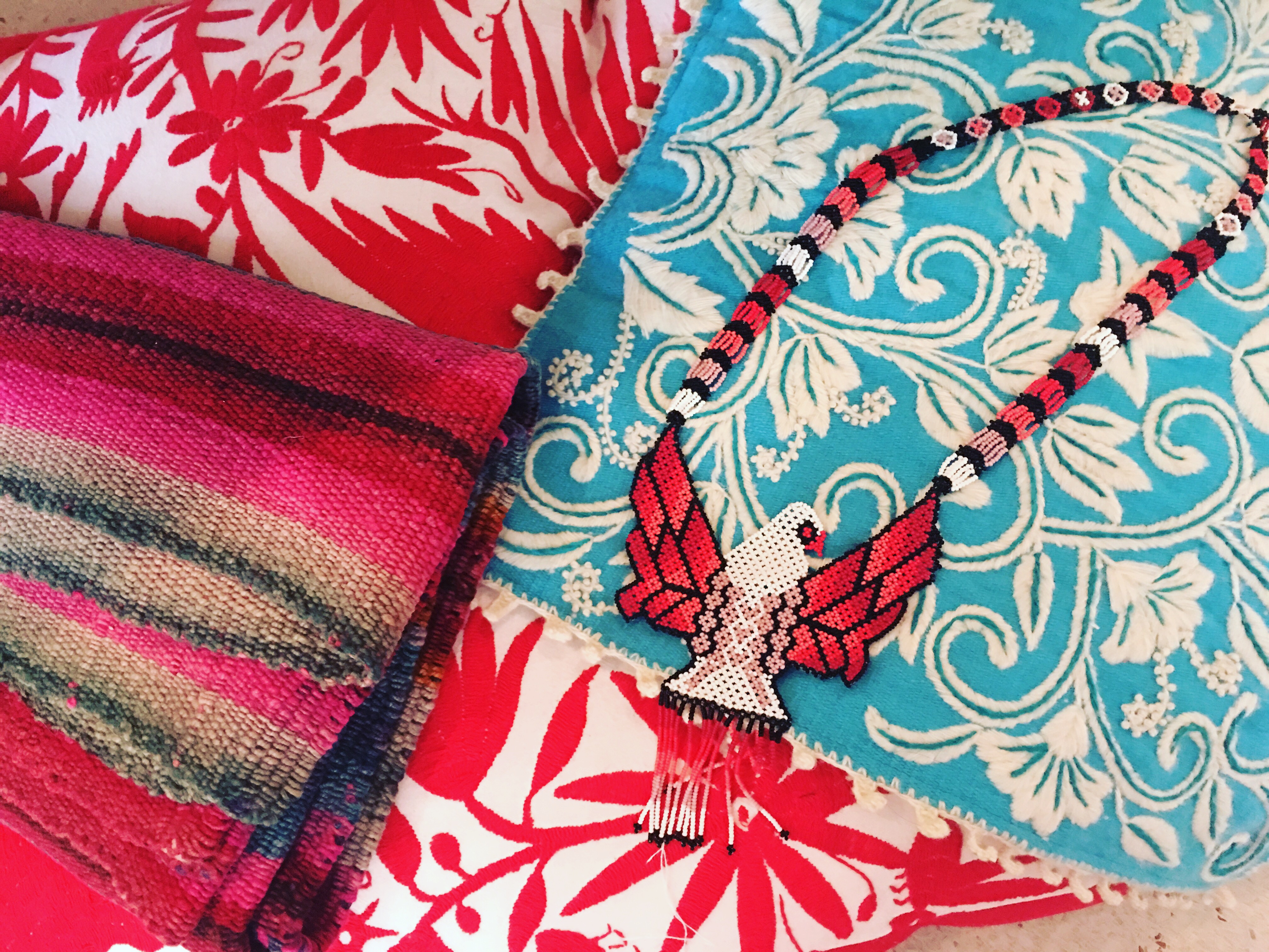
White for the floors and walls, at “Tierra Santa Healing House” spa but full of vibrant colors of Latin American embroidery and handcrafted objects by Eco Fair Trade designer Carolina K who has been working with different ethnic groups from Mexico to Peru and India with successful collaborations such as Anthropology and Urban Outfitters.
Otomi cushion covers and ethnic objects at the Bazar by Carolina K inside Tierra Santa spa. Otomi cushions are also part of Tierra Santa’s decor.
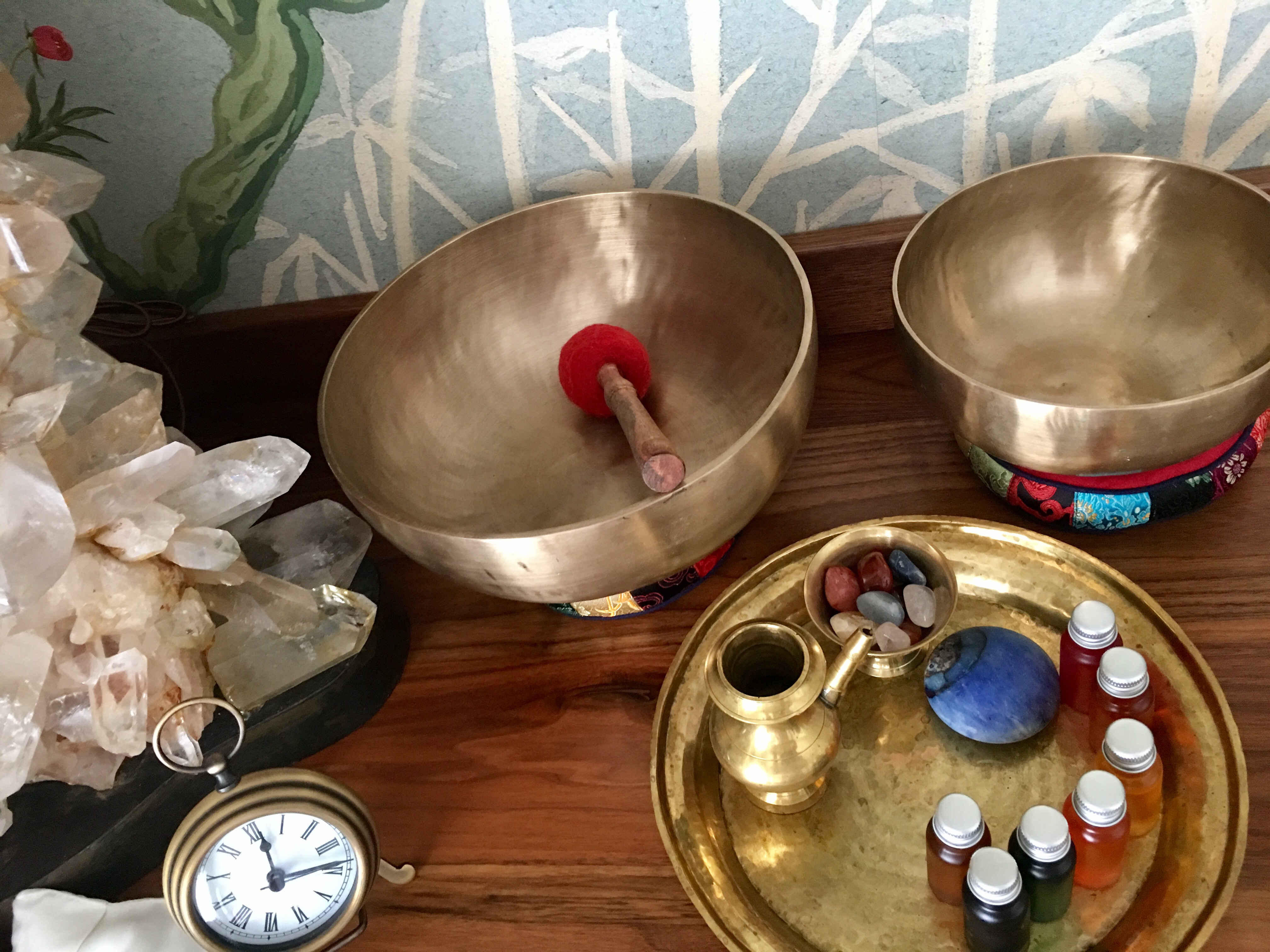
Tierra Santa is America’s first South American inspired spa, combining ancient healing techniques and treatments; hand blended plant oils, rose stones and vibrating singing bowls. Sustainable in so many different levels Tierra Santa’s holistic treatments have been developed respecting the mysticism and rituals of these cultures with their own in-house Shaman.
Tierra Santa Healing House is so different from any other Spa experiences; a unique collection of seven “Moringa” seed base oils representing the 7 chakras to elevate, calm, restore and heal are used on each specific treatment; Amazonian white clay collected from the Marajo shores and Guarana-maca blend scrubs to purify mind and body; a welcoming scent of Palo Santo and their own custom made soap tower are just examples of the attention to every detail. Once at the Wet Spa; guests can experience the journey of the senses; the hammam, centered by heated gobek tasi stone and incrusted with Faena’s signature South American Rose mosaic.
Inside the Hammam the gobek tasi stone incrusted with Faena’s signature South American Rose mosaic.
Signature 7 chakra oils made of moringa seeds and Himalayan singing bowls at Tierra Santa Spa
A treatment suite at Tierra Santa spa
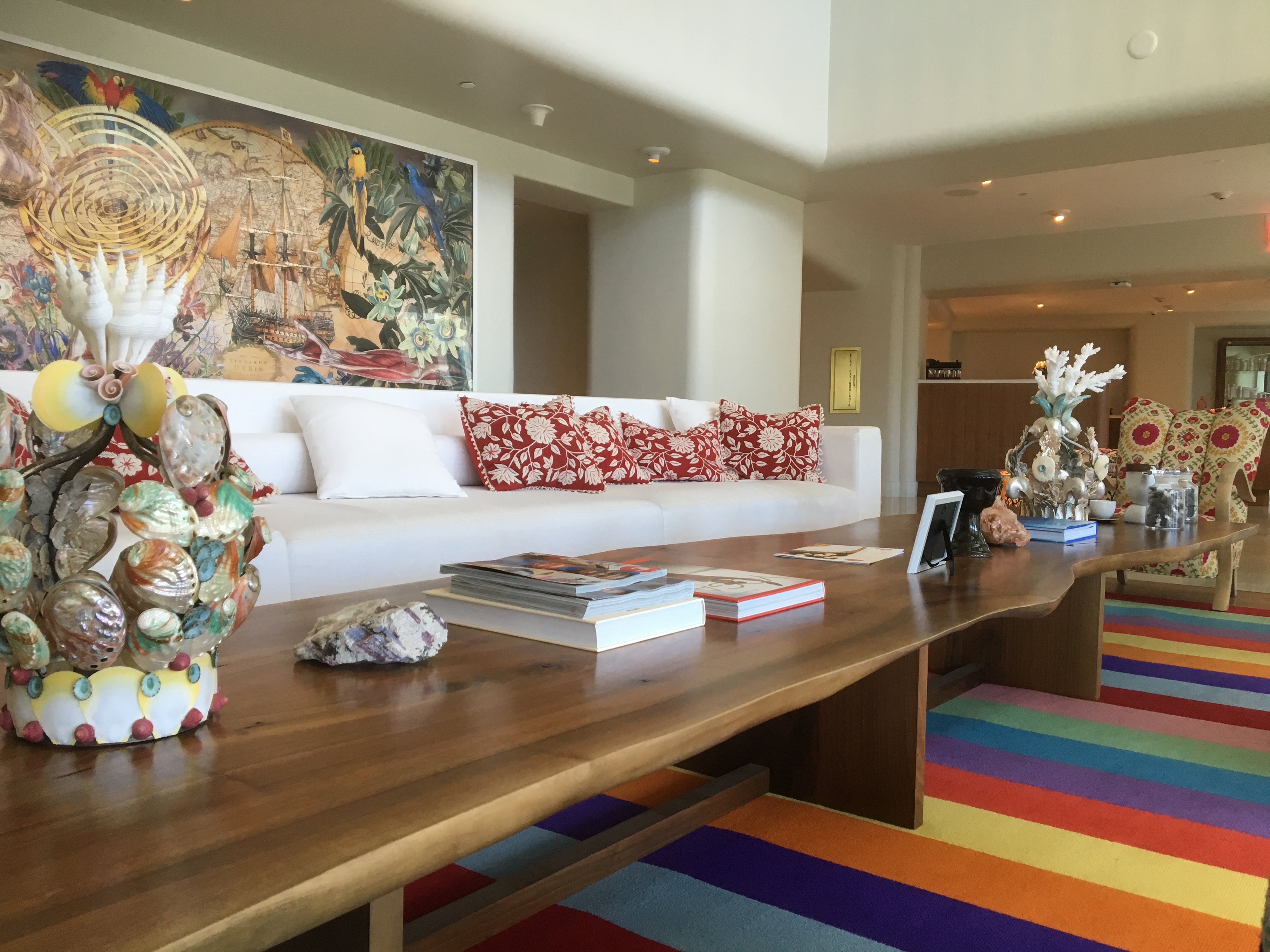
Back to the spa suites; a rainbow stripped rug representing the 7 chakras and comfy sofas adorned with otomi embroidered cushions make the perfect spot for sipping on blended teas and healing stone infused water while contemplating views of the tropical oasis.
A gracious spa hostess dressed on Huaxacan styled dress by Carolina K guide us to the gorgeous suites covered with Juan Gatti’s murals. There, a choice of therapeutic power oils, healing stones and custom massages are used in conjunction with singing bowls to elevate the spirit.
Now, we don’t want to go back to reality but we can always dream of that fantastic world and yet have it all; right here in Miami Beach at the Faena District.
For reservations:
Faena Hotel Miami Beach
3201 Collins Ave.
Faena District, Miami Beach, FL 33140
Phone # 305 535 4697 http://www.faena.com
Tierra Santa Healing House
Phone # 1 844 798 9716
Pao by Paul Qui
Phone # 786 655 5600
Los Fuegos by Francis Mallmann
Phone # 786 655 5600





















 Montserrat Franco