Hacienda Guegorene. San Pedro Taviche, District of Ocotlan de Morelos
The Hacienda Guegorene is a historic Estate located in San Pedro Taviche, in the Ocotlán district of Oaxaca, within the Central Valleys, a region deeply tied to the Zapotec culture.
Historical background
Hacienda Guegorene dates back roughly to the late 17th or early 18th century, making it part of the colonial hacienda system that shaped much of rural Oaxaca’s agricultural economy.
The name Guegorene is believed to come from Zapotec linguistic roots, while interpretations vary locally, historians and linguists generally connect the word to Zapotec terms associated with “place of abundance” fertile agricultural land or a place where life grows, or “river of blood” because of the red color of the copal trees that surrounds the land.
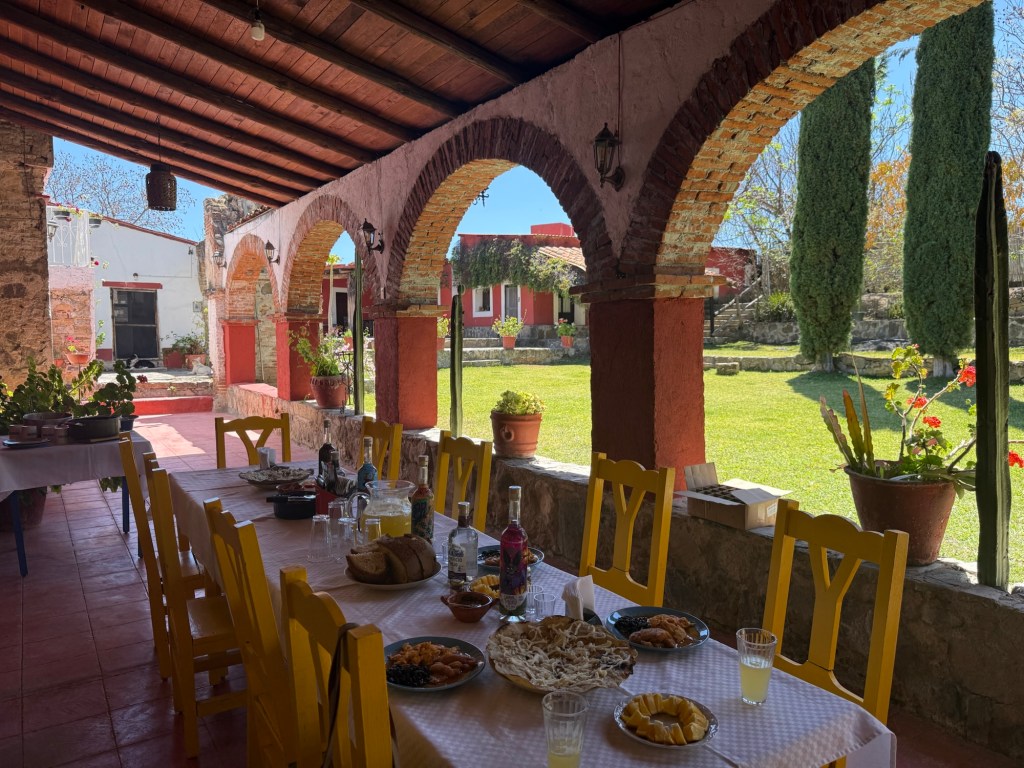
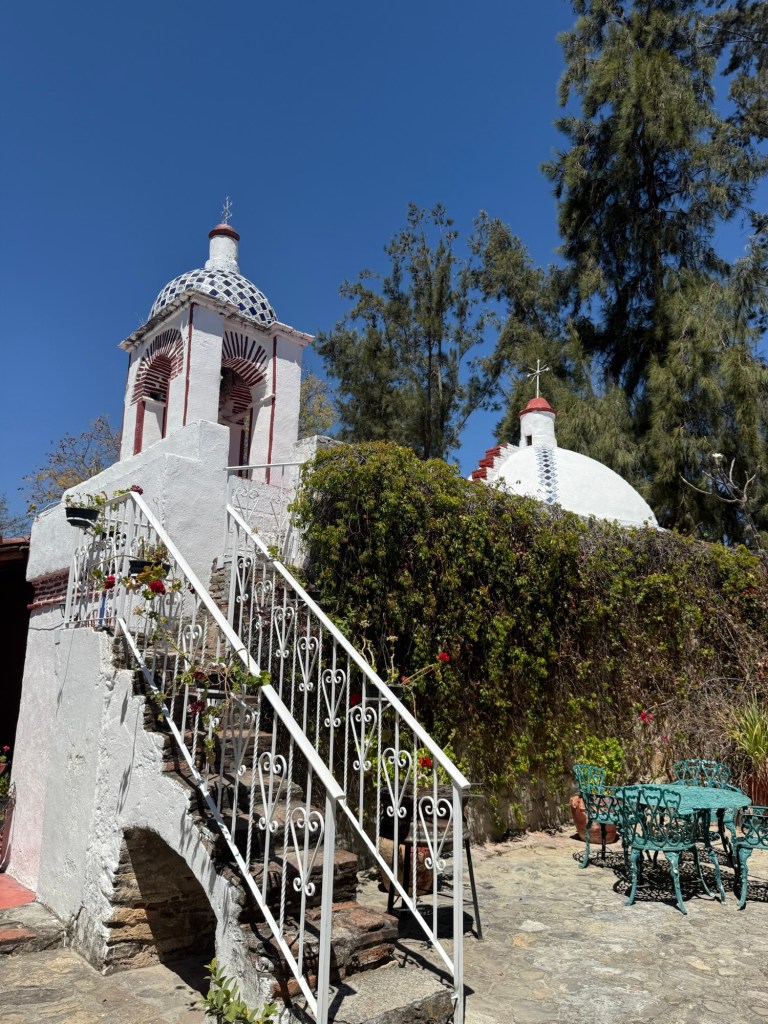
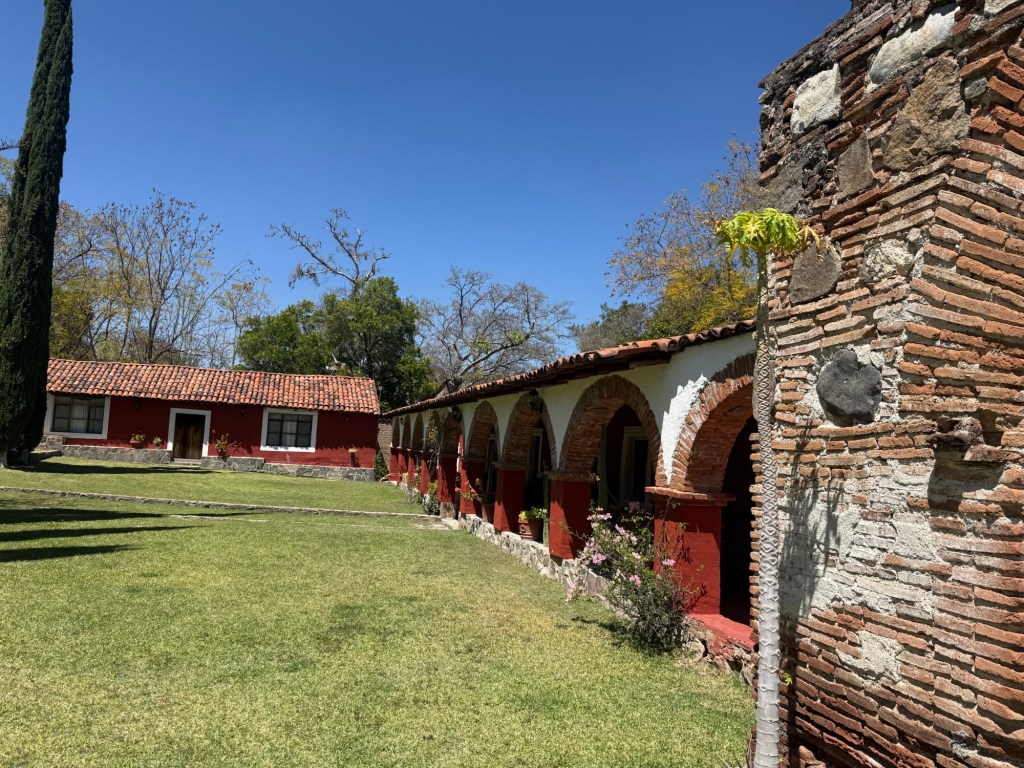
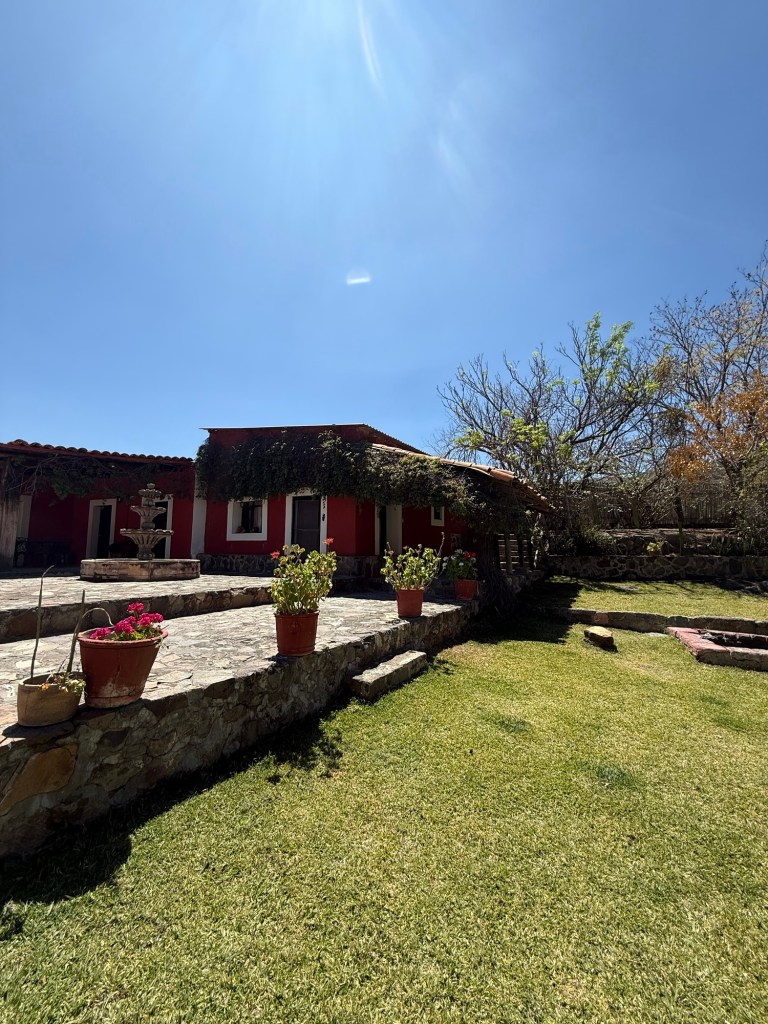
The architecture reflects classic colonial hacienda design, with a central fountain and gardens, large corridors with arches, an estate chapel, surrounding agricultural lands.
Mining in the Taviche, Ocotlan areas
Mining in the Taviche area dates back to the 19th century. By the late 1800s and early 1900s, many deposits of silver and gold were already being exploited in the Taviche mining district, including areas around San Pedro and San Jerónimo Taviche.
Mines were originally operated on a small scale by local haciendas like Guegorene. Later, foreign and national companies became involved in extracting the metals. The area became known as a precious-metal district with multiple underground mines.
Mining slowed down during the Mexican Revolution (around 1910) but resumed again in the 1920s and later decades.
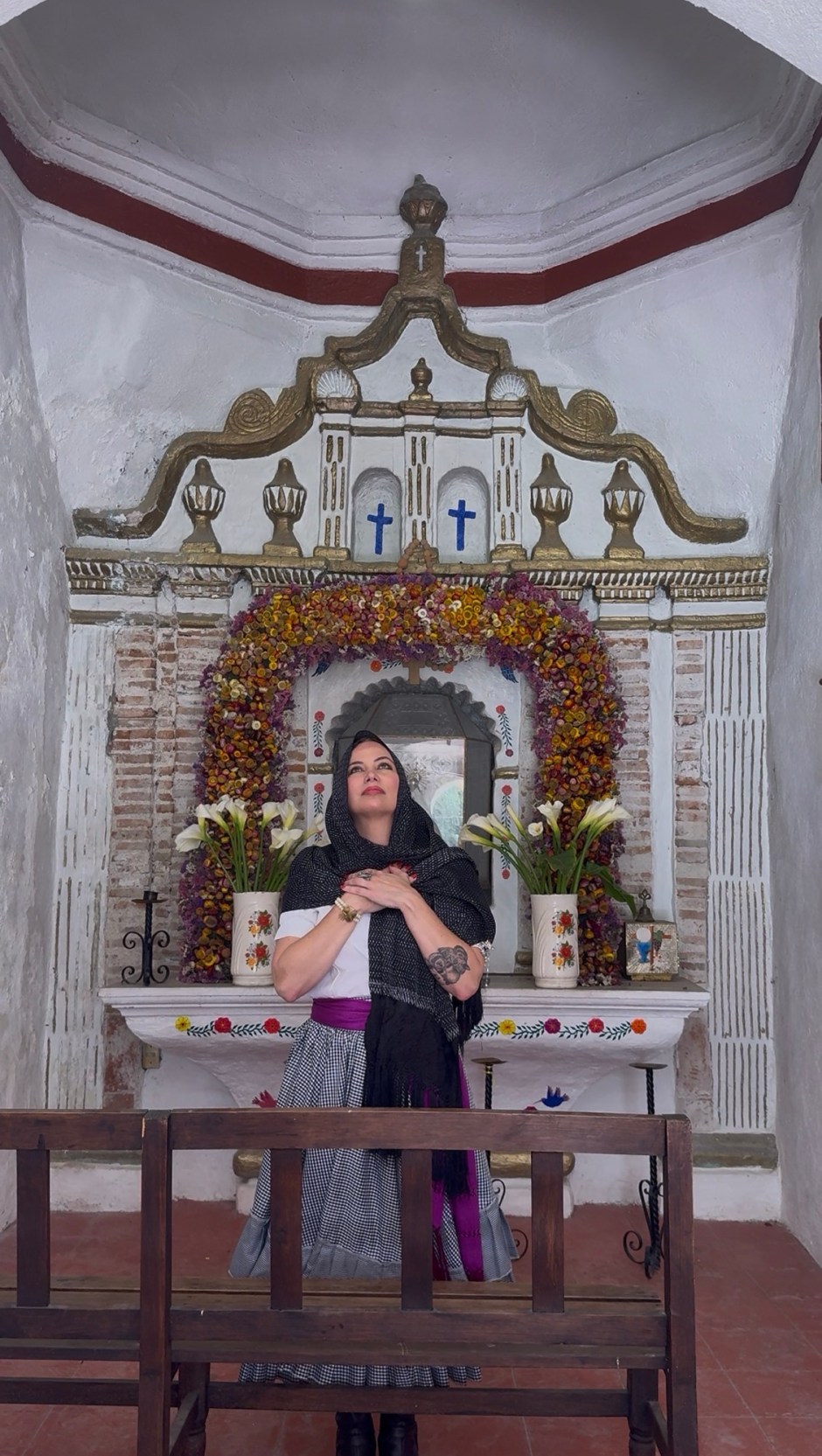
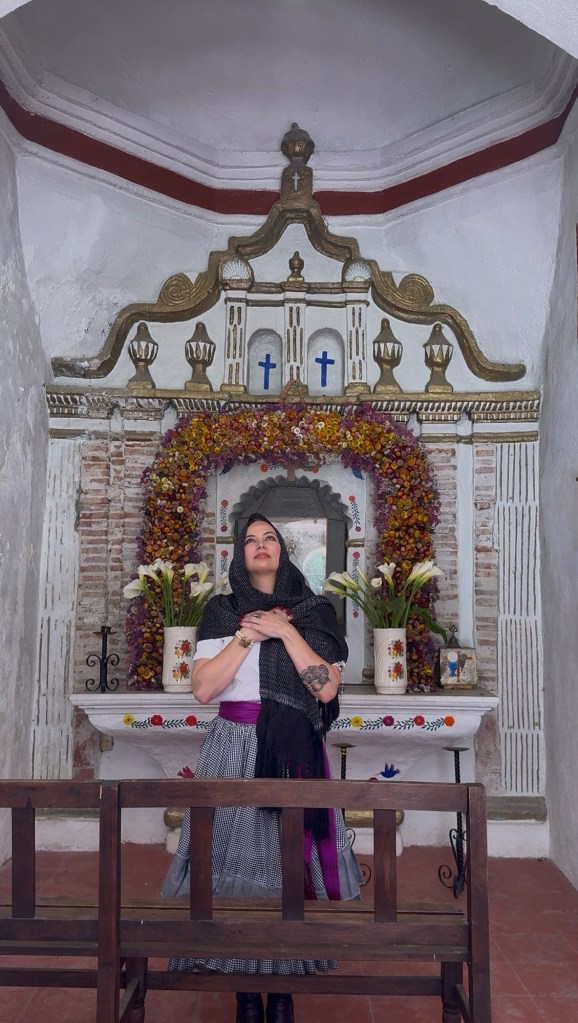
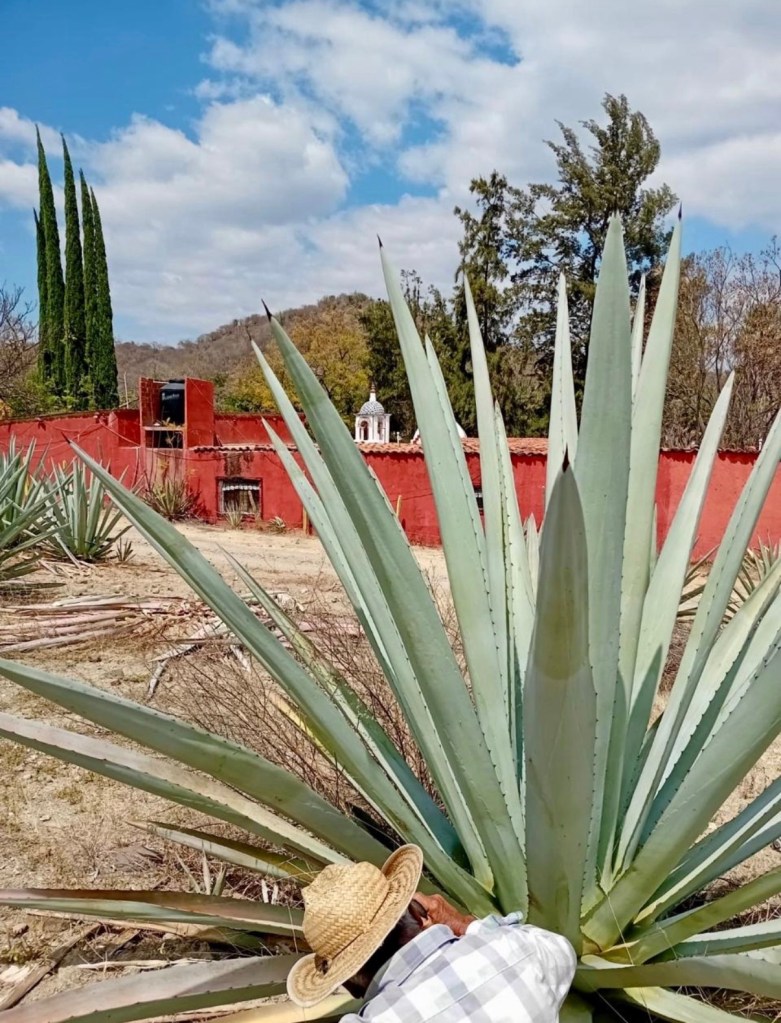
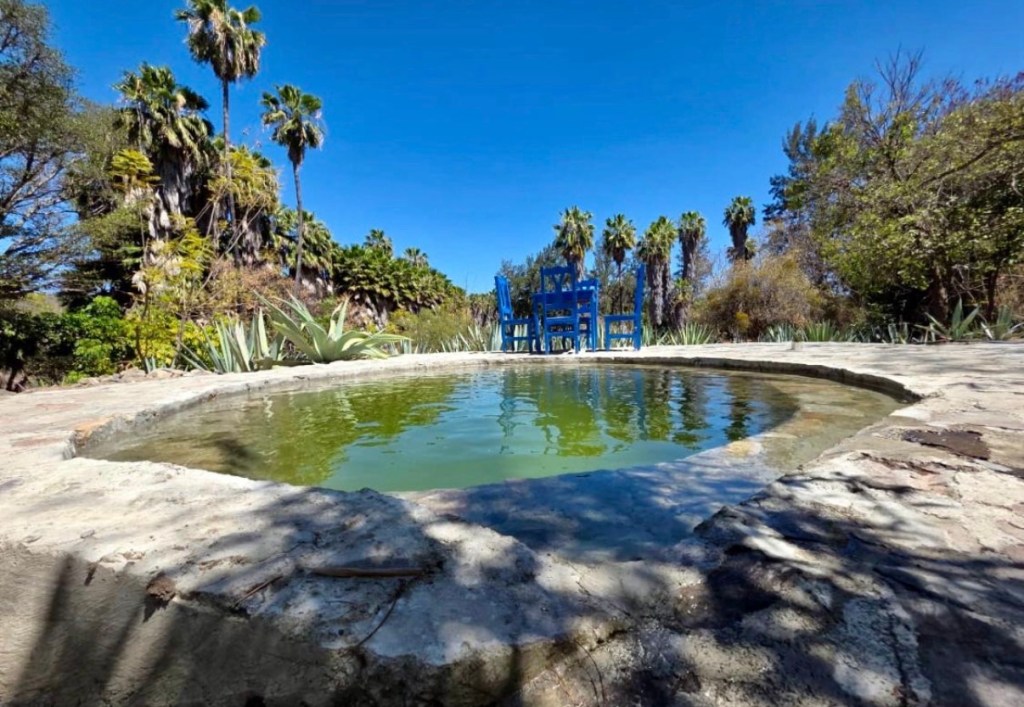
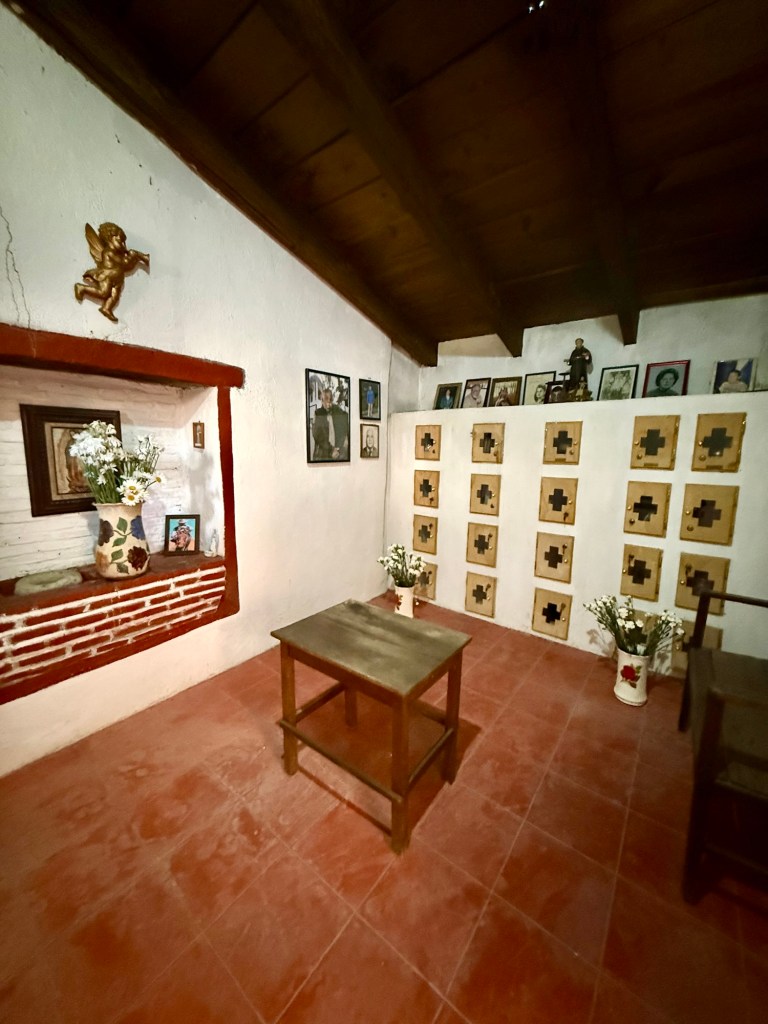
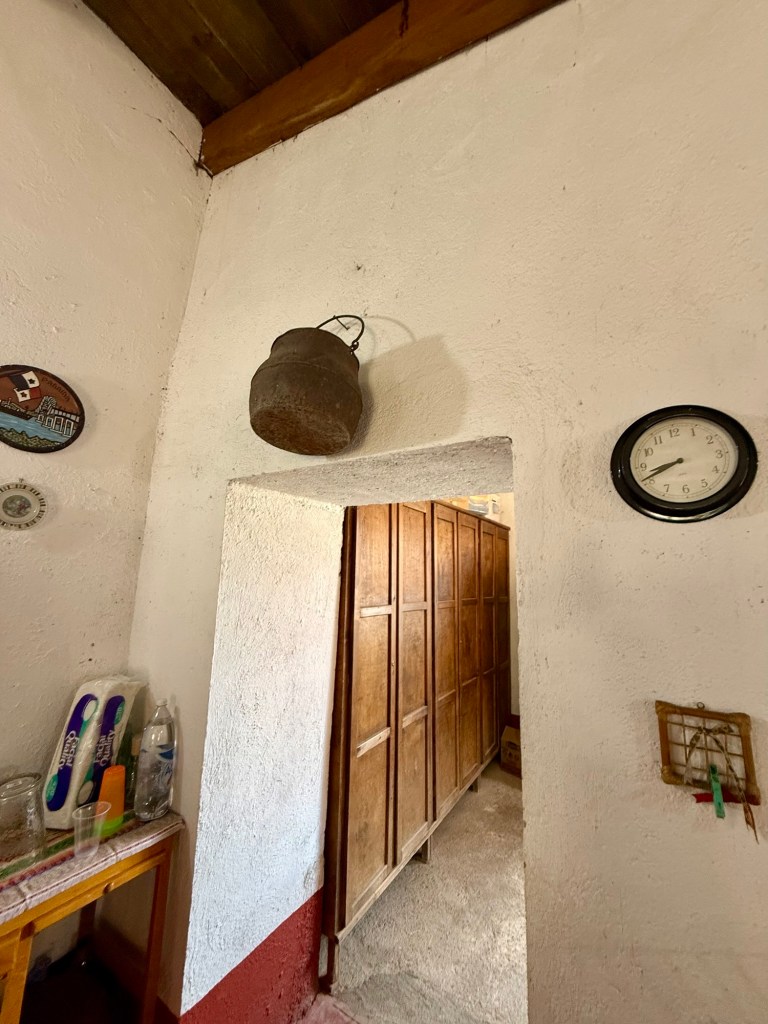
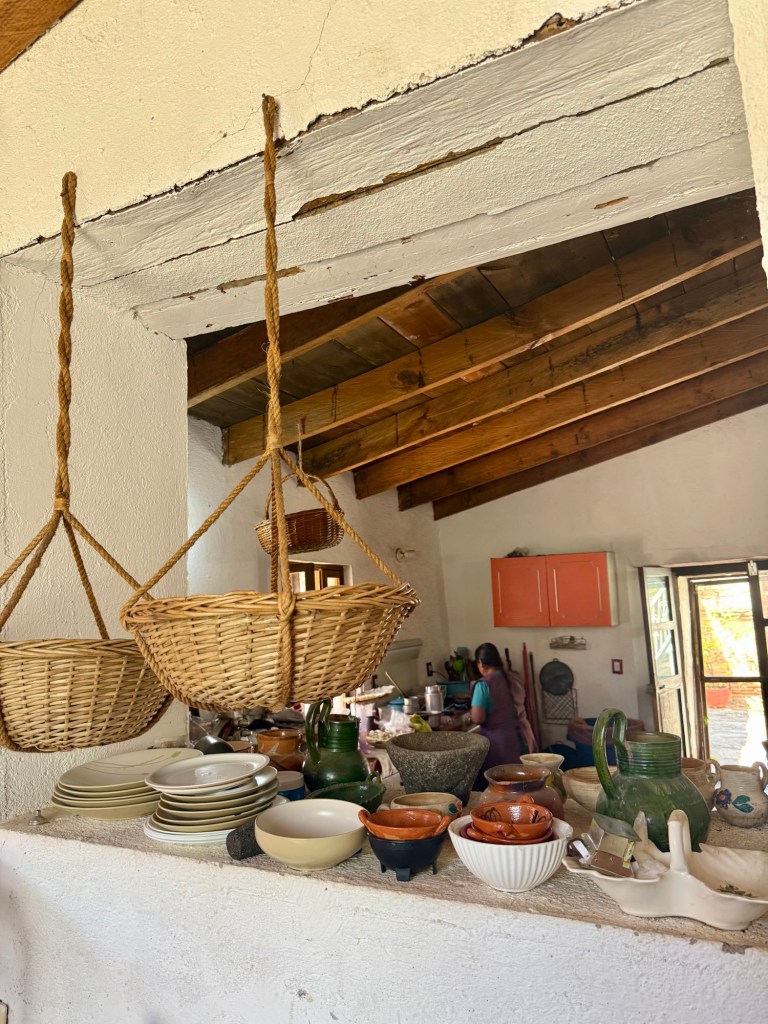
Montserrat Franco at the Chappel in honor to the Lady of Juquila. Hacienda Guegorene The agave fields across Hacienda Guegorene The spring water pool Breakfast at Hacienda Guegorene Four generations of Skidmore rest at the Hacienda’s chappel The kitchen with some ancient artifacts The kitchen The Chappel The arched corridors of the hacienda Several chambers are located across the hacienda complex
The chapel on the property reportedly contains a Virgin of Juquila image from 1827, showing how the estate also became integrated into the local religious and social life of the community.
The Union of Texan miners and Zapotec women
María Saturnina Jiménez García, of Zapotec descent, was the matriarch who led the operations of the hacienda alongside her Texan husband and son of Frank, the founder: Charles Henry Skidmore.
Dolores Skidmore Jiménez and Carlos Skidmore Jiménez preserved the estate and its agricultural vocation. They had eleven kids.
Today, Eduardo Muñozcano Skidmore, great-grandson of Frank, leads the comprehensive restoration of the historic center and creates the brand Quiéreme Mucho, bringing tradition into the 21st century with a sustainable vision and international outlook.
Sources:
Interview with Eduardo Muñozcano Skidmore , sociologist, descendant of the founders and creator of Quiereme Mucho Mezcal.
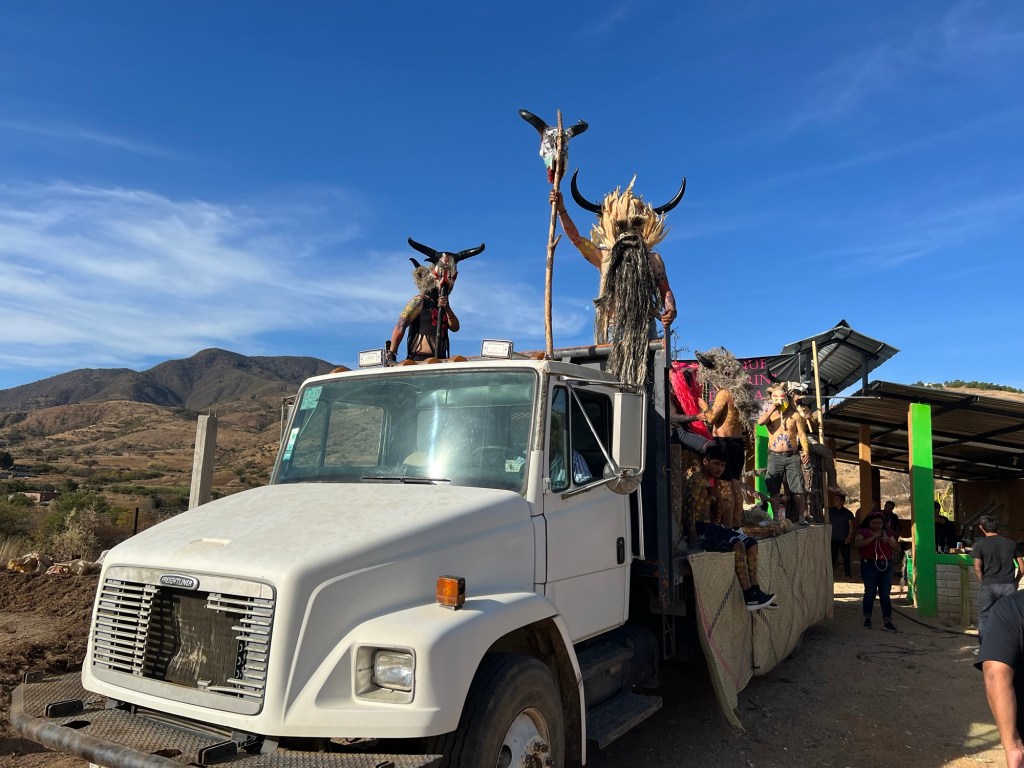
Oaxaca’s carnivals are among the most picturesque and diverse in Mesoamerica, celebrated between February and March before Lent.
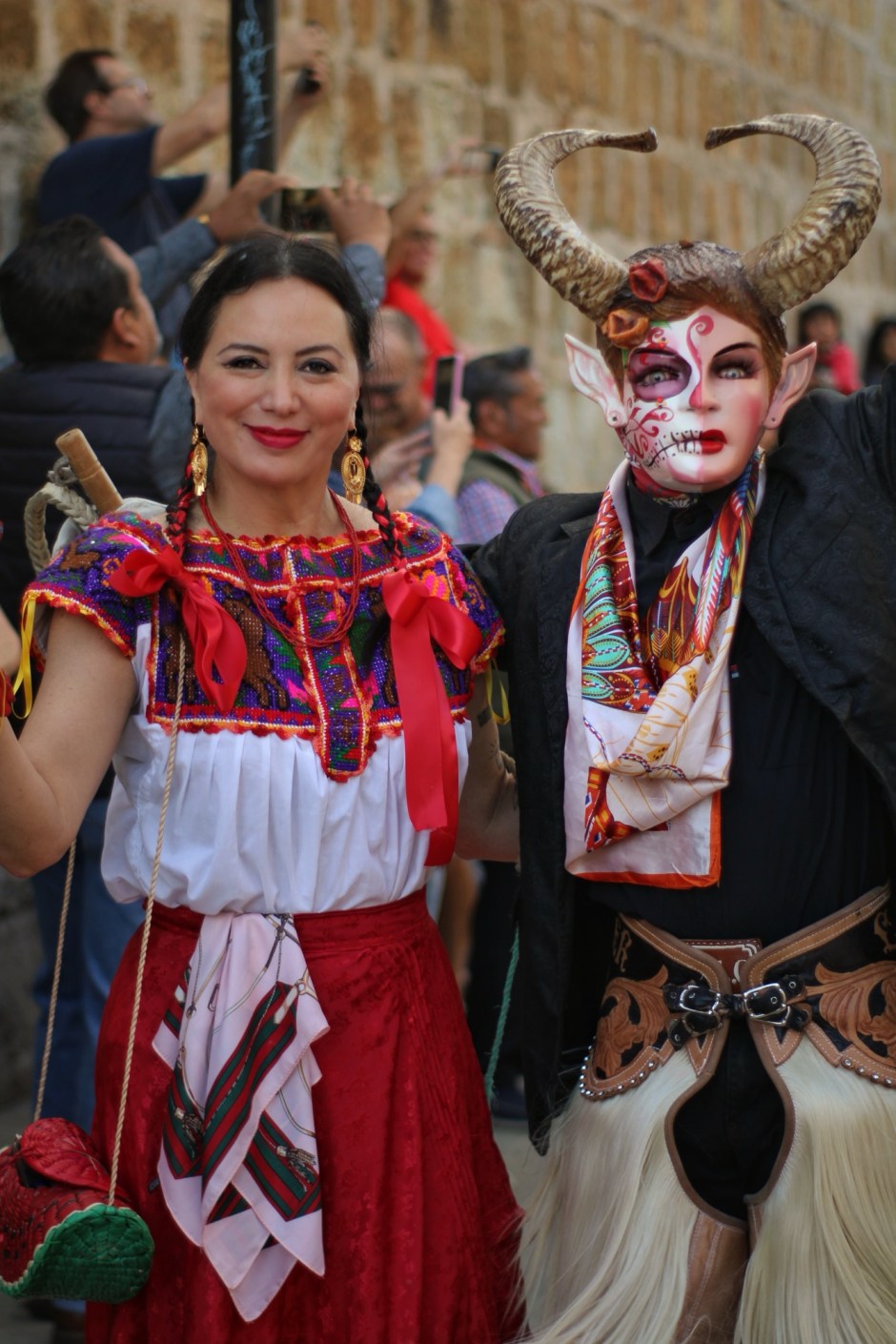
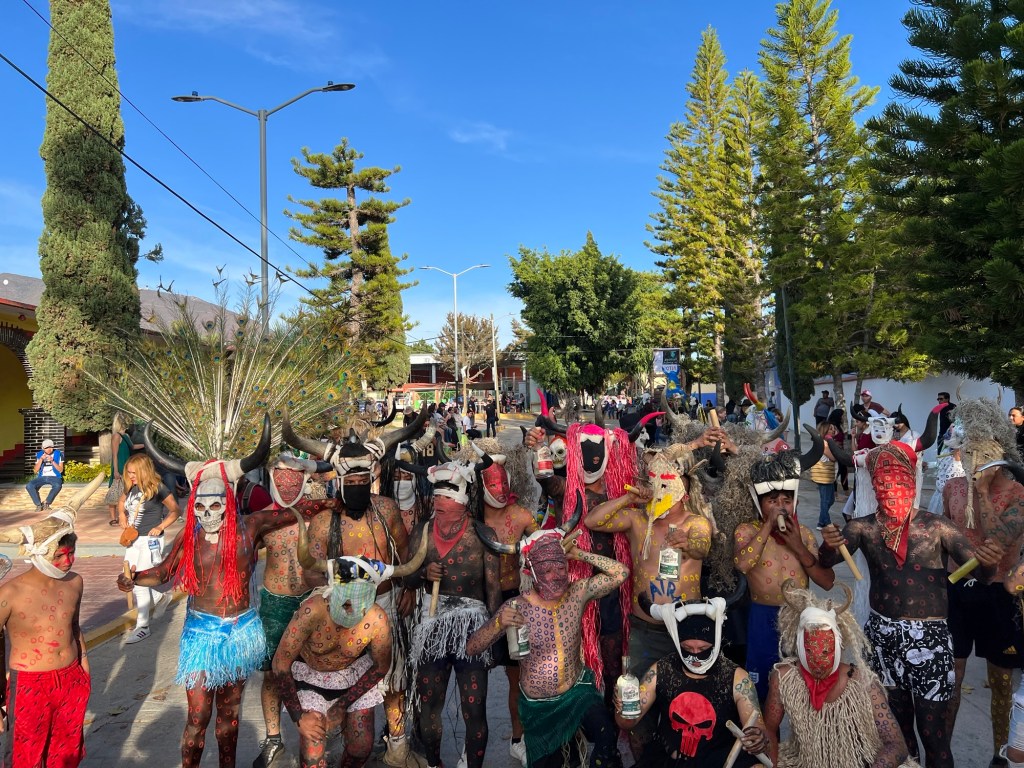
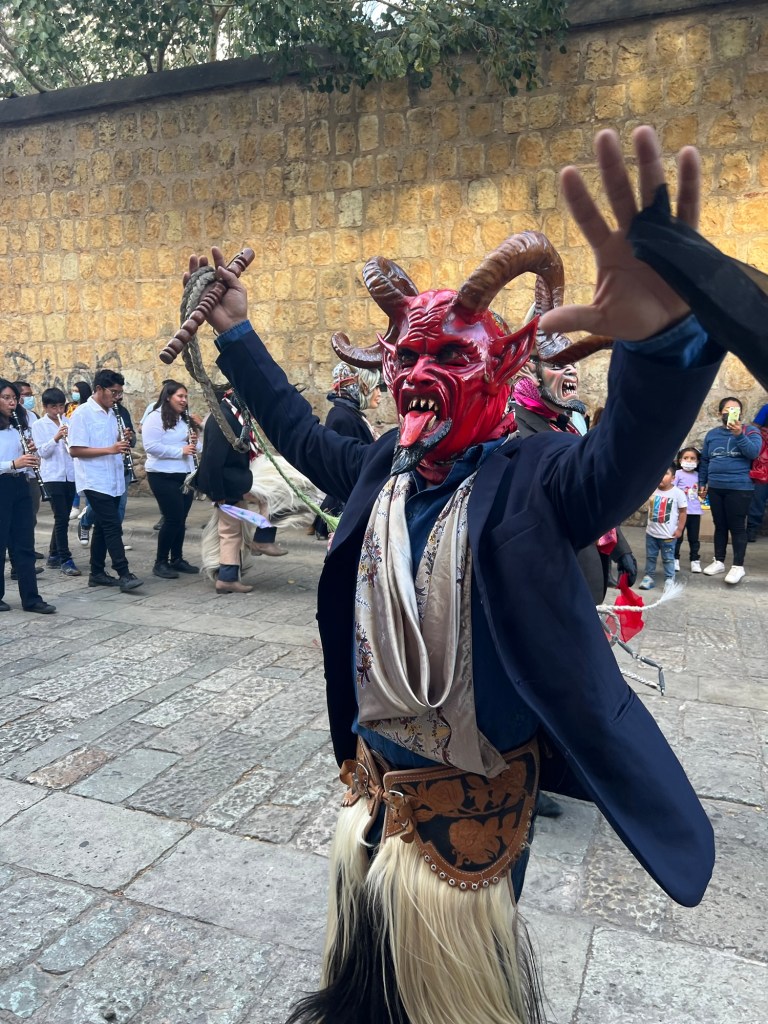
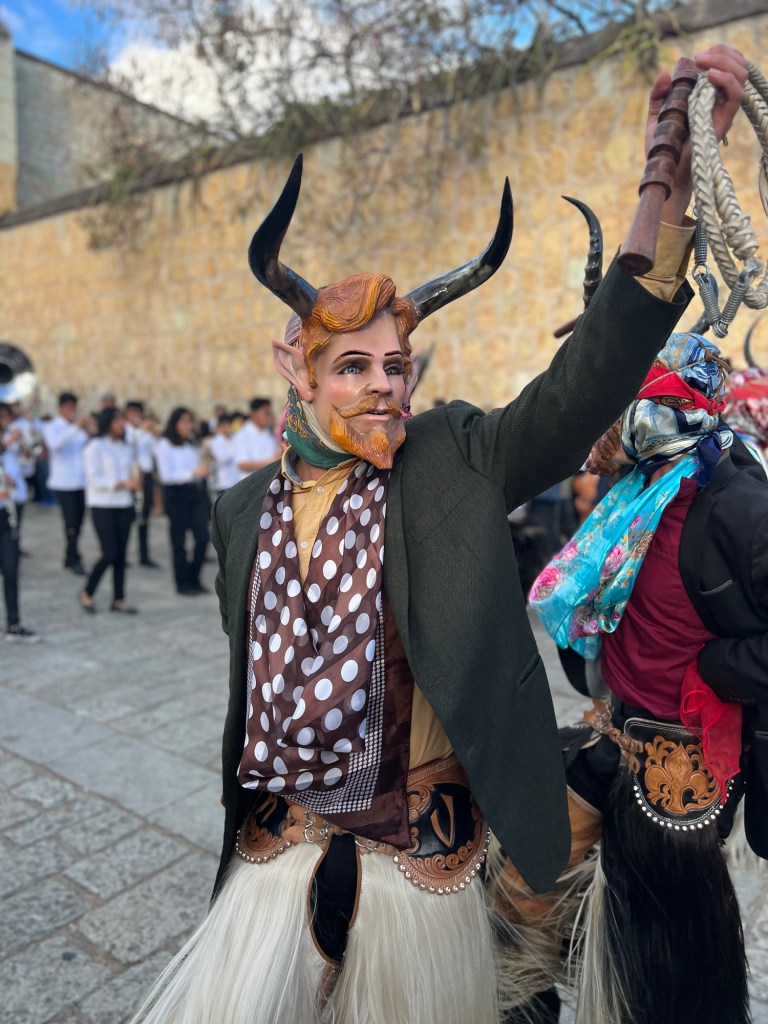
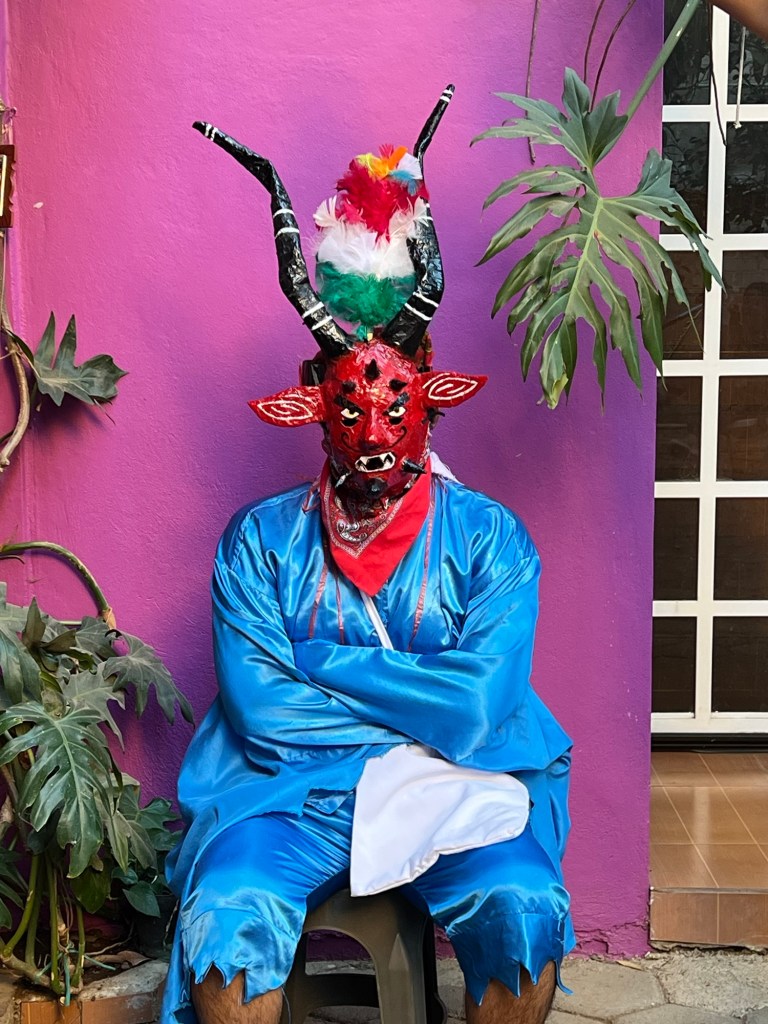
They feature colorful parades, music, and unique characters like the “cachudos” of Santa María Coyotepec, the “diablos pintos” of Santa Catarina Minas, and the devils of Santiago Juxtlahuaca.
Santa Catarina Minas carnivals
Some of the most iconic carnivals include:
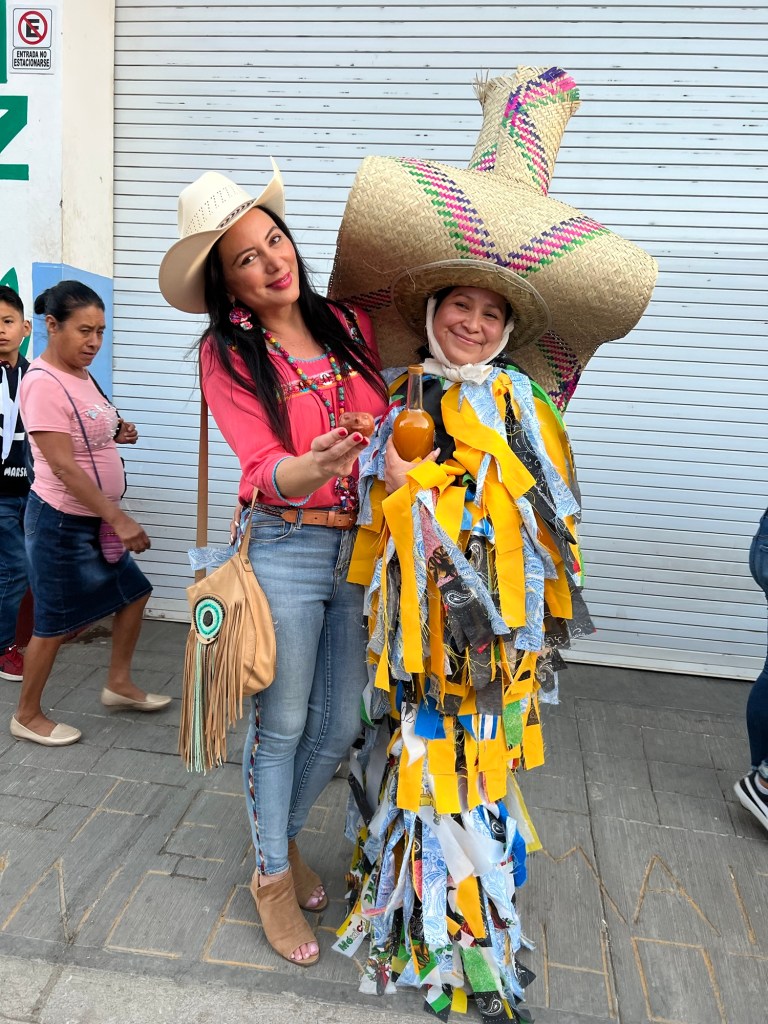
Putleco Carnival (Putla Villa de Guerrero): Famous for its “tiliches”, characters covered in colorful rags dancing nonstop.
San Martín Tilcajete: Features oiled-up “diablitos” roaming the streets with bells.
Villa de Zaachila: Devils and decorated eggs filled with flour are thrown at young women as a courtship gesture. The tradition of devils and love eggs in Zaachila is a vibrant expression of Zapotec culture. On Fat Tuesday, groups dress up as devils with papier-mâché masks, ringing bells to signal the last day for “carnal” or bad deeds before Lent. The Devils and Love Eggs Devils carry decorated eggshells filled with baby powder or flour and confetti, breaking them on single ladies’ heads as a sign of interest. These “love eggs” are displayed on embroidered handkerchiefs with love declarations, adding a romantic touch. Zaachila, the last Zapotec Empire capital, preserves traditions like mask-making, feather art, and embroidery.
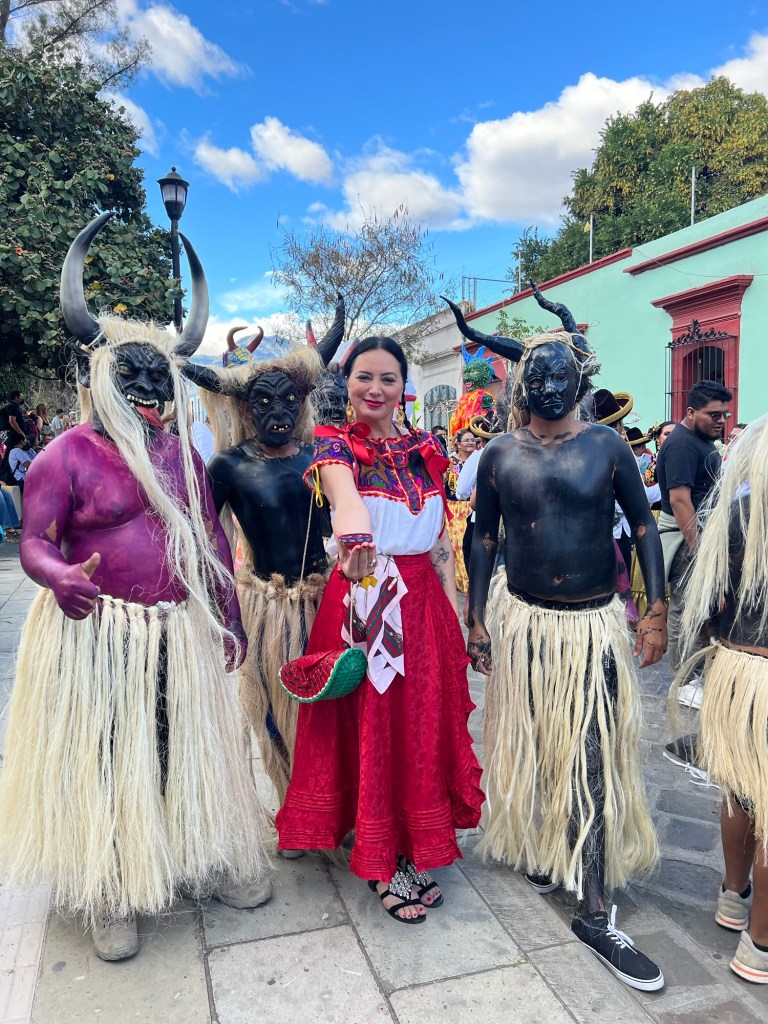
Santa Catarina Minas: The story goes that in ancient times, they celebrated “Carnestolendas” on the Tuesday before Ash Wednesday, as a way to “cast out their demons” and give death to carnal desires. It was also the last day to eat meat before Ash Wednesday, when they’d go to receive ashes and observe Lent. What are the “diablos pintos” The “pintos” were people who painted their bodies and faces with natural pigments like tizate, apasle, palm, cuernamentas, and animal hides. They’d go out to scare the landowners and rebel, revealing their anger and indignation without being recognized, as their faces were covered or painted. The tradition They’d go to the hills to gather these natural pigments and then descend to frighten the authorities, expressing their inner “demons” and purifying themselves before Lent. This ancient tradition was a form of catharsis, releasing tensions and negative emotions before the reflective period of Lent. It’s fascinating to see how these ancient traditions influence today’s Carnival celebrations in Oaxaca and beyond.
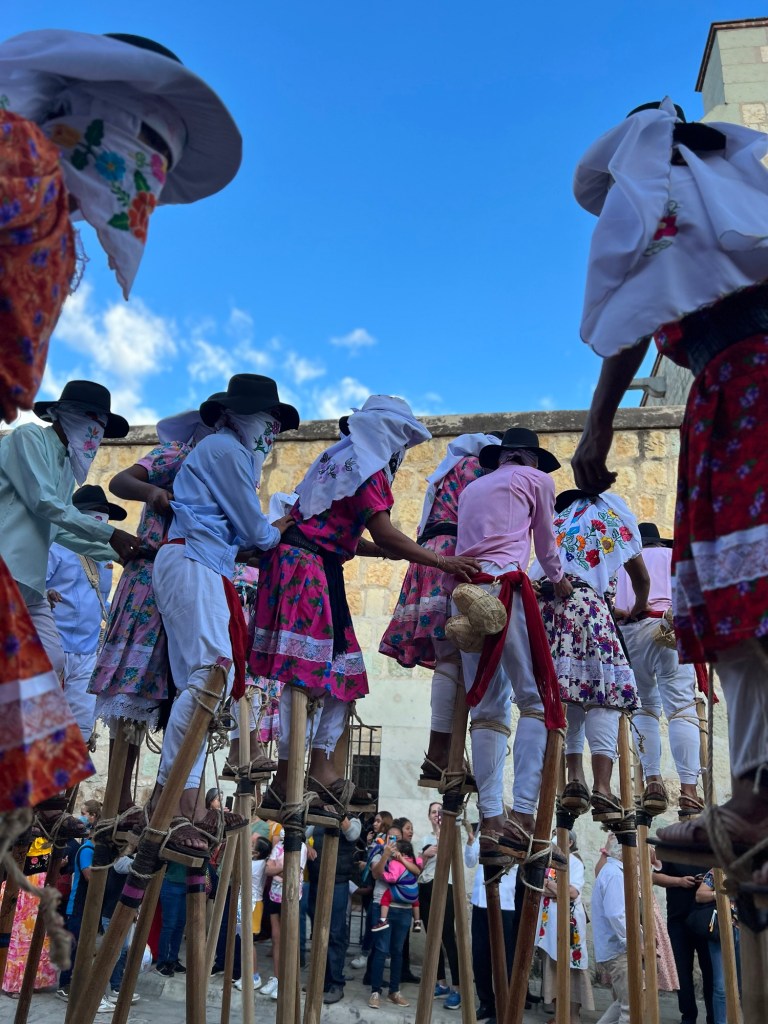
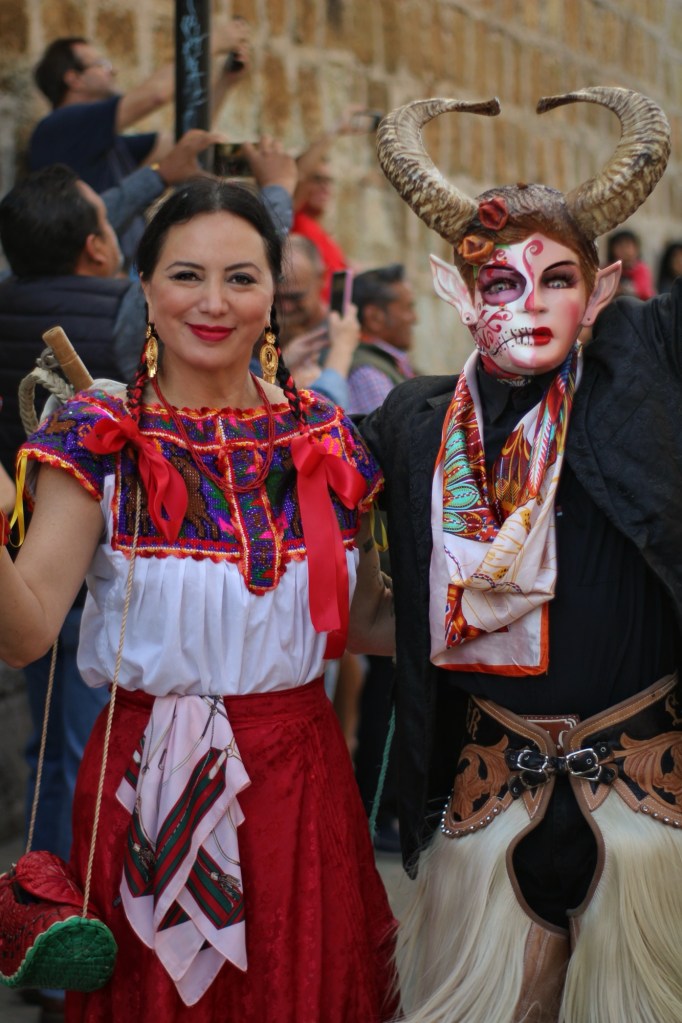
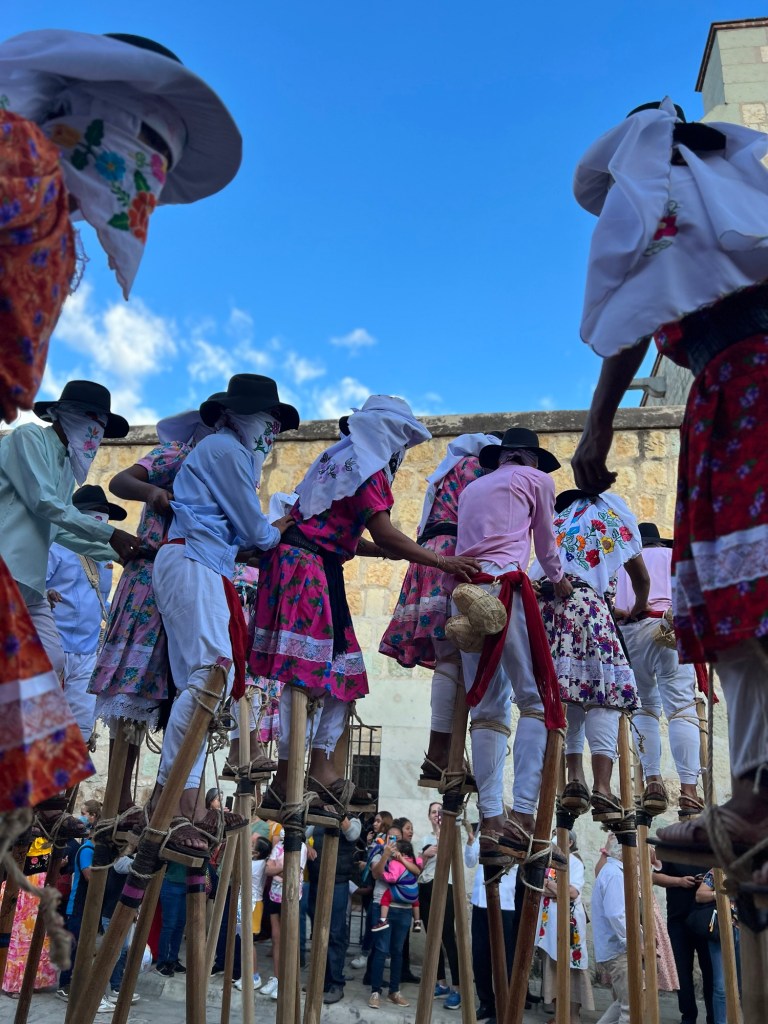
Montserrat Franco and a female Tiliche in Ocotlan de Morelos carnival The Santa Catarina Minas Carnival The Devil of Juxtlahuaca The Devil of Juxtlahuaca Zaachila’s zancudos Montserrat Franco and Cachudos of Santa Maria Coyotepec
Others include San Bartolo Coyotepec, San Juan Bautista la Raya, Ocotlan de Morelos, Magdalena Teitipac, and San Bartolomé Quialana.
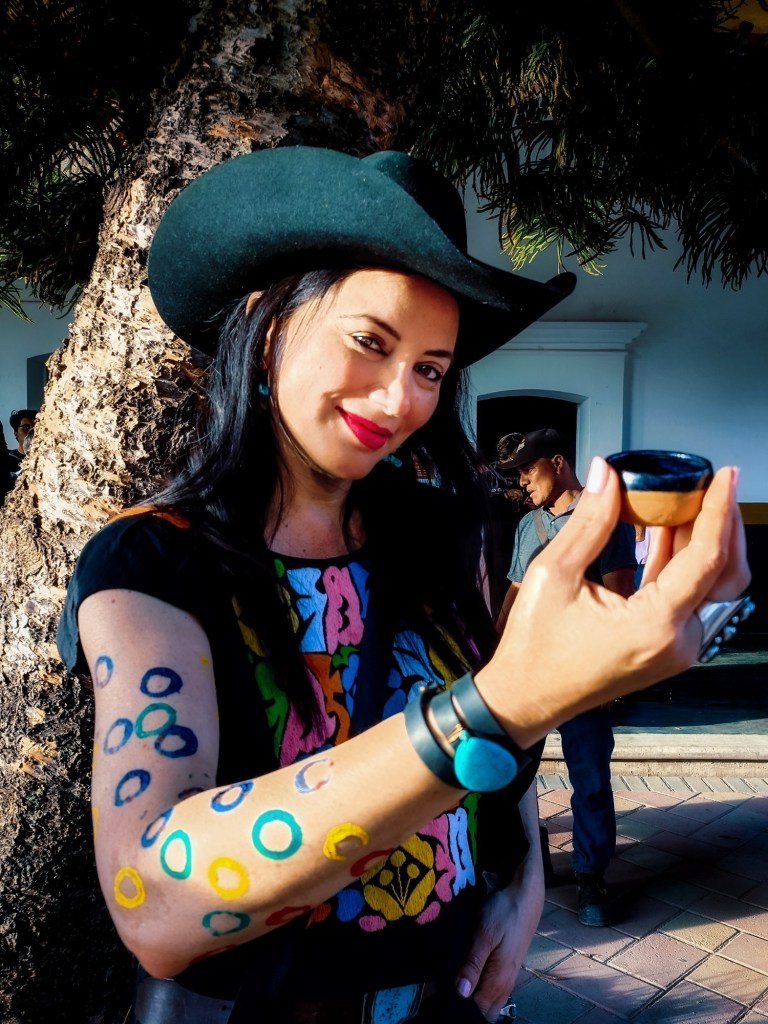
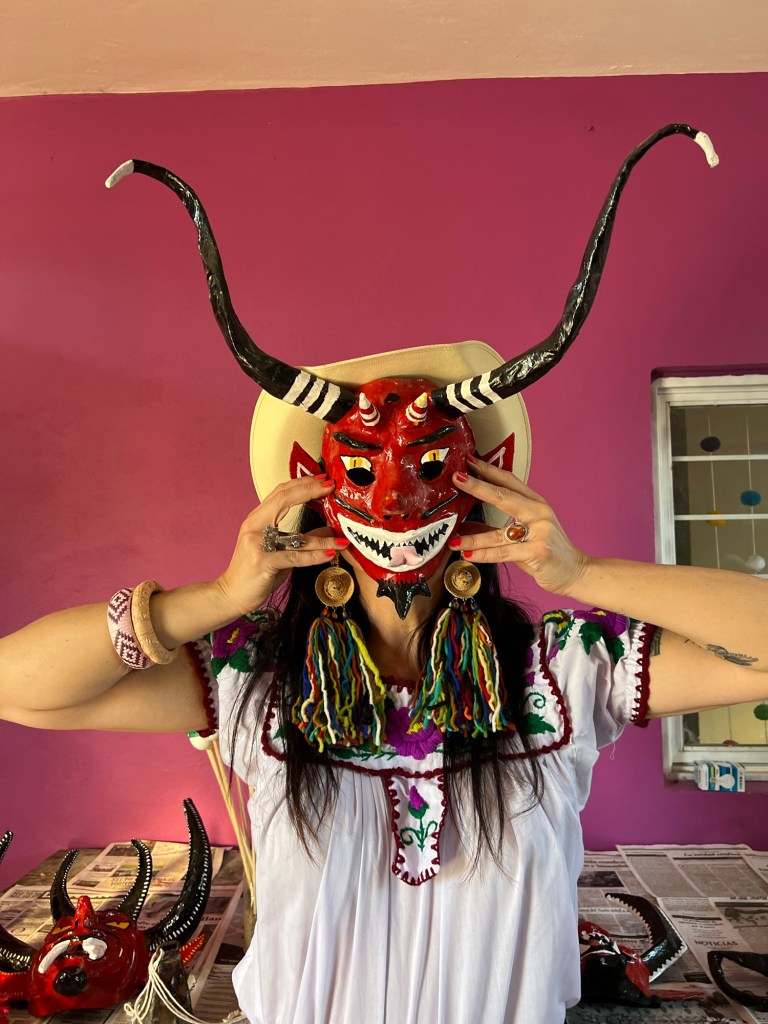
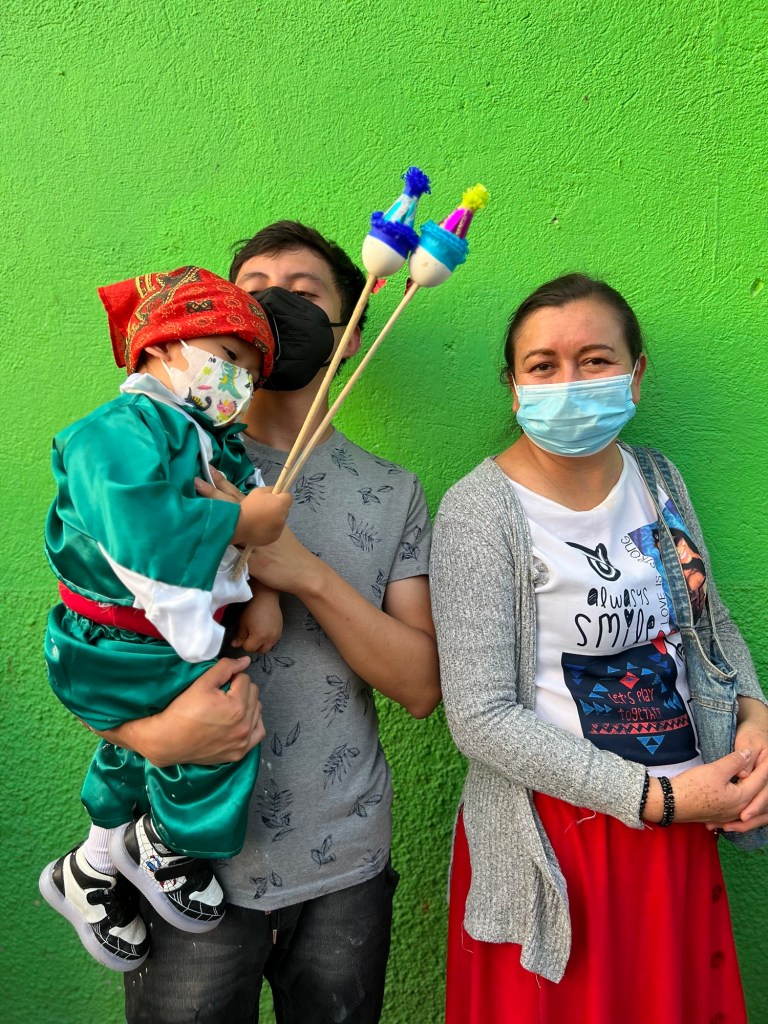
Montserrat Franco in Juquila’s traditional outfit with the Devil of Santiago Juxtlahuaca. Photo credit: Mayin López Decorated eggs filled with flour at Zaachila’s carnivals Zancudos of Zaachila Montserrat Franco with “pintos” dot painting in Santa Catarina Mina’s carnival. Photo credit: Sinuhé Gerardo Montserrat Franco wearing a paper mache mask from Zaachila A devil in Zaachila A family during Zaachila’s carnival
A Land of diversity, Cultural Heritage declared by Unesco, a destination like no other
Montserrat Franco
Oaxaca is not like any other part of Mexico; Oaxaca is a country of its own and that is reflected in the pride of 16 different linguistic groups and 26 sub-linguistic groups in their distinctive 8 regions.
The diversity in the culinary and mezcal is impressive counting the different terroirs, soils and elevations as well as the historic taste of each community: Cañada or Sugar cane fields (home of interesting Agricole rums and Oaxacan whiskey), Coast (excellent fish and sea food), Isthmus (most of the representative Tehuana and Muxe cultures, the famous Iguana soup and other delicacies), Mixteca(famous for their corn), Papaloapan (border with Veracruz, famous for their coffee and cacao), Northern Highlands, Southern Highlands, Central Valleys (where you will be mostly touring and will have all the diversity of agaves for the mezcal production).
Some recommendations:
· Most places, especially markets, taxis, stores, artisan shops, only accept cash in Oaxaca, credit cards only at fine dining restaurants and mixology bars. Always have Mexican pesos and if you need to, check with your bank which bank partners have no foreign commissions on transactions. Remember that US dollars are very low now and change is at around 16.28. You can exchange at the airport upon arrival and at the historic center at the exchange shops, just check the rates first.
· There’s no Uber in Oaxaca but there’s an app call Didi that you can download and place your credit card, it connects to yellow taxis and the rates are lower than negotiating with taxis on the street, I recommend to set the app to “Pay with cash” because when the driver sees that you are paying with CC on file, he can just cancel your trip because it takes longer for them to get paid.
· Always take a yellow cab; if you see a red or blue cab, those are called independent or “foraneos taxis” and connect closest cities but they are not allowed to enter inside the city center of Oaxaca, you may end up your trip far from your hotel if you take one of those taxis, paying the same rate.
· Getting around with taxis in Oaxaca can be a pain because they can technically charge you anything; always ask first how much the ride will be from your place to a place you go and agree to it.
· Tips are voluntary and servers always ask if you want to leave tips. US nationals are always the most generous but servers are not used to more than 10 or 15% gratuity.
· Always wear comfortable shoes, you walk a lot in Oaxaca
· Always wear sunscreen, hats, sunglasses, sun is pretty strong
· Keep yourself hydrated, never drink water from the faucet, not even to brush your teeth, use bottled water.
· Have some repellent, there are mosquitoes in the villages and there’s dengue going on right now.
· Oaxaca is pretty safe but avoid walking on dark streets during late hours (midnight and up) at the historic center. If you exit from a Mezcaleria try to always go on main streets; you will see the lively scene but always keep an eye on your back and surroundings.
· In any situation enjoy everything that Oaxaca has to offer: the gastronomy, the mezcal, the craft and the lively scenery because every day in Oaxaca is a celebration; you will see most of these “calendas” or processions with dancers, giant props “monos”, globes “marmotas”, live marching bands and all of that is just part of their daily lives and is free for the public to see it and enjoy around the main streets of the Santo Domingo Temple. If you just walk around there or have a coffee or drink at a rooftop nearby Santo Domingo at around 5 to 7 pm each afternoon; you will experience it, most-likely is wedding or a Quinceanera (Sweet 15 celebrated in Oaxaca) depending of the date it is also a celebration of a Saint Patron (they have so many all year long)
The Santo Domingo Temple is the center of the everything that happens around the city of Oaxaca
Mezcal service and cocktail offering at Casa Oaxaca
Culinary etiquette and must tries in Oaxaca:
Memelas: Handmade white corn patties made of “masa” they are always made to order in the comal (kind of like a hot clay grill) once cooked, the memelas (thicker than regular tortillas) are brushed with “asiento” (pork lard) placed again in the comal, they add “frijoles” (beans puree) “quesillo” cheese (often called “Oaxaca Cheese” but the correct name is “Quesillo”) those are the basic ingredients but you can add toppers such as: meats “tasajo” (a thin slice of beef) “Cecina” (a thin slice of marinated in chiles beef). Memelas are usually taken for breakfast with “café de olla” (if you are an espresso person, you may not like it as it is diluted with water; coffee cooked on a clay pot with spices such as cinnamon, cloves and it is already sweeten with “piloncillo” (unrefined cane sugar paste)
Memelas and salsitas service at Ancestral restaurant in Xochimilco
Tlayudas: These are white or blue corn patties made by hand and then pressed to make them very thin; cooked at the comal and then left to dry. They can remain edible for a long time in airtight containers. Some foodies describe them as the Oaxacan pizza, the tlayudas are something so traditional of Oaxaca that you can’t leave without trying them. Once the thin patties are ready and crispy, they are placed at the comal and “asiento” is added (if you are vegan or for religious reasons you could ask them to make it without asiento or with a vegan base asiento (most established restaurants can accommodate), then the frijoles, then quesillo (the main ingredient in the tlayuda) avocado slices, you have a choice of Cecina or tasajo and is accompanied with roasted green onions and radish.
Salsa verde and salsa roja: These salsitas are always present to accompany any dish, the green sometimes can be very spicy as it is made with habanero, the red can be a mix of mild chiles, some restaurants make these salsas in front of you and you can choose the salts you want and level of spiciness.
A traditional Oaxacan platter with meat, grilled cheese, guacamole, chiles, pork, sausage, bean, salsa roja and totopos (corn chips)
Chapulines: the roasted and seasoned crickets are the signature topping for any dish in Oaxaca. They contain more protein than a slice of beef. You can find them in all sizes and can eat them as a snack, on top of guacamole they taste fantastic, with salty peanuts and nuts. They are also grinded and made into salts.
A vendor stand at the Merced market with an assortment of chapulines salt and other favor “botanas” (appetisers)
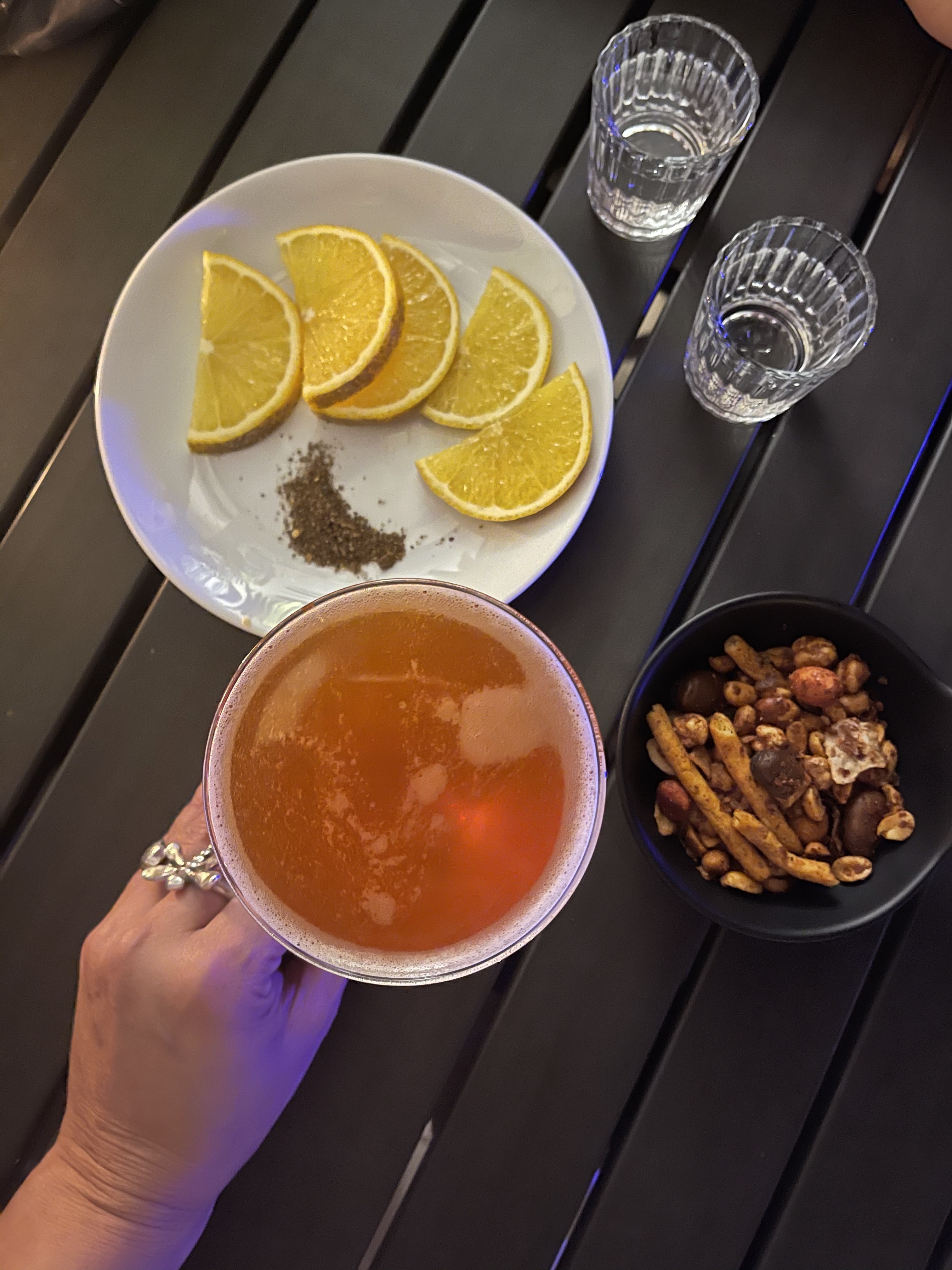
Sal de Gusano: the worm that is around the maguey (agave) is soaking the agave SAP and is rich in flavor; it is collected and let to dry, then roasted and ground with spices to be converted into salt. It is served along with orange slices, green apples or jicama after a sip of mezcal but is preferred to have just the mezcal without any of that and use the gusano salt mostly as a rim for cocktails.
Mole: there are 7 different types of Mole in Oaxaca as opposed to Puebla where there is only 1. The competition has always been there as to who makes the best mole, but the reality is that each family in each region of Oaxaca has a signature recipe and their traditional mole for each occasion. On my recommendations there are some moles to taste in restaurants but you can also taste some at the mercados or towns nearby and see the difference.
Chocolate: in Oaxaca they will offer you for breakfast even before coffee a Chocolate de agua (basically a non dairy hot chocolate) and a Chocolate con leche (a hot chocolate on hot milk) the beverage is very rich in flavor and already has lots of added sugar, vanilla and roasted almonds. The basic chocolate paste is made on the metate (an ancient stone grinder). On my recommendations you can also visit a traditional Chocolate factory at one of the mercados where you can see the process, now made in metal grinders, is still very old fashioned. The most important thing about the chocolate they serve you is that they will use a green or red clay jar and a molinillo (some kind of a wooden wisp) to make the bubbles right in front of you. If it doesn’t make bubbles, the hot chocolate is not perfectly served.
The famous Oaxacan Chocolate served in a clay jarrito at La Merced Market
Tejate: an ancient drink that had ceremonial purposes in the past. It is very refreshing and you will see it in the streets served from giant clay containers on “jicaras” hand painted gourd vessels, you can also ask for a plastic container to go.
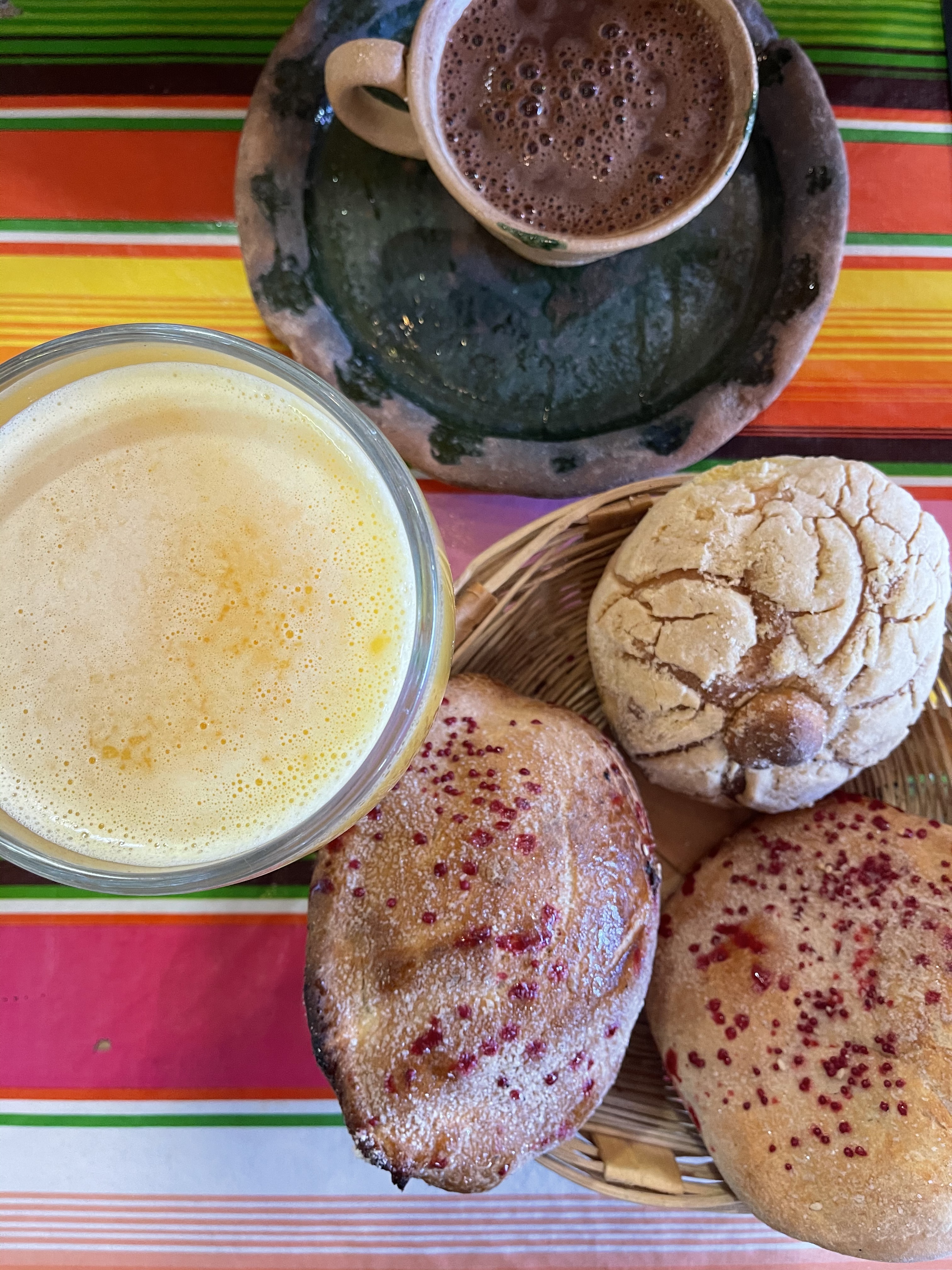
Pan de Yema or Pan Dulce: an egg, water, flour and pulque (fermented agave SAP) yeast, some bread makers now use baker’s yeast. They will always serve you this bread (that is the original recipe for the Pan de Muertos) with a chocolate beverage or coffee. The Pan dulce will have some variations on shape and the crusty top (also called “conchas” in other parts of Mexico).
Pan de yema and pan dulce served with chocolate and orange juice at La Merced market
Barbacoa: best barbacoas you will find at the village’s markets; the most popular barbacoas are the ones of the village of Zaachila which was the last capital of the Zapotec empire and about 40 minutes from the center of Oaxaca or in the Tlacolula market (about 40 minutes from Oaxaca’s city center) Barbacoa can be of sheep, goat or cow but most popular and rich in flavor are the first two. Beef is first marinated with spices and then cooked in an underground oven, a mezcal bottle is placed next to it as a blessing. You can also experience and see the “destapada” when they open the oven and serve you a copita (tiny glass) of warm mezcal to open the appetite before having the barbacoa for breakfast or lunch. Usually it is the meal/brunch on Sundays. At markets it is served with a generous dish of soup from the barbacoa itself and large tortillas with all the toppings to make your own barbacoa tacos.
Aguas Frescas: at any restaurants or markets the aguas frescas are always available and since this is pure fruit juice, you have all the variety that the tropical and sub-tropical region has to offer.
Nieves: These are Oaxacan sorbets, made with real fruit, water or milk in the old fashioned way (wooden tanks) . They have great flavor. Some of the best nieves are at La OaxaqueñaPlaza de la Danza, on the same plaza of La Soledad Church, this is great area to have a seat and enjoy the sunset or after a meal, have some nieves and listen to the marimba (steel drum) players that are always there.
Mezcal: the pride and joy of Oaxaca is Mezcal, I have recommendations on the next posts of some of my favorite mezcal routes and mezcalerias as each region has a signature mezcal making and agave diversity as well as each region’s microclimate, water and terroir will influence on the final product. What used to be a drink of the community made in small batches for that special occasion is today a fashionable spirit praised by bartenders around the world and loved by millennials. Today is the fastest growing spirit category.
The city of Coral Gables was developed by George Merrick with the conception of “The Beautiful City” an architectural movement from the late 1800’s and early 1900’s that includes the “Beaux-Arts” style characteristic to many buildings not only in Coral Gables but also can be seen in Downtown Miami.
Merrick a visioner himself created unique villages in to the City, on a plan that only Walt Disney could conceive; Merrick was determined to make this town beautiful.
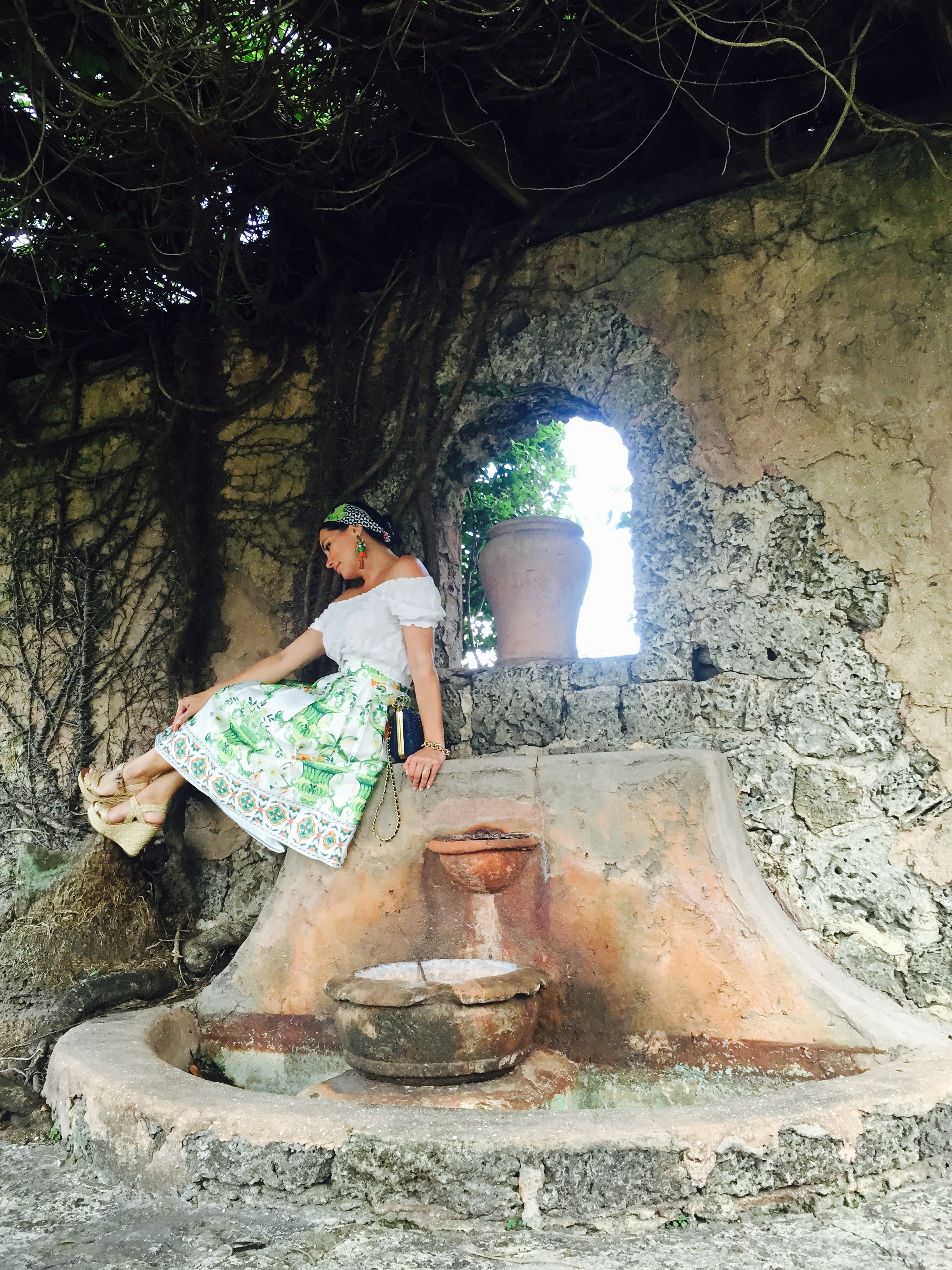
One of the typical scenes in Coral Gables, a fountain built on the coral rock (limestone) bringing reminiscences of an ancient Spanish village.
The Villages
I invite you to take a closer look to the villages and admire the architecture, the gardens, the arched gates and feel like you have travelled around the globe in less than a day.
The Italian Village: Stroll on Montserrat, Palmarito and Altara Avenues, the homes here will transport you to the Villas of the 17th century in Italy. Frank Wyatt Woods designed them in 1926.
The French Villages: Conceived after 18th century French country farm houses and chateaux; these villages are located on the 500 to 1000 block of Hardee Road.
French Normandy Village: Did you notice when driving on traffic on LeJeune Road the particular houses by the 400 block of Vizcaya Ave? These are the 15th century homes found in England and France; constructed here in the 1930’s.
Pioneer Village: When driving or walking around Santa Maria Street by the Golf Course of The Biltmore Hotel; take a look at the Colonial Village with tall pillars, white picket fences, two story porticoes.
Chinese Village: The colorful Chinese compound style residences were designed in 1926 and you can see them on the 5100 blocks of Riviera Drive, Menendez, Castania, Maggiore and Sansovino Avenues.
Dutch South African Village: Designed by Palm Beach Architect Marion Syms Wyeth, these L and U shaped farmhouses resemble the homes of the wealthy Dutch colonists and you can see them on LeJeune Road and Riviera Drive, Maya Street.
The predominant architectural lines in Coral Gables are the 1920’s Mediterranean Revival Style and The Spanish Renaissance often confused with the 1930’s Art Deco because of the timeline between styles.
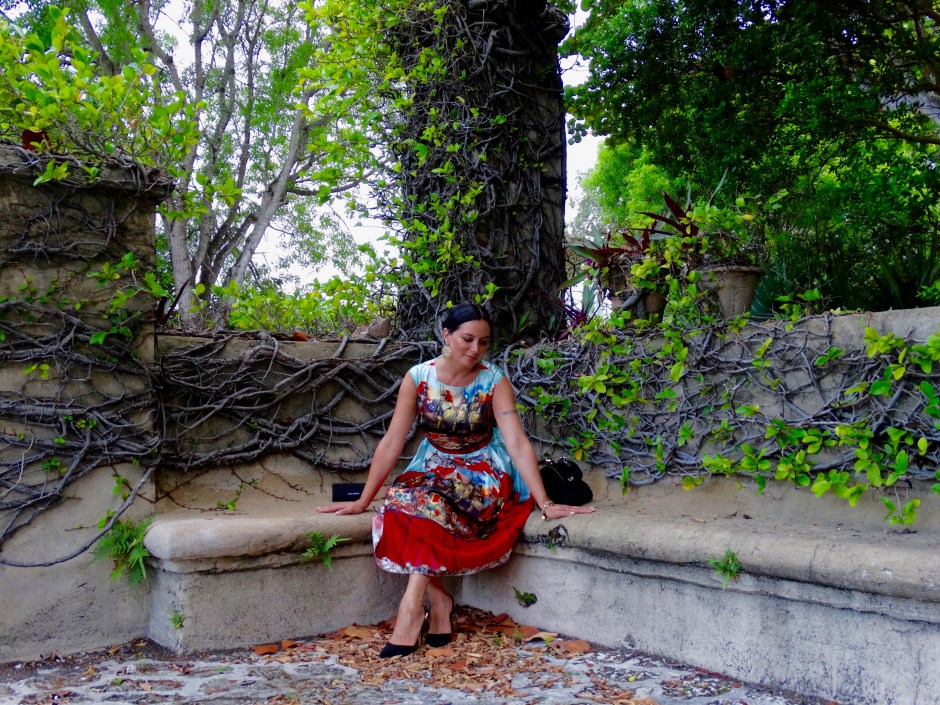
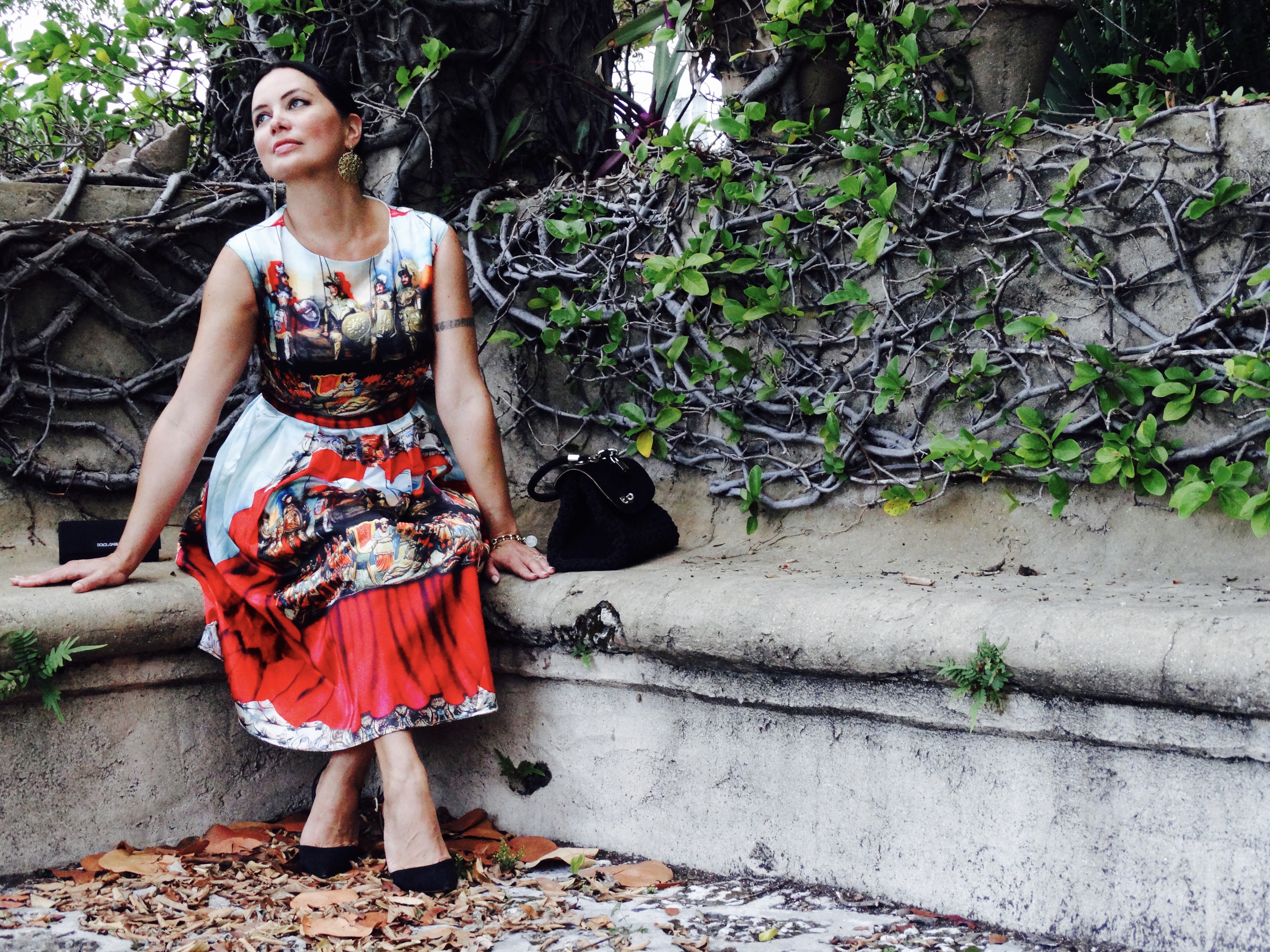
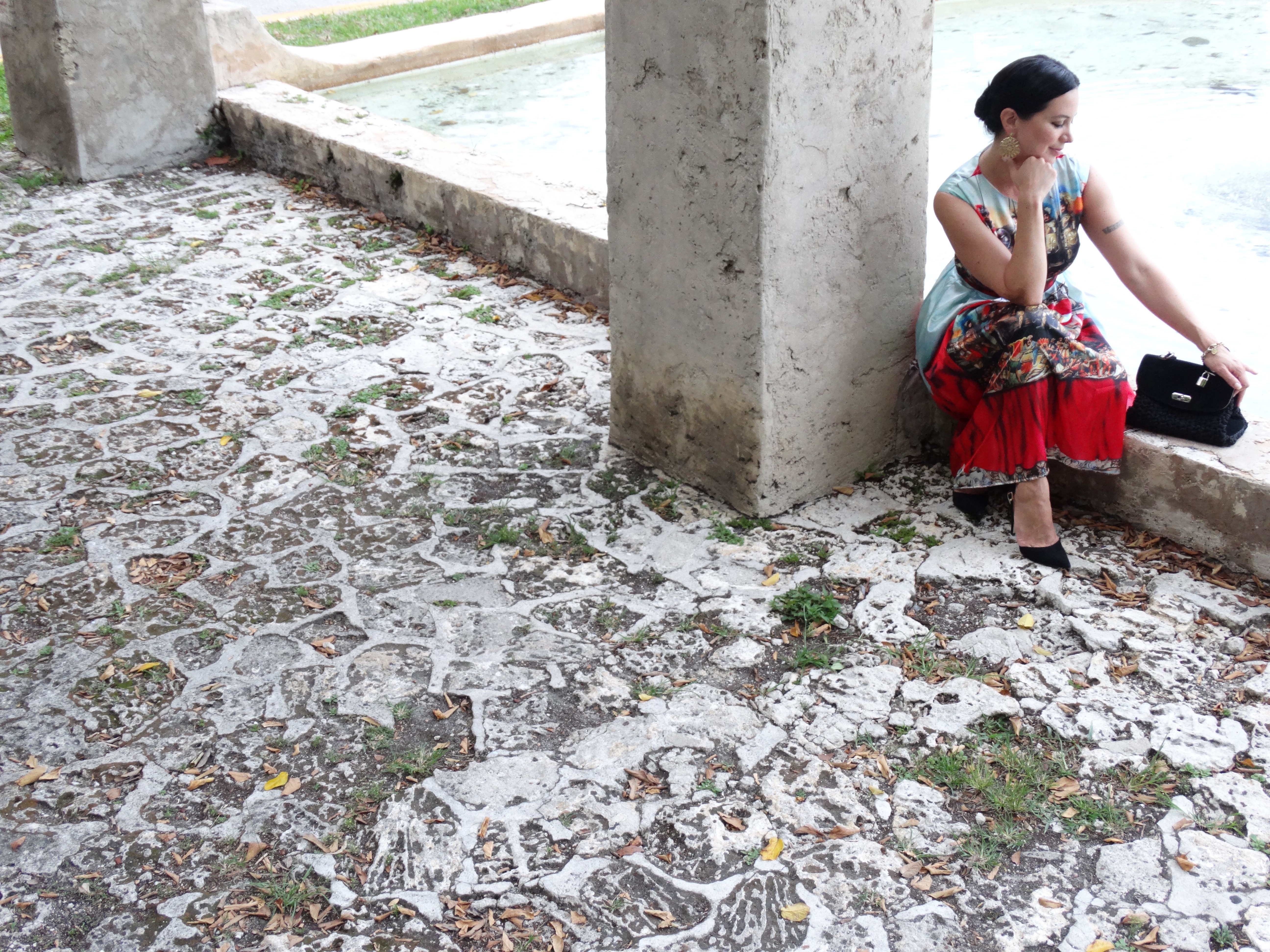
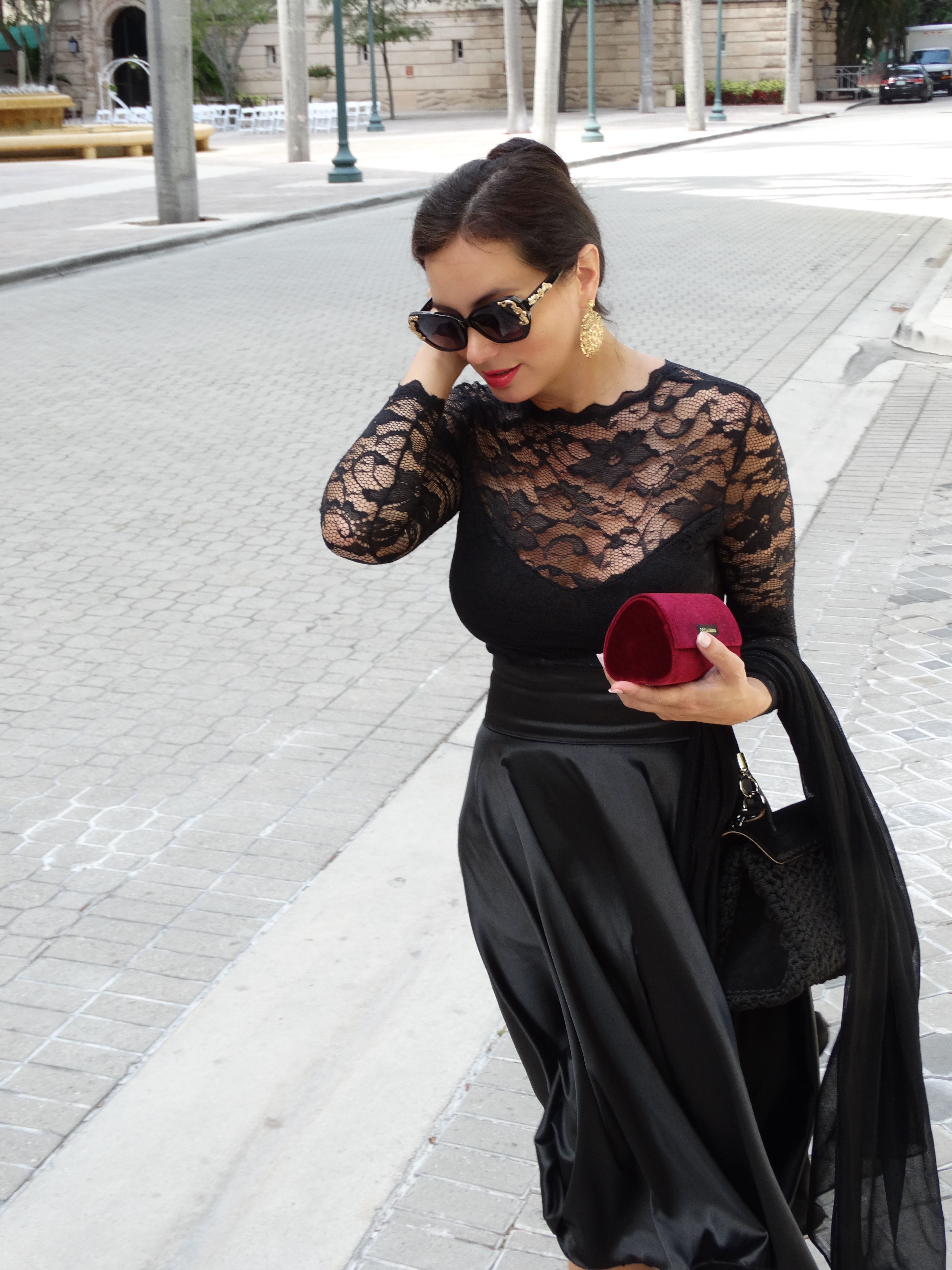
Montserrat Franco in Coral Gables, wearing a dress from the Dolce Gabbana Teatro dei Pupi (Theatre of marionettes) collection
The Gates of Coral Gables
George Merrick also envisioned eight different entrances to Coral Gables inspired in Spanish hill towns; only four were completed. You may drive by almost everyday around these gates but take a pause and look around a piece of history on your very own town.
The Douglas entrance (on Douglas and 8th Street) also called “La Puerta del Sol” is one of the most elaborated built between 1925 and 1927. It is registered on the National Registry of Historic Places.
A view of the building connected to the gate “Puerta del Sol”
Montserrat Franco in Coral Gables (Puerta del Sol entrance) wearing a Dolce Gabbana dress and sunglasses from the Sicilian Baroque collection
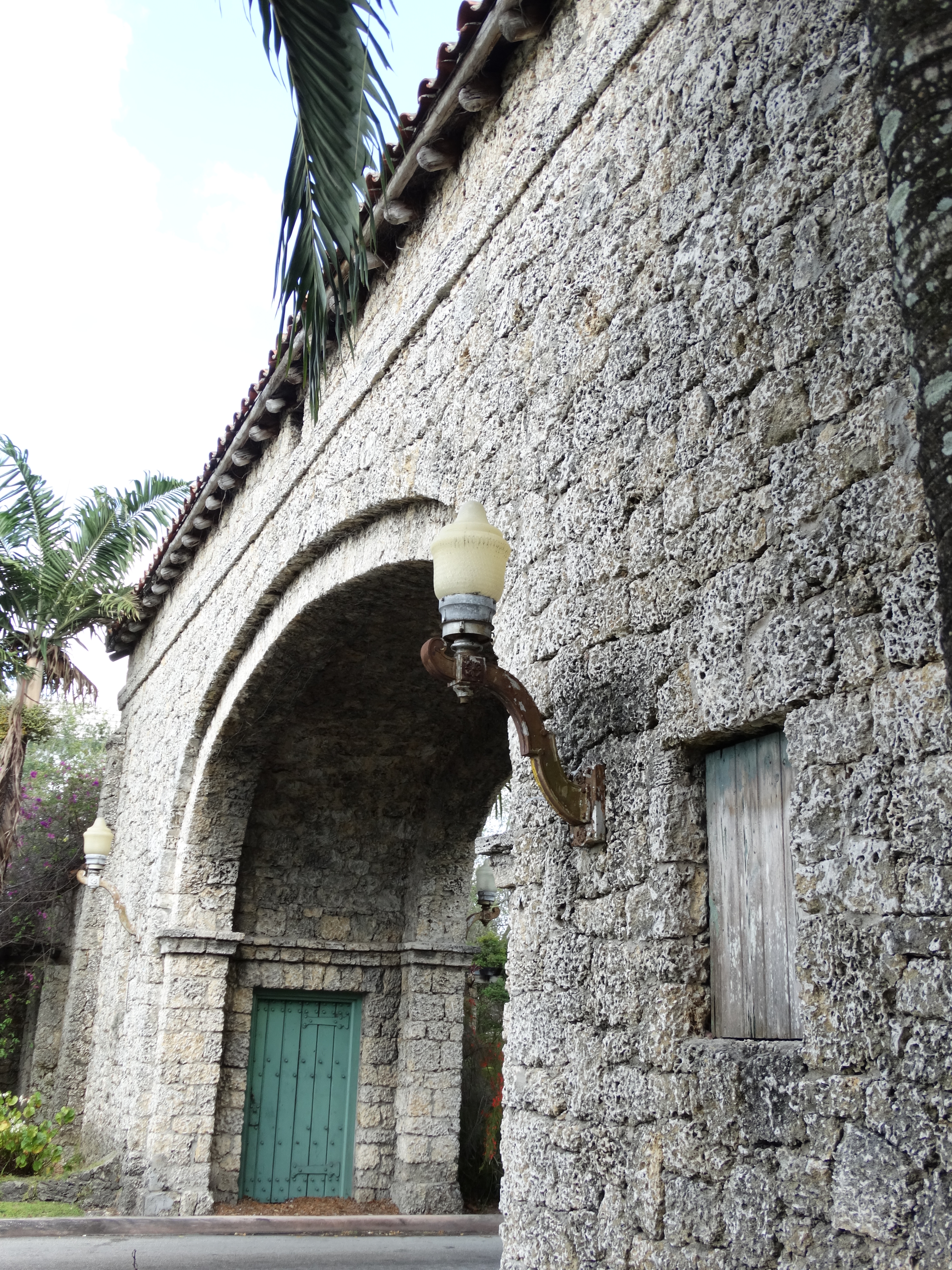
The Granada Entrance: Located at Granada Blvd and SW 8th st built on coral rock (limestone). The arch spans Granada Blvd which is a historic roadway.
The Granada entrance
Montserrat Franco at the Granada walls in a Dolce Gabbana dress from the Byzantine collection
The Prado entrance: Located at the NW corner of the City of Coral Gables at S.W. 8th Street and S.W. 57th Avenue (Red Road). For years the Country Club Prado Arch has been a setting for photography, specially wedding, engagement, etc.
The Alhambra Entrance: Located at S.W. 37 Avenue (Douglas Road), Majorca Avenue and Alhambra Circle. The Alhambra entry arch is also known as the commercial entry to Coral Gables, as Alhambra Circle leads to the central business district and Miracle Mile.
So much to explore in Coral Gables that you may want to come back for more, a long walk around charming homes with clustered buganvilias on limestone walls; unexpected fountains; spanish coats of arms on pillars and immense banyan trees to get the feeling of that Mediterranean getaway not so far away from home.
“Some people look for a beautiful place, others make the place beautiful”
St Barth; an almost unreachable destination in the French West Indies is the perfect hideaway for the jet setter. Surrounded by pristine white sand beaches, unspoiled nature; mountains and the turquoise clear waters of the Atlantic Ocean this associated Island of France had a long history before becoming the top destination for celebrities in search for privacy.
The airport in St Jean – St Barth is actually one of the most difficult landings in the history of aviation
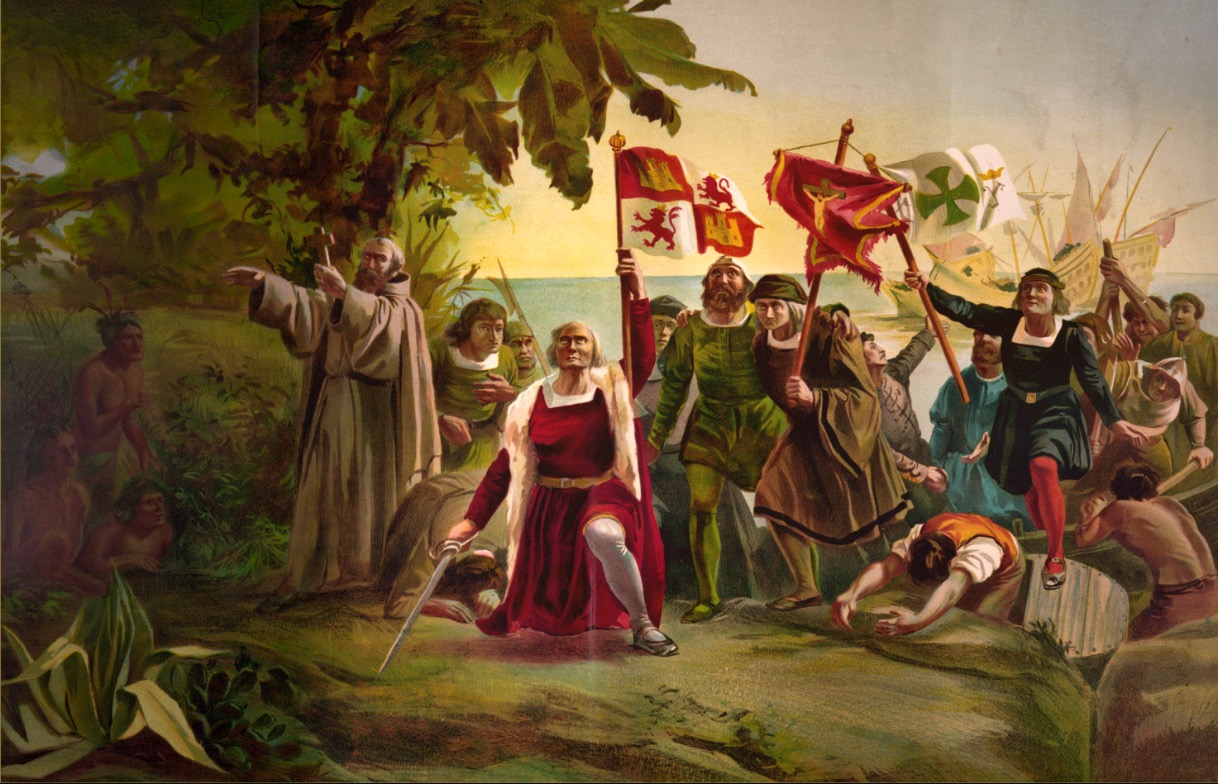
The Beginnings: In 1493 Columbus landed in St Barth and named the Island after his brother Bartolomeo; the first inhabitants of the Island were the Arawak Indians; hostile conditions and the lack of gold were crucial for the Spanish Crown and St Barth remained forgotten for centuries; later ruled by the French; then sold to the Dutch to be returned to the French; St Barth started to be noticed by luxury resort developers just in the 1950’s when Rockefeller built his private home in the top of the mountains in Colombier; West side of the Island.
The discovery of St Barthelemy. Columbus gave to the Island the name of his brother Bartolomeo.
A view from the cliff at Colombier.
Today; the most expensive yachts in the world are no strangers to St Barth and every day is almost a competition on size and style.
The Eclipse mega yacht owned by Russian Billionaire Roman Abramovich, I spotted from my balcony at the Beach House in Corossol.
Hotel Cheval Blanc LVMH Flamandes Beach
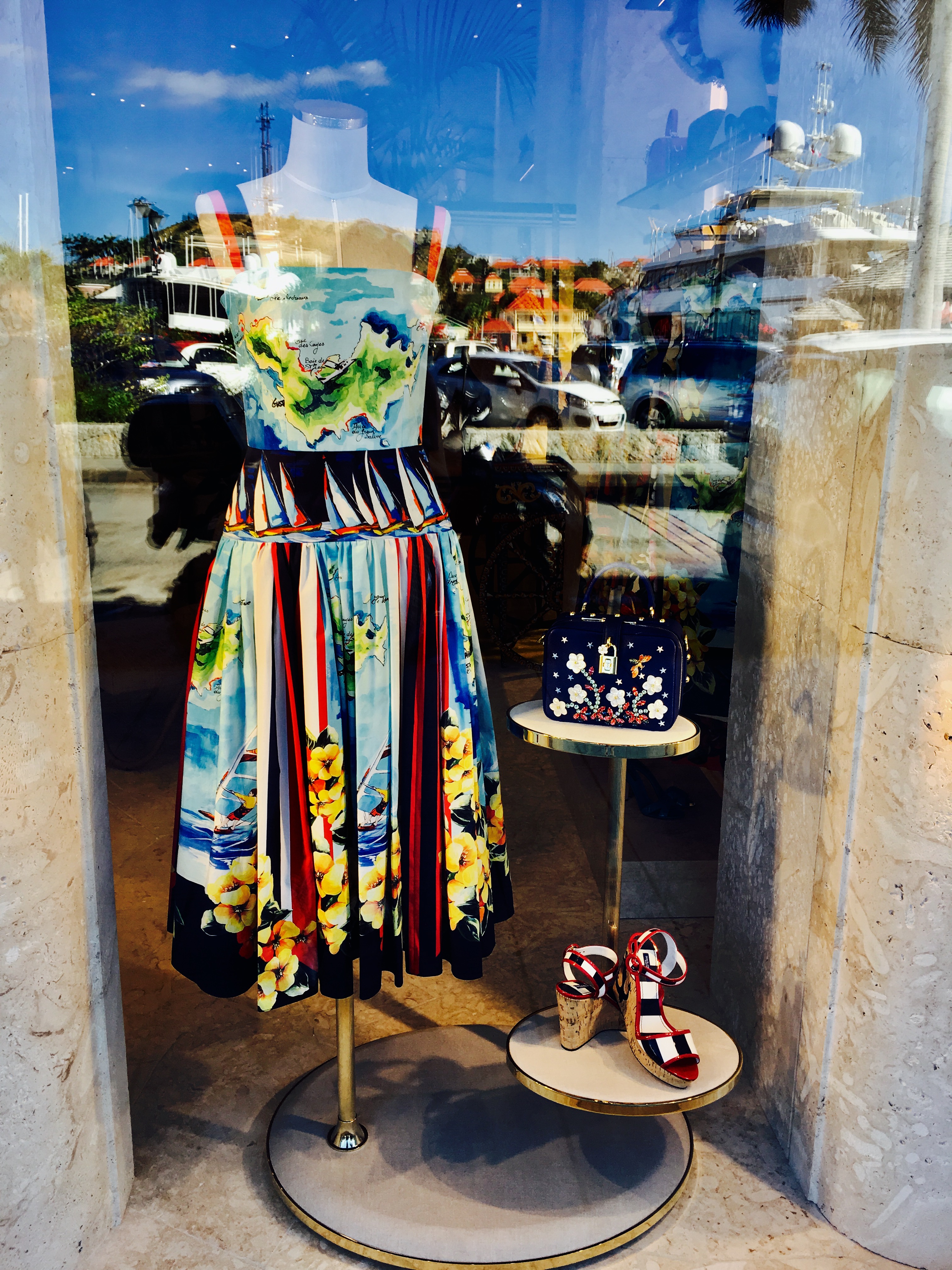
Shopping: For luxury shopping the Quai de la Republique; Le Carre D’Or; a Caribbean version of Beverly Hills with the most desirable designers and limited edition collections made exclusively for St Barth. I spent many hours at the Dolce & Gabanna flagship store opened just a few months ago with its own Martini Bar for D & G collaboration. The colorful collection reflects the spirit of the Island; floral scarfs; bejeweled mules, oversized sunglasses, embellished straw baskets and wedges and the 1950’s inspired cocktail dresses just makes us want to wear them all and go for a stroll in a Moke (the ultimate transportation in the Island) around Gustavia.
The Dolce & Gabanna loves St Barth collection at the DG flagship store in Gustavia
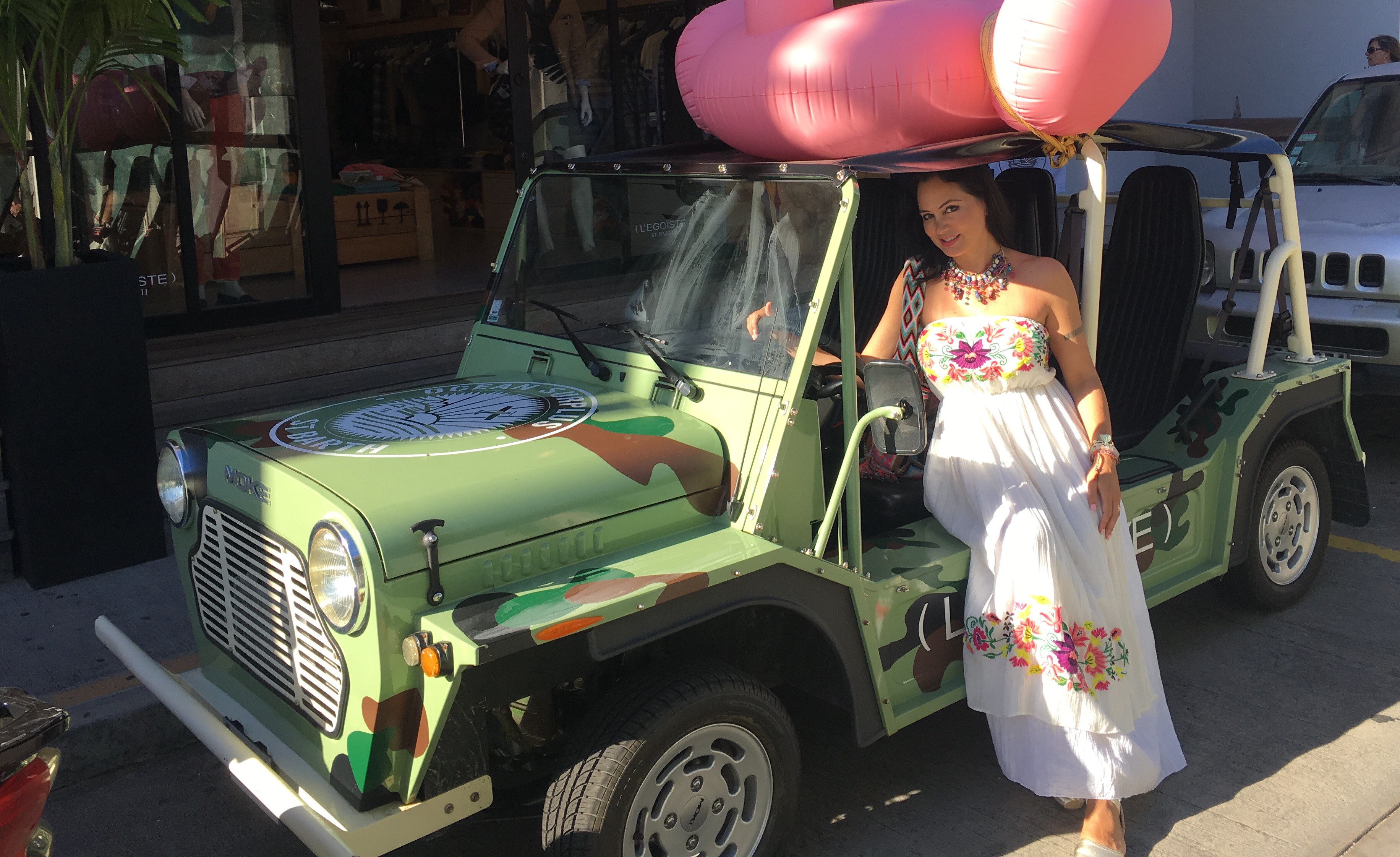
The Moke is the best transportation in St Barth. Wearing a hand embroidered dress and Mayan necklace.
St Barth is the culinary capital of the Caribbean; suddenly we see people walking with baguettes on the streets and freshly made pastries can be found at any of the Boulangeries and Patisseries; at supermarkets all of them carry French brands and is like going to Paris in the middle of a tropical setting.
Desserts served at Cheval Blanc. Flamandes Beach
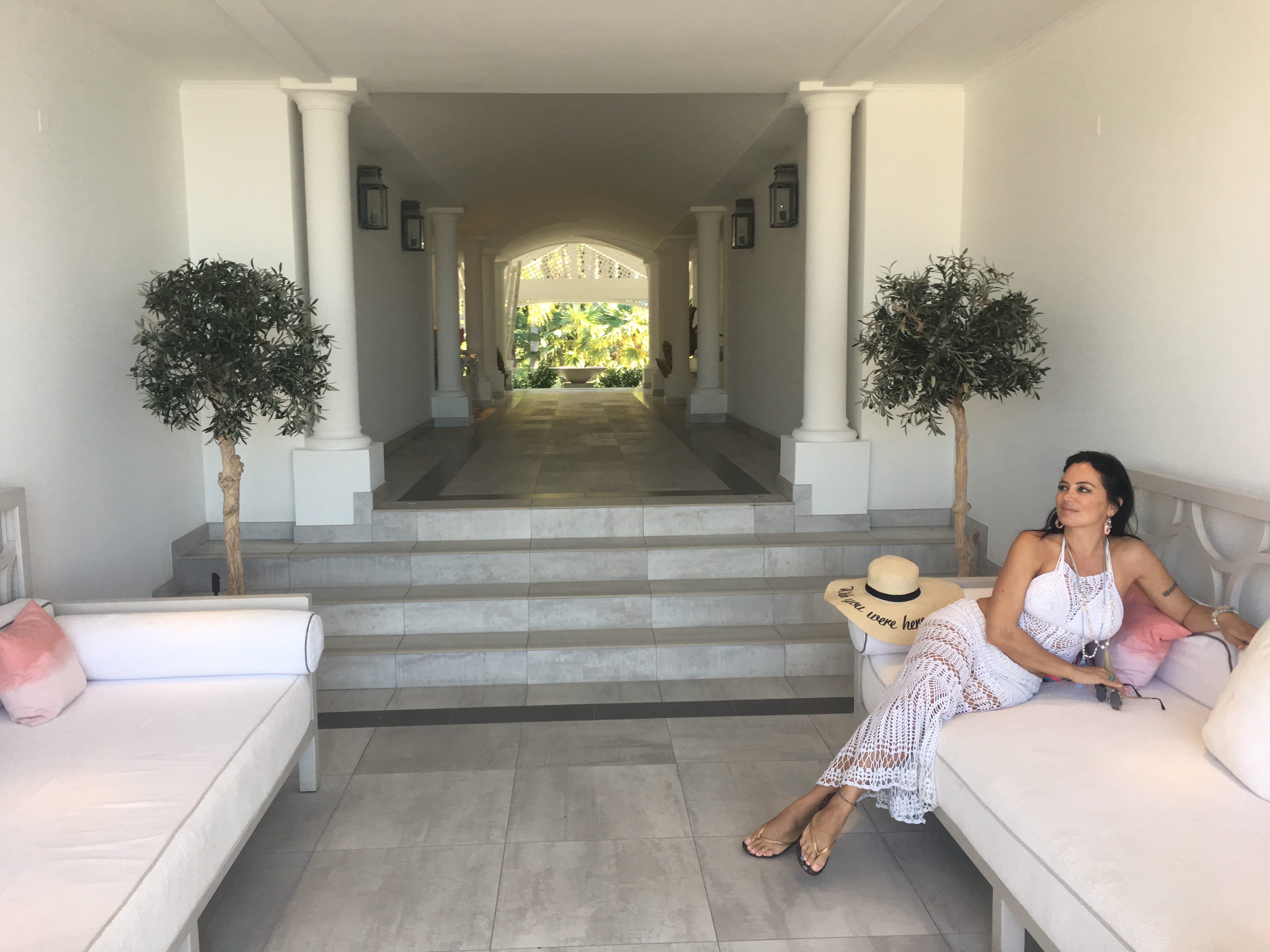
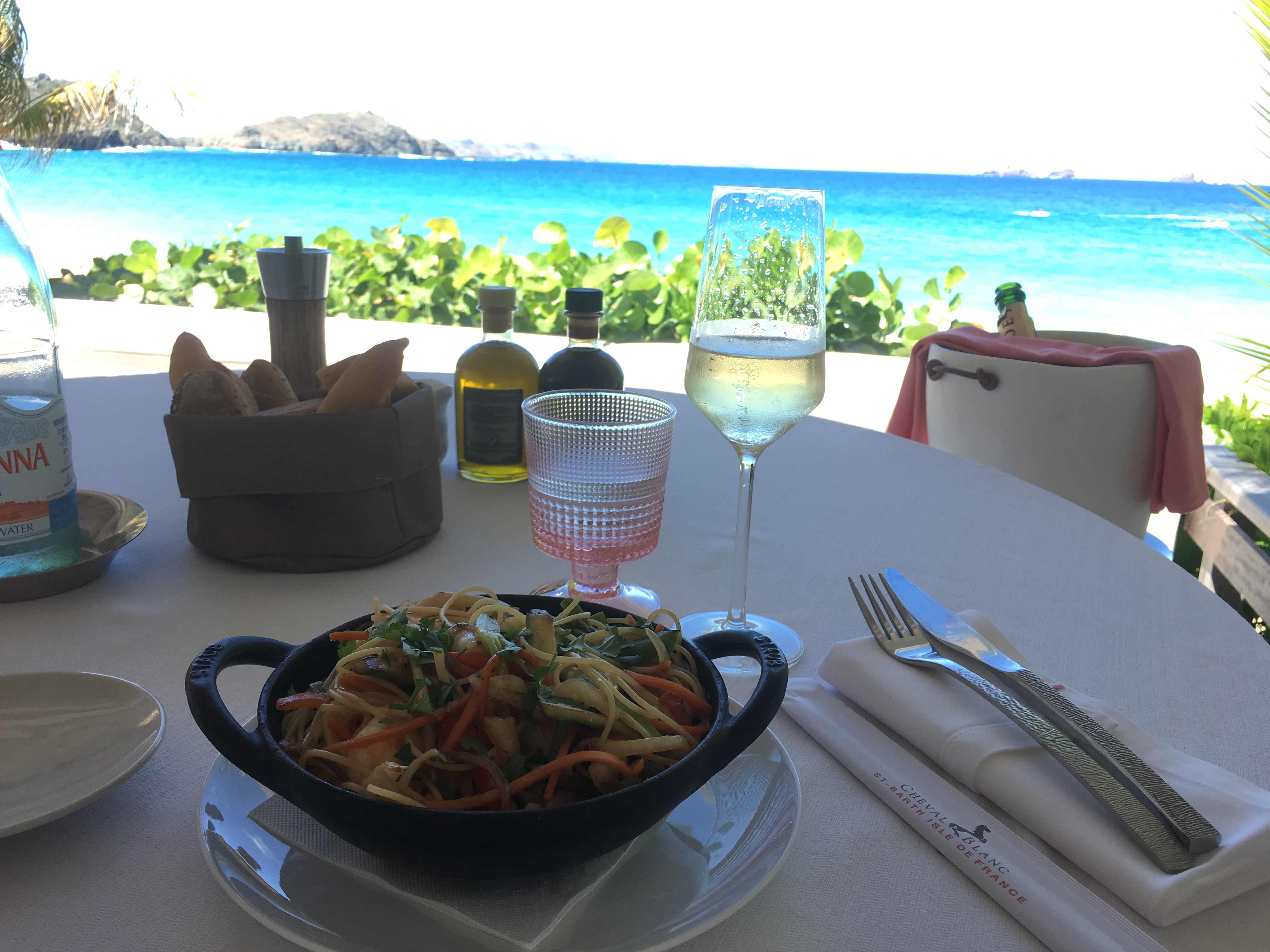
Flamandes: The lifestyle of the Island is resort chic with impeccable service and attention to details, the French touch is notorious; For lunch I truly enjoyed The Cheval Blanc in Flamandes; it was also the best beach for swim and great cuisine by Chef Yann Vinsont. The Cheval Blanc is part of the LVMH Luxury Resort collection.
Flamandes Beach
Lunch at Case de L’Isle Hotel Cheval Blanc LVMH
Grand Cul de Sac: Lunch at Le Sereno in Grand Cul de Sac is another must on my list; from its sister 5 star hotel “Il Sereno” in Laco di Cuomo; Le Sereno exudes style; designed by renowned Parisian designer Christian Liaigre.
The lagoon at Sereno Beach is also perfect for paddle boarding or canoeing in the afternoon. Great place to spot the turtles swimming on the water or picking up giant conch between the rocks.
Next to Le Sereno; Le Guanahani is another impressive luxury resort with a Spa by Clarins and its distinctive tiki bars by the beach; Le Guanahani offers true island feeling.
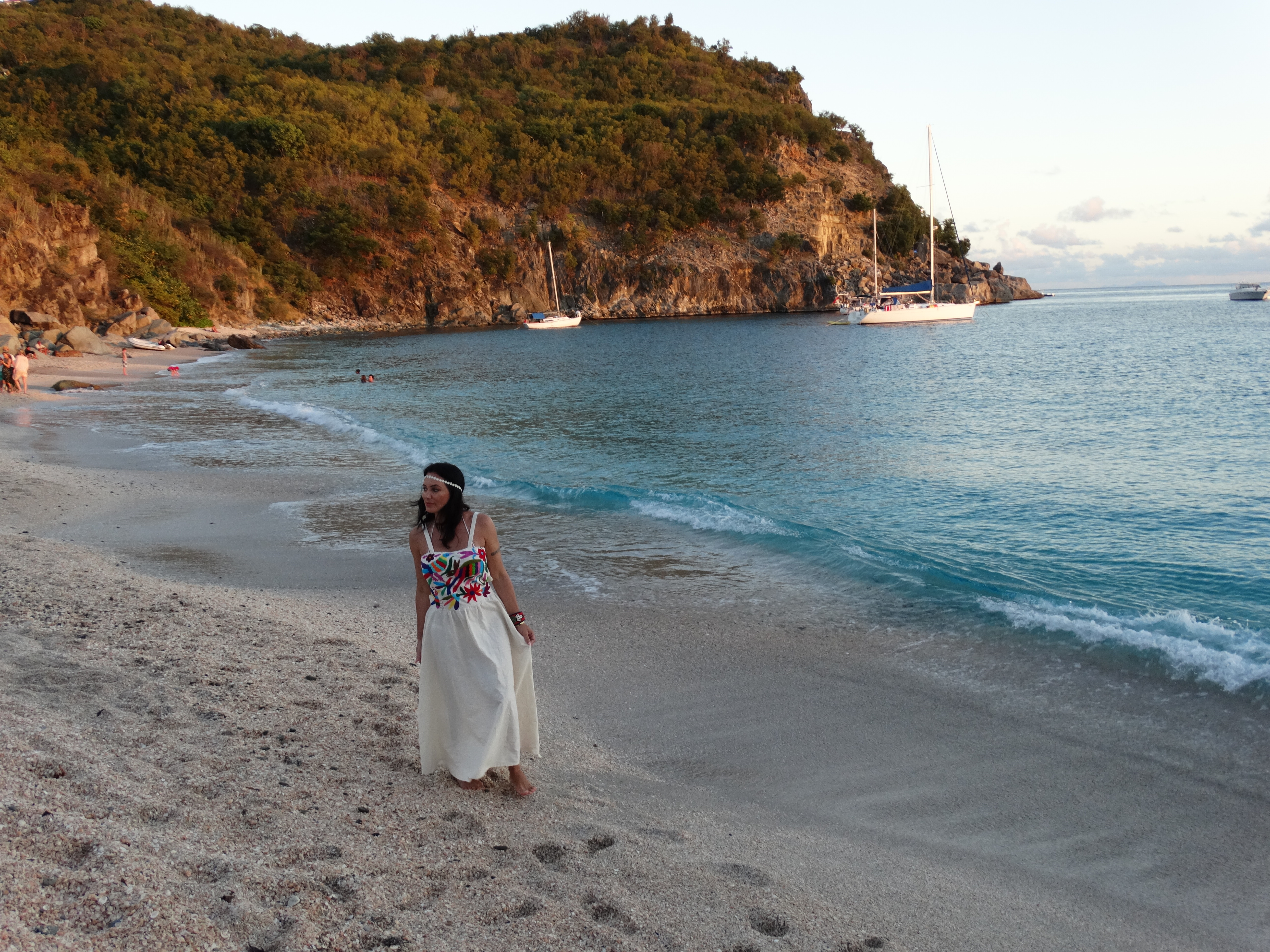
Wearing an embroidered vintage Manila shawl at the beach of Le Guanahani – Grand Cul de Sac, St Barth
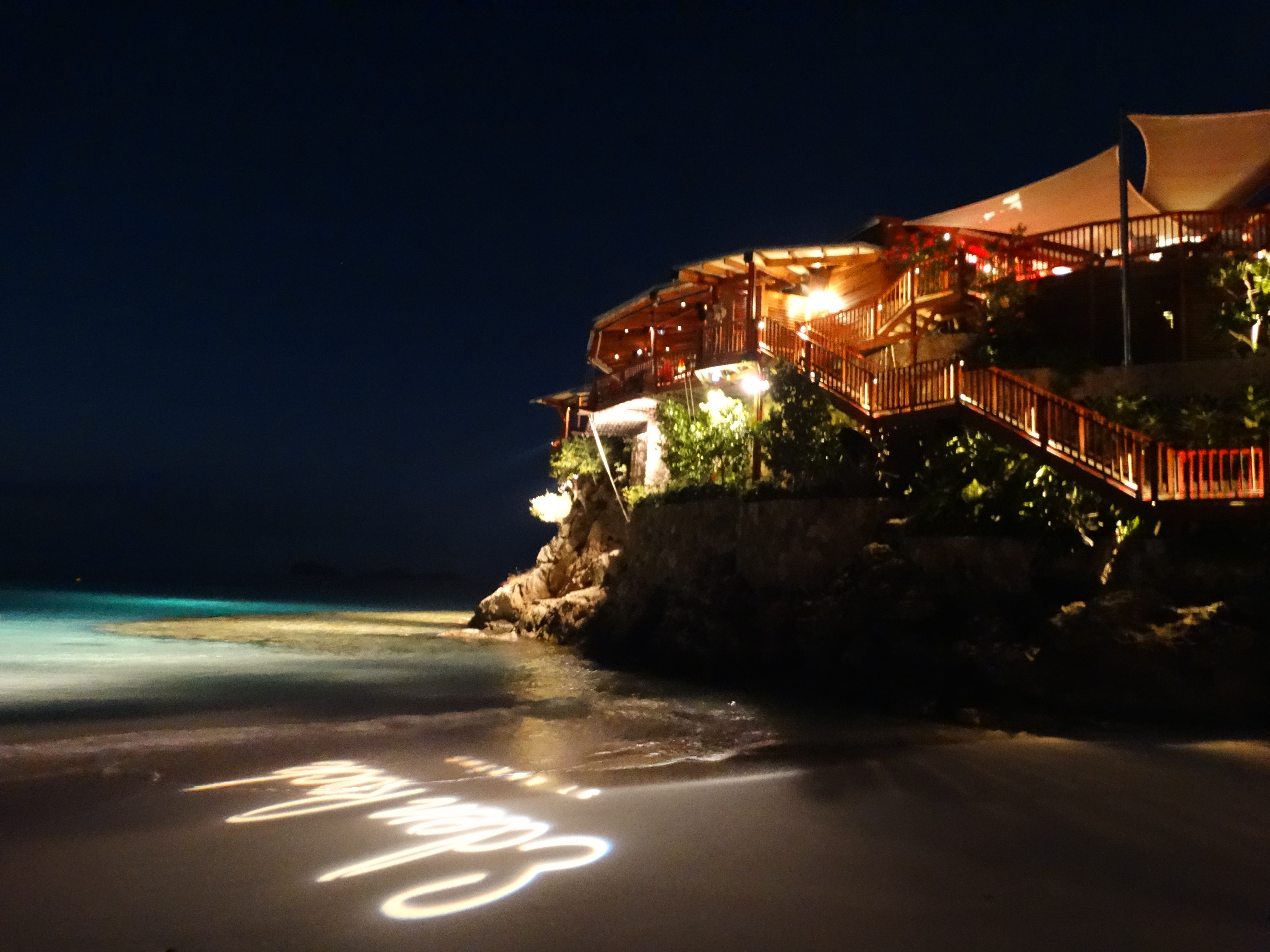
St Jean: Dining in St Barth: a must is the Eden Rock at the “In” Beach of St Jean just next to the airport; with two signature restaurants: “On the Rocks” at the top of the cliff or “The Sand Bar” both headed by Michelin starred Chef Jean-Georges.
Eden Rock St Barth by night
St Barth preserve its Colonial charm from the Dutch era; the Creole and the French; signs on the streets are both in Dutch and French.
At the Comca-Comca Creole Village in St Jean wearing a custom embroidered Otomi dress
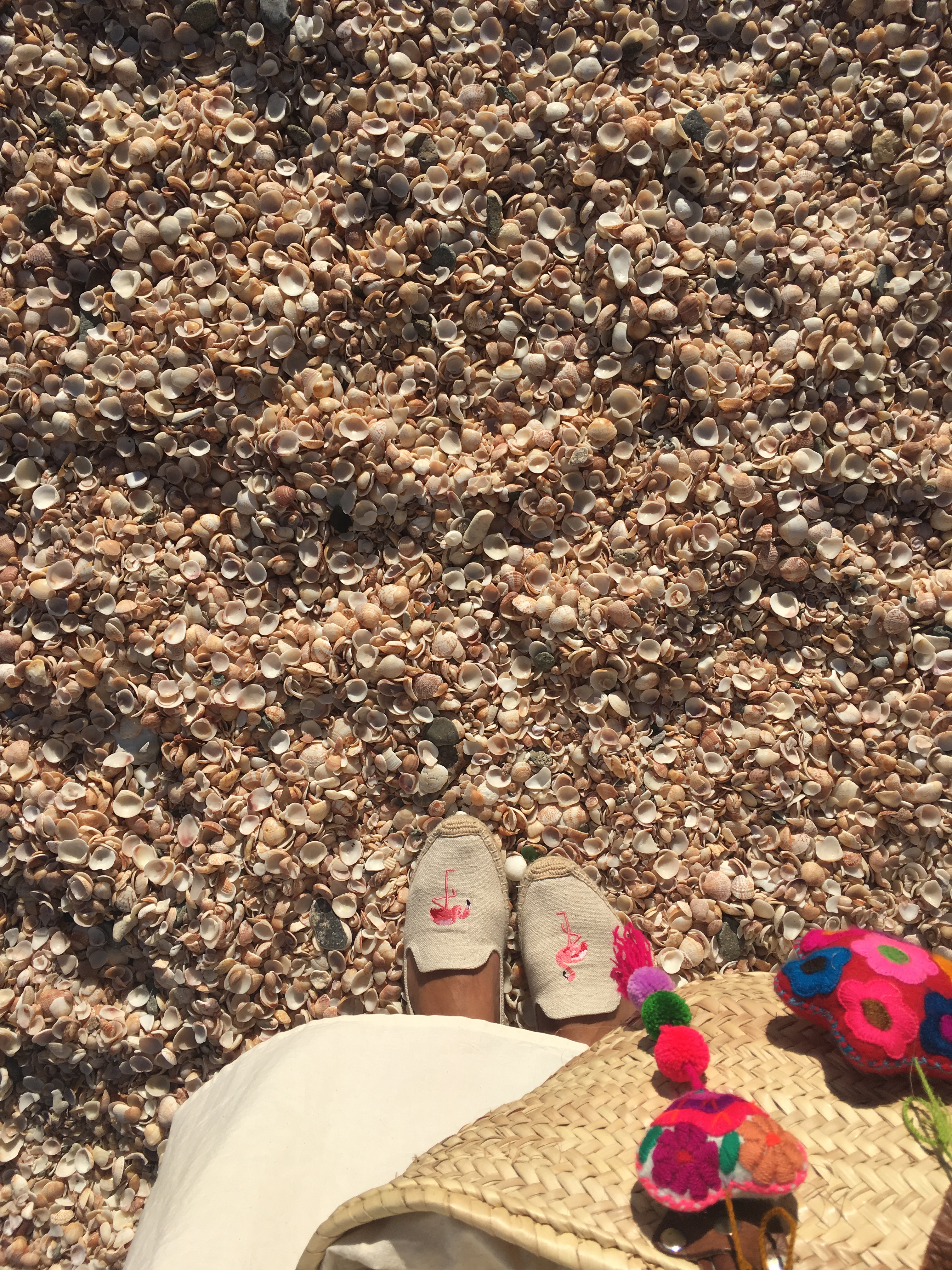
Shell Beach: Walking distance from the lively port of Gustavia and just steps from divine dining spots like Bagatelle and Bonito; we are in Shell Beach; a small portion of the Island covered with shells of all types and colors; you never know when you’ll find a unique one in the middle of all these shells.
Shell Beach and Flamingo espadrilles by Soludos @soludos weaved basket with Chiapas accesories
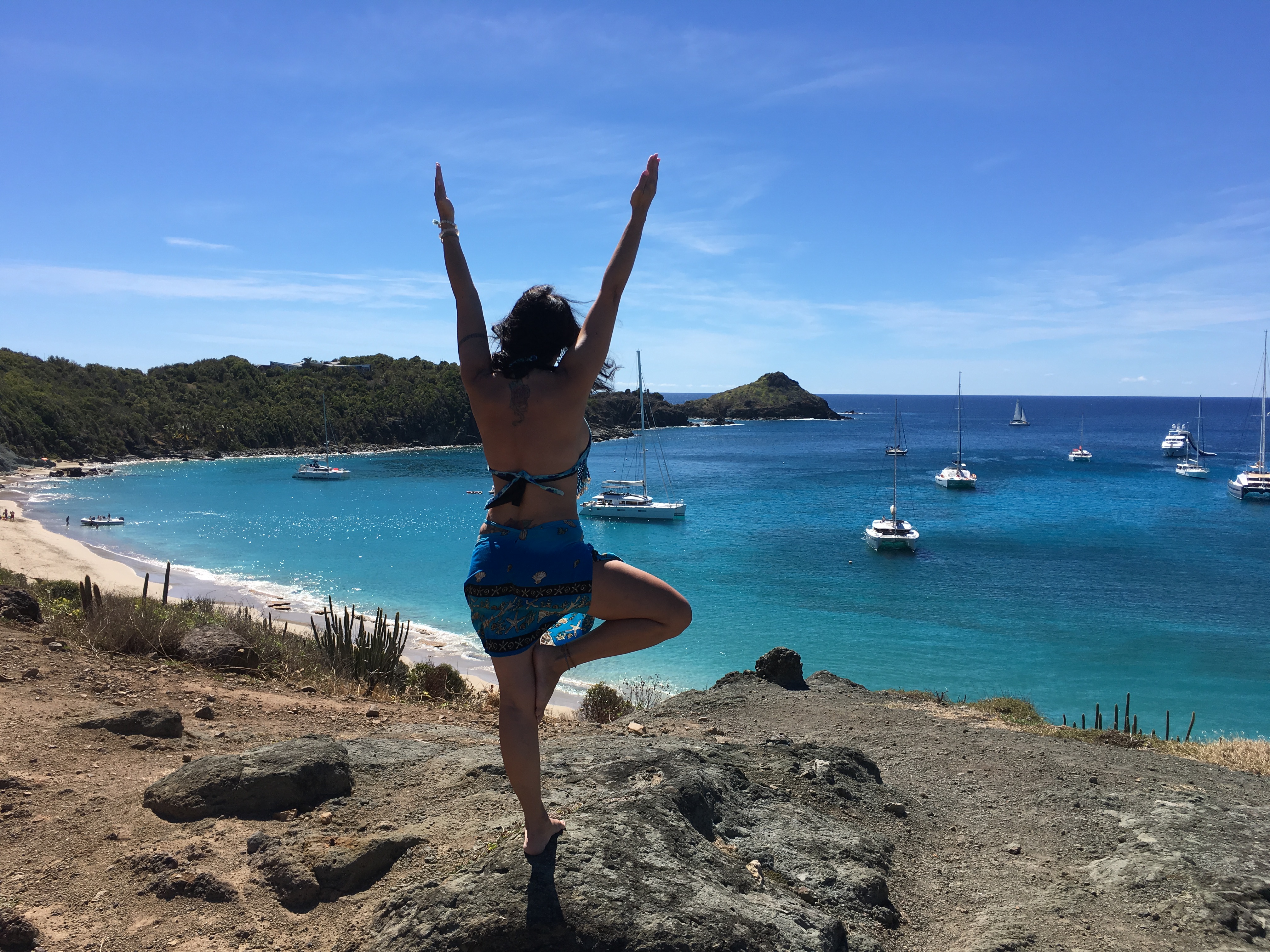
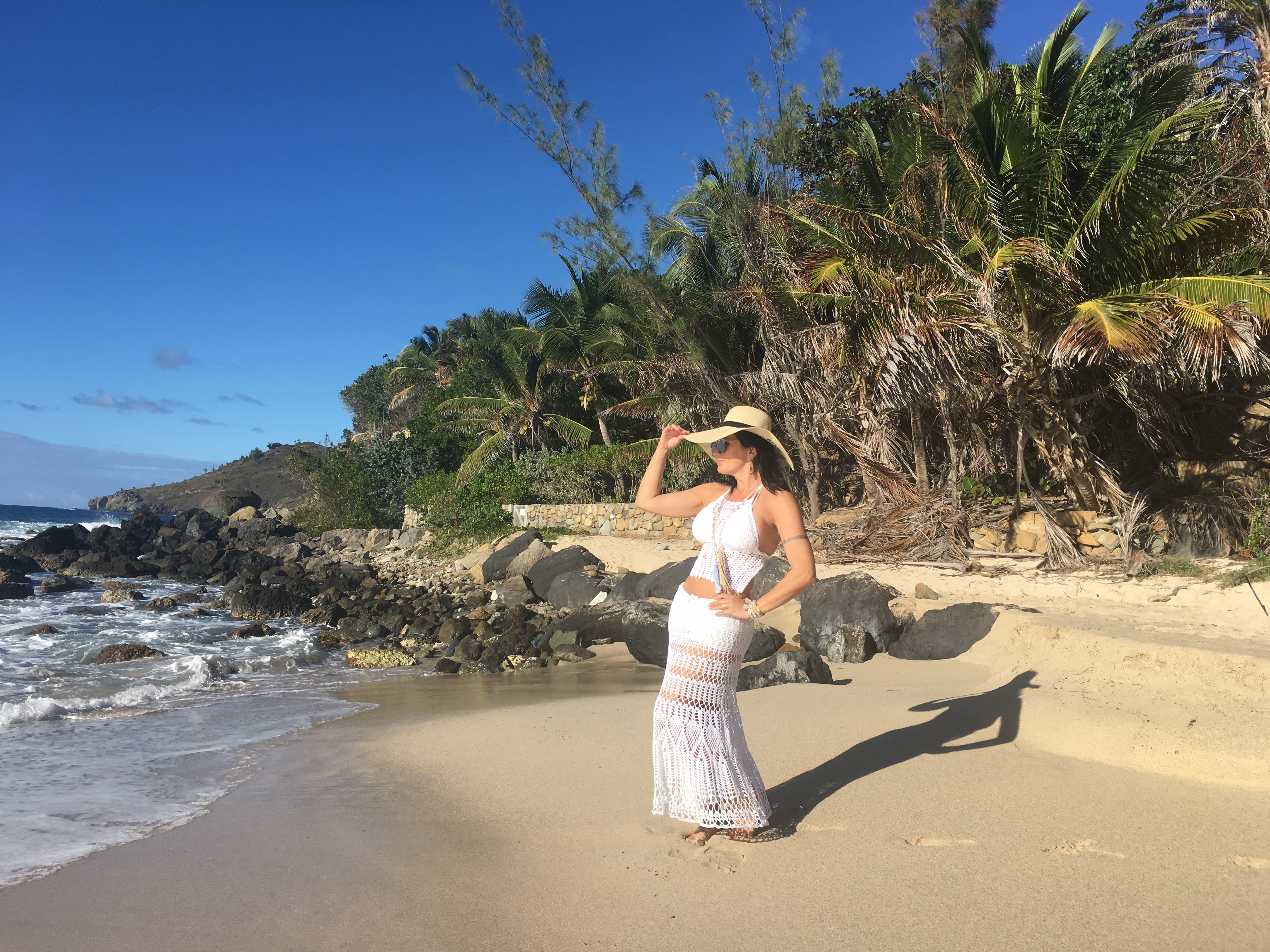
St Barth has it all; from hiking thru the mountains and spotting baby turtles on the way to incredible views of the secluded Island in Colombier to infinite white sandy beaches in Saline or the freshest catch of the day to your table.
Shell Beach
“Travel is the only thing you buy that makes you richer” – Anonymous.
With so much to do in Miami it is hard to decide where to start your day but if you are in the Downtown area, need a great cup of coffee and at the same time support your local roasters stop by Eternity Coffee Roasters on 117 SE 2nd Ave. They have a roasterie and tasting room where you can choose your grains, make your own blends and they will roast it and brew for you on site. I took my European friends to the tiny shop and they all agreed the coffee was superb, the espressos made just right, the aromas and the blends fantastic.
Just like in the wine world, the coffee can be tasted and appreciated, today there are more coffee connoisseurs who are showing interest in the “art of the barista” (coffee barman) So now you know, when you need your Java dose try Eternity Coffee and get the whole experience of coffee tasting.
The roaster at Eternity Coffee shop and tasting room. Their single origin grains are mainly from Colombia from Farm direct trades.
Choose, smell and taste the finest grains at Eternity Coffee roasters coming directly from the Farms in Colombia, Guatemala and other plantations in the world.
The flavor profile of each coffee is indigenous from the grain itself some of them with wild flower honey hints and herbal notes, hazelnut, milk chocolate, vainilla or tangy cranberry
If you didn’t make a trip yet to Miami’s newest Museum the Perez Art Museum Miami (PAMM) there’s no better time to do it then now and there are no excuses to be immersed in the contemporary art world with all this Museum has to offer. Arrive to the Museum by car, foot or take the Metro Mover stopping at the Museum station and you will be right there on 1103 Biscayne Blvd. Each second Saturday of the month there’s a free admission for everyone, a program sponsored by Target.
Most of the Latin American Art collection including Botero, Diego Rivera and Wilfredo Lam comes from Colombian-born developer Jorge Perez who donated $40 million in cash and art to earn naming rights. Perez, the son of Cuban exiles, has been a major force in Miami’s urban redevelopment.
A visit to the PAMM will definitely open new ways to look at art and think twice when labeling Miami as a less cultural town.
Ai Weiwei “According to what?” retrospective at PAMM on display through mid March
The Museum is open from Tuesdays through Sundays from 10 am to 6 pm. Tickets are $12 for Adults and $8 for Seniors and Children 7-18 years old
Piles of crabs installation by Chinese Master Ai Weiwei during the Opening reception of the PAMM
Time for lunch? Visit the Historic Miami River neighborhood, one of the oldest in Miami. At a settlement from the early 1840’s is where you will find Garcia’s Seafood and Grill Fish Market located on 398 NW North River Dr. you will find fresh fish and seafood from the boats to your plate served with the traditional Caribbean seasonings and flavors. For over 40 years The Garcia’s (a Cuban-born family of 11 kids) have been offering affordable dining with fresh catch grilled to order on a casual riverside setting.
Grilled Yellowtail, stone crabs, sides of fried plantains (tostones), yellow rice and fried sweet plantains (maduros) with grilled shrimp. These side dishes are perhaps part of Miami’s Cuban traditional gastronomy
Garcia’s fresh stone crab
Now is time to visit another great unconventional Gallery on a Historic site in Downtown Miami, CU1 Gallery at the Security Building on 117 NE 1st Ave.
The Security Building in Downtown Miami was the most imposing building at time of construction in 1926. Constructed in the Beaux Arts architectural style, is listed on the National Register of Historic Places
CU1 Gallery is a photo space located inside the iconic Security Building. You can visit the gallery Tuesdays through Saturdays from 1 to 6 pm. Free admission
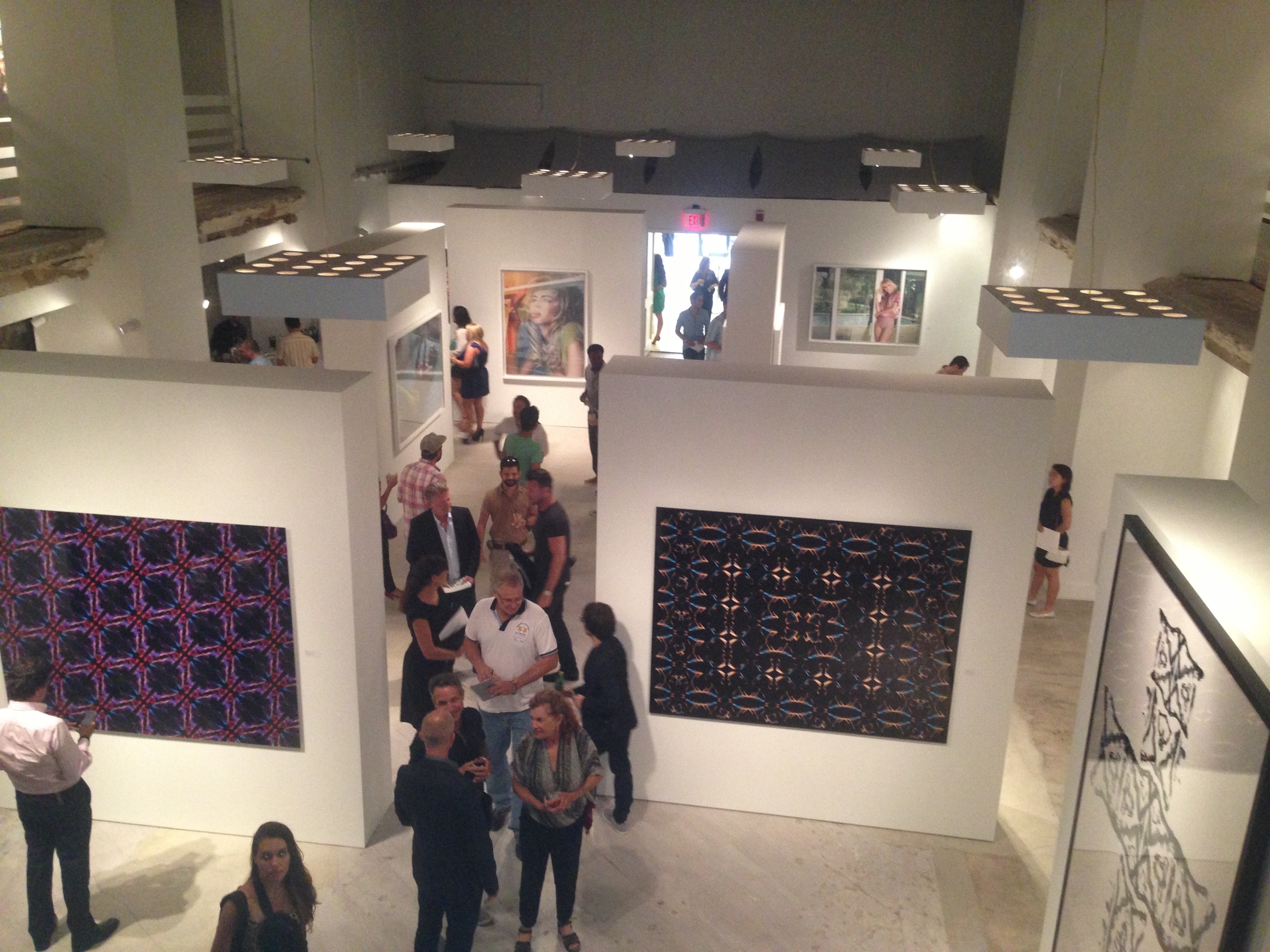
“Look at Me” was the first opening exhibition at CU1 Gallery where you can take a look through the photographer’s lens inside the vault at The Security Building
“Look at Me” showcased works by European photographers, most of them with extensive backgrounds in editorial and fashion advertising.
For the European partners of CU1 Goettlicher, Weber, Schmidt and Mueller who believed in Miami’s art life, Downtown Miami will be facing an incredible art renaissance and it’s going to happen.
“Eye to Eye” is the current exhibition at CU1 Gallery on view until February 14 2014. What are you waiting for? take a look at one of the newest innovative galleries in Miami.
Now get ready for the next art exhibitions on board of the SeaFair docked at the Chopin Plaza next to the Intercontinetal Hotel from January 16th to the 20th of 2014. it is a unique experience to appreciate works of local and international artists showcasing installations, paintings, photography and sculptures. See you on board Miami !!!
The Miami International Art Fair (MIA) is coming on board of the mega yacht SeaFair on January 16th to the 20th
Take a stroll in Downtown Miami like a local and if you live in Miami discover or revisit these great spots once again. Start with a good coffee at The Urban Öxy proudly brewing Panther coffee , a local roaster located on 101 NE 2nd Ave. I really love this coffee shop where everything is made from scratch so you can have your coffee the way you want it.
Prices are reasonable and the staff is friendly and knowledgeable, try some of the grill sandwiches made to order with roasted artichoke, sun-dried tomato, goat cheese, provolone, Swiss or for the sweet tooth the mini cupcake selection or the homemade oatmeal cookies with pecan, dark and white chocolate chips, cranberry or macadamia nuts, absolutely delicious.
The Urban Oxy serves Panther coffee, a Miami based specialty coffee roaster
Black chalkboards on the walls of the Urban Oxy, a coffee house with a soul of its own
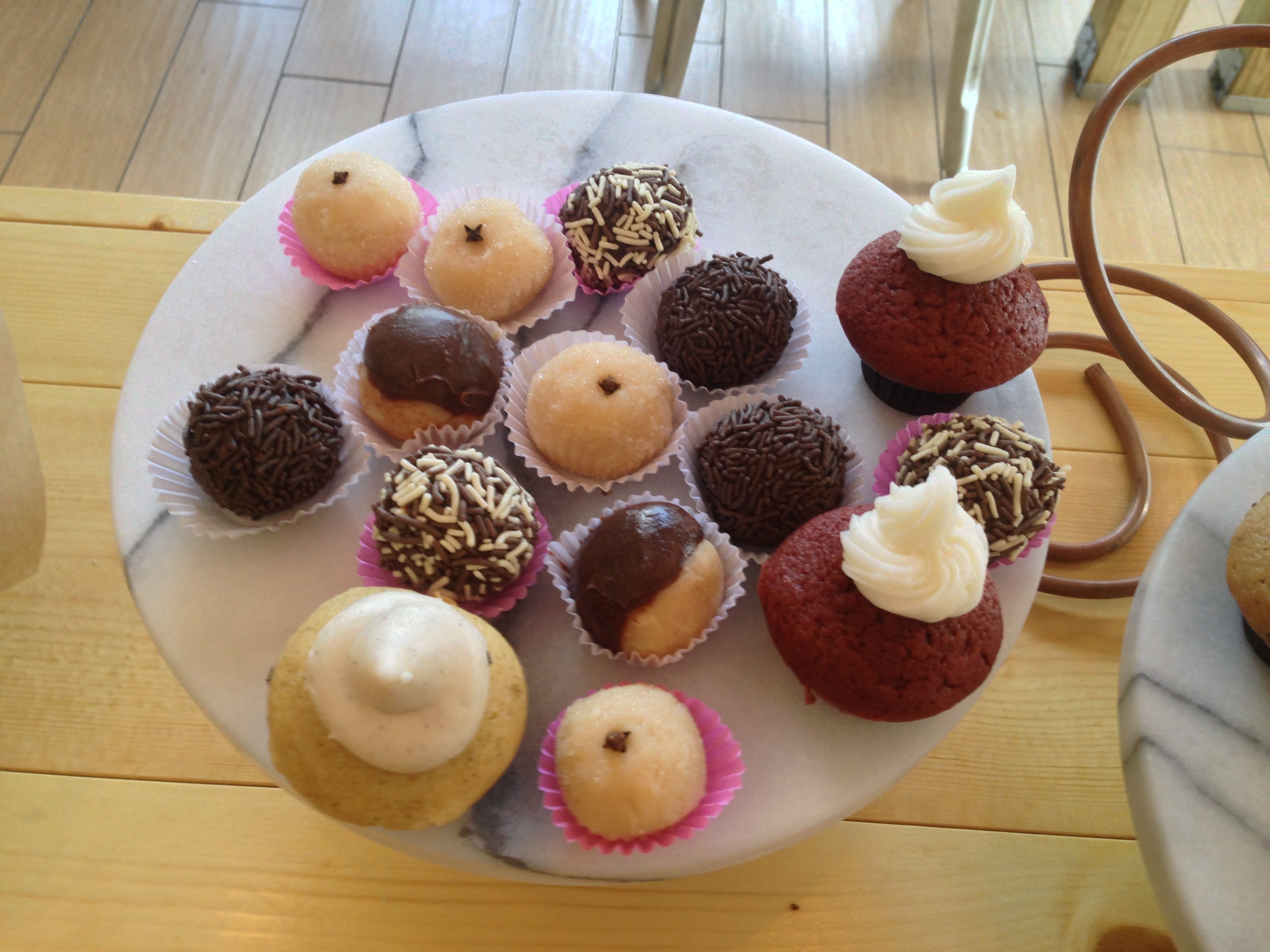
Homemade sweets like vainilla and red velvet mini cupcakes, brigadeiros (a brazilian chocolate delight) and coconut sweets at the Urban Oxy
Now that you’ve got your coffee and read your newspaper why not taking a visit to the Freedom Tower, just at walking distance located on 600 Biscayne Blvd. across the American Airlines Arena, the Freedom Tower is one of Miami’s magnificent landmarks constructed in 1924 on the Spanish Colonial revival architectural style, conceived originally for the Miami News, serving later as center for Cuban refugees during 1962 to 1964. Today is home of the Miami Dade College Museum of Art and Design and you can enjoy the contemporary art and photography exhibits as they are free and open to the public from Wednesdays to Sundays until 5 pm.
The Freedom Tower was modeled after the bell tower of the Cathedral of Seville, the alligators climbing on the tower were part of the “ForeverGlades” exhibition in 2013 in collaboration with Galleria Ca D’Oro Rome-Miami
Detail of the roof and chandelier Inside the majestic main lobby of the Freedom Tower. Photo credit: David Franco
“Rituals in Haiti” the newest photography exhibition taking place at the Freedom Tower. Photo credit: David Franco
The Mural at the Lobby on the Freedom Tower. The Freedom Tower is an icon of faith, democracy and the generosity of the American people
And for those who are craving of cultural things to do in Miami there are no excuses, this is exactly what we will do if we were in NYC going from one Art Gallery to another and then stopping for some coffee and cupcakes, really? At least I will.
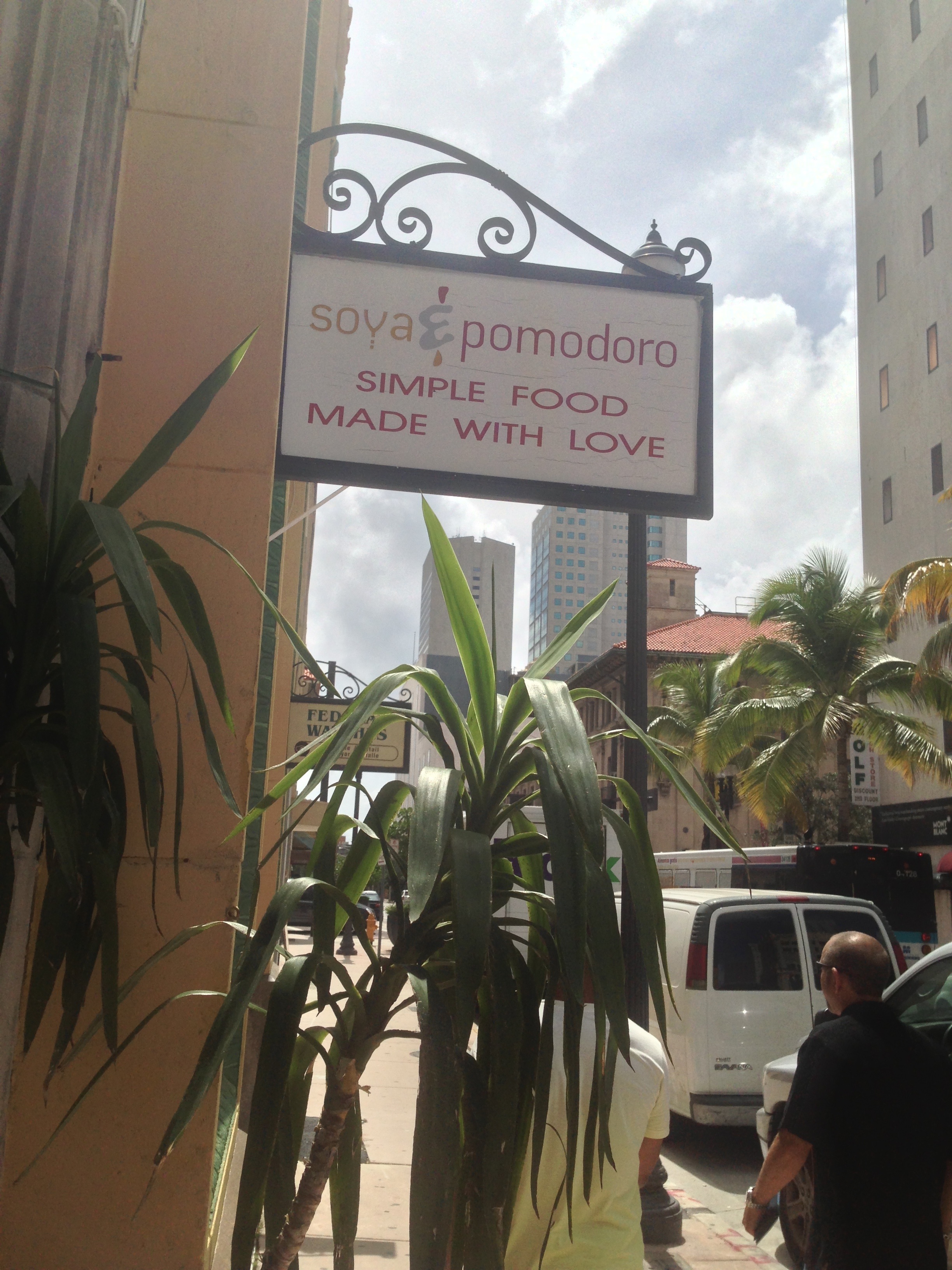
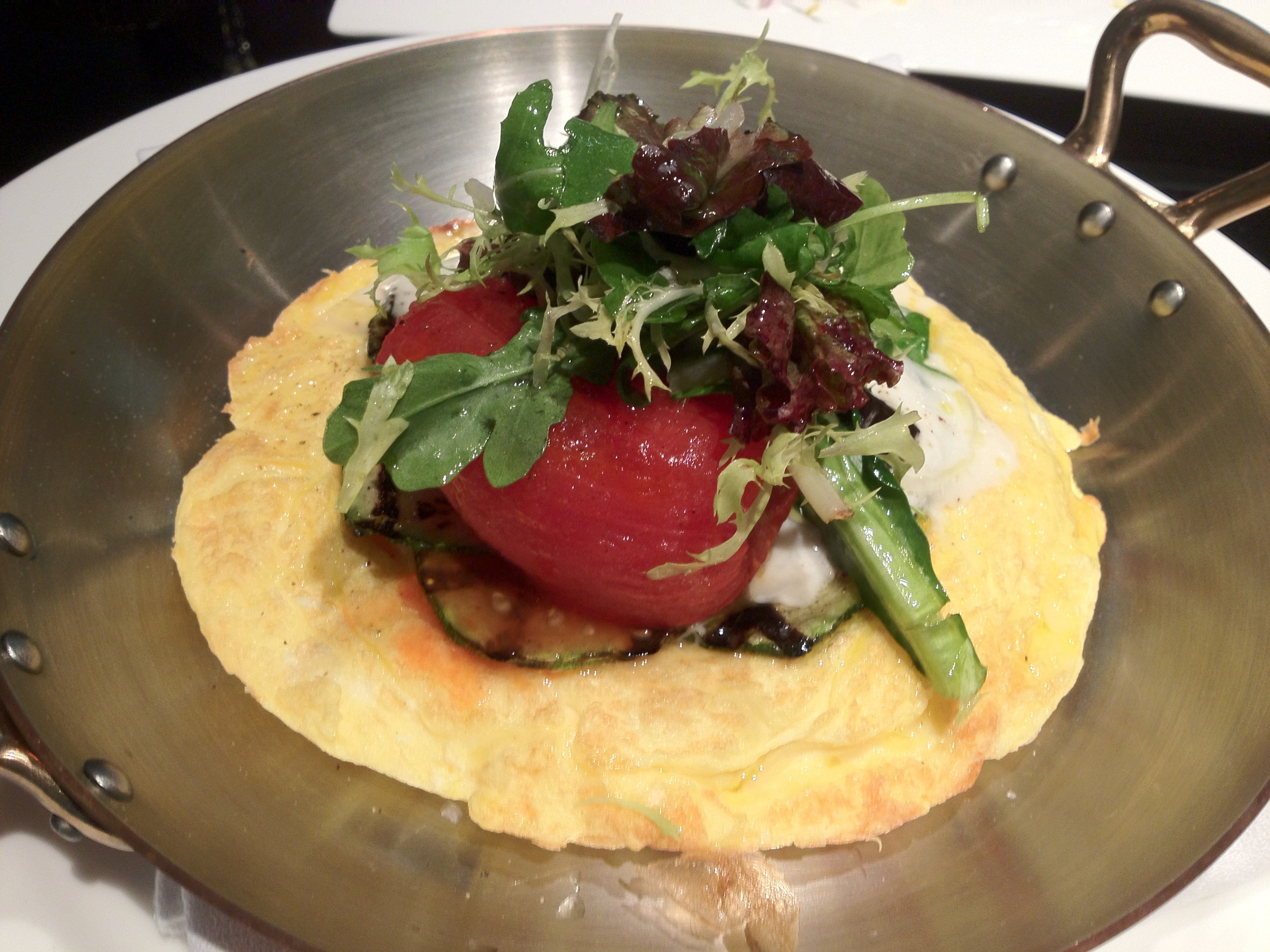
Now having fulfilled your cultural appetite why not going for lunch just a few blocks away on another historical building of Downtown Miami, yes I am talking about ‘Soya & Pomodoro” a truly hidden gem, a place were you can seat and relax like in NYC’s SOHO while enjoying comfort Italian food on a very particular setting.
Soya & Pomodoro located on 120 NE First St. inside another historical landmark The Shoreland Arcade Building built on 1925
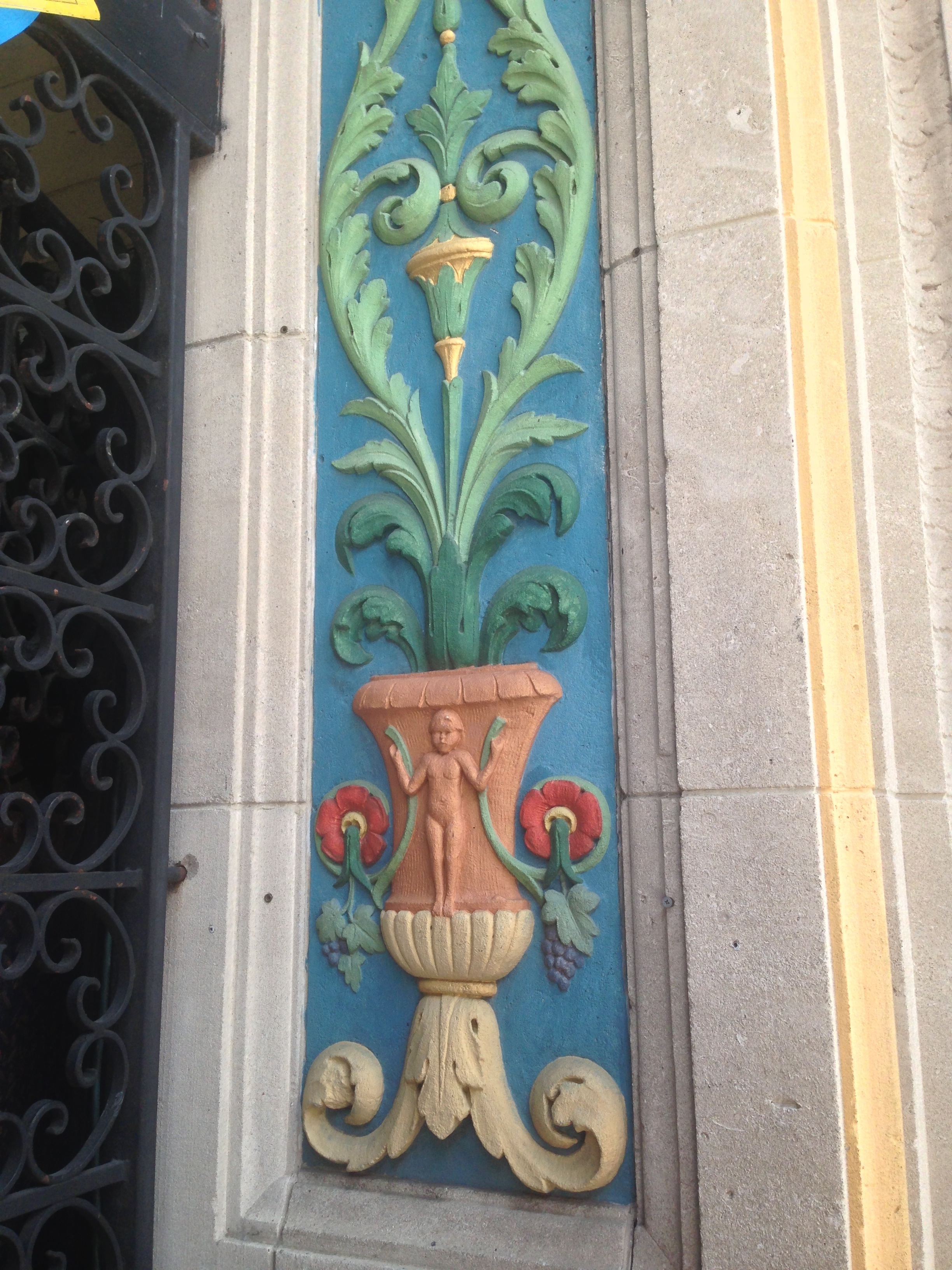
Detail on the entrance of Soya & Pomodoro restaurant. The Shoreland Arcade Building is part of the National Register of Historic Places
The casual dining at Soya & Pomodoro located on the building that is the last remaining intact arcade in Downtown Miami featuring large arches and pilasters with masonry medallions exhibiting symbols of Florida’s history.
Absolutely amazing the “Fazzoletti di pere e formaggio” fresh pasta filled with Taleggio cheese and fresh pears on a bed of creamy ricotta and shrimp sauce
The Shoreland Arcade Building constructed on the Beaux Arts architectural style, very present in the heart of Downtown Miami
Soya & Pomodoro is also great to visit on the evenings for dinner, Thursdays
or Fridays when they have live jazz and… talking about live Jazz another
great place to visit in Downtown Miami is “Le Chat Noir” this intimate suburban spot next door to Soya & Pomodoro has anEpicurean market section were you can get your selection of cheeses and charcuterie and a bottle of French wine, then go downstairs to listen to jazz and blues truly soulful musicians. If you are looking for
an alternative atmosphere, this is the place to be.
Le Chat Noir features live jazz and blues in the cellar on Wednesdays, Fridays and Saturdays starting at 9:30
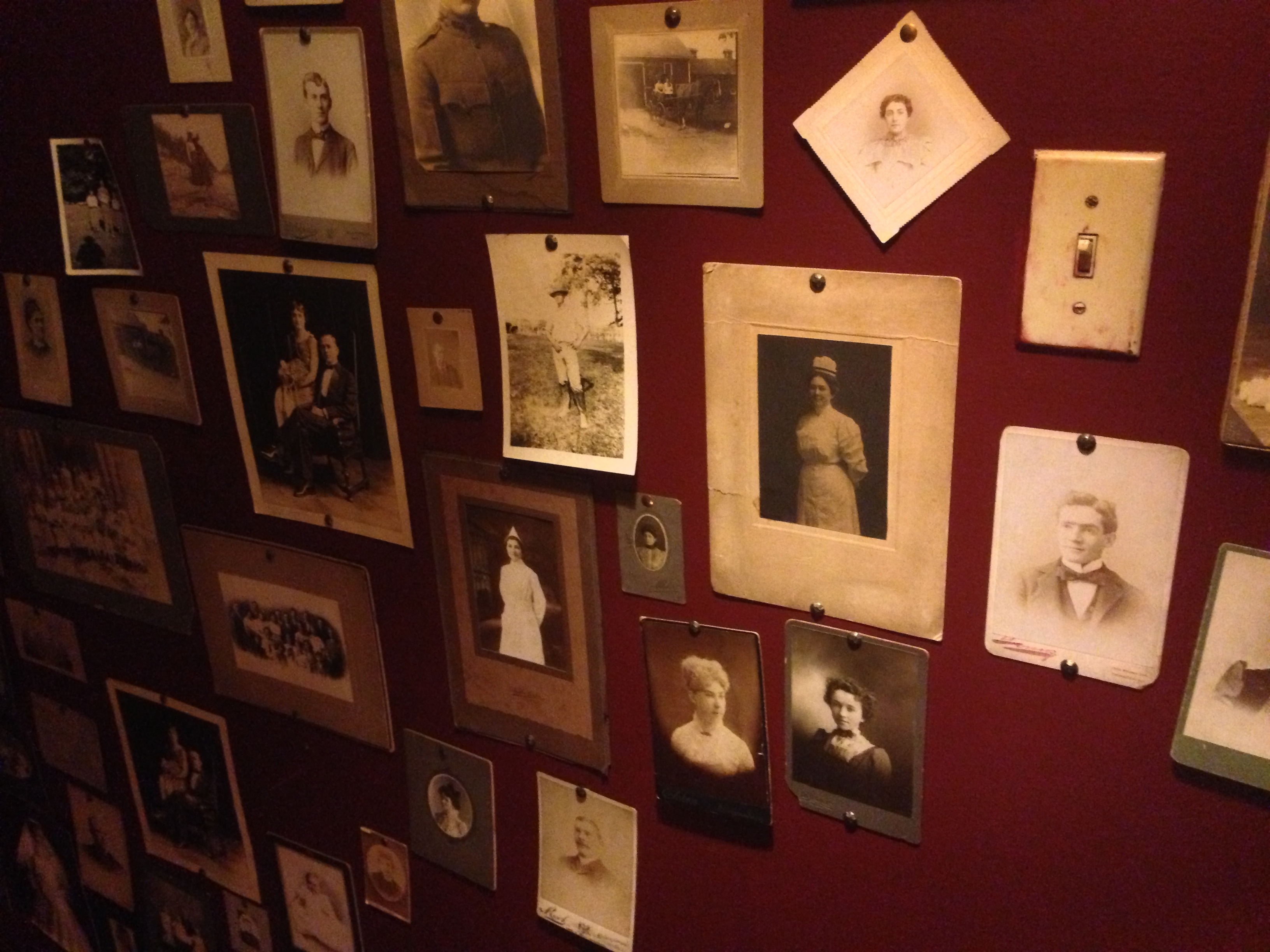
Vintage pictures and postcards on the wall going downstairs to the cellar at Le Chat Noir for live jazz. You can order also appetizers and wine at the Bar while listening to the finest jazz music.
Hope you enjoy this short Downtown Miami tour for a day, keep coming to the blog for new places to dine, shop and live a cultural life in Miami. See you soon !!!
(C) 2014 Montserrat Franco. All pictures by me, except for the ones with credits.
There’s no doubt one can live the “Dolce Vita style” in Miami and if you don’t think so, just try some of these suggestions when coming to Downtown and Brickell areas.
With so many options in Italian dining because of the new wave of Italians coming to the magic city for fun, for business and for a change like everybody else who is part of this big melting pot.
Miami can’t be more blessed than now starting with the big Brickell development boom less than a decade ago when Trattoria Rosinella and Perricone’s Restaurant and Marketplace opened followed by Segafredo and more recently Toscana Divino and world acclaimed Cipriani.
I love the “Cioppino” served at Perricone’s. This is a traditional Italian American dish originated in the San Francisco Bay area, it was originally the fishermen’s stew made with left overs from fish and seafood dishes.
At Perricone’s you will find the same ambiance you may encounter in New York’s Little Italy district; friendly staff, reasonable prices and generous portions, typical of Italian American eateries, the market with a very good wine selection, artisan chocolates and everything you need for take away when on a rush for a quick home fixed up, just try the “antipasti” (appetizers) like stuffed peppers with rice or porcini mushrooms or the stuffed tomatoes with mozzarella cheese.
The home made fresh pasta at Perricone’s served with Gradma Jennie’s signature pomodoro ragu sauce topped with fresh basil and ricotta cheese
They have their own extra virgin olive oil and table wine, Perricone’s is definitely a place for a business lunch in the quiet and lush gazebo surrounded by tropical plants so characteristic of our territory.
For a more intimate dining with candle lights you can opt for the charming “al fresco” garden or one of the cozy rooms in the wooden cottage.
At Perricone’s they are so cool they will even pick you up from your hotel or office on their own Eco friendly cart service.
Perricone’s features a generous and affordable Sunday brunch, live music weekly and hosts the monthly Brickell Art walk like the other restaurants around to mention a few : Baru Urbano, Dolores but you can call me Lolita, the Red Bar (why not? Brickell should have it’s own art walk too)
Delicious homemade meatballs at Trattoria Rosinella topped with their own tomato sauce, fresh basil and parmesan cheese
Trattoria Rosinella is the perfect spot to start your day “alla Italiana” before going to work (if you have time of course) Italians take their time to stop by the local coffee shop for a Capuccino and “cornetto” (a pastry filled with Nutella, fruit jam or plain) you can get yours freshly made at Rosinella’s bakery.
This family owned restaurant and bakery has always a lunch special menu of the day with home made pastas and fresh sauces made from scratch and aromatized with garden herbs.
The crab and lobster stuffed ravioli over a 3 cheese sauce
Coming myself from a home cooking tradition I can tell when mamma is cooking in the kitchen and that’s exactly the same feeling you’ll get at this mom and pop eatery where fresh ingredients are the key to their success, simple dishes made to order and a culinary knowledge passed from generation to generation making the soul of a true trattoria and guess where? In the heart of Brickell just across from the newest Italian ultra modern and design development “Millecento” by Pininfarina.
The bakery has always something to take home or to taste right there. I love their fresh bread selection and pastries.
Now I am going to brag about this place and is one of my favorites spots after work, it will be yours too once you try it. Just stop for an aperitif by the bar inside Toscana Divino and get some “antipasti” with it, go for one of the classic Italian drinks or a glass of Italian wine (and their wine list is pretty extensive) well selected from the Tuscan region with some cold cuts and cheeses. I love their burrata plate with arugula and pomodorini (cherry tomatoes) always served with a small dish of sea salt and their aromatic extra virgin olive oil from Tuscany over some warm home made bread.
The salmon tartare at Toscana Divino
Toscana Divino is the highest expression of modern Italian Fusion cuisine with the talented and creative executive Chef Julian Baker who gets inspired blending Tuscan flavors adding old world touches. Toscana Divino is also a one stop restaurant and fashionable place where you can find the finest handmade goods from Florence like those oversized Italian leather purses or the stylish Tuscan glassware that is used at the Restaurant.
Brunch at Toscana Divino is delicious paired with a Bellini o Mimosa cocktail
The brunch is superb and for those who love wine, good news, they also host monthly wine tasting and classes. So if you shop around Mary Brickell Village and decide to take a coffee pause and a decadent pistachio cake; an aperitif with friends after work, a business lunch or a quality dinner with that special one, Toscana Divino is the place.
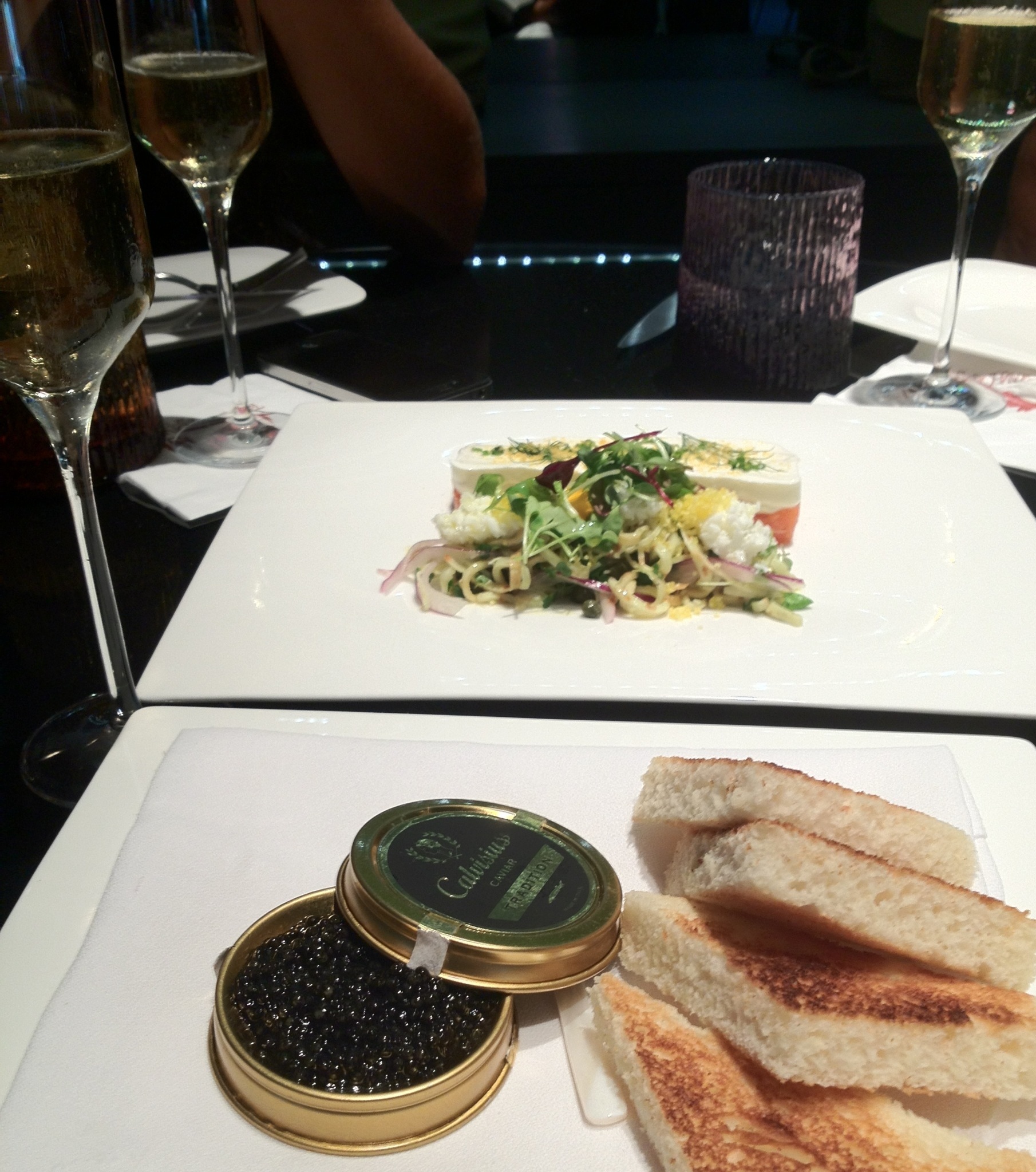
Why not some caviar too at Toscana Divino, I can’t get enough of the pairings with the tartare and mixed greens, capers, chives and sour cream but here my recommendation is with some oak mature Chardonnay
Segafredo is definitely the meeting point in Brickell, a casual and modern baroque seating outdoors and indoors with trendy lounge music spinned by local DJ’s has been for years the choice destination for young professionals. I like to go to Segafredo at sunset for an aperitif or to chat with friends I haven’t seen in centuries. The music might get too loud after 9 pm when the drinks and cocktails are the best option. Their cocktail menu is fantastic, try their specialty coffee drinks like Espresso Margarita or Coffee Martini made with a double shot of Segafredo Zanetti coffee.
Start with some brick oven pizza served at Segafredo topped with prosciutto and arugula with fresh mozzarella slices and a dash of extra virgin olive oil
From Thursdays trough Saturdays Segafredo’s night club Spazio Nero is open with bottle service or drinks at the bar. The mini club gets packed with the local crowd, the resident and guests DJ’s spinning to the latest progressive house music. Very soon with the opening of the new SLS Hotel and Residences, Brickell’s nightlife will take an entire new spin and we can’t wait for it to happen.
The frappe at Segafredo Zanetti in Brickell, a great option in our hot Miami days
For more than 80 years the Cipriani family witnessed film stars, socialites and paparazzi at their landmark Harry’s Bar in Venice; from Sophia Loren to Greta Garbo, Fellini and Marcello Mastroiani, they all came to dine and be seen at the legendary Harry’s Bar. In 1948 the Bellini cocktail was created there and now you can get yours at Cipriani in Brickell/Downton Miami location.
The impeccable service at Cipriani restaurant inside the Viceroy Hotel and Residences in Brickell. Cipriani is a symbol of Italian fine dining around the world.
Cipriani is all about “who is there” and “who has been there” Can’t get enough of Sobe’s glamorous dining at top restaurants in 5 star hotels? Well then you come to Cipriani for more and you never know who is going to show. The celebrity approved restaurant is finally here in Miami. Reservations a must and dress to impress attire is suggested, after all, don’t you want to show off those new Giuseppe Zanotti design shoes?
The Carpaccio was invented in the 1950’s at Harry’s Bar in Venice founded by Giuseppe Cipriani. Today you can taste the Carpaccio at Cipriani Brickell and be part of years of culinary history.
For the fashionable pair Domenico Dolce and Stefano Gabbana, their beloved Sicily is an endless source of inspiration. With several collections on a row from New York to Milan Fashion Weeks they take us on a tour to rediscover Sicilian traditions, architecture, and history through Fashion.
The sumptuous gold-thread embroidery, religious and devotional hand work as seen on the Monreale Cathedral in Palermo with the most stupendous Byzantine mosaics. Montserrat Franco wearing the Byzantine dress
Detail of 12-13th century mosaic of Christ Pantocrator at the Monreale Cathedral The Cathedral of Monreale is the pinnacle achievement of Arab-Norman art. Founded in 1172 by William II. A Benedictine Monastery was built next to it. An add from the Fall/Winter 2013 campaign by Dolce & Gabbana featuring Monica Bellucci Details from the runway at the Milan Fashion Week 2013. The sumptuous gold, the Cardinal red, the Sicilian widow black and the pure white. This collection is a romantic view of the Sicilian women going to Church, wearing their lace veils and rosaries, the accessories are exaggerated with bejeweled crowns that makes them part Saint and part principessa. Montserrat Franco wearing Dolce & Gabbana sunglasses from the Sicilian Baroque collection In Dolce & Gabbana tailored suit during one of my visits to Southern Italy.
The 2013 Fall/Winter Collection is all about Domenico Dolce’s homeland, honoring the materials of homespun craft (needlepoint, tapestry) the faded baroque splendor in the palaces and basilicas of Southern Italy, an invitation to look deep in to our lost traditions and beliefs, no matter what they are.
With an emotive celebration on a cool Parisian evening; Ralph Lauren presented his Fall/Winter 2013 collection and took full charge of the restoration of L’École des Beaux-Arts (School of Fine Arts) which was home of Degas, Manet and Hubert de Givenchy among the most illustrious students.
Detail from the runway of the Fall/Winter 2013 Collection by Ralph Lauren, among the guests to the exclusive Gala and Fashion show attended the Princess Charlene of Monaco, the actress Catherine Deneuve, the American Ambassador in Paris Charles Rivkin
L’École des Beaux-Arts, founded during the reign of Louis XIV is one of the oldest Institutions for Fine Arts in the world. The renovations will start in 2014.
The Chevalier of The Legion of Honor Ralph Lauren received this title in 2010 by Sarkozy and soon after was recognized with the keys of the City of New York by the hands of Mayor Bloomberg.
Detail from the Fall 2013 collection presented at the Beaux Arts
The new collection was inspired in the Russian sobriety using the dark night black along with Bordeaux, Prussian Blues, forest green and amethyst.
This was the historic debut of Ralph Lauren in Paris. Two years ago he hosted the exhibition of his classic car collection at Musee des Arts Decoratifs with more than 155 thousand visitors.
With this act Ralph Lauren gives back to Paris, a city that inspired him so much. Just a few years ago he restored the 17th century palace in the charming Saint-Germain-des-Pres, now one of his biggest flagship stores in Europe and home of “Ralph’s”, his Restaurant, serving prime steak from cows raised on his ranch in Colorado.
Detail of the flagship store at the Parisian Latin Quarter with the style of Ralph Lauren.
In the courtyard of Ralph’s The Restaurant, he opted for a French wine list selection instead of the American, an act of diplomacy. Yet at Ralph’s the best burgers of Paris are served.
In Paris, Ralph’s serves American Modern cuisine. Reservations are highly recommended. The service is very French.
The young boy who started selling ties after his Military service, 45 years later runs an Empire of 5,1 millions of Euros. For the first time he presented his fashion show in Paris at the Beaux-Arts and we didn’t see him with his regular black T-Shirt but with impeccable black tie holding hands with his wife Ricky.
Ralph Lauren, the Chevalier, the boy from the Bronx, the true American spirit.
































 Montserrat Franco