

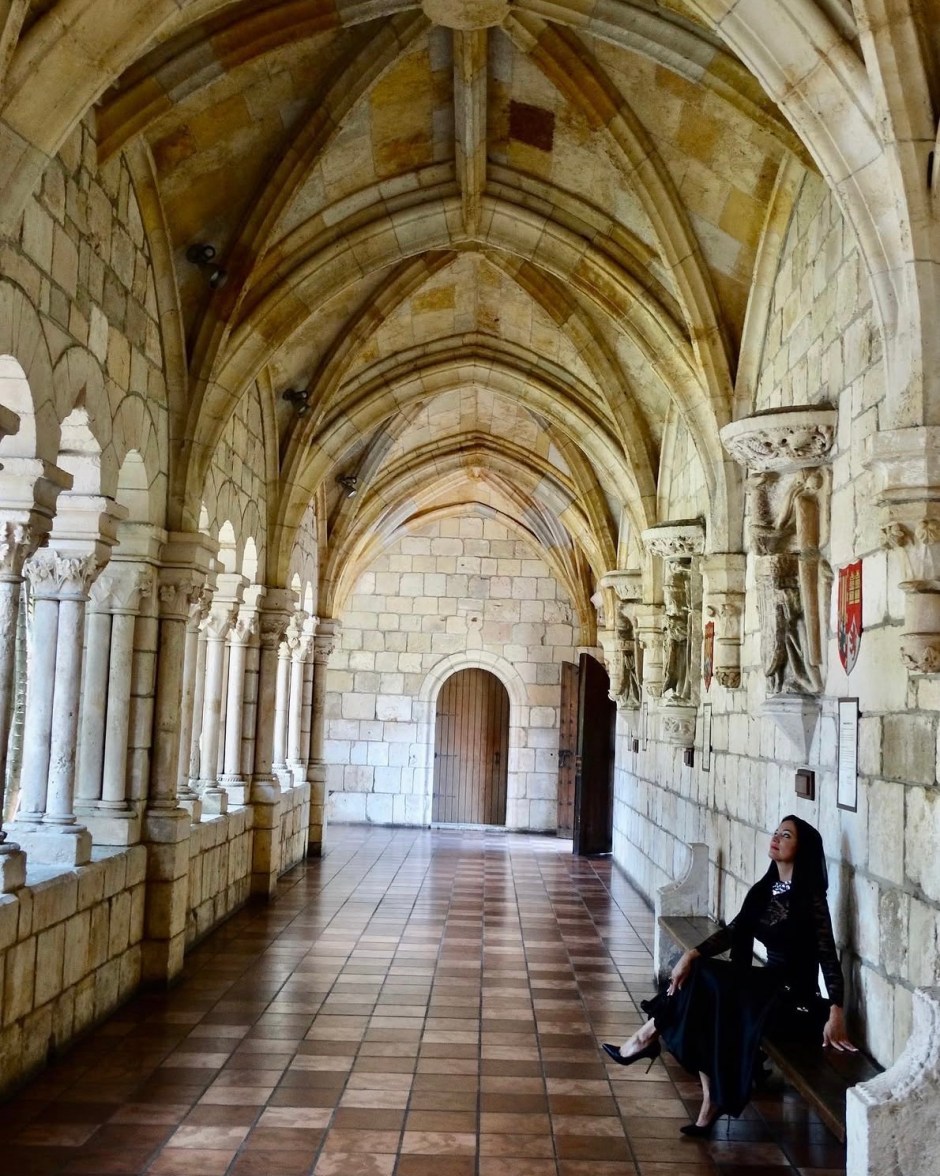
The Monastery and cloisters of St. Bernard of Clairvaux
The origin
As much as we may think this is a replica or a revival of an architectural style, this is an original Cistercian monastery and cloisters from the Order of St. Bernard of Clairvaux, built in 1133 AD in Segovia, Spain.
Stone by stone, it was transported to its current location in North Miami Beach, Florida and it is considered one of the oldest structures in the entire Western Hemisphere.
The monastery was named for the Cistercian monk Bernard of Clairvaux after his canonization in 1174, and it acted as a home to monks for the roughly 700 years to follow.
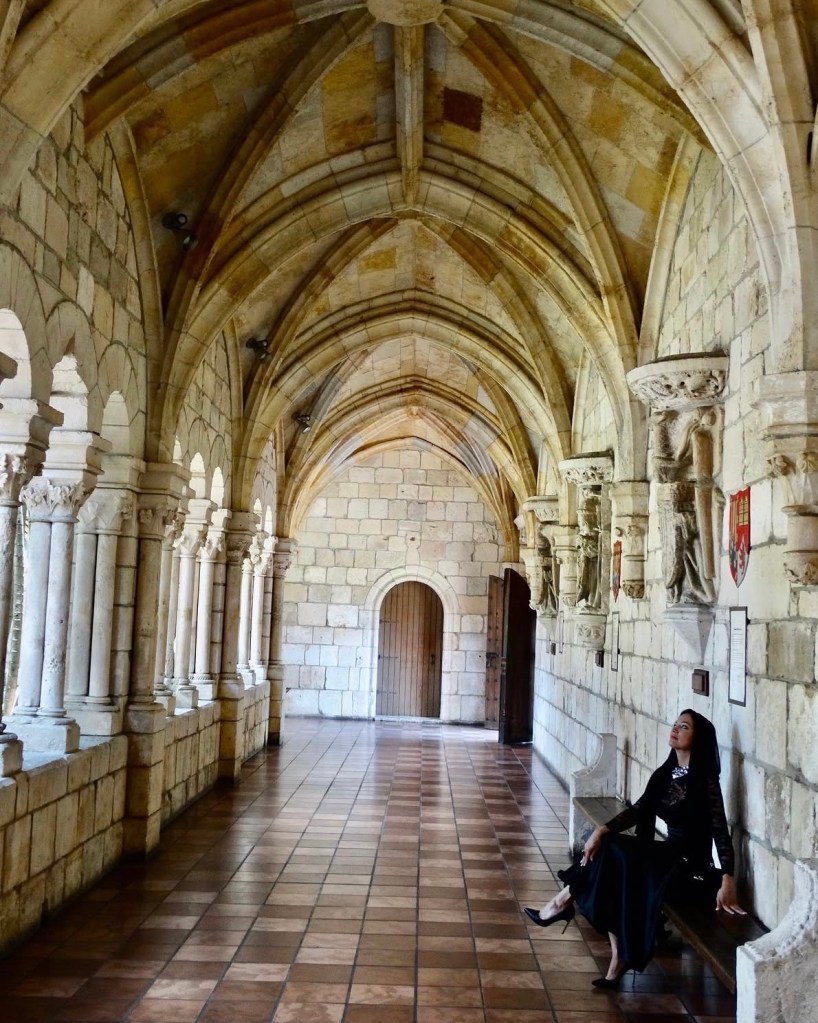
The Cistercian architectural style, characterized by its austere design, reflected the monastic order’s devotion to humility and strict discipline.
The purchase of a monastery
In 1925, William Randolph Hearst purchased the Cloisters and the Monastery’s outbuildings.
The structures were dismantled, packed in more than 11,000 wooden crates, numbered for identification and shipped to the United States.
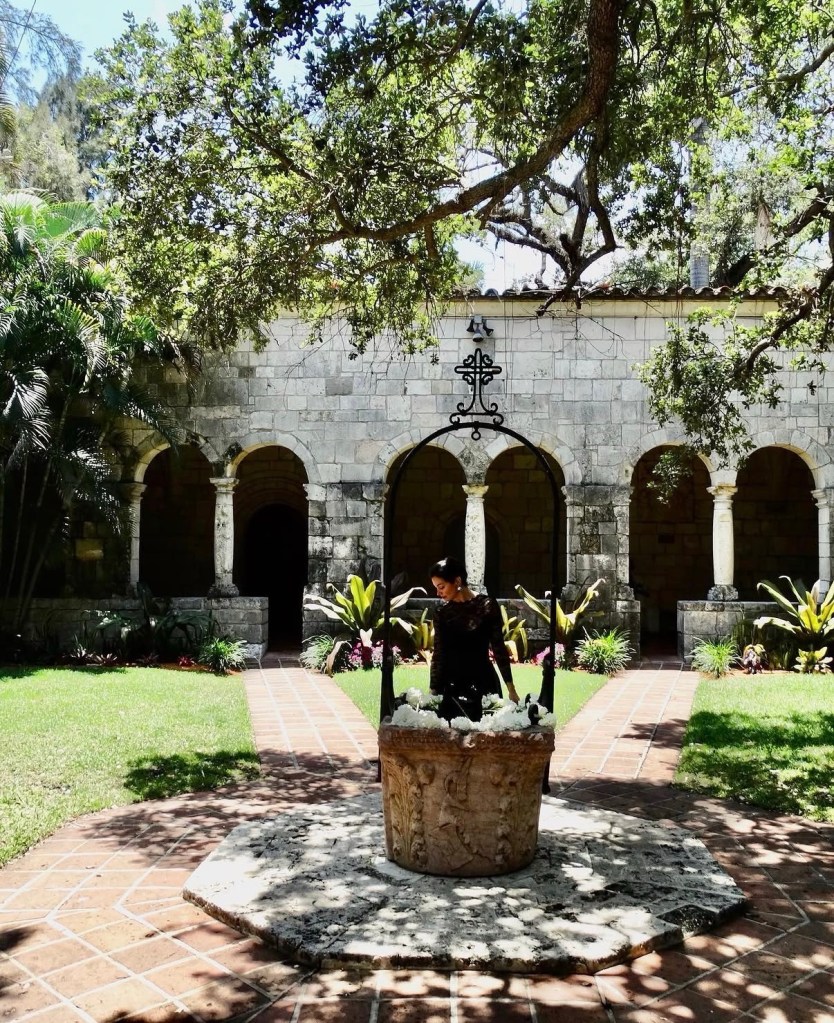
The financial issues
Soon after the shipment arrived, Hearst’s financial problems forced most of his collection to be sold at auction. The massive crates remained in a warehouse in Brooklyn, New York, for 26 years.
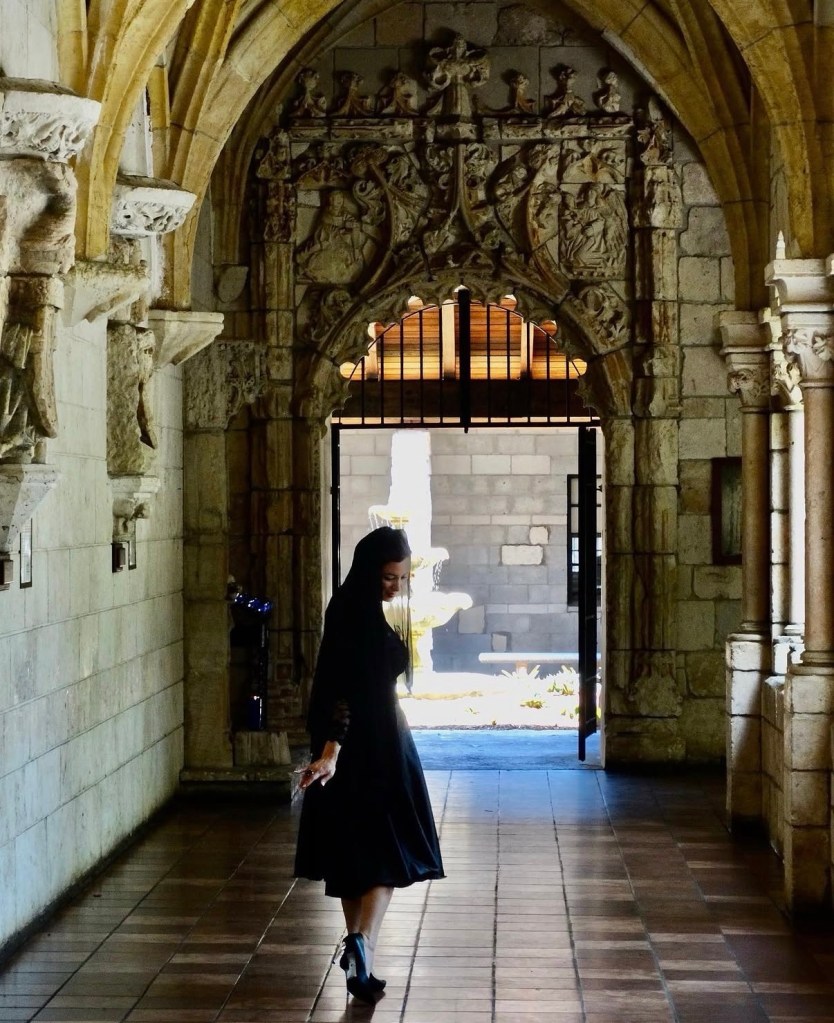
It took 19 months and the equivalent of nearly $20 million dollars to put the building together. In 1953 Time magazine called it “the biggest jigsaw puzzle in history.”
The repurchase and donation to South Florida
In 1964, Colonel Robert Pentland, Jr, who was a multimillionaire banker, purchased the Cloisters and presented them to the Bishop of Florida in North Miami Beach, where is home of its actual location.
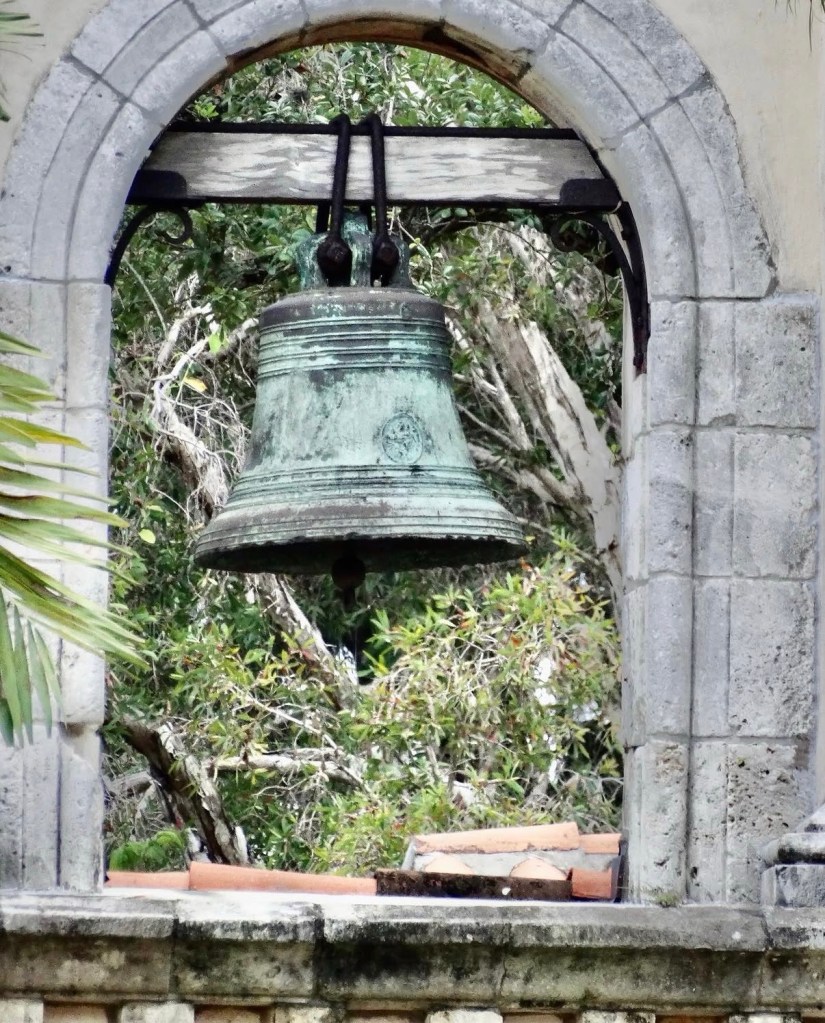
If you go:
Please check the website for operating hours, as they may vary.
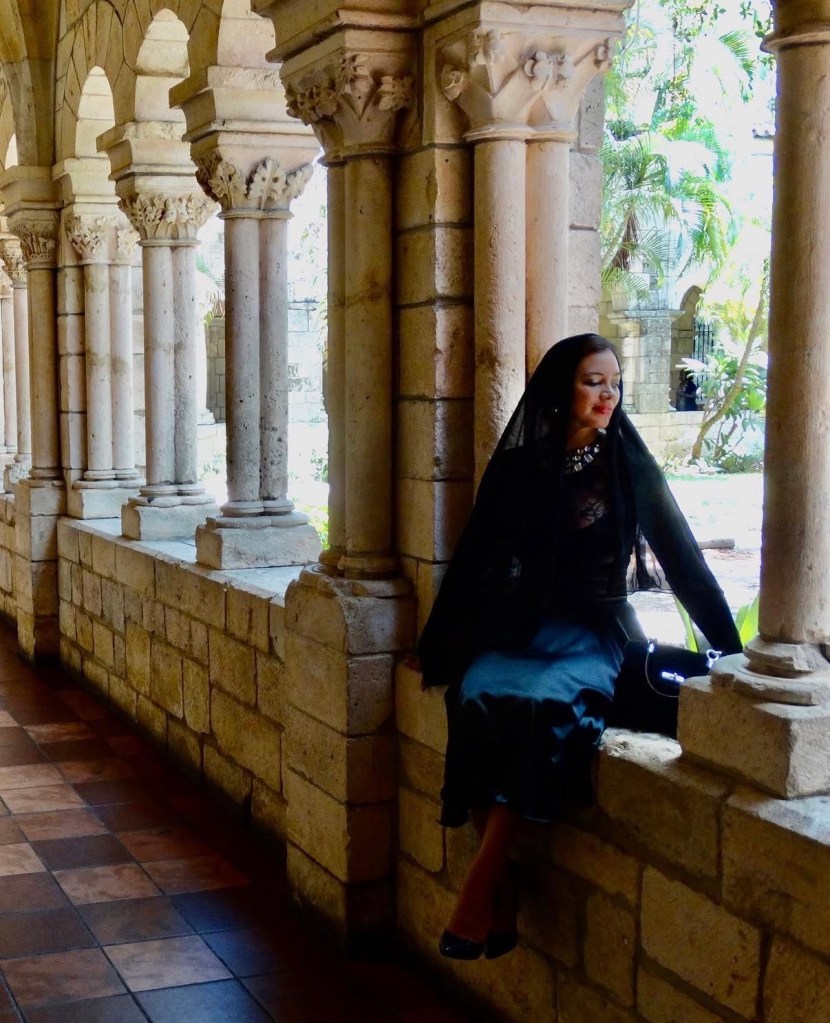
The 12th century was a period of transition between Romanesque art, characterized by massive, compartmentalized architecture with rounded arches and tunnel vaults. Montserrat Franco in Dolce & Gabbana’s Devotion collection.
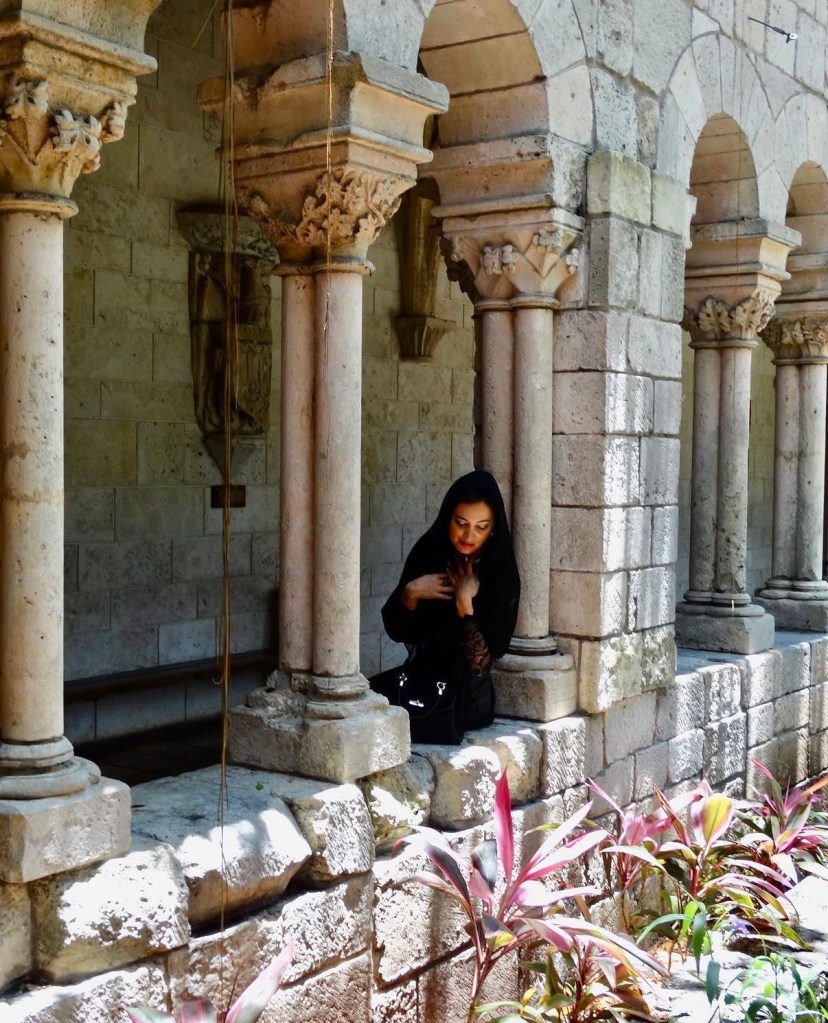
Cistercian churches built in the 12th century were exceedingly plain, unadorned with either figural or decorative sculpture, and usually severely elegant. Montserrat Franco at the Ancient Spanish Monastery in North Miami Beach.
References:
de Ange, Angie (2007). “Oldest Building in the West”. Orange & Blue. University of Florida: College of Journalism & Communications.
Carlson, Charle (April 2005). Weird Florida. Barnes & Noble. p. 136. ISBN978-0-7607-5945-5.
 Montserrat Franco